Results by title
4038 books match the query 'Social aspects' and 308 start with c
Consuming Catastrophe
Mass Culture in America's Decade of DisasterTimothy Recuber
Temple University Press, 2016
Horrified, saddened, and angered: That was the American people’s reaction to the 9/11 attacks, Hurricane Katrina, the Virginia Tech shootings, and the 2008 financial crisis. In Consuming Catastrophe, Timothy Recuber presents a unique and provocative look at how these four very different disasters took a similar path through public consciousness. He explores the myriad ways we engage with and negotiate our feelings about disasters and tragedies—from omnipresent media broadcasts to relief fund efforts and promises to “Never Forget.”
Recuber explains how a specific and “real” kind of emotional connection to the victims becomes a crucial element in the creation, use, and consumption of mass mediation of disasters. He links this to the concept of “empathetic hedonism,” or the desire to understand or feel the suffering of others.
The ineffability of disasters makes them a spectacular and emotional force in contemporary American culture. Consuming Catastrophe provides a lively analysis of the themes and meanings of tragedy and the emotions it engenders in the representation, mediation and consumption of disasters.
Consuming Environments
Television and Commercial CultureMichael Budd
Rutgers University Press, 1999
Whether we love it, hate it, or use it just to pass the time, most adults in the United States are watching more television than ever, up to four hours a day by some estimates. Our devotion to commercial television gives it unprecedented power in our lives.
Advertisers and television executives want us to spend as much time as we can in front of our sets, for it is access to our brains that they buy and sell. Yet the most important effect of television may be one that no one intends-accelerated destruction of the natural environment.
Consuming Environments explores how, with its portrayals of a world of simulated abundance, television has nurtured a culture of consumerism and overconsumption. The average person in the U.S. consumes more than twice the grain and ten times the oil of a citizen of Brazil or Indonesia. And people in less industrialized countries suffer while their resources are commandeered to support comfortable lifestyles in richer nations.
Using detailed examples illustrated with images from actual commercials, news broadcasts, and television shows, the authors demonstrate how ads and programs are put together in complex ways to manipulate viewers, and they offer specific ways to counteract the effects of TV and overconsumption's assault on the environment.
Consuming Environments
Television and Commercial CultureCraig, Steve
Rutgers University Press, 1999
Advertisers and television executives want us to spend as much time as we can in front of our sets, for it is access to our brains that they buy and sell. Yet the most important effect of television may be one that no one intends--accelerated destruction of the natural environment.
Consuming Environments explores how, with its portrayals of a world of simulated abundance, television has nurtured a culture of consumerism and overconsumption. The average person in the U.S. consumes more than twice the grain and ten times the oil of a citizen in Brazil or Indonesia. And people in less industrialized countries suffer while their resources are commandeered to support comfortable lifestyles in richer nations. Using detailed examples illustrated with images from actual commercials, news broadcasts, and television shows, the authors demonstrate how ads and programs are put together in complex ways to manipulate viewers, and they offer specific ways to counteract the effects of TV and overconsumption's assault on the environment.
Consuming Motherhood
Taylor, Janelle S
Rutgers University Press, 2004
Consuming Motherhood addresses the provocative question of how motherhood and consumption—as ideologies and as patterns of social action—mutually shape and constitute each other in contemporary North American and European social life. Ideologically, motherhood and consumption are often constructed in opposition to each other, with motherhood standing in as a naturalized social relation that is thought to be uniquely free of the calculating instrumentality that dominates commercial relations. Yet, in social life, motherhood and consumption are inseparable. Whether shopping for children’s clothing or childbirth services, or making decisions about adopting children, becoming a mother (and maternal practice more generally) is deeply influenced by consumption. How can the relationship between motherhood and consumption be revealed, and critically analyzed? Consuming Motherhood brings together a group of sociologists, anthropologists, and religious studies scholars to address this question through carefully grounded ethnographic studies. This insightful book reveals how mothers negotiate the contradictory forces that position them as both immune from and the target of consumerist tendencies in contemporary global society.
Containment and Condemnation
Law and the Oppression of the Urban PoorDavid Ray Papke
Michigan State University Press, 2019
Contemporary Advances in Theoretical and Applied Spanish Linguistic Variation
Juan J. Colomina-Almiñana
The Ohio State University Press, 2017
This volume makes three major contributions to Hispanic sociolinguistics. First, it covers variation in less commonly studied varieties, which are new areas of interest in a broader world where certain minorities and their languages are crucial. Second, it offers recent and innovative approaches to variation coming from formal theories in order to spark a debate about methodology that is more comprehensive of the diverse approaches to variation currently practiced in the field. Finally, it includes chapters that combine quantitative and qualitative analysis of different linguistic variables.
Contemporary African Screen Worlds
Lindiwe Dovey, Añulika Agina, and Michael W. Thomas, editors
Duke University Press, 2025
Contributors. Moradewun Adejunmobi, Añulika Agina, Alexander Bud, Lindiwe Dovey, Femi Eromosele, Pier Paolo Frassinelli, Alexandra Grieve, Jonathan Haynes, Joe Jackson, Alessandro Jedlowski, Dennis-Brook Prince Lotsu, Alison MacAulay, Elastus Mambwe, Asteway M. Woldemichael, Nedine Moonsamy, Elizabeth Olayiwola, Temitayo Olofinlua, Rashida Resario, Estrella Sendra, Robin Steedman, Michael W. Thomas, Stefanie Van de Peer, Solomon Waliaula
Contemporary Asian American Communities
Intersections And Divergencesedited by Linda Trinh Võ and Rick Bonus
Temple University Press, 2002

Content Machines
Reading and Writing in the Platform EraSarah Brouillette
Duke University Press, 2026
Contentious Citizenship
Salvadoran Activism and Belonging Across BordersArely M. Zimmerman
University of Arizona Press, 2026
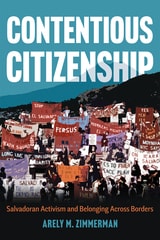
Drawing on nearly fifty interviews with activists who fled El Salvador, Zimmerman traces how political refugees carried with them strategies of resistance and community organizing that shaped social justice movements in the United States. The book addresses the political turmoil and grassroots mobilizations in El Salvador, the sanctuary movement of the 1980s, contemporary activism, and the impact of women’s strategies and forms of resistance.
Essential reading for scholars and students of migration, Central American studies, and political movements, Contentious Citizenship is a bold intervention into contemporary debates on identity, legality, and resistance. Zimmerman’s work honors the ingenuity and resilience of Salvadoran activists and invites readers to consider what it means to belong.
Contentious Lives
Two Argentine Women, Two Protests, and the Quest for RecognitionJavier Auyero
Duke University Press, 2003
Auyero reconstructs Nana’s and Laura’s biographies through oral histories and diaries. Drawing on interviews with many other protesters, newspaper articles, judicial records, government reports, and video footage, he provides sociological and historical context for their stories. The women’s accounts reveal the frustrations of lives overwhelmed by gender domination, the deprivations brought about by hyper-unemployment and the withering of the welfare component of the state, and the achievements and costs of collective action. Balancing attention to large-scale political and economic processes with acknowledgment of the plurality of meanings emanating from personal experiences, Contentious Lives is an insightful, penetrating, and timely contribution to discussions of popular resistance and the combined effects of globalization, neoliberal economic policies, and political corruption in Argentina and elsewhere.
Contested Curriculum
LGBTQ History Goes to SchoolDon Romesburg
Rutgers University Press, 2025
What began in fits and starts in activism and educational materials across the late twentieth century led to the passage of California’s landmark FAIR Education Act in 2011, ensuring that LGBTQ history has a place in the K–12 classroom. Historian Don Romesburg, the lead scholar who worked with advocacy organizations to pass the act, recounts the decades-long struggle to integrate LGBTQ content into history education policy, textbooks, and classrooms. Looking at California and states that followed its lead, he assesses the challenges and opportunities presented by this new way of teaching history. Romesburg’s powerful case for LGBTQ-inclusive education is all the more urgent in this era of anti-gay book bans, regressive legislation, and attempts to diminish the vital role that inclusive and honest history education should play in a democratic nation.
Contesting Childhood
Autobiography, Trauma, and MemoryDouglas, Kate
Rutgers University Press, 2010
Drawing on trauma and memory studies and theories of authorship and readership, Contesting Childhood offers commentary on the triumphs, trials, and tribulations that have shaped this genre. Douglas examines the content of the narratives and the limits of their representations, as well as some of the ways in which autobiographies of youth have become politically important and influential. This study enables readers to discover how stories configure childhood within cultural memory and the public sphere.
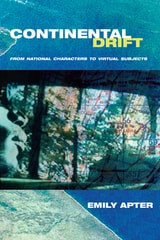
Continental Drift
From National Characters to Virtual SubjectsEmily Apter
University of Chicago Press, 1999
Among the many topics Apter explores are the fate of national literatures in an increasingly transnational literary climate; the volatile stakes of Albert Camus's life and reputation against the backdrop of Algerian civil strife; the use of literary and theatrical productions to "script" national character for the colonies; belly-dancing and aesthetic theory; and the impact of new media on colonial and postcolonial representation, from tourist photography to the videos of Digital Diaspora.
Continental Drift advances debates not just in postcolonial studies, but also in gender, identity, and cultural studies; ethnography; psychoanalysis; and performance studies.
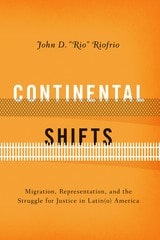
Continental Shifts
Migration, Representation, and the Struggle for Justice in Latin(o) AmericaBy John D. "Rio" Riofrio
University of Texas Press, 2015
Applying a broad geographical approach to comparative Latino literary and cultural studies, Continental Shifts illuminates how the discursive treatment of Latinos changed dramatically following the enactment of NAFTA—a shift exacerbated by 9/11. While previous studies of immigrant representation have focused on single regions (the US/Mexico border in particular), specific genres (literature vs. political rhetoric), or individual groups, Continental Shifts unites these disparate discussions in a provocative, in-depth examination.
Bringing together a wide range of groups and genres, this intercultural study explores novels by Latin American and Latino writers, a border film by Tommy Lee Jones and Guillermo Arriaga, “viral” videos of political speeches, popular television programming (particularly shows that feature incarceration and public shaming), and user-generated YouTube videos. These cultural products reveal the complexity of Latino representations in contemporary discourse. While tropes of Latino migrants as threatening, diseased foreign bodies date back to the nineteenth century, Continental Shifts marks the more pernicious, recent images of Latino laborers (legal and not) in a variety of contemporary media. Using vivid examples, John Riofrio demonstrates the connections between rhetorical and ideological violence and the physical and psychological violence that has more intensely plagued Latino communities in recent decades. Culminating with a consideration of the “American” identity, this eye-opening work ultimately probes the nation’s ongoing struggle to uphold democratic ideals amid dehumanizing multiethnic tension.
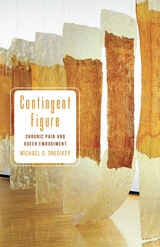
Contingent Figure
Chronic Pain and Queer EmbodimentMichael D. Snediker
University of Minnesota Press, 2021
A masterful synthesis of literary readings and poetic reflections, making profound contributions to our understanding of chronic pain
At the intersection of queer theory and disability studies, acclaimed theorist Michael D. Snediker locates something unexpected: chronic pain. Starting from this paradigm-shifting insight, Snediker elaborates a bracing examination of the phenomenological peculiarity of disability, articulating a complex idiom of figuration as the lived substance of pain’s quotidian. This lexicon helps us differently inhabit both the theoretical and phenomenal dimensions of chronic pain and suffering by illuminating where these modes are least distinguishable.
Suffused with fastidious close readings, and girded by a remarkably complex understanding of phenomenal experience, Contingent Figure resides in the overlap between literary theory and lyric experiment. Snediker grounds his exploration of disability and chronic pain in dazzling close readings of Herman Melville, Emily Dickinson, Henry James, and many others. Its juxtaposition of these readings with candid autobiographical accounts makes Contingent Figure an exemplary instance of literary theory as a practice of lyric attention.
Thoroughly rigorous and anything but predictable, this stirring inquiry leaves the reader with a rich critical vocabulary indebted to the likes of Maurice Blanchot, Gilles Deleuze, D. O. Winnicott, and Eve Kosofsky Sedgwick. A master class in close reading’s inseparability from the urgency of lived experience, this book is essential for students and scholars of disability studies, queer theory, formalism, aesthetics, and the radical challenge of Emersonian poetics across the long American nineteenth century.
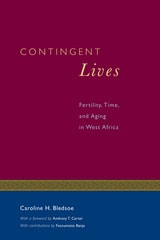
Contingent Lives
Fertility, Time, and Aging in West AfricaCaroline H. Bledsoe
University of Chicago Press, 2002
Using ethnographic and demographic data from a three-year study in rural Gambia, Contingent Lives explains this seemingly counterintuitive fact by juxtaposing two very different understandings of the life course: one is a linear, Western model that equates aging and the ability to reproduce with the passage of time, the other a Gambian model that views aging as contingent on the cumulative physical, social, and spiritual hardships of personal history, especially obstetric trauma. Viewing each of these two models from the perspective of the other, Caroline Bledsoe produces fresh understandings of the classical anthropological subjects of reproduction, time, and aging as culturally shaped within women's conjugal lives. Her insights will be welcomed by scholars of anthropology and demography as well as by those working in public health, development studies, gerontology, and the history of medicine.
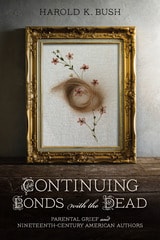
Continuing Bonds with the Dead
Parental Grief and Nineteenth-Century American AuthorsHarold K. Bush
University of Alabama Press, 2016
Grief transformed into legacy—how loss shaped the soul of American literature.
Harold K. Bush's Continuing Bonds with the Dead examines the profound transfiguration that the death of a child wrought on the literary work of nineteenth-century American writers. Taking as his subjects Harriet Beecher Stowe, Abraham Lincoln, William Dean Howells, Mark Twain, and W. E. B. Du Bois, Bush demonstrates how the death of a child became the defining "before-and-after moment" in their lives as adults and as artists. In narrating their struggles, Bush maps the intense field of creative energy induced by reverberating waves of parental grief and the larger nineteenth-century culture of mortality and grieving.
Bush explores in detail how each of these five writers grappled with and were altered by the loss of a child. He writes, for example, with moving insights about how the famed author of Adventures of Huckleberry Finn found himself adrift on a river of grief when meningitis struck down his daughter, Susy. In his deeply learned exploration of Twain's subsequent work, Bush illuminates how Twain wrote to cope with Susy's death, to make sense of her persistent presence in his life, and possibly to redeem her loss. Passionate and personal, Bush's insightful prose traces the paths of personal transformation each of these emblematic American writers took in order to survive the spiritual trauma of loss.
The savage Civil War was America's shared "before and after moment," the pivot upon which the nation's future swung. Bush's account of these five writers' grief amplifies our understanding of America's evolving, national relationship to mourning from then to the present.
Controlling Voices
Intellectual Property, Humanistic Studies, and the InternetTyAnna K. Herrington. Foreword by Jay David Bolter
Southern Illinois University Press, 2001
TyAnna K. Herrington explains current intellectual property law and examines the effect of the Internet and ideological power on its interpretation. Promoting a balanced development of our national culture, she advocates educators’ informed participation in ensuring egalitarian public access to information. She discusses the control of information and the creation of knowledge in terms of the way control functions under current property law.
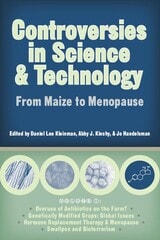
Controversies in Science and Technology
From Maize to MenopauseEdited by Daniel Lee Kleinman, Abby J. Kinchy, and Jo Handelsman
University of Wisconsin Press, 2005
* Antibiotics and Resistance: the science, the policy debates, and perspectives from a microbiologist, a veterinarian, and an M.D.
* Genetically Modified Maize and Gene Flow: the science of genetic modification, protecting genetic diversity, agricultural biotech vesus the environment, corporate patents versus farmers' rights
* Hormone Replacement Theory and Menopause: overview of the Women's Health Initiative, history of hormone replacement therapy, the medicalization of menopause, hormone replacement therapy and clinical trials
* Smallpox: historical and medical overview of smallpox, government policies for public health, the Emergency Health Powers Act, public resistance vs. cooperation.

Conversation and Community
Chat in a Virtual WorldLynn Cherny
CSLI, 1999

Conversations Across Our America
Talking About Immigration and the Latinoization of the United StatesBy Louis G. Mendoza
University of Texas Press, 2012
In the summer of 2007, Louis G. Mendoza set off on a bicycle trip across the United States with the intention of conducting a series of interviews along the way. Wanting to move beyond the media’s limited portrayal of immigration as a conflict between newcomers and “citizens,” he began speaking with people from all walks of life about their views on Latino immigration. From the tremendous number of oral histories Mendoza amassed, the resulting collection offers conversations with forty-three different people who speak of how they came to be here and why they made the journey. They touch upon how Latino immigration is changing in this country, and how this country is being changed by Latinoization. Interviewees reflect upon the concerns and fears they’ve encountered about the transformation of the national culture, and they relate their own experiences of living and working as “other” in the United States.
Mendoza’s collection is unique in its vastness. His subjects are from big cities and small towns. They are male and female, young and old, affluent and impoverished. Many are political, striving to change the situation of Latina/os in this country, but others are “everyday people,” reflecting upon their lives in this country and on the lives they left behind. Mendoza’s inclusion of this broad swath of voices begins to reflect the diverse nature of Latino immigration in the United States today.
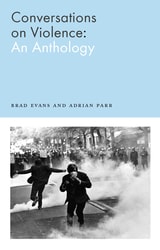
Conversations on Violence
An AnthologyBrad Evans
Pluto Press, 2021
Whether physical or metaphorical, institutional or interpersonal, violence is everywhere. A seemingly immutable fact of life, it is nonetheless rarely engaged with at the conceptual level. What does violence actually mean? And is it an inevitable part of the human condition?
Conversations on Violence brings together many of the world's leading critical scholars, artists, writers and cultural producers to provide a kaleidoscopic exploration of the concept of violence. Through in-depth interviews with thirty figures including Marina Abramovic, Kehinde Andrews and Simon Critchley, Brad Evans and Adrian Parr interrogate violence in all its manifestations, including its role in politics, art, gender discrimination and decolonisation.
Provocative, eye-opening and bracingly original, Conversations on Violence sheds light on a defining political and ethical concern of our age.
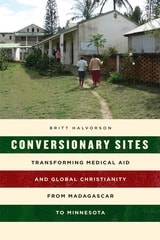
Conversionary Sites
Transforming Medical Aid and Global Christianity from Madagascar to MinnesotaBritt Halvorson
University of Chicago Press, 2018
A nuanced critique of the ambivalent relationships among religion, capitalism, and humanitarian aid, Conversionary Sites draws important connections between religion and science, capitalism and charity, and the US and the Global South.
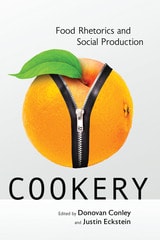
Cookery
Food Rhetorics and Social ProductionEdited by Donovan Conley and Justin Eckstein
University of Alabama Press, 2020
The rhetoric of contemporary food production and consumption with a focus on social boundaries
The rhetoric of food is more than just words about food, and food is more than just edible matter. Cookery: Food Rhetorics and Social Production explores how food mediates both rhetorical influence and material life through the overlapping concepts of invention and production. The classical canon of rhetorical invention entails the process of discovering one’s persuasive appeals, whereas the contemporary landscape of agricultural production touches virtually everyone on the planet. Together, rhetoric and food shape the boundaries of shared living.
The essays in this volume probe the many ways that food informs contemporary social life through its mediation of bodies—human and extra-human alike—in the forms of intoxication, addiction, estrangement, identification, repulsion, and eroticism. Our bodies, in turn, shape the boundaries of food through research, technology, cultural trends, and, of course, by talking about it.
Each chapter explores food’s persuasive nature through a unique prism that includes intoxication, dirt, “food porn,” strange foods, and political “invisibility.” Each case offers new insights about the relations between rhetorical influence and embodied practice through food. As a whole Cookery articulates new ways of viewing food’s powers of persuasion, as well as the inherent role of persuasion in agricultural production.
The purpose of Cookery, then, is to demonstrate the deep rhetoricity of our modern industrial food system through critical examinations of concepts, practices, and tendencies endemic to this system. Food has become an essential topic for discussions concerned with the larger social dynamics of production, distribution, access, reception, consumption, influence, and the fraught question of choice. These questions about food and rhetoric are equally questions about the assumptions, values, and practices of contemporary public life.

Cool Capitalism
Jim McGuigan
Pluto Press, 2009
Thomas Frank coined the term ‘the conquest of cool’. This book shows how this conquest is at the heart of the dynamics of contemporary capitalism.
Jim McGuigan argues that 'cool capitalism' incorporates disaffection into capitalism itself, absorbing rebellion and thereby neutralising opposition to the present system of culture and society.
McGuigan explores a huge variety of cultural examples, from the sleek images of mainstream advertising, to the fringes of artistic production, offering a vigourous critique of our understanding of subversion, resistance and counter-culturalism.
Has capitalism really colonised our planet? McGuigan shows that there is still some space left for rebellion against the seductive power of the free market economy.
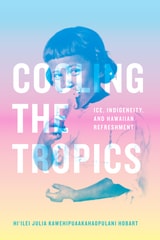
Cooling the Tropics
Ice, Indigeneity, and Hawaiian RefreshmentHi'ilei Julia Kawehipuaakahaopulani Hobart
Duke University Press, 2023
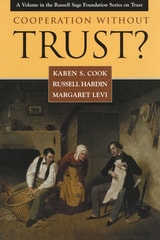
Cooperation Without Trust?
Karen S. Cook
Russell Sage Foundation, 2005
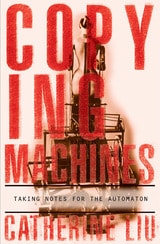
Copying Machines
Taking Notes for the AutomatonCatherine Liu
University of Minnesota Press, 2000
Explores literary theory’s fear of and fascination with the mechanical.
Anxieties about fixing the absolute difference between the human being and the mechanical replica, the automaton, are as old as the first appearance of the machine itself. Exploring these anxieties and the efforts they prompted, this book opens a window on one of the most significant, if subtle, ideological battles waged on behalf of the human against the machine since the Enlightenment—one that continues in the wake of technological and conceptual progress today.
A sustained examination of the automaton as early modern machine and as a curious ancestor of the twentieth-century robot, Copying Machines offers extended readings of mechanistic images in the eighteenth century through the prism of twentieth-century commentary. In readings of texts by Lafayette, Molière, Laclos, and La Bruyère—and in a chapter on the eighteenth-century inventor of automatons, Jacques Vaucanson—Catherine Liu provides a fascinating account of ways in which the automaton and the preindustrial machine haunt the imagination of ancien régime France and structure key moments of the canonical literature and criticism of the period.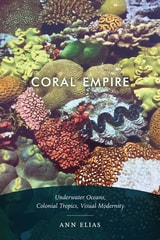
Coral Empire
Underwater Oceans, Colonial Tropics, Visual ModernityAnn Elias
Duke University Press, 2019
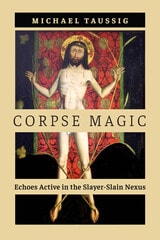
Corpse Magic
Echoes Active in the Slayer-Slain NexusMichael Taussig
University of Chicago Press, 2025
Corpse Magic is a response to the global ubiquity of violence. In this bracing new work, the influential anthropologist Michael Taussig puts killings in Colombia, by gangs and guerrillas, police and the military, and agents of agribusiness, in conversation with mass shootings and police killings, disproportionately of Black people, in the United States. In both contexts, he examines the effects of violent killing on its victims, its perpetrators, and those who witness and relive it through media footage.
Drawing from literature, religion, philosophy, and anthropology, Taussig traces the idea that the act of killing “infects” the killer and spreads outward, then connects this concept of contagion to beliefs in Colombia and elsewhere that the souls of the slain possess those of their slayers and that magic can be used to empower or thwart corpses as agents of vengeance. In this powerful and imaginative work, Taussig asks what kind of power the dead continue to have; what kinds of magic can manage that power; and what, if anything, can stop seemingly endless cycles of violence.
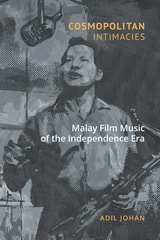
Cosmopolitan Intimacies
Malay Film Music of the Independence EraAdil Johan
National University of Singapore Press, 2018
Drawing on analyses of lyrics and music, interviews with musicians, and the content of Malay entertainment magazines, in an approach that spans ethnomusicology and cultural studies, he reveals this body of work to be a product of a musical and cultural cosmopolitanism in the service of a nation-making process based on ideas of Malay ethnonationalism, initially fluid but increasingly homogenized over time. Malay film music of the period covertly expressed radical sentiments despite being produced within a commercialized film industry.
Written in a lively style and illustrated with musical examples, the book will satisfy ethnomusicologists, composers, and film studies scholars interested in Southeast Asia and the Malay world. It will equally be of interest to scholars interested in the role of culture in nation-making more broadly.
Cosmopolitanism and Solidarity
Studies in Ethnoracial, Religious, and Professional Affiliation in the United StatesDavid A. Hollinger
University of Wisconsin Press, 2006
Building on many of the topics in his highly acclaimed earlier work, these essays treat a number of contentious issues, many of them deeply embedded in America's past and present political polarization. Essays include "Amalgamation and Hypodescent," "Enough Already: Universities Do Not Need More Christianity," "Cultural Relativism," "Why Are Jews Preeminent in Science and Scholarship: The Veblen Thesis Reconsidered," and "The One Drop Rule and the One Hate Rule." Hollinger is at his best in his judicious approach to America's controversial history of race, ethnicity, and religion, and he offers his own thoughtful prescriptions as Americans and others throughout the world struggle with the pressing questions of identity and solidarity.

Cosmopolitics I
Isabelle Stengers
University of Minnesota Press, 2010
Cosmopolitics II
Isabelle Stengers
University of Minnesota Press, 2011
Originally published in French in seven volumes, Cosmopolitics investigates the role and authority of the sciences in modern societies and challenges their claims to objectivity, rationality, and truth. Cosmopolitics II includes the first English-language translations of the last four books: Quantum Mechanics: The End of the Dream, In the Name of the Arrow of Time: Prigogine’s Challenge, Life and Artifice: The Faces of Emergence, and The Curse of Tolerance.
Arguing for an “ecology of practices” in the sciences, Isabelle Stengers explores the discordant landscape of knowledge derived from modern science, seeking intellectual consistency among contradictory, confrontational, and mutually exclusive philosophical ambitions and approaches. For Stengers, science is a constructive enterprise, a diverse, interdependent, and highly contingent system that does not simply discover preexisting truths but, through specific practices and processes, helps shape them.
Stengers concludes this philosophical inquiry with a forceful critique of tolerance; it is a fundamentally condescending attitude, she contends, that prevents those worldviews that challenge dominant explanatory systems from being taken seriously. Instead of tolerance, she proposes a “cosmopolitics” that rejects politics as a universal category and allows modern scientific practices to peacefully coexist with other forms of knowledge.
Counterstreams in Migration
Ethiopians' Choices to Stay, Leave, or ReturnHewan Girma
Temple University Press, 2026
Weaving together nearly 100 stories of non-migrants, returnees, and repeat migrants from Ethiopia, Girma advances a theory of migra-emotions, emotions specific to migration, to understand decisions and experiences, such as the imaginary of home and the lived reality of alienation, disaffection abroad, and feelings of duty to one’s homeland.
Looking beyond the meanings of migration or processes of integration, Girma explores the emotional subtext of migration aspirations. In doing so, Counterstreams of Migration complicates conventional understandings of migration and provides a more complete picture of migrant stories.
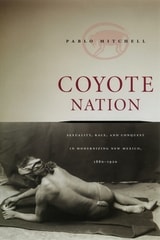
Coyote Nation
Sexuality, Race, and Conquest in Modernizing New Mexico, 1880-1920Pablo Mitchell
University of Chicago Press, 2005
Coyote Nation considers these questions as it explores how New Mexicans evaluated and categorized racial identities through bodily practices. Where ethnic groups were numerous and—in the wake of miscegenation—often difficult to discern, the ways one dressed, bathed, spoke, gestured, or even stood were largely instrumental in conveying one's race. Even such practices as cutting one's hair, shopping, drinking alcohol, or embalming a deceased loved one could inextricably link a person to a very specific racial identity.
A fascinating history of an extraordinarily plural and polyglot region, Coyote Nation will be of value to historians of race and ethnicity in American culture.
Cracking Up
Black Feminist Comedy in the Twentieth and Twenty-First Century United StatesKatelyn Hale Wood
University of Iowa Press, 2021
Katelyn Hale Wood interprets these artists not as tokens in a white, male-dominated field, but as part of a continuous history of Black feminist performance and presence. Broadly, Cracking Up frames stand-up comedy as an important platform from which to examine citizenship in the United States, articulate Black feminist political thought, and subvert structures of power. Wood also champions comedic performance and theatre history as imperative contexts for advancing historical studies of race, gender, and sexuality. From the comedy routines popular on Black vaudeville circuits to stand-up on contemporary social media platforms, Cracking Up excavates an overlooked history of Black women who have made the art of joke-telling a key part of radical performance and political engagement.
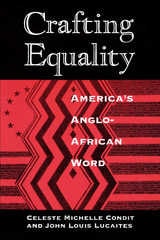
Crafting Equality
America's Anglo-African WordCeleste Michelle Condit and John Louis Lucaites
University of Chicago Press, 1993
Drawing upon little studied speeches, newspapers, magazines, and other public discourse, Condit and Lucaites survey the shifting meaning of equality from 1760 to the present as a process of interaction and negotiation among different social groups in American politics and culture. They make a powerful case for the critical role of black Americans in actively shaping what equality has come to mean in our political conversation by chronicling the development of an African-American rhetorical community. The story they tell supports a vision of equality that embraces both heterogeneity and homogeneity as necessary for maintaining the balance between liberty and property.
A compelling revision of an important aspect of America's history, Crafting Equality will interest anyone wanting to better understand the role public discourse plays in affecting the major social and political issues of our times. It will also interest readers concerned with the relationship between politics and culture in America's increasingly multi-cultural society.
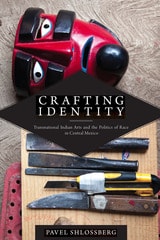
Crafting Identity
Transnational Indian Arts and the Politics of Race in Central MexicoPavel Shlossberg
University of Arizona Press, 2015
The first ethnographic study of its kind, the book examines how indigenous and mestizo mask makers, both popular and elite, view and contest relations of power and inequality through their craft. Using data from his interviews with mask makers, collectors, museum curators, editors, and others, Pavel Shlossberg places the artisans within the larger context of their relationships with the nation-state and Mexican elites, as well as with the production cultures that inform international arts and crafts markets. In exploring the connection of mask making to capitalism, the book examines the symbolic and material pressures brought to bear on Mexican artisans to embody and enact self-racializing stereotypes and the performance of stigmatized indigenous identities.
Shlossberg’s weaving of ethnographic data and cultural theory demystifies the way mask makers ascribe meaning to their practices and illuminates how these practices are influenced by state and cultural institutions. Demonstrating how the practice of mask making negotiates ethnoracial identity with regard to the Mexican state and the United States, Shlossberg shows how it derives meaning, value, and economic worth in the eyes of the state and cultural institutions that mediate between the mask maker and the market.
Crap
A History of Cheap Stuff in AmericaWendy A. Woloson
University of Chicago Press, 2020
In Crap: A History of Cheap Stuff in America, Wendy A. Woloson takes seriously the history of objects that are often cynically-made and easy to dismiss: things not made to last; things we don't really need; things we often don't even really want. Woloson does not mock these ordinary, everyday possessions but seeks to understand them as a way to understand aspects of ourselves, socially, culturally, and economically: Why do we—as individuals and as a culture—possess these things? Where do they come from? Why do we want them? And what is the true cost of owning them?
Woloson tells the history of crap from the late eighteenth century up through today, exploring its many categories: gadgets, knickknacks, novelty goods, mass-produced collectibles, giftware, variety store merchandise. As Woloson shows, not all crap is crappy in the same way—bric-a-brac is crappy in a different way from, say, advertising giveaways, which are differently crappy from commemorative plates. Taking on the full brilliant and depressing array of crappy material goods, the book explores the overlooked corners of the American market and mindset, revealing the complexity of our relationship with commodity culture over time.
By studying crap rather than finely made material objects, Woloson shows us a new way to truly understand ourselves, our national character, and our collective psyche. For all its problems, and despite its disposability, our crap is us.
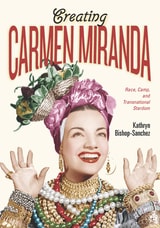
Creating Carmen Miranda
Race, Camp, and Transnational StardomKathryn Bishop-Sanchez
Vanderbilt University Press, 2016
This final performance in many ways exemplified the power of Carmen Miranda. The actress, singer, and dancer pursued a relentless mission to demonstrate the provocative theatrical force of her cultural roots in Brazil. Armed with bare-midriff dresses, platform shoes, and her iconic fruit-basket headdresses, Miranda stole the show in films like That Night in Rio and The Gang's All Here. For American film audiences, her life was an example of the exoticism of a mysterious, sensual South America. For Brazilian and Latin American audiences, she was an icon. For the gay community, she became a work of art personified and a symbol of courage and charisma.
In Creating Carmen Miranda, Kathryn Bishop-Sanchez takes the reader through the myriad methods Miranda consciously used to shape her performance of race, gender, and camp culture, all to further her journey down the road to becoming a legend.
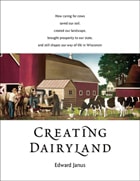
Creating Dairyland
How caring for cows saved our soil, created our landscape, brought prosperity to our state, and still shapes our way of life in WisconsinEdward Janus
Wisconsin Historical Society Press, 2011
The story of dairying in Wisconsin is the story of how our very landscape and way of life were created. By making cows the center of our farm life and learning how to care for them, our ancestors launched a revolution that changed much more than the way farmers earned their living — it changed us.
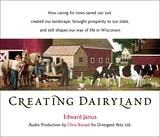
Creating Dairyland
How caring for cows saved our soil, created our landscape, brought prosperity to our state, and still shapes our way of life in WisconsinEdward Janus
Wisconsin Historical Society Press, 2011
The story of dairying in Wisconsin is the story of how our very landscape and way of life were created. By making cows the center of our farm life and learning how to care for them, our ancestors launched a revolution that changed much more than the way farmers earned their living — it changed us.
Creating Worlds Otherwise
Art, Collective Action, and (Post)ExtractivismPaula Serafini
Vanderbilt University Press, 2022
Extractivism has increasingly become the ground on which activists and scholars in Latin America frame the dynamics of ecological devastation, accumulation of wealth, and erosion of rights. These maladies are the direct consequences of long-standing extraction-oriented economies, and more recently from the expansion of the extractive frontier and the implementation of new technologies in the extraction of fossil fuels, mining, and agriculture. But the fields of sociology, political ecology, anthropology, and geography have largely ignored the role of art and cultural practices in studies of extractivism and post-extractivism.
The field of art theory, on the other hand, has offered a number of texts that put forward insightful analyses of artwork addressing extraction, environmental devastation, and the climate crisis. However, an art theory perspective that does not engage firsthand and in depth with collective action remains limited and fails to provide an account of the role, processes, and politics of art in anti- and post-extractivist movements.
Creating Worlds Otherwise examines the narratives that subaltern groups generate around extractivism, and how they develop, communicate, and mobilize these narratives through art and cultural practices. It reports on a six-year project on creative resistance to extractivism in Argentina and builds on long-term engagement working on environmental justice projects and campaigns in Argentina and the UK.
It is an innovative contribution to the fields of Latin American studies, political ecology, cultural studies, and art theory, and addresses pressing questions regarding what post-extractivist worlds might look like as well as how such visions are put into practice.
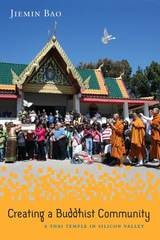
Creating a Buddhist Community
A Thai Temple in Silicon ValleyJiemin Bao
Temple University Press, 2015
In Creating a Buddhist Community, Jiemin Bao shows how the Wat Thai participants practice Buddhism and rework gender relationships in the course of organizing temple space, teaching meditation, schooling children in Thai language and culture, merit making, fundraising, and celebrating festivals.
Bao’s detailed account of the process of creating an inclusive temple community with Thai immigrants as the majority helps to deconstruct the exoticized view of Buddhism in American culture. Creating a Buddhist Community also explores Wat Thai’s identification with both the United States and Thailand and how this transnational perspective reimagines and reterritorializes what is called American Buddhism.

Creating the Customer-Driven Academic Library
Jeannette Woodward
American Library Association, 2009
Creating the Customer-Driven Library
Building on the Bookstore ModelJeannette Woodward
American Library Association, 2004
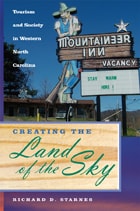
Creating the Land of the Sky
Tourism and Society in Western North CarolinaRichard D. Starnes
University of Alabama Press, 2005
A sophisticated inquiry into tourism's social and economic power across the South.
In the early 19th century, planter families from South Carolina, Georgia, and eastern North Carolina left their low-country estates during the summer to relocate their households to vacation homes in the mountains of western North Carolina. Those unable to afford the expense of a second home relaxed at the hotels that emerged to meet their needs. This early tourist activity set the stage for tourism to become the region's New South industry. After 1865, the development of railroads and the bugeoning consumer culture led to the expansion of tourism across the whole region.
Richard Starnes argues that western North Carolina benefited from the romanticized image of Appalachia in the post-Civil War American consciousness. This image transformed the southern highlands into an exotic travel destination, a place where both climate and culture offered visitors a myriad of diversions. This depiction was futher bolstered by partnerships between state and federal agencies, local boosters, and outside developers to create the atrtactions necessary to lure tourists to the region.
As tourism grew, so did the tension between leaders in the industry and local residents. The commodification of regional culture, low-wage tourism jobs, inflated land prices, and negative personal experiences bred no small degree of animosity among mountain residents toward visitors. Starnes's study provides a better understanding of the significant role that tourism played in shaping communities across the South.
Creative Life
Music, Politics, People, and MachinesBob Ostertag
University of Illinois Press, 2008
Drawing on his intimate engagement with political conflict in Latin America and the Balkans, Ostertag identifies an art of "insurgent politics" that struggles to expand the parameters of the physical and social world. He also discusses his innovative collaborations with major modern performers, filmmakers, and artists around the world. Part memoir, part journalism, and part aesthetic manifesto, Creative Life is a dazzling set of writings from a musical artist who has worked on the cutting edge of new music for thirty years.