Results by title
4155 books match the query 'State & Local' and 291 start with c
Columbus, Georgia, 1865
The Last True Battle of the Civil WarCharles A. Misulia
University of Alabama Press, 2010
Columbus, Georgia, 1865 is a comprehensive study of the Easter Sunday, April 16, 1865, conflict, which occurred in the dark of night and extended over a mile and half through a series of forts and earthworks and was finally decided in an encounter on a bridge a thousand feet in length. This volume offers the first complete account of this battle, examining and recounting in depth not only the composition and actions of the contending forces, which numbered some three thousand men on each side, but meticulously detailing the effect of the engagement on the city of Columbus and its environs.
Misulia’s study fills in an omission in the grand account of our cataclysmic national struggle and adds a significant chapter to the history of an important regional city. In addition, Misulia takes on the long-vexing question of which encounter should be recognized as the last battle of the Civil War and argues persuasively that Columbus, Georgia, qualifies for this distinction on a number of counts.
Columbus, Ohio
Two Centuries of Business and Environmental ChangeMansel G. Blackford
The Ohio State University Press, 2016
Precisely because they lived in a midsize, midwestern city, Columbus residents could learn from the earlier experiences of their counterparts in older, larger coastal metropolises, and then go beyond them. Not having large sunk costs in pre-existing water systems, Columbus residents could, for instance, develop new, world-class, state-of-the-art methods for treating water and sewage, steps essential for urban expansion. Columbus, Ohio explores how city residents approached urban challenges—especially economic and environmental ones—and how they solved them.
Columbus, Ohio: Two Centuries of Business and Environmental Change concludes that scholars and policy makers need to pay much more attention to environmental issues in the shaping of cities, and that they need to look more closely at what midwestern metropolises accomplished, as opposed to simply examining coastal cities.
Comb Ridge and Its People
The Ethnohistory of a RockRobert McPherson
Utah State University Press, 2009
West of the Four Corners and east of the Colorado River, in southeastern Utah, a unique one-hundred-mile-long, two-hundred-foot-high, serrated cliff cuts the sky. Whether viewed as barrier wall or sheltering sanctuary, Comb Ridge has helped define life and culture in this region for thousands of years. Today, the area it crosses is still relatively remote, though an important part of a scenic complex of popular tourist destinations that includes Natural Bridges National Monument and Grand Gulch just to the west, Glen Canyon National Recreation Area and Lake Powell a bit farther west, Canyonlands National Park to the north, Hovenweep National Monument to the east, and the San Juan River and Monument Valley to the south. Prehistorically Comb Ridge split an intensively used Ancient Puebloan homeland. It later had similar cultural—both spiritual and practical—significance to Utes, Paiutes, and Navajos and played a crucial role in the history of European American settlement. To tell the story of this rock that is unlike any other rock in the world and the diverse people whose lives it has affected, Robert S. McPherson, author of multiple books on Navajos and on the Four Corners region, draws on the findings of a major, federally funded project to research the cultural history of Comb Ridge. He carries the story forward to contention over present and future uses of Comb Ridge and the spectacular country surrounding it.
The book is the winner of the 2009 Utah Book Award for Nonfiction.
Combat Zoning
Military Land-Use Planning In NevadaDavid Loomis
University of Nevada Press, 1993
Loomis provides a clear and disturbing picture of military land-use planning and how it has affected residents in Nevada. He contends that a lack of citizen participation in the development of land-use plans is a weakness in the planning process and that both the military and the citizenry should take an active role to avoid future conflicts.
Combating Mountaintop Removal
New Directions in the Fight against Big CoalBryan T. McNeil
University of Illinois Press, 2012
Coming Of Age In Buffalo
Youth and Authority in the Postwar EraWilliam Graebner
Temple University Press, 1993
Pegged pants poodle skirts, record hops, rock ‘n’ roll, soda shops: in the interval between the bombing of Hiroshima and the assassination of John F. Kennedy, these were distinguishing marks of the "typical" postwar teenager-if there was a "typical" teenager. In this richly illustrated account of Youth in postwar Buffalo, William Graebner argues that the so-called Youth culture was really a variety of "disparate subcultures, united by age but in conflict over class, race, ethnicity, and gender." Using scrap books, oral histories, school Yearbooks, and material culture, he shows how Buffalo teenagers were products of diverse and often antagonistic subcultures. The innocuous strains of "Rock Around the Clock" muffled the seething gang loyalties and countercultural influence of James Dean, Marlon Brando, and Buffalo’s own "Hound Dog" Lorenz. Racial antipathies once held in check spilled out on Memorial Day, 1956, when white and black Youth clashed on board a take Erie pleasure boat in a "riot" that recast the city’s race relations for decades to come.
While exploring the diversity within Youth subcultures, Graebner examines the ways in which adults—educators, clergy, representatives of the media, and other authorities—sought to contain this generation. The Hi-Teen Club, Buffalo Plan dress code, record hops, graduation ceremonies, film censorship, and restrictions on secret societies and on corner lounging were all forms of social engineering that reinforced social and economic boundaries that were at the heart of the dominant culture. The prevailing adult influence on activities, attitudes, and style served to redirect the "misguided Youth" of the fifties and to obliterate their image from public memory. Although the media still portrays this decade as the golden age of cultural homogeneity, the diversity in musical preferences, hair and clothing styles, and allegiances to disc jockeys suggest the wide diversity of Youth experiences and challenges to adult authority that were part of coming of age in postwar America.
Coming Out, Moving Forward
Wisconsin's Recent Gay HistoryR. Richard Wagner
Wisconsin Historical Society Press, 2020
In this volume, R. Richard Wagner draws on historical research and materials from his extensive personal archive to not only chronicle an important movement, but also to tell the stories of the state’s LGBT pioneers—from legislators and elected officials to activists, businesspeople, and everyday citizens. Coming Out, Moving Forward documents the rich history of Wisconsin’s LGBT individuals and communities as they pushed back against injustice and found ways to live openly and proudly as themselves.
Coming Out, Moving Forward is a continuation to the first volume in this series, We’ve Been Here All Along.
Coming Out, Moving Forward
Wisconsin’s Recent Gay HistoryR. Richard Wagner
Wisconsin Historical Society Press, 2020
In this volume, R. Richard Wagner draws on historical research and materials from his extensive personal archive to not only chronicle an important movement, but also to tell the stories of the state’s LGBT pioneers—from legislators and elected officials to activists, businesspeople, and everyday citizens. Coming Out, Moving Forward documents the rich history of Wisconsin’s LGBT individuals and communities as they pushed back against injustice and found ways to live openly and proudly as themselves.
Coming Out, Moving Forward is a continuation to the first volume in this series, We’ve Been Here All Along.
Coming of Industrial Order
Town and Factory Life in Rural Massachusetts, 1810-1860Jonathan Prude
University of Massachusetts Press, 1999
Commonwealth of Compromise
Civil War Commemoration in MissouriAmy Laurel Fluker
University of Missouri Press, 2020
Acts of Civil War commemoration have long been controversial and were never undertaken for objective purposes, but instead served to transmit particular values to future generations. Understanding this process lends informative context to contemporary debates about Civil War memory.
Commonwealth of Toil
Chapters in the History of Massachusetts Workers and Their UnionsThomas Juravich
University of Massachusetts Press, 1996
Over the past two centuries, Massachusetts workers have fought for many important advances that would later be enjoyed by other Americans. The right to organize, restrictions on work hours and child labor, and workers' compensation were all pioneered in the Commonwealth. From the 1825 strike of Boston carpenters for a ten-hour day to recent victories in hospitals and universities, Massachusetts workers and their unions have been in the forefront of the battle for dignity and justice.
This book tells their story. In eighteen chapters, beginning with the first industrial workers in the nation—the Lowell “mill girls”—the authors describe the struggles of working men and women to improve their lives. In the process, the book provides a valuable perspective on the development of the American labor movement.
Communists and Community
Activism in Detroit's Labor Movement, 1941-1956Ryan S. Pettengill
Temple University Press, 2020
Communists and Community seeks to reframe the traditional chronology of the Communist Party in the United States as a means to better understand the change that occurred in community activism in the mid-twentieth century. Ryan Pettengill argues that Popular Front activism continued to flourish throughout the war years and into the postwar period. In Detroit, where there was a critical mass of heavy industry, Communist Party activists mobilized support for civil rights and affordable housing, brought attention to police brutality, sought protection for the foreign-born, and led a movement for world peace.
Communists and Community demonstrates that the Communist Party created a social space where activists became effective advocates for the socioeconomic betterment of a multiracial work force. Pettengill uses Detroit as a case study to examine how communist activists and their sympathizers maintained a community to enhance the quality of life for the city’s working class. He investigates the long-term effects of organized labor’s decision to force communists out of the unions and abandon community-based activism. Communists and Community recounts how leftists helped workers, people of color, and other under-represented groups became part of the mainstream citizenry in America.
Communists in Harlem during the Depression
Mark Naison
University of Illinois Press, 2004
Winner of the Ralph Bunche Award, American Political Science Association
No socialist organization has ever had a more profound effect on black life than the Communist Party did in Harlem during the Depression. Mark Naison describes how the party won the early endorsement of such people as Adam Clayton Powell Jr. and how its support of racial equality and integration impressed black intellectuals, including Richard Wright, Langston Hughes, and Paul Robeson.
This meticulously researched work, largely based on primary materials and interviews with leading black Communists from the 1930s, is the first to fully explore this provocative encounter between whites and blacks. It provides a detailed look at an exciting period of reform, as well as an intimate portrait of Harlem in the 1920s and 30s, at the high point of its influence and pride.
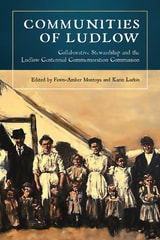
Communities of Ludlow
Collaborative Stewardship and the Ludlow Centennial Commemoration CommissionFawn-Amber Montoya
University Press of Colorado, 2021
The history of the Ludlow Massacre encompasses the stories of immigrant groups, women, the working-class, and people of color as much as the story of that tragedy, and the continued relevance of these issues creates a need for remembrance and discussion of how to make the events of the Ludlow Massacre available to contemporary society. The book outlines recent efforts to remember and commemorate this important historical event, documenting the unique collaborations in public scholarship and outreach among the diverse group of people involved in marking the 100-year anniversary of the Ludlow Massacre. The chapters relate the tales of the stewards of the Ludlow Massacre—the various communities that rallied together to keep this history alive and show its relevance, including lineal descendants, members of the United Mine Workers of America, historians, archaeologists, scholars, artists, interpreters, authors, playwrights, and politicians. The book also offers tips, strategies, and cautionary tales for practicing engaged public scholarship.
The history of the Ludlow Massacre has been told as a tragedy of striking miners in the West that occurred during a turbulent time in US labor relations, but it is so much more than that. Communities of Ludlow explores the intersections of public scholarship, advocacy, and personal experience, weaving these perspectives together with models for practicing public scholarship to illustrate the power of creating spaces for sharing ideas and information in an environment that encourages creativity, open dialogue, public outreach, political action, and alternative narratives.
Contributors: Robert Butero, Robin Henry, Michael Jacobson, Elizabeth Jameson, Linda Linville, Matthew Maher, Yolanda Romero
Competing Memories
The Legacy of Arkansas's Civil WarMark Christ
Butler Center for Arkansas Studies, 2016
Between 2011 and 2015, Arkansas commemorated the 150th anniversary of the American Civil War with re-enactments, lectures, placement of historical markers, and a wide variety of other events that were collectively attended by more than 375,000 people. While the sesquicentennial commemoration highlighted the Civil War events that occurred in the state and honored the people who experienced the war in Arkansas, the question of the war’s significance to modern Arkansas remained.
Competing Memories: The Legacy of Arkansas’s Civil War collects the proceedings of the final seminar sponsored by the Arkansas Civil War Sesquicentennial Commission, which sought to define the lasting impact that the nation’s deadliest conflict had on the state by bringing together some of the state’s leading historians.
In these essays, Thomas A. DeBlack explores the post-war lives of both Union and Confederate soldiers who played prominent roles in Civil War Arkansas. Cherisse Jones-Branch delves into the lives of black Arkansans during the war and Reconstruction. Jeannie Whayne discusses the many ways the Civil War affected the state’s economic development, while Kelly Houston Jones investigates the Civil War’s impact on Arkansas women. Mary Jane Warde examines the devastating effects of the Civil War on Native Americans in Arkansas and the Indian Territory. Elliott West scrutinizes Civil War Arkansas from a continental perspective, and Carl Moneyhon considers the evolution of how we remember the Civil War.
Together, the essays in Competing Memories: The Legacy of Arkansas’s Civil War provide a compelling account of how America’s bloodiest war continues to affect Arkansas and its people today.
Complex Commonwealth
Public History in PennsylvaniaEdited by Margaret Jerrido, Jeanine M. Mazak-Kahne, and Kristin O'Brassill-Kulfan
Temple University Press, 2027
There are thousands of historic sites across Pennsylvania. The question of whose memories, what histories, and what local heritage deserve preservation has animated historians and communities for centuries. The editors and contributors to Complex Commonwealth provide a collection of accessible essays about public history in Pennsylvania that show how we have commemorated and preserved the state’s material culture, museums, monuments and memorials, parks, archives, libraries, and historic sites over centuries.
Chapters examine the Homestead Steel Strike, the Carlisle Indian School’s Digital Resource Center, and African American cemeteries and burial grounds, among other case studies. The methodologies these public historians use are as diverse as the various histories of labor, gender, religion, and race. It is by shedding light on these underseen histories that Complex Commonwealth affirms the importance of state and regional history to everyday Pennsylvanians.
Complex Commonwealth emphasizes the importance of place and space in shaping how we know what we know about the past and how that collectively shapes our future.
Contributors: Barbara Barksdale, Zachary L. Brodt, Steven Burg, Mary Catherine Foltz, Kelly C. George, James Gerencser, Alexandra Acri Godfrey, Kris Lowrey, Devin C. Manzullo-Thomas, Carol W. Smith, Frank Vitale IV, and the editors
Comstock Women
The Making Of A Mining CommunityRonald M. James
University of Nevada Press, 1997
Confederate Home Front
Montgomery during the Civil WarWilliam Warren Rogers, Jr.
University of Alabama Press, 2001
Drawing from a wealth of historic documents and personal papers, William Warren Rogers, Jr., provides a fascinating and detailed political, economic, social, and commercial history of Montgomery from 1860 to 1865. His account begins with an examination of daily life in the city before the war began-how slaves outnumbered whites, how an unvarnished frontier atmosphere prevailed on the streets despite citizens' claims to refinement, how lush crops of corn and cotton grew in fields right up to the city limits, and how class divisions were distinct and immovable.
Rogers arranges his material topically, covering the events that led to the decision for secession and Montgomery's heady days as the Confederacy's first capital; the industrialization of the city's war effort as it became a hub of activity and served as a military post; the city's business patterns and administration as it attempted to promote the Confederacy and defend itself from federal forces; and the plight of the small group of Unionists who inhabited Montgomery through the war. Rogers concludes with chapters examining the situation in Montgomery as the Confederacy unraveled and the city fell to Union troops.
The Montgomery experience offers a microcosm of life on the Confederate home front and demonstrates that citizens generally experienced the same hopes, deprivations, and tragedies that other Southerners did at this time. Rogers's well-written, comprehensive history of the wartime city makes an original contribution to Civil War homefront and community studies that should appeal to general readers and scholars alike.
Confluences
Religion, Health, and Diversity in MissouriSigne Cohen
University of Missouri Press, 2025
The contributors to this volume explore connections between religious affiliation, race, gender, ethnicity, epidemiology, and attitudes towards health and medicine in Missouri from the nineteenth century to the present day. They ask what role religious belief systems play in healthcare outcomes and offer important arguments for building a dialogue between faith communities and medical caregivers. Centering on Missouri as a site for religious transformation and diversity, this volume documents how religious perspectives shape contemporary America.
Initial chapters outline the religious history of Missouri, relaying the history of medicine in the region before and after Missouri statehood. Subsequent essays document Missouri’s religious diversity by contemplating Native American, Asian American, and African American religious experiences in Missouri, intentionally recovering and respectfully contextualizing understudied events and forgotten individuals. The volume’s remaining essays consider religious responses to the Cholera, Influenza, and Covid-19 epidemics and show how Native American, Euro-American, and African American Missourians have transformed U.S. history and healthcare. Collectively, the essays in this book demonstrate that religious freedom, medical knowledge, and transnational encounters are woven into the historical fabric of the region.
Featuring essays by experts in Religious Studies and Health Sciences, this volume will be of interest to scholars of religion, sociology, public health, and medicine, as well as readers more generally interested in the history and culture of Missouri.
Congress of States
Proceedings of the Provisional Congress of the Confederate States of AmericaR. David Carlson
University of Alabama Press, 2023
A landmark publication of public reports that reveal the founding of the Confederate government
Past publications of the proceedings of the Confederate Congress have focused on the public sessions of the Regular Confederate States Congress that met in Richmond, Virginia from February 1862 to March 1865. Omitted were the formative early sessions of the Montgomery, Alabama and Richmond, Virginia Provisional Congresses of 1861 and 1862. In Congress of States, David Carlson reveals these critical early meetings.
To illuminate this pivot point in American and Southern history, Carlson has drawn on detailed and often verbatim minutes reported in Richmond, Montgomery, Charleston, New Orleans, Savannah, and Augusta newspapers, assembling here a unique set of transcriptions that reveal the birth of the Confederate government.
Congress of States provides an introduction to the Provisional Confederate Congress and the purpose of this work relative to the Southern Historical Society’s landmark 1923 publication “Proceedings of the Confederate Congress,” which detailed the 1862–1865 Regular Confederate Congress. He also includes a chronology outlining the major events of the secession crisis, annotated minutes for the Provisional Confederate Congress’s five sessions, appendices featuring the leadership and committees of the Provisional Congress, and fascinating examples of the proposed Confederate emblem and flags debated by the delegates.
A key set of primary sources that scholars, historians, librarians, and political scientists will value for years to come, Congress of States will also be essential reading for the general reader interested in American and Southern history, the Antebellum South, and the Civil War.
Conifers of the New England–Acadian Forest
A Cultural HistorySteve Keating
University of Massachusetts Press, 2024
Why did white pine help spark the American Revolution? How did balsam aid the development of germ theory? What does hemlock have to do with making leather? In Conifers of the New England–Acadian Forest, microbiologist Steve Keating explores how conifers influenced the course of human history, writing in a style that is both scientific and accessible.
Keating’s study focuses on one of the most forested and wild ecoregions in North America, which extends into New York, New England, and Canada and includes Acadia National Park. Here, spruces, firs, and cedars of the northern boreal forest mix with hemlocks and pines of more temperate climates. This combination helps create the appearance, aroma, and ecology of the region, and the trees’ unique botanical traits have been ingeniously utilized by numerous peoples including the Iroquois, French explorers, beer brewers, and shipbuilders. Keating concludes with identification guides for the conifers and where they can be found in Acadia National Park.
Connecting the West
Historic Railroad Stops and Stage Stations in Elko County, NevadaShawn Hall
University of Nevada Press, 2002
Shawn Hall's immensely popular guidebooks to Nevada ghost towns have become essential resources for backcountry explorers and scholars alike. Now Hall returns to Elko County to survey the county's railroad and stage stations, as well as other sites not included in his earlier survey of this colorful section of the state. As in his earlier volumes, Hall includes a history of each site he lists, along with period and contemporary photographs, directions for locating the sites, and an assessment of their present condition. His historical accounts, based on a wide range of primary and secondary sources, are both scholarly and engaging, rich in anecdotes and personalities, and in the fascinating minutia of history often ignored by more academic writers. Shawn Hall's dedication to documenting Nevada's thousands of historic sites has enriched our knowledge of the state's relatively brief but very eventful past. Connecting the West is a worthy addition to Hall's remarkable efforts to preserve the state's history.

Conservation Fallout
Nuclear Protest At Diablo CanyonJohn Wills
University of Nevada Press, 2012
An unprecedented look at nuclear politics in California Vehement, widespread opposition accompanied the rise of the U.S. nuclear industry during the 1960s and 1970s. In Conservation Fallout, John Wills examines one of the most controversial atomic projects of the period: Pacific Gas and Electric Company’s decision to build its premier nuclear power plant at Diablo Canyon, a relatively unsettled, biologically rich, and especially scenic part of the central California coastline. Two competing visions of California emerged while the plant underwent construction. Environmentalists used Diablo as a symbol of impending ecological doomsday, while PG&E envisioned it as the model that would usher in a new age of energy production. The Sierra Club almost disbanded over whether to condone or protest the reactor project. Divisions also emerged in the local community as residents and politicians, enticed by the promise of cheap electricity and lucrative tax revenues, found themselves pitted against others who feared the dangers of radiation in their own backyards. The controversy intensified when a fault line was discovered within three miles of the plant. Grassroots groups The Mothers for Peace, a local women’s group, and The Abalone Alliance, a statewide nonviolent direct-action organization, did their utmost to stop the plant from going on-line. In 1979, an Alliance rally in San Francisco attracted 25,000 people, while 40,000 others gathered in San Luis Obispo. During a two-week-long blockade of the Diablo plant in 1981, over 1,900 activists were jailed, the largest arrest in the history of American antinuclear protest. Despite its significance in the history of twentieth-century environmental issues and the continuing debate over the safety of nuclear power, the full story of Diablo Canyon has not been told until now. Wills bases his account on extensive interviews with the individuals involved, as well as on the archives of the Sierra Club, several protest organizations, public agencies, PG&E, and others. The result is an engaging, balanced examination of nuclear politics in California. By focusing on one of the last wild places in the state and its transformation into a major technological center, and on the evolution and strategies of the little-studied grassroots protest groups determined to protect California and resist the spread of nuclear technology, Wills has made a major contribution to our understanding of America’s nuclear age.
Conservative Counterrevolution
Challenging Liberalism in 1950s MilwaukeeTula A. Connell
University of Illinois Press, 2016

Conspiring Toward Utopia
Jersey Homesteads and the Jewish New DealDaniel S. Palmer
Rutgers University Press, 2027
During the 1930s, the United States government founded the Jersey Homesteads community (now known as Roosevelt, New Jersey) to help a group of pioneering Jewish immigrants create a new and ambitious cooperative experiment. Two hundred urban garment worker families moved from New York City to rural New Jersey to develop an intentional community with a focus and reliance upon both agriculture and craft. The community worked to unite the Jewish cooperative agricultural movement with the New Deal priorities of back-to-the-land rural resettlement. Notably, the town also embraced modernist aesthetics through homes designed by Louis Kahn and Alfred Kastner, and a public mural by Ben Shahn depicting the community’s creation.
This book tells the inspiring yet under-appreciated history of the town’s establishment, revealing its historical utopian commune precursors and detailing how such an unconventional project could only have been possible at its precise moment because of President Franklin D. Roosevelt’s progressive New Deal government support. The Jersey Homesteads project brought together the forces of community, identity, and art as a unified force for betterment in the brave new world of New Deal America. It is a story about a specific time and place with significant lessons for our understanding of American modernism and Jewish identity during the 1930s and beyond.
Constructing Cuban America
Race and Identity in Florida's Caribbean South, 1868–1945Andrew Gomez
University of Texas Press, 2024
How Black and white Cubans navigated issues of race, politics, and identity during the post-Civil War and early Jim Crow eras in South Florida.
On July 4, 1876, during the centennial celebration of US independence, the city of Key West was different from other cities. In some of post–Civil War Florida, Black residents were hindered from participating in 4th of July festivities, but Key West's celebration, “led by a Cuban revolutionary mayor working in concert with a city council composed of Afro-Bahamians, Cubans, African Americans, and Anglos,” represented a profound exercise in interracial democracy amid the Radical Reconstruction era.
Constructing Cuban America examines the first Cuban American communities in South Florida—Key West and Tampa—and how race played a central role in shaping the experiences of white and Black Cubans. Andrew Gomez argues that factors such as the Cuban independence movement and Radical Reconstruction produced interracial communities of Cubans that worked alongside African Americans and Afro-Bahamians in Florida, yielding several successes in interracial democratic representation, even as they continued to wrestle with elements of racial separatism within the Cuban community. But the conclusion of the Cuban War of Independence and early Jim Crow laws led to a fracture in the Cuban-American community. In the process, both Black and white Cubans posited distinct visions of Cuban-American identity.
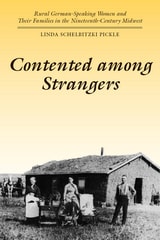
Contented among Strangers
Rural German-Speaking Women and Their Families in the Nineteenth-Century MidwestLinda Schelbitzki Pickle
University of Illinois Press, 1995
German-Americans make up one of the largest ethnic groups in the United States, yet their very success at assimilating has also made them one of the least visible. Contented among Strangers examines the central role German-speaking women in rural areas of the Midwest played in preserving their ethnic and cultural identity. Even while living far from their original homelands, these women applied traditional European patterns of rural family life and values to their new homes in Illinois, Iowa, Kansas, Missouri, and Nebraska. As a result they were more content with their modest lives than were their Anglo-American counterparts. Through personal recollections--including interesting diary material translated by the author, church and community documents, and migration and census data--Pickle reveals the diversity and richness of the women's experiences.
Contested Curriculum
LGBTQ History Goes to SchoolDon Romesburg
Rutgers University Press, 2025
What began in fits and starts in activism and educational materials across the late twentieth century led to the passage of California’s landmark FAIR Education Act in 2011, ensuring that LGBTQ history has a place in the K–12 classroom. Historian Don Romesburg, the lead scholar who worked with advocacy organizations to pass the act, recounts the decades-long struggle to integrate LGBTQ content into history education policy, textbooks, and classrooms. Looking at California and states that followed its lead, he assesses the challenges and opportunities presented by this new way of teaching history. Romesburg’s powerful case for LGBTQ-inclusive education is all the more urgent in this era of anti-gay book bans, regressive legislation, and attempts to diminish the vital role that inclusive and honest history education should play in a democratic nation.
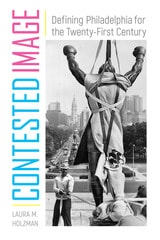
Contested Image
Defining Philadelphia for the Twenty-First CenturyLaura M. Holzman
Temple University Press, 2019
Thomas Eakins’ 1875 painting, The Gross Clinic, the Rocky Statue, andthe Barnes Foundation are all iconic in Philadelphia for different reasons. But around the year 2000, this painting, this sculpture, and this entire art collection, respectively, generated extended—and heated—controversies about the “appropriate” location for each item. Contested Image revisits the debates that surrounded these works of visual culture and how each item changed through acts of reception—through the ways that viewers looked at, talked about, and used these objects to define their city.
Laura Holzman investigates the negotiations and spirited debates that affected the city of Philadelphia’s identity and its public image. She considers how the region’s cultural resources reshaped the city’s reputation as well as delves into discussions about official efforts to boost local spirit. In tracking these “contested images,” Holzman illuminates the messy process of public envisioning of place and the ways in which public dialogue informs public meaning of both cities themselves and the objects of urban identity.
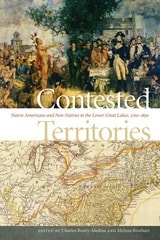
Contested Territories
Native Americans and Non-Natives in the Lower Great Lakes, 1700-1850Charles Beatty-Medina
Michigan State University Press, 2012
A remarkable multifaceted history, Contested Territories examines a region that played an essential role in America's post-revolutionary expansion—the Lower Great Lakes region, once known as the Northwest Territory. As French, English, and finally American settlers moved westward and intersected with Native American communities, the ethnogeography of the region changed drastically, necessitating interactions that were not always peaceful. Using ethnohistorical methodologies, the seven essays presented here explore rapidly changing cultural dynamics in the region and reconstruct in engaging detail the political organization, economy, diplomacy, subsistence methods, religion, and kinship practices in play. With a focus on resistance, changing worldviews, and early forms of self-determination among Native Americans, Contested Territories demonstrates the continuous interplay between actor and agency during an important era in American history.

Contested Waters
An Environmental History of the Colorado RiverApril R. Summitt
University Press of Colorado, 2013
-From the conclusion
The Colorado River is a vital resource to urban and agricultural communities across the Southwest, providing water to 30 million people. Contested Waters tells the river's story-a story of conquest, control, division, and depletion.
Beginning in prehistory and continuing into the present day, Contested Waters focuses on three important and often overlooked aspects of the river's use: the role of western water law in its over-allocation, the complexity of power relationships surrounding the river, and the concept of sustainable use and how it has been either ignored or applied in recent times. It is organized in two parts, the first addresses the chronological history of the river and long-term issues, while the second examines in more detail four specific topics: metropolitan perceptions, American Indian water rights, US-Mexico relations over the river, and water marketing issues. Creating a complete picture of the evolution of this crucial yet over-utilized resource, this comprehensive summary will fascinate anyone interested in the Colorado River or the environmental history of the Southwest.
Contesting the Constitution
Congress Debates the Missouri Crisis, 1819-1821William S. Belko
University of Missouri Press, 2021
The larger question with which the legislators grappled were the limits of the Constitution’s provisions granting Congress the authority to affect the institution of slavery—both where it already existed and where it could expand. The issue—what would come to be known as the Missouri Crisis—severely tested the still young republic and, some four decades later, would all but rend it asunder. This timely collection of original essays thoughtfully engages the intersections of history and constitutional law, and is certain to find eager readers among historians, legal scholars, political scientists, as well as many who call Missouri home.
Contributing Authors:
William S. Belko
Christopher Childers
John Eastman
Brook Poston
John R. Van Atta
Contingent Maps
Rethinking Western Women's History and the North American WestEdited by Susan E. Gray and Gayle Gullett
University of Arizona Press, 2014
Contingent Maps demonstrates how employing place as an analytical tool transforms Western women’s history. Gray and Gullett depict place as not only a physical location but as a way of understanding, as the spatial configuration of power relations that are always in flux. As a place and many places, the West is therefore always being constructed. All maps are contingent, as Gray and Gullett’s reading of the articles in this collection attest. Contingent Maps offers histories of Wests ranging from the nineteenth century to the near present. This synthesis of feminist history and geography has the potential to revitalize the field of Western women’s history.
Continually Working
Black Women, Community Intellectualism, and Economic Justice in Postwar MilwaukeeCrystal Marie Moten
Vanderbilt University Press, 2023
Moten emphasizes the ways in which Black women transformed the urban landscape by simultaneously occupying spaces from which they had been historically excluded and creating their own spaces. Black women refused to be marginalized within the historically white and middle‑class Milwaukee Young Women's Christian Association (MYWCA), an association whose mission centered on supporting women in urban areas. Black women forged interracial relationships within this organization and made it, not without much conflict and struggle, one of the most socially progressive organizations in the city. When Black women could not integrate historically white institutions, they created their own. They established financial and educational institutions, such as Pressley School of Beauty Culture, which beautician Mattie Pressley DeWese opened in 1946 as a result of segregation in the beauty training industry. This school served economic, educational, and community development purposes as well as created economic opportunities for Black women. Historically and contemporarily, Milwaukee has been and is still known as one of the most segregated cities in the nation. Black women have always contested urban inequality, by making space for themselves and others on the margins. In so doing, they have transformed both the urban landscape and urban history.
Contributions to Michigan Archaeology
James E. Fitting, John R. Halsey and H. Martin Wobst
University of Michigan Press, 1968
Convicts, Coal, and the Banner Mine Tragedy
Robert David Ward
University of Alabama Press, 1987
In the late 1870s, Jefferson County, Alabama, and the town of Elyton (near the future Birmingham) became the focus of a remarkable industrial and mining revolution. Together with the surrounding counties, the area was penetrated by railroads. Surprisingly large deposits of bituminous coal, limestone, and iron ore—the exact ingredients for the manufacture of iron and, later, steel—began to be exploited. Now, with transportation, modern extractive techniques, and capital, the region’s geological riches began yielding enormous profits.
This book is about the men who worked involuntarily in the Banner Coal Mine, owned by the Pratt Consolidated Coal Company. And it is about the repercussions and consequences that followed an explosion at the mine in the spring of 1911 that killed 128 convict miners.
Copts in Michigan
Eliot Dickinson
Michigan State University Press, 2008
The Copts, or Egyptian Christians, are a relatively small and tight-knit ethno-religious group, numbering perhaps three thousand people and living mostly in the Detroit metropolitan area. Since they began immigrating to Michigan in the mid-1960s, their community has grown exponentially.
Granted exceptional access to the Coptic community, Eliot Dickinson provides the first in- depth profile of this unique and remarkably successful immigrant group. Drawing on personal interviews to infuse the book with warmth and depth. Copts in Michigan offers readers a compelling view into this vibrant community.
Corn Kings and One-Horse Thieves
A Plain-Spoken History of Mid-IllinoisJames Krohe Jr.
Southern Illinois University Press, 2017
In Corn Kings and One-Horse Thieves, James Krohe Jr. presents an engaging history of an often overlooked region, filled with fascinating stories and surprising facts about Illinois’s midsection.
Krohe describes in lively prose the history of mid-Illinois from the Woodland period of prehistory until roughly 1960, covering the settlement of the region by peoples of disparate races and religions; the exploitation by Euro-Americans of forest, fish, and waterfowl; the transformation of farming into a high-tech industry; and the founding and deaths of towns. The economic, cultural, and racial factors that led to antagonism and accommodation between various people of different backgrounds are explored, as are the roles of education and religion in this part of the state. The book examines remarkable utopian experiments, social and moral reform movements, and innovations in transportation and food processing. It also offers fresh accounts of labor union warfare and social violence directed against Native Americans, immigrants, and African Americans and profiles three generations of political and government leaders, sometimes extraordinary and sometimes corrupt (the “one-horse thieves” of the title). A concluding chapter examines history’s roles as product, recreation, and civic bond in today’s mid-Illinois.
Accessible and entertaining yet well-researched and informative, Corn Kings and One-Horse Thieves draws on a wide range of sources to explore a surprisingly diverse section of Illinois whose history is America in microcosm.
Corn Palaces and Butter Queens
A History of Crop Art and Dairy SculpturePamela H. Simpson
University of Minnesota Press, 2012
Teddy Roosevelt’s head sculpted from butter. The Liberty Bell replicated in oranges. The Sioux City Corn Palace of 1891 encased with corn, grains, and grasses and stretching for two city blocks—with a trolley line running down its center. Between 1870 and 1930, from county and state fairs to the world’s fairs, large exhibition buildings were covered with grains, fruits, and vegetables to declare in no uncertain terms the rich agricultural abundance of the United States. At the same fairs—but on a more intimate level—ice-cooled cases enticed fairgoers to marvel at an array of butter sculpture models including cows, buildings, flowers, and politicians, all proclaiming the rich bounty and unending promise held by the region.
Often viewed as mere humorous novelties—fun and folksy, but not worthy of serious consideration—these lively forms of American art are described by Pamela H. Simpson in a fascinating and comprehensive history. From the pioneering cereal architecture of Henry Worrall at the Philadelphia Centennial Exposition to the vast corn palaces displayed in Sioux City, Iowa, and elsewhere between 1877 and 1891, Simpson brings to life these dazzling large-scale displays in turn-of-the-century American fairs and festivals. She guides readers through the fascinating forms of crop art and butter sculpture, as they grew from state and regional fairs to a significant place at the major international exhibitions. The Minnesota State Fair’s Princess Kay of the Milky Way contest, Lillian Colton’s famed pictorial seed art, and the work of Iowa’s “butter cow lady,” Norma “Duffy” Lyon, are modern versions of this tradition.
Beautifully illustrated with a bounty of never-before-seen archival images, Corn Palaces and Butter Queens is an accessible history of one of America’s most unique and beguiling Midwestern art forms—an amusing and peculiar phenomenon that profoundly affected the way Americans saw themselves and their country’s potential during times of drought and great depression.

Cornerstone on College Hill
An Illustrated History of the University of Alaska FairbanksTerrence Cole
University of Alaska Press, 1994
Cornish in Michigan
Russell M. Magnaghi
Michigan State University Press, 2007
Several ethnic groups have come to Michigan from the British Isles. Each group of immigrants from this region—the Cornish, English, Irish, and Welsh—has played a significant role in American history.
Historic records show that some early nineteenth-century Cornish immigrants were farmers and settled in the Lower Peninsula of Michigan. However, the majority of early Cornish immigrants were miners, and much of their influence was felt in the Upper Peninsula of the state. Many of the underground miners from Cornwall got their start in this region before they migrated to other mining regions throughout the United States.
Hard-working families came from throughout the peninsula of Cornwall, bringing their history, recipes, songs, religions, and other traditions to Michigan’s northern mining country. This nineteenth-century migration brought them to new homes in Keweenaw County, Houghton County, Copper Harbor, Eagle Harbor, and Presque Isle. In the 1830s, newly arrived immigrants also settled in the lower parts of Michigan, in Macomb, Washtenaw, Lenawee, and Oakland counties. The automobile boom of the 1920s sent many of these immigrants and their children to Metro Detroit from the Upper Peninsula, where their traditions are perpetuated today.
Coronado National Memorial
A History of Montezuma Canyon and the Southern HuachucasJoseph P. Sánchez
University of Nevada Press, 2017
Sánchez is the foremost historian of the area, and he shifts through and decodes a number of key Spanish and English language documents from different archives that tell the story of an historical drama of epic proportions. He combines the regional and the global, starting with the prehistory of the area. He covers Spanish colonial contact, settlement missions, the Mexican Territorial period, land grants, and the ultimate formation of the international border that set the stage for the creation of the Coronado National Memorial in 1952.
Much has been written about southwestern Arizona and northeastern Sonora, and in many ways this book complements those efforts and delivers details about the region’s colorful past.
Coronado's Children
Tales of Lost Mines and Buried Treasures of the SouthwestBy J. Frank Dobie
University of Texas Press, 1978
Written in 1930, Coronado's Children was one of J. Frank Dobie's first books, and the one that helped gain him national prominence as a folklorist. In it, he recounts the tales and legends of those hardy souls who searched for buried treasure in the Southwest following in the footsteps of that earlier gold seeker, the Spaniard Coronado.
"These people," Dobie writes in his introduction, "no matter what language they speak, are truly Coronado's inheritors.... l have called them Coronado's children. They follow Spanish trails, buffalo trails, cow trails, they dig where there are no trails; but oftener than they dig or prospect they just sit and tell stories of lost mines, of buried bullion by the jack load... "
This is the tale-spinning Dobie at his best, dealing with subjects as irresistible as ghost stories and haunted houses.
Coronado's Well-Equipped Army
The Spanish Invasion of the American SouthwestJohn M. Hutchins
Westholme Publishing, 2023
Winner of Two Colorado Book Awards
The historic 1540–1542 expedition of Captain-General Francisco Vasquez de Coronado is popularly remembered as a luckless party of exploration which wandered the American Southwest and then blundered onto the central Great Plains of Texas, Oklahoma, and Kansas. The expedition, as historian John M. Hutchins relates in Coronado’s Well-Equipped Army: The Spanish Invasion of the American Southwest, was a military force of about 1,500 individuals, made up of Spanish soldiers, Indian warrior allies, and camp followers. Despite the hopes for a peaceful conquest of new lands—including those of a legendary kingdom of Cibola—the expedition was obliged to fight a series of battles with the natives in present-day Sonora, California, Arizona, and New Mexico. The final phase of the invasion was less warlike, as the members of the expedition searched the Great Plains in vain for a wealthy civilization called Quivira.While much has been written about the march of Coronado and his men, this is the first book to address the endeavor as a military campaign of potential conquest like those conducted by other conquistadors. This helps to explain many of the previously misunderstood activities of the expedition. In addition, new light is cast on the non-Spanish participants, including Mexican Indian allies and African retainers, as well as the important roles of women.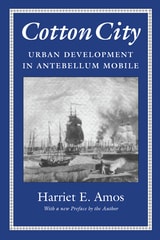
Cotton City
Urban Development in Antebellum MobileHarriet E. Amos Doss
University of Alabama Press, 2001
The exploration of the North-South relationship and the growth of of antebellum Mobile.
Cotton City offers a compelling exploration of Mobile, Alabama’s transformation into a thriving urban center during the antebellum period. Historian Harriet E. Amos examines how economic ambition, civic planning, and the cotton trade shaped the city’s development between 1819 and 1861. Through detailed archival research, Amos reveals how Mobile’s leaders sought to modernize infrastructure, expand commerce, and assert the city’s regional importance—all while navigating the tensions of slavery, class, and Southern identity.
This richly contextualized study highlights the interplay between urban growth and the broader forces of the Southern economy, making Cotton City a vital contribution to the histories of the American South, urbanization, and antebellum society.
Cotton Patch Schoolhouse
Susie Powers Tompkins
University of Alabama Press, 1992
Step back into 1920s Alabama, where grit, laughter, and the red clay roads of the Black Belt shape one young woman’s unforgettable first year of teaching
Cotton-Patch Schoolhouse follows 18‑year‑old Susie Powers Tompkins as she takes on a one-room school with eight children, zero experience, and a Model T that’s always one mud puddle away from disaster. With warmth and wit, she discovers that the real curriculum is written not in textbooks—but in the faces, fears, and fierce hopes of her students.
In a world of cotton fields, nature walks, homemade art supplies, and potbellied stoves, Susie learns that teaching is as much about heart as it is about lessons. She navigates runaway love affairs, surprise pets (including an opinionated mouse), the hardships of rural poverty, and the extraordinary generosity of neighbors who have little but give much.
As contemporary readers grapple with educational inequities, rural depopulation, and renewed conversations about community, Cotton-Patch Schoolhouse feels strikingly fresh. It reminds us that creativity blooms under constraint, that relationships matter more than resources, and that small schools can make a big difference. Tompkins' memoir will delight lovers of Southern history, educators, memoir readers, rural studies enthusiasts, and anyone who enjoys heartfelt stories of resilience, community, and the transformative power of teaching

Count Those Buzzards! Stamp Those Grey Mules!
Superstitions Remembered from a Southern ChildhoodKathryn Tucker Windham with a preface by Dilcy Hilley Windham and a foreword by Emily Blejwas
University of Alabama Press, 2026
A nostalgic journey through the beliefs, customs, sayings, superstitions, and folk wisdom of a Southern childhood
Count Those Buzzards! Stamp Those Grey Mules! is a warm and engaging celebration of the folklore, superstitions, and everyday wisdom that once shaped life across the rural South. Drawing on her Alabama childhood, beloved storyteller Kathryn Tucker Windham recounts the sayings, rituals, beliefs, and customs passed from generation to generation long before information was instantly available at the touch of a screen.
With humor, affection, and a keen eye for the memorable details of ordinary life, Windham introduces readers to a world where bottle trees repelled evil spirits, rabbit’s feet promised good fortune, and signs and omens guided daily decisions. Her stories capture not only the traditions themselves but also the families and communities that kept them alive.
Part memoir and part folklore treasury, this enduring classic preserves a rich cultural inheritance while offering a vivid portrait of twentieth-century Southern life. Featuring a new introduction by Dilcy Windham and a foreword by Emily Blejwas, this edition invites readers to rediscover a fascinating world of memory, myth, and tradition.
Counterculture Kaleidoscope
Musical and Cultural Perspectives on Late Sixties San FranciscoNadya Zimmerman
University of Michigan Press, 2013
In a bold reconsideration of the late sixties San Francisco counterculture movement, Counterculture Kaleidoscope takes a close look at the cultural and musical practices of that era. Addressing the conventional wisdom that the movement was grounded in rebellion and opposition, the book exposes two myths: first, that the counterculture was an organized social and political movement of progressives with a shared agenda who opposed the mainstream (dubbed "hippies"); and second, that the counterculture was an innocent entity hijacked by commercialism and transformed over time into a vehicle of so-called "hip consumerism."
Seeking an alternative to the now common narrative, Nadya Zimmerman examines primary source material including music, artwork, popular literature, personal narratives, and firsthand historical accounts. She reveals that the San Francisco counterculture wasn't interested in commitments to causes and made no association with divisive issues---that it embraced everything in general and nothing in particular.
"Astute and accessible, Counterculture Kaleidoscope provides thought-provoking insights into the historical, cultural and social context of the San Francisco counter-culture and its music scene, including discussions of Vietnam and student protest, the Haight-Ashbury Diggers, the Grateful Dead, Led Zeppelin, Altamont, and Charlie Manson. A must for students and scholars of socio-musical activity and for all of us to whom music matters."
---Sheila Whiteley, author of The Space Between the Notes: Rock and the Counter-Culture and Too Much Too Young: Popular Music, Age and Gender
"The hippie counterculture has never garnered the scholarly attention accorded the new left and the black freedom struggle. Overviews of the period ritualistically mention it as part and parcel of that apparently incandescent era---the Sixties---but rarely capture its distinctiveness. Counterculture Kaleidoscope is a timely and provocative intervention in Sixties scholarship that significantly deepens our understanding of this important but understudied phenomenon."
—Alice Echols, Associate Professor, University of Southern California, and author of Scars of Sweet Paradise: The Life and Times of Janis Joplin
Countermemory
A Rhetoric of ResistanceApril L. O'Brien and James Chase Sanchez
University of Alabama Press, 2025
Investigates the interdisciplinary dimensions of countermemory through a rhetorical lens
Countermemory: A Rhetoric of Resistance by April L. O’Brien and James Chase Sanchez is a groundbreaking monograph that explores the concept of countermemory from an interdisciplinary and rhetorical perspective. The authors define “countermemory” as remembrance that resituates often overlooked or erased narratives of marginalized groups by positioning these memories as equally significant to dominant historical narratives. This work investigates how countermemories emerge in response to public memories, highlighting the tensions and resistance that arise when marginalized voices challenge mainstream historical accounts.
Through a mixed-methodological approach—incorporating site-based analysis, participant observation, textual analysis, and historiography—O’Brien and Sanchez examine countermemory in both physical and digital spaces. From memorial sites and museums to music videos, TV shows, and digital maps, they reveal the various ways countermemory operates and persists. The authors focus particularly on countermemory in the American South, centering on the experiences and histories of Black, Latinx, and Indigenous communities.
Countermemory is essential reading for scholars and students of rhetoric and public memory. The book also offers rich insights to readers who are passionate about addressing issues of racial inequality, people interested in examining their own experiences and the role they can play in promoting social change, and those interested in exploring the ways in which history is constructed and presented, and how marginalized perspectives are often excluded or distorted.
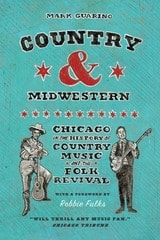
Country and Midwestern
Chicago in the History of Country Music and the Folk RevivalMark Guarino
University of Chicago Press, 2023
Chicago is revered as a musical breeding ground, having launched major figures like blues legend Muddy Waters, gospel soul icon Mavis Staples, hip-hop firebrand Kanye West, and the jazz-rock band that shares its name with the city. Far less known, however, is the vital role Chicago played in the rise of prewar country music, the folk revival of the 1950s and 1960s, and the contemporary offspring of those scenes.
In Country and Midwestern, veteran journalist Mark Guarino tells the epic century-long story of Chicago’s influence on sounds typically associated with regions further south. Drawing on hundreds of interviews and deep archival research, Guarino tells a forgotten story of music, migration, and the ways that rural culture infiltrated urban communities through the radio, the automobile, and the railroad. The Midwest’s biggest city was the place where rural transplants could reinvent themselves and shape their music for the new commercial possibilities the city offered. Years before Nashville emerged as the commercial and spiritual center of country music, major record labels made Chicago their home and recorded legendary figures like Bill Monroe, The Carter Family, and Gene Autry. The National Barn Dance—broadcast from the city’s South Loop starting in 1924—flourished for two decades as the premier country radio show before the Grand Ole Opry. Guarino chronicles the makeshift niche scenes like “Hillbilly Heaven” in Uptown, where thousands of relocated Southerners created their own hardscrabble honky-tonk subculture, as well as the 1960s rise of the Old Town School of Folk Music, which eventually brought national attention to local luminaries like John Prine and Steve Goodman. The story continues through the end of the twentieth century and into the present day, where artists like Jon Langford, The Handsome Family, and Wilco meld contemporary experimentation with country traditions.
Featuring a foreword from Grammy-nominated singer-songwriter Robbie Fulks and casting a cross-genre net that stretches from Bob Dylan to punk rock, Country and Midwestern rediscovers a history as sprawling as the Windy City—celebrating the creative spirit that modernized American folk idioms, the colorful characters who took them into new terrain, and the music itself, which is still kicking down doors even today.