Results by title
18293 books match the query 'United States' and 1260 start with c
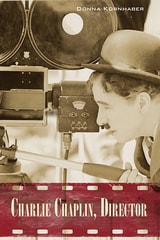
Charlie Chaplin, Director
Donna Kornhaber
Northwestern University Press, 2014
Charlie Chaplin was one of the cinema’s consummate comic performers, yet he has long been criticized as a lackluster film director. In this groundbreaking work—the first to analyze Chaplin’s directorial style—Donna Kornhaber radically recasts his status as a filmmaker. Spanning Chaplin’s career, Kornhaber discovers a sophisticated "Chaplinesque" visual style that draws from early cinema and slapstick and stands markedly apart from later, "classical" stylistic conventions. His is a manner of filmmaking that values space over time and simultaneity over sequence, crafting narrative and meaning through careful arrangement within the frame rather than cuts between frames. Opening up aesthetic possibilities beyond the typical boundaries of the classical Hollywood film, Chaplin’s filmmaking would profoundly influence directors from Fellini to Truffaut. To view Chaplin seriously as a director is to re-understand him as an artist and to reconsider the nature and breadth of his legacy.
Charlotte Perkins Gilman and Her Contemporaries
Literary and Intellectual ContextsEdited by Cynthia J. Davis and Denise D. Knight
University of Alabama Press, 2004
Considers Gilman’s place in American literary and social history by examining her relationships to other prominent intellectuals of her era
By placing Charlotte Perkins Gilman in the company of her contemporaries, this collection seeks to correct misunderstandings of the feminist writer and lecturer as an isolated radical. Gilman believed and preached that no life is ever led in isolation; indeed, the cornerstone of her philosophy was the idea that “humanity is a relation.”Gilman's highly public and combative stances as a critic and social activist brought her into contact and conflict with many of the major thinkers and writers of the period, including Mary Austin, Margaret Sanger, Ambrose Bierce, Grace Ellery Channing, Lester Ward, Inez Haynes Gillmore, William Randolph Hearst, Karen Horney, William Dean Howells, Catharine Beecher, George Bernard Shaw, and Owen Wister. Gilman wrote on subjects as wide ranging as birth control, eugenics, race, women's rights and suffrage, psychology, Marxism, and literary aesthetics. Her many contributions to social, intellectual, and literary life at the turn of the 20th century raised the bar for future discourse, but at great personal and professional cost.
Charlotte Perkins Gilman and a Woman's Place in America
Edited by Jill Bergman
University of Alabama Press, 2017
Charlotte Perkins Gilman and a Woman’s Place in America is a pioneering collection that probes how depictions of space, confinement, and liberation establish both the difficulty and necessity of female empowerment. Turning Victorian notions of propriety and a woman’s place on its ear, this finely crafted essay collection studies Gilman’s writings and the manner in which they push back against societal norms and reject male-dominated confines of space.
The contributors present fascinating and innovative readings of some of Gilman’s most significant works. By examining the settings in “The Yellow Wallpaper” and Herland, for example, the volume analyzes Gilman’s construction of place, her representations of male dominance and female subjugation, and her analysis of the rules and obligations that women feel in conforming to their assigned place: the home.
Additionally, this volume delineates female resistance to this conformity. Contributors highlight how Gilman’s narrators often choose resistance over obedient captivity, breaking free of the spaces imposed upon them in order to seek or create their own habitats. Through biographical interpretations of Gilman’s work that focus on the author’s own renouncement of her “natural” role of wife and mother, contributors trace her relocation to the American West in an attempt to appropriate the masculinized spaces of work and social organization.
Engaging, well-researched, and deftly written, the essays in this collection will appeal to scholars of Gilman, literature, and gender issues alike.
Charlotte Perkins Gilman
New Texts, New ContextsJennifer S. Tuttle and Carol Farley Kessler
The Ohio State University Press, 2011
Charlotte Perkins Gilman
Optimist ReformerJill Rudd
University of Iowa Press, 1999
Charlotte's Rose
A. E. Cannon
University of Utah Press, 2011
Charlotte’s Rose—justifiably back in print—tells the story of a young Welsh girl, Charlotte Edwards, who, soon after her mother dies, sails with her father from England to the United States to become part of a company of Mormon handcart pioneers—emigrants with no horses or oxen who themselves pulled the heavy carts filled with their belongings. These were arduous journeys. While on the Mormon Trail, Charlotte befriends a young mother who later dies in childbirth. Though only 12 years old, Charlotte assumes responsibility for the infant and carries her to Utah. Over the course of their journey together, Charlotte becomes deeply attached to the baby she calls Rose, which makes Charlotte’s choice at the novel’s end particularly poignant.
The author, A. E. Cannon, is adept at creating vivid, multifaceted, believable characters and has crafted a story of pioneers that will seem relevant to today’s young people. The reader will quickly be drawn into the story as Charlotte struggles to navigate the trials of an adolescent moving into adulthood. Although this is a book about Mormon pioneers, it is in fact about the larger American experience of immigration—a drama still unfolding today—and Charlotte’s coming-of-age journey will resonate with readers young and old.
Chasing Arizona
One Man’s Yearlong Obsession with the Grand Canyon StateKen Lamberton
University of Arizona Press, 2015
Lamberton chases the four corners of Arizona, attempts every county, every reservation, and every national monument and state park, from the smallest community to the largest city. He drives his Kia Rio through the longest tunnels and across the highest suspension bridges, hikes the hottest deserts, and climbs the tallest mountain, all while visiting the people, places, and treasures that make Arizona great.
In the vivid, lyrical, often humorous prose the author is known for, each destination weaves together stories of history, nature, and people, along with entertaining side adventures and excursions. Maps and forty-four of the author’s detailed pencil drawings illustrate the journey.
Chasing Arizona is unlike any book of its kind. It is an adventure story, a tale of Arizona, a road-warrior narrative. It is a quest to see and experience as much of Arizona as possible. Through intimate portrayals of people and place, readers deeply experience the Grand Canyon State and at the same time celebrate what makes Arizona a wonderful place to visit and live.
Chasing Change in Camden
Police Reform in One of America's Most Violent CitiesJohn Shjarback
Temple University Press, 2025
In Chasing Change in Camden, John Shjarback investigates how Camden’s police department re-formed and questions whether it can serve as a model for other cities. He analyzes successful policies—from innovative police training to advancements in technology—and evidence-based policing strategies.
Shjarback explains how the changes were implemented and then adjusted in response to community backlash. Chasing Change in Camden concludes with a discussion of threats to the reform and accountability efforts in both the CCPD and American policing more broadly. Ultimately, Camden’s case study offers valuable lessons for cities seeking effective police reform.
Chasing Newsroom Diversity
From Jim Crow to Affirmative ActionGwyneth Mellinger
University of Illinois Press, 2013
Chasing the Shadow
Mickey Marcus's 200 Days of DestinySteven L. Ossad
University of Missouri Press, 2024
The life of David “Mickey” Marcus has become the stuff of legends and myths (even fantasy), conspiracy, wild exaggeration, and untethered embellishment. The image of Marcus cast by the character portrayed by Kirk Douglas in the film version of his life still dominates most evocations of the man, for good or ill. And these days, reactions to the book or film rest mostly on the current headlines rather than the historical context of the struggle in which Marcus died, or the events that cast him as a real-life player in an event marked by destiny.
Chasing the Shadow: Mickey Marcus’s 200 Days of Destiny is the first comprehensive and balanced biography of David Daniel “Mickey” Marcus, a founder of American Civil Affairs and Military Government doctrine and practice and a seminal figure in early Israeli military history. Far from merely a tribute to Mickey Marcus's legacy, Ossad’s work serves as a critical tool for understanding the realities of mid-20th-century warfare in a Postwar colonial struggle and the dynamics of U.S.-Israeli military and political relations in 1948, the critical year for Israel’s struggle for independence. Indeed, Chasing the Shadow is a valuable read for those interested in Middle East history, Jewish military history, and a fascinating character whose story is told in an engaging, informative, and insightful narrative.
Chasing the Stars
How the Astronomers of Observatory Hill Transformed Our Understanding of the UniverseJames Lattis
Wisconsin Historical Society Press, 2024
Explore the remarkable story of Wisconsin astronomers whose curiosity, persistence, and innovation helped us better understand our universe.
Chasing the Stars traces the history of the University of Wisconsin’s Washburn Observatory, where some of the world’s most cutting-edge astronomical inventions were born. Learn about the earliest Indigenous stargazers, the women who worked as the first human computers, the astronomers who sold time by the stars, the scientists who shrank the Milky Way, and the crucial role Wisconsin astronomers played in the development of modern astrophysics and space astronomy.
This extraordinary book features more than 100 modern and historic photographs that illustrate the people and science behind Wisconsin’s astronomical innovations. Designed for lay readers and astronomers alike, Chasing the Stars inspires all of us to look up at the sky in wonder.
“Filled with fascinating astronomy-related facts, Chasing the Stars covers the first century-plus of the University of Wisconsin’s Washburn Observatory and the science it inspired. . . . [It is] a thorough, enlightening history of an important scientific site and the personalities who brought it to life.”
—Foreword Reviews
“Lattis and Tyrrell give us a masterful tour of Washburn Observatory, its legacy of astronomical discovery, and the key figures who forever changed our understanding of the cosmos. Readers will find delightful insights on these pages that bring this rich history to life and instill a desire to gaze at the stars.”
—Kenneth Sembach, former director of the Space Telescope Science Institute
“Through enchanting photos and compelling tales of astronomers, Lattis and Tyrrell shed light on the impressive innovations Wisconsin has contributed to the field of astrophysics. From the novel ways of collecting light from space to the new technologies sent to space on early satellites, readers will be fascinated to learn how Wisconsin astronomers have influenced our understanding of the universe.”
—Dr. Amanda Bauer, deputy director and head of science and education, Yerkes Observatory
“This fascinating and detailed account of the history of astronomy in Wisconsin highlights a diverse set of connections, from the construction of the University of Wisconsin’s first observatory in the late 1880s, to General Mills, Oscar Meyer, railroads, and the creation of the American Astronomical Society. Chasing the Stars recounts for us how Wisconsin’s astronomers came to be leaders in this field for more than a century and reminds us of why astronomy is a deeply human endeavor that appeals to professionals and nonprofessionals alike.”
—Dr. Andrea Ghez, UCLA astrophysicist and Nobel laureate
Cheaper by the Hour
Temporary Lawyers and the Deprofessionalization of the LawAuthored by Robert A. Brooks
Temple University Press, 2012
Recent law school graduates often work as temporary attorneys, but law firm layoffs and downsizing have strengthened the temporary attorney industry. Cheaper by the Hour is the first book-length account of these workers.
Drawing from participant observation and interviews, Robert A. Brooks provides a richly detailed ethnographic account of freelance attorneys in Washington, DC. He places their document review work in the larger context of the deprofessionalization of skilled labor and considers how professionals relegated to temporary jobs feel diminished, degraded, or demeaned by work that is often tedious, repetitive, and well beneath their abilities.
Brooks documents how firms break a lawyer's work into discrete components that require less skill to realize maximum profits. Moreover, he argues that information technology and efficiency demands are further stratifying the profession and creating a new underclass of lawyers who do low-end commodity work.
Cheatgrass
Fire and Forage on the RangeJames A. Young
University of Nevada Press, 2009
Cheatgrass (Bromus tectorum) is an exotic species that appeared in North America in the late nineteenth century and has since become a dominant plant in the arid and semiarid rangelands between the Sierra Nevadas, Cascades, and Rocky Mountains. It is the first grass to appear after the region's long, cold winters and thus has become an important forage plant for livestock and wildlife. Cheatgrass is also a major environmental hazard in the sagebrush plant communities where it has established itself, providing highly combustible fuel for the wildfires that have ravaged so much of the Great Basin since the mid-twentieth century. Cheatgrass is the first comprehensive study of this highly invasive plant that has changed the ecology of millions of acres of western rangeland. Authors Young and Clements have researched the biology and impact of cheatgrass for four decades. Their book addresses the subject from several perspectives: the history of the invasion; the origins and biology of cheatgrass; its genetic variations, breeding systems, and patterns of distribution; its impact on grazing management; and the role it plays, both positive and negative, in the lives of high desert wildlife.

Cheating the Spread
Gamblers, Point Shavers, and Game Fixers in College Football and BasketballAlbert J. Figone
University of Illinois Press, 2012
Checkbook Zionism
Philanthropy and Power in the Israel-Diaspora RelationshipEric Fleisch
Rutgers University Press, 2024
By delving into the history of American Jews’ philanthropic giving to Israelis, Fleisch assesses the core nature of power sharing between both sides of the Jewish diaspora to the United States through in-depth contemporary case studies of the relationship between sixteen non-governmental organizations and their American Jewish donors. Field observation, document analysis, and interviews with leaders, activists, and select donors alike serve a critical role here, as Fleisch assesses whether these contemporary philanthropic associations repeat classic dynamics of power-sharing or whether they represent a marked departure from the Checkbook Zionism of old. The result is a new paradigm for evaluating power sharing that can be applied to future considerations of development in the Israel-Diaspora relationship.
Checking the Costs of War
Sources of Accountability in Post-9/11 US Foreign PolicyEdited by Sarah E. Kreps and Douglas L. Kriner
University of Chicago Press, 2025
A thorough reassessment of how domestic factors do and do not constrain the use of American military force abroad in the early twenty-first century.
More than two decades have passed since the September 11th terrorist attacks resuscitated debates about the “imperial presidency” within the United States. During that same time, the United States has fought costly and inconclusive wars in Iraq and Afghanistan, pivoted to the Pacific to counter China, and pulled its gaze back to Europe and the Middle East in response to wars in Ukraine and Gaza. Moreover, new technologies and ways of funding and staffing wars have made the costs of war less visible to the public while polarization has increased and a new legal doctrine of presidential power has gained force.
Against this backdrop, Checking the Costs of War reassesses how domestic factors have both constrained and failed to constrain the use of military power across different contexts and over time. Richly empirical chapters explore the varying effects of different kinds of potential checks: legislative, public opinion, and bureaucratic. Collectively, chapters offer new insight into the prospects for war and peace today.
Checklist for Change
Making American Higher Education a Sustainable EnterpriseZemsky, Robert
Rutgers University Press, 2013
Robert Zemsky details the complications that have impeded every credible reform intended to change American higher education. He demythologizes such initiatives as the Morrill Act, the GI Bill, and the Higher Education Act of 1972, shedding new light on their origins and the ways they have shaped higher education in unanticipated and not commonly understood ways. Next, he addresses overly simplistic arguments about the causes of the problems we face and builds a convincing argument that well-intentioned actions have combined to create the current mess for which everyone is to blame.
Using provocative case studies, Zemsky describes the reforms being implemented at a few institutions with the hope that these might serve as harbingers of the kinds of change needed: the University of Minnesota at Rochester’s compact curriculum in the health sciences only, Whittier College’s emphasis on learning outcomes, and the University of Wisconsin Oshkosh’s coherent overall curriculum.
In conclusion, Zemsky describes the principal changes that must occur not singly but in combination. These include a fundamental recasting of federal financial aid; new mechanisms for better channeling the competition among colleges and universities; recasting the undergraduate curriculum; and a stronger, more collective faculty voice in governance that defines not why, but how the enterprise must change.

Checklist of Library Building Design Considerations
William W. Sannwald
American Library Association, 2016
Checklist of Library Building Design Considerations
William W. Sannwald
American Library Association, 2009
Cheers to Michigan
A Celebration of Cocktail Culture and Craft DistillersTammy Coxen and Lester Graham
University of Michigan Press, 2019
Learn how to mix a Bullshot, the Detroit-born cocktail containing Campbell’s Beef Broth—Marilyn Monroe famously called the drink “a horrible thing to do to vodka.” Or try out the authors’ Whiskey Sour recipe honoring the true story of Valentine Goesaert, a Dearborn woman who challenged the constitutionality of a Michigan law prohibiting female bartenders and in 1948 took her case before the U.S. Supreme Court. Whether you’re a fan of whiskey, gin, or vodka—of the latest cocktail trends or all-time classic drinks—there’s something in this book for all tastes. What’s constant is that each drink showcases a uniquely Michigan twist, making this book perfect for anyone who loves the state, its history and culture, or simply the delicious, delightful, and distinctive cocktails it has inspired.
Cheese War
Conflict and Courage in Tillamook County, OregonMarilyn Milne
Oregon State University Press, 2022
On one side of the battle was Beale Dixon, head of Tillamook County Creamery Association. Dixon set up a scheme to offer low-interest, low-collateral loans from TCCA’s largest member cooperative, Tillamook Cheese & Dairy Association, to the supermarkets that stocked Tillamook products. Dixon argued it was a cheap, easy way to ensure good will—and continued purchases—in a tight market. On the other side was George Milne, a respected farmer and board president of the cooperative. Milne supported his board’s decision that loans would require board approval and bank oversight. Dixon mostly ignored those requirements.
The discovery of more financial irregularities soon spiraled into a community-wide dispute, exacerbated by a complex web of family and business relationships. The Cheese War raged for the better part of a decade across board meetings, courtrooms, and the community itself. While largely unknown outside of Tillamook County, the Cheese War was so divisive that some families remain fractured today.
Sisters Marilyn Milne and Linda Kirk, children of the Cheese War, saw how it absorbed their parents. As adults, they set out to learn more about what had happened. The authors conducted years of research and have integrated it with tales of their experiences as farm kids living through the all-consuming fight. As Americans become ever more interested in food supply chains and ethical consumption, here is the story of the very human factors behind one of Oregon’s most iconic brands.
Chemical Alert!
A Community Action HandbookEdited by Marvin S. Legator and Sabrina F. Strawn
University of Texas Press, 1993
In the 1978 Love Canal toxic waste crisis, concerned citizens "did a far better job of evaluating the health of the community than did the professionals of the New York Health Department," asserts Marvin Legator. In Chemical Alert! A Community Action Handbook, he and coeditor Sabrina Strawn offer a step-by-step guide that can be used by any lay person or citizens' group to determine whether a health risk exists in their area.
Writing for the general reader with no scientific expertise, environmental, medical, and legal professionals instruct communities on the organizational and investigative techniques that will produce a valid, scientific case study. With these tools, citizens living near petrochemical plants or waste disposal areas—or who may have simply noticed a high incidence of certain health problems in their community—can determine for themselves whether a problem really exists and seek remediation. Given the reality that government agencies often lack the resources—or the will—to detect health hazards before they affect a community, an informed citizenry should be its own best environmental watchdog.

Chemical Heroes
Pharmacological Supersoldiers in the US MilitaryAndrew Bickford
Duke University Press, 2020
Chemical Lands
Pesticides, Aerial Spraying, and Health in North America’s Grasslands since 1945David D. Vail
University of Alabama Press, 2018
An exploration of the elaborate relationship between farmers, aerial sprayers, agriculturalists, crop pests, chemicals, and the environment.
The controversies in the 1960s and 1970s that swirled around indiscriminate use of agricultural chemicals—their long-term ecological harm versus food production benefits—were sparked and clarified by biologist Rachel Carson’s Silent Spring (1962). This seminal publication challenged long-held assumptions concerning the industrial might of American agriculture while sounding an alarm for the damaging persistence of pesticides, especially chlorinated hydrocarbons such as DDT, in the larger environment.
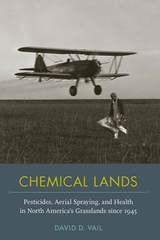
In Chemical Lands: Pesticides, Aerial Spraying, and Health in North America’s Grasslands since 1945 David D. Vail shows, however, that a distinctly regional view of agricultural health evolved. His analysis reveals a particularly strong ethic in the North American grasslands where practitioners sought to understand and deploy insecticides and herbicides by designing local scientific experiments, engineering more precise aircraft sprayers, developing more narrowly specific chemicals, and planting targeted test crops. Their efforts to link the science of toxicology with environmental health reveal how the practitioners of pesticides evaluated potential hazards in the agricultural landscape while recognizing the production benefits of controlled spraying.
Chemical Lands adds to a growing list of books on toxins in the American landscape. This study provides a unique Grasslands perspective of the Ag pilots, weed scientists, and farmers who struggled to navigate novel technologies for spray planes and in the development of new herbicides/insecticides while striving to manage and mitigate threats to human health and the environment.
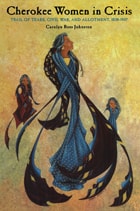
Cherokee Women In Crisis
Trail of Tears, Civil War, and Allotment, 1838-1907Carolyn Johnston
University of Alabama Press, 2003
American Indian women have traditionally played vital roles in social hierarchies at the family, clan, and tribal levels. In the Cherokee Nation, specifically, women and men are considered equal contributors to the culture. With this study, however, we learn that three key historical events in the 19th and early 20th centuries—removal, the Civil War, and allotment of their lands—forced a radical renegotiation of gender roles and relations in Cherokee society.
Carolyn Johnston (who is related to John Ross, principal chief of the Nation) looks at how Cherokee women navigated these crises in ways that allowed them to retain their traditional assumptions, ceremonies, and beliefs and to thereby preserve their culture. In the process, they both lost and retained power. The author sees a poignant irony in the fact that Europeans who encountered Native societies in which women had significant power attempted to transform them into patriarchal ones and that American women struggled for hundreds of years to achieve the kind of equality that Cherokee women had enjoyed for more than a millennium.
Johnston examines the different aspects of Cherokee women’s power: authority in the family unit and the community, economic independence, personal autonomy, political clout, and spirituality. Weaving a great-grandmother theme throughout the narrative, she begins with the protest of Cherokee women against removal and concludes with the recovery of the mother town of Kituwah and the elections of Wilma Mankiller and Joyce Dugan as principal chiefs of the Cherokee Nation and the Eastern Band of Cherokees.
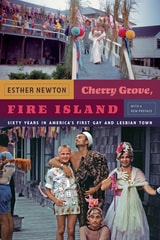
Cherry Grove, Fire Island
Sixty Years in America's First Gay and Lesbian TownEsther Newton
Duke University Press, 2014
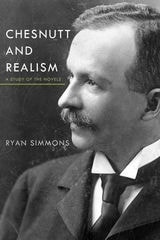
Chesnutt and Realism
A Study of the NovelsRyan Simmons
University of Alabama Press, 2006
Provides an important examination of Charles Chesnutt as a practitioner of realism
Although Chesnutt is typically acknowledged as the most prominent African American writer of the realist period, scholars have paid little attention to the central question of this study: what does it mean to call Chesnutt a realist? As a writer whose career was restricted by the dismal racial politics of his era, Chesnutt refused to conform to literary conventions for depicting race. Nor did he use his imaginative skills to evade the realities he and other African Americans faced. Rather, he experimented with ways of portraying reality that could elicit an appropriate, proportionate response to it, as Ryan Simmons demonstrates in extended readings of each of Chesnutt’s novels, including important unpublished works overlooked by previous critics.
In addition, Chesnutt and Realism addresses a curiously neglected subject in American literary studies—the relationship between American literary realism and race. By taking Chesnutt seriously as a contributor to realism, this book articulates the strategies by which one African American intellectual helped to define the discourses that influenced his fate.
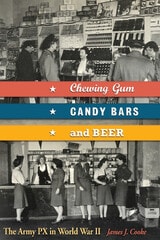
Chewing Gum, Candy Bars, and Beer
The Army PX in World War IIJames J. Cooke
University of Missouri Press, 2009
The AES was dedicated to providing soldiers with some of the comforts they had enjoyed in civilian life—candy, beer, cigarettes, razor blades, soap—whether by operating an exchange close to where they were fighting or by sending goods forward to the lines, free of charge. The beer may have been only “3.2,” but it was cheap and, unlike British beer, was served cold, thanks to PX coolers. And a constant supply of cigarettes and chewing gum gave GIs an advantage when flirting with the local girls.
In chronicling the history of the AES, James J. Cooke harks back to the Civil War, in which sutlers sold basic items to the Yankee troops for exorbitant prices, and to the First World War, when morale-building provisions were brought in by agencies such as the Red Cross. He then traces the evolution of the PX through World War II from the point of view of those who ran the service and that of the soldiers who used it, blending administrative history with colorful anecdotes and interspersing letters from GIs.
Cooke views the PX as a manifestation of American mobility, materialism, and the cultural revolution of mass consumerism that flourished in the 1920s, serving soldiers who were themselves products of this new American way of retail and expected a high level of material support in time of war. He emphasizes the accomplishments of Major General Joseph W. Byron, chief PX officer from 1941 to 1943, and his deputy, Colonel Frank Kerr. He also tells how the PX dealt with the presence of large numbers of women in uniform and the need to meet their demands in exchange offerings.
By 1945, General Byron could boast that the Army Exchange Service operated the world’s largest department store chain, serving the grandest army the United States had ever put in the field, and today the PX is still a central factor of military life. Yet as Cooke shows, the key to the AES’s importance was ultimately the way it bolstered morale—and helped give our fighting men the will to keep fighting.
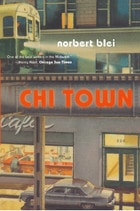
Chi Town
Norbert Blei
Northwestern University Press, 2003
Chi Townis the story of Norbert Blei's love affair with a city that shaped both his life and work. Along the route of this walking tour of the Windy City, you'll dine with Petros in Greek Town, see Studs Terkel in action at WFMT interviewing Dave Brubeck, listen to Mike Royko describe his own neighborhood, share the thoughts of Chicago sportswriter Jerome Holtzman, and meet newspaper vendors, trash collectors, bankers and more.
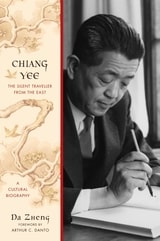
Chiang Yee
The Silent Traveller from the East--A Cultural BiographyZheng, Da
Rutgers University Press, 2010
This biography is more than a recounting of extraordinary accomplishments. It also embraces the transatlantic life experience of Yee who traveled from China to England and then on to the United States, where he taught at Columbia University, to his return to China in 1975, after a forty-two year absence. Interwoven is the history of the communist revolution in China; the battle to save England during World War II; the United States during the McCarthy red scare era; and, eventually, thawing Sino-American relations in the 1970s. Da Zheng uncovers Yee's encounters with racial exclusion and immigration laws, displacement, exile, and the pain and losses he endured hidden behind a popular public image.
Chic Ironic Bitterness
R. Jay Magill, Jr.
University of Michigan Press, 2009
A brilliant and timely reflection on irony in contemporary American culture
“This book is a powerful and persuasive defense of sophisticated irony and subtle humor that contributes to the possibility of a genuine civic trust and democratic life. R. Jay Magill deserves our congratulations for a superb job!”
—Cornel West, University Professor, Princeton University
“A well-written, well-argued assessment of the importance of irony in contemporary American social life, along with the nature of recent misguided attacks and, happily, a deep conviction that irony is too important in our lives to succumb. The book reflects wide reading, varied experience, and real analytical prowess.”
—Peter Stearns, Provost, George Mason University
“Somehow, Americans—a pragmatic and colloquial lot, for the most part—are now supposed to speak the Word, without ironic embellishment, in order to rebuild the civic culture. So irony’s critics decide it has become ‘worthy of moral condemnation.’ Magill pushes back against this new conventional wisdom, eloquently defending a much livelier American sensibility than the many apologists for a somber ‘civic culture’ could ever acknowledge."
—William Chaloupka, Chair and Professor, Department of Political Science, Colorado State University
The events of 9/11 had many pundits on the left and right scrambling to declare an end to the Age of Irony. But six years on, we're as ironic as ever. From The Simpsons and Borat to The Daily Show and The Colbert Report, the ironic worldview measures out a certain cosmopolitan distance, keeping hypocrisy and threats to personal integrity at bay.
Chic Ironic Bitterness is a defense of this detachment, an attitude that helps us preserve values such as authenticity, sincerity, and seriousness that might otherwise be lost in a world filled with spin, marketing, and jargon. And it is an effective counterweight to the prevailing conservative view that irony is the first step toward cynicism and the breakdown of Western culture.
R. Jay Magill, Jr., is a writer and illustrator whose work has appeared in American Prospect, American Interest, Atlantic Monthly, Foreign Policy, International Herald Tribune, New York Times, Wall Street Journal, and Print, amongother periodicals and books. A former Harvard Teaching Fellow and Executive Editor of DoubleTake, he holds a Ph.D. in American Studies from the University of Hamburg in Germany. This is his first book.
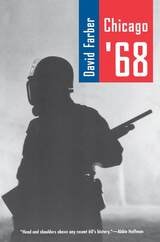
Chicago '68
David Farber
University of Chicago Press, 1988
"Chicago '68 was a watershed summer. Chicago '68 is a watershed book. Farber succeeds in presenting a sensitive, fairminded composite portrait that is at once a model of fine narrative history and an example of how one can walk the intellectual tightrope between 'reporting one's findings' and offering judgements about them."—Peter I. Rose, Contemporary Sociology
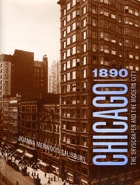
Chicago 1890
The Skyscraper and the Modern CityJoanna Merwood-Salisbury
University of Chicago Press, 2009
Chicago’s first skyscrapers are famous for projecting the city’s modernity around the world. But what did they mean at home, to the Chicagoans who designed and built them, worked inside their walls, and gazed up at their façades? Answering this multifaceted question, Chicago 1890 reveals that early skyscrapers offered hotly debated solutions to the city’s toughest problems and, in the process, fostered an urban culture that spread across the country.
An ambitious reinterpretation of the works of Louis Sullivan, Daniel Burnham, and John Wellborn Root, this volume uses their towering achievements as a lens through which to view late nineteenth-century urban history. Joanna Merwood-Salisbury sheds new light on many of Chicago’s defining events—including violent building trade strikes, the Haymarket bombing, the World’s Columbian Exposition, and Burnham’s Plan of Chicago—by situating the Masonic Temple, the Monadnock Building, and the Reliance Building at the center of the city’s cultural and political crosscurrents.
While architects and property owners saw these pioneering structures as manifestations of a robust American identity, immigrant laborers and social reformers viewed them as symbols of capitalism’s inequity. Illuminated by rich material from the period’s popular press and professional journals, Merwood-Salisbury’s chronicle of this contentious history reveals that the skyscraper’s vaunted status was never as inevitable as today’s skylines suggest.
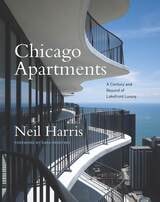
Chicago Apartments
A Century and Beyond of Lakefront LuxuryNeil Harris and Teri J. Edelstein
University of Chicago Press, 2020
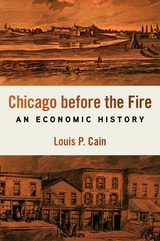
Chicago Before the Fire
An Economic HistoryLouis P. Cain
University of Illinois Press, 2025
An advantageous location and entrepreneurial passion helped fuel Chicago’s transformation from a fur trading post to a thriving city. Louis P. Cain’s economic history places pre-1871 Chicago within the narrative of national expansion and examines infrastructure, finance, and other areas of city life. Business histories tell the story of fortunes made with essential products like meat and grain. Sketches of titans like William Ogden and Cyrus McCormick reveal how real estate, farm equipment, and other industries became engines of local growth. Cain also details public health improvements that made Lake Michigan safe as a water supply while census data informs a portrait of Chicago’s population and the lives of the free Blacks and Irish immigrants at the bottom of the socioeconomic ladder.
Panoramic and up to date, Chicago before the Fire looks at how an intersection of geography, vision, and investment built a great American city.
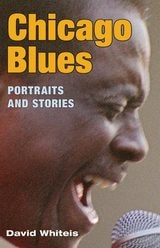
Chicago Blues
Portraits and StoriesDavid Whiteis
University of Illinois Press, 2006
Through revealing portraits of selected local artists and slice-of-life vignettes drawn from the city’s pubs and lounges, Chicago Blues encapsulates the sound and spirit of the blues as it is lived today. As a committed participant in the Chicago blues scene for more than a quarter century, David Whiteis draws on years of his observations and extensive interviews to paint a full picture of the Chicago blues world, both on and off the stage.
In addition to portraits of blues artists he has personally known and worked with, Whiteis takes readers on a tour of venues like East of Ryan and the Starlight Lounge, home to artists such as Jumpin’ Willie Cobbs, Willie D., and Harmonica Khan. He tells the stories behind the lives of past pioneers, including Junior Wells, pianist Sunnyland Slim, and harpist Big Walter Horton, whose music reflects the universal concerns with love, loss, and yearning that continue to keep the blues so vital for so many.
Chicago Business and Industry
From Fur Trade to E-CommerceEdited by Janice L. Reiff
University of Chicago Press, 2013
Drawing on the award-winning Encyclopedia of Chicago, Janice L. Reiff has compiled a unique history of work in the Windy City. Beginning with an overview of the city’s commercial development, Chicago Business and Industry considers how key industries shaped—and were shaped by—both the local and global economies. The city’s phenomenal population growth, its proximity to water, and its development of railroads made Chicago one of the most productive markets for lumber and grain throughout the nineteenth century. The region’s once-booming steel industry, on the other hand, suffered a dramatic decline in the second half of the twentieth century, when already weakened demand met with increasing international competition. Chicago Business and Industry chronicles the Chicago region’s changing fortunes from its beginning.
Reiff has compiled and updated essays from the Encyclopedia covering the city’s most historically famous—and infamous—companies, from the Union Stock Yard to Montgomery Ward to the Board of Trade. The book concludes with a historical account of labor types and issues in the city, with attention to such topics as health-care workers, unemployment, and unionization. Today, Groupon and a host of other high-tech firms have led some experts to christen Chicago the Silicon Valley of the Midwest. Reiff’s new introduction takes account of these and other recent trends.
Engaging, accessible, and packed with fascinating facts, Chicago Business and Industry invites readers into the history and diversity of work in the city, helping them understand how Chicago became Chicago.
Chicago Católico
Making Catholic Parishes MexicanDeborah E. Kanter
University of Illinois Press, 2020
Deborah E. Kanter tells the story of neighborhood change and rebirth in Chicago's Mexican American communities. She unveils a vibrant history of Mexican American and Mexican immigrant relations as remembered by laity and clergy, schoolchildren and their female religious teachers, parish athletes and coaches, European American neighbors, and from the immigrant women who organized as guadalupanas and their husbands who took part in the Holy Name Society. Kanter shows how the newly arrived mixed memories of home into learning the ways of Chicago to create new identities. In an ever-evolving city, Mexican immigrants and Mexican Americans’ fierce devotion to their churches transformed neighborhoods such as Pilsen.
The first-ever study of Mexican-descent Catholicism in the city, Chicago Católico illuminates a previously unexplored facet of the urban past and provides present-day lessons for American communities undergoing ethnic integration and succession.
Chicago Coffeehouses
Brewing Community and Connection in the MidwestJune Sawyers
University of Illinois Press, 2027
Since the turn of the last century, immigrants have brought Chicago an abundance of varied café traditions from Europe, the Middle East, and beyond. Sawyers delves into yesteryear’s Towertown bohemian enclave and midcentury venues that helped fuel the folk music revival. She also explores the coffeehouse’s ongoing evolution into a digitized workplace, and the creative ways today’s artists and entrepreneurs reimagine these spaces as patisseries, cafés, bake shops, tearooms, and performance settings. Throughout, Sawyers brings to light the Midwestern coffeehouse’s role in cultivating individual identity and neighborhood connection.
Entertaining and enlightening, Chicago Coffeehouses takes readers into iconic gathering places with art on the walls and the aroma of ground beans in the air, where steam rises from a chipped but bottomless cup of coffee.
Chicago Death Trap
The Iroquois Theatre Fire of 1903Nat Brandt. Introduction by Perry R. Duis and Cathlyn Schallhorn
Southern Illinois University Press, 2006
On the afternoon of December 30, 1903, during a sold-out matinee performance, a fire broke out in Chicago’s Iroquois Theatre. In the short span of twenty minutes, more than six hundred people were asphyxiated, burned, or trampled to death in a panicked mob’s failed attempt to escape. In Chicago Death Trap: The Iroquois Theatre Fire of 1903, Nat Brandt provides a detailed chronicle of this horrific event to assess not only the titanic tragedy of the fire itself but also the municipal corruption and greed that kindled the flames beforehand and the political cover-ups hidden in the smoke and ash afterwards.
Advertised as “absolutely fireproof,” the Iroquois was Chicago’s most modern playhouse when it opened in the fall of 1903. With the approval of the city’s building department, theater developers Harry J. Powers and William J. Davis opened the theater prematurely to take full advantage of the holiday crowds, ignoring flagrant safety violations in the process.
The aftermath of the fire proved to be a study in the miscarriage of justice. Despite overwhelming evidence that the building had not been completed, that fire safety laws were ignored, and that management had deliberately sealed off exits during the performance, no one was ever convicted or otherwise held accountable for the enormous loss of life.
Lavishly illustrated and featuring an introduction by Chicago historians Perry R. Duis and Cathlyn Schallhorn, Chicago Death Trap: The Iroquois Theatre Fire of 1903 is rich with vivid details about this horrific disaster, captivatingly presented in human terms without losing sight of the broader historical context.
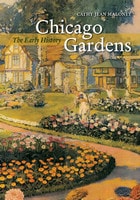
Chicago Gardens
The Early HistoryCathy Jean Maloney
University of Chicago Press, 2008
Cathy Jean Maloney has spent decades researching the city’s horticultural heritage, and here she reveals the unusual history of Chicago’s first gardens. Challenged by the region’s clay soil, harsh winters, and fierce winds, Chicago’s pioneering horticulturalists, Maloney demonstrates, found imaginative uses for hardy prairie plants. This same creative spirit thrived in the city’s local fruit and vegetable markets, encouraging the growth of what would become the nation’s produce hub. The vast plains that surrounded Chicago, meanwhile, inspired early landscape architects, such as Frederick Law Olmsted, Jens Jensen, and O.C. Simonds, to new heights of grandeur.
Maloney does not forget the backyard gardeners: immigrants who cultivated treasured seeds and pioneers who planted native wildflowers. Maloney’s vibrant depictions of Chicagoans like “Bouquet Mary,” a flower peddler who built a greenhouse empire, add charming anecdotal evidence to her argument–that Chicago’s garden history rivals that of New York or London and ensures its status as a world-class capital of horticultural innovation.
With exquisite archival photographs, prints, and postcards, as well as field guide descriptions of living legacy gardens for today’s visitors, Chicago Gardens will delight green-thumbs from all parts of the world.
Chicago Latina Trailblazers
Testimonios of Political ActivismEdited by Rita D. Hernández, Leticia Villarreal Sosa, Elena R. Gutiérrez
University of Illinois Press, 2024
Mexican American and Puerto Rican women have long taken up the challenge to improve the lives of Chicagoans in the city’s Latino/a/x communities. Rita D. Hernández, Leticia Villarreal Sosa, and Elena R. Gutiérrez present testimonies by Latina leaders who blazed new trails and shaped Latina Chicago history from the 1960s through today.
Taking a do-it-all attitude, these women advanced agendas, built institutions, forged alliances, and created essential resources that Latino/a/x communities lacked. Time and again, they found themselves the first Latina to hold their post or part of the first Latino/a/x institution of its kind. Just as often, early grassroots efforts to address issues affecting themselves, their families, and their neighborhoods grew into larger endeavors. Their experiences ranged from public schools to healthcare to politics to broadcast media, and each woman’s story shows how her work changed countless lives and still reverberates across the entire city.
An eyewitness view of an unknown history, Chicago Latina Trailblazers reveals the vision and passion that fueled a group of women in the vanguard of reform.
Contributors: Ana Castillo, Maria B. Cerda, Carmen Chico, Aracelis Flecha Figueroa, Aida Luz Maisonet Giachello, Mary Gonzales, Ada Nivia López, Emma Lozano, Virginia Martinez, Carmen Mendoza, Elena Mulcahy, Guadalupe Reyes, Luz Maria B. Solis, and Carmen Velasquez
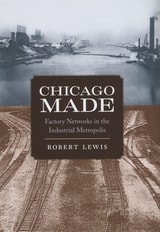
Chicago Made
Factory Networks in the Industrial MetropolisRobert Lewis
University of Chicago Press, 2008
Robert Lewis documents how manufacturers, attracted to greenfield sites on the city’s outskirts, began to build factory districts there with the help of an intricate network of railroad owners, real estate developers, financiers, and wholesalers. These immense networks of social ties, organizational memberships, and financial relationships were ultimately more consequential, Lewis demonstrates, than any individual achievement. Beyond simply giving Chicago businesses competitive advantages, they transformed the economic geography of the region. Tracing these transformations across seventy-five years, Chicago Made establishes a broad new foundation for our understanding of urban industrial America.
Chicago Neighborhoods and Suburbs
A Historical GuideEdited by Ann Durkin Keating
University of Chicago Press, 2008
Many of us, in fact, know little of the neighborhoods beyond those where we work, play, and live. This is especially true in Chicagoland, a region that spans over 4,400 square miles and is home to more than 9.5 million residents. In Chicago Neighborhoods and Suburbs, historian Ann Durkin Keating sheds new light on twenty-first-century Chicago by providing a captivating yet compact guide to the Midwest’s largest city. Keating charts Chicago’s evolution with comprehensive, cross-referenced entries on all seventy-seven community areas, along with many suburbs and neighborhoods both extant and long forgotten, from Albany Park to Zion. Thoughtful interpretive essays by urban historians Michael Ebner, Henry Binford, Janice Reiff, Susan Hirsch, and Robert Bruegmann explore how the city’s communities have changed and grown throughout the years, and sixty historic and contemporary photographs and additional maps add depth to each entry.
From the South Side to the West Side to the North Side, just about every local knows how distinctive Chicago’s neighborhoods are. Few of us, however, know exactly how they came to be. Chicago Neighborhoods and Suburbs brings the city—its inimitable neighborhoods, industries, and individuals—to life, making it the perfect guidebook for anyone with an interest in Chicago and its history.

Chicago Rebuilt
Seeing Yesterday’s City TodayRyan Chester and Vincent L. Michael
University of Chicago Press, 2027
Reveals Chicago’s lost architecture and tells the remarkable stories of their creation and destruction.
As you walk or drive down the street, do you ever wonder what it might have looked like in years gone by? What buildings used to be there? How have the surroundings changed over time?
For the first time, through the skill of Ryan Chester’s drawings, readers can see buildings throughout Chicago that were demolished decades before they ever lived. Chicago Rebuilt explores architectural styles that have been popular over the last two centuries and brings them to life in an entirely new way. Included are forty-four intricate architectural drawings of the city, juxtaposed with archival photographs and materials, as well as informative essays on each building. Together with Vincent L. Michael, Chester illuminates the fascinating histories of who made these structures, why they succeeded or failed, and why each was ultimately lost.
Enchanting and haunting, Chicago Rebuilt tells the story of a vanished city by conjuring it anew through energetic renderings from one of Chicago’s most masterful architectural and artistic talents.
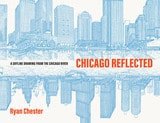
Chicago Reflected
A Skyline Drawing from the Chicago RiverRyan Chester
University of Chicago Press, 2023
As completed, Chester’s two-foot-high, fifty-five-foot-long drawing is a unique vision. In addition to dozens of accurately depicted buildings, Chester included pieces of Chicago’s past, including the Union Station Concourse Building that was demolished in 1969 and the immense SS Eastland, which sank in the river in 1915, killing hundreds of people. Recent architecture is featured as well, including Studio Gang’s St. Regis Chicago tower and the Bank of America Tower by Goettsch Partners.
An essay by acclaimed writer Thomas Dyja accompanies the accordion-fold presentation of Chester’s drawing, enhancing this remarkable volume that will delight any fan of Chicago, architecture, or art. Chicago Reflected opens up fresh vistas of the stunning, ever-evolving architectural landscape that can be found only in Chicago.

Chicago River Bridges
Patrick T. McBriarty
University of Illinois Press, 2013
The first comprehensive guidebook of these remarkable features of Chicago's urban landscape, Chicago River Bridges chronicles more than 175 bridges spanning 55 locations along the Main Channel, South Branch, and North Branch of the Chicago River. With new full-color photography of the existing bridges by Kevin Keeley and Laura Banick and more than one hundred black and white images of bridges past, the book unearths the rich history of Chicago's downtown bridges from the Michigan Avenue Bridge to the often forgotten bridges that once connected thoroughfares such as Rush, Erie, Taylor, and Polk Streets.
Throughout, McBriarty delivers new research into the bridges' architectural designs, engineering innovations, and their impact on Chicagoans' daily lives. Describing the structure and mechanics of various kinds of moveable bridges (including vertical-lift, Scherer rolling lift, and Strauss heel trunnion mechanisms) in a manner that is accessible and still satisfying to the bridge aficionado, he explains how the dominance of the "Chicago-style" bascule drawbridge influenced the style and mechanics of bridges worldwide. Interspersed throughout are the human dramas that played out on and around the bridges, such as the floods of 1849 and 1992, the cattle crossing collapse of the Rush Street Bridge, or Vincent "The Schemer" Drucci's Michigan Avenue Bridge jump.
A confluence of Chicago history, urban design, and engineering lore, Chicago River Bridges illustrates Chicago's significant contribution to drawbridge innovation and the city's emergence as the drawbridge capital of the world. It is perfect for any reader interested in learning more about the history and function of Chicago's many and varied bridges. The introduction won The Henry N. Barkhausen Award for original research in the field of Great Lakes maritime history sponsored by the Association for Great Lakes Maritime History.
Chicago Skyscrapers, 1871-1934
Leslie Thomas
University of Illinois Press, 2013
For more than a century, Chicago's skyline has included some of the world's most distinctive and inspiring buildings. This history of the Windy City's skyscrapers begins in the key period of reconstruction after the Great Fire of 1871 and concludes in 1934 with the onset of the Great Depression, which brought architectural progress to a standstill. During this time, such iconic landmarks as the Chicago Tribune Tower, the Wrigley Building, the Marshall Field and Company Building, the Chicago Stock Exchange, the Palmolive Building, the Masonic Temple, the City Opera, Merchandise Mart, and many others rose to impressive new heights, thanks to innovations in building methods and materials. Solid, earthbound edifices of iron, brick, and stone made way for towers of steel and plate glass, imparting a striking new look to Chicago's growing urban landscape.
Chicago Skyscrapers, 1934-1986
How Technology, Politics, Finance, and Race Reshaped the CityThomas Leslie
University of Illinois Press, 2023
Illustrated with more than 140 photographs, Chicago Skyscrapers, 1934–1986 tells the fascinating stories of the people, ideas, negotiations, decision-making, compromises, and strategies that changed the history of architecture and one of its showcase cities.
Chicago Studies in Political Economy
Edited by George J. Stigler
University of Chicago Press, 1988