Results by title
4413 books match the query 'Anthropology' and 377 start with c
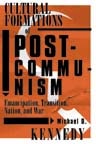
Cultural Formations Of Postcommunism
Emancipation, Transition, Nation, and WarMichael D. Kennedy
University of Minnesota Press, 2002
A powerful exposition of how culture shapes social and political change.
"Transition" is the name typically given to the time of radical change following the fall of communism, connoting a shift from planned to market economy, from dictatorship to democracy. Transition is also, in Michael Kennedy’s analysis, a culture in its own right-with its own contentions, repressions, and unrealized potentials. By elaborating transition as a culture of power and viewing it in its complex relation to emancipation, nationalism, and war, Kennedy’s book clarifies the transformations of postcommunism as well as, more generally, the ways in which culture articulates social change. This ambitious work is, in effect, a nuanced critical-cultural sociology of change.
Kennedy examines transition culture’s historical foundation by looking at the relationship among perestroika, Poland, and Hungary, and considers its structure and practice in the following decade across fields and nations. His wide-ranging analysis-of the artifacts of transition culture’s proponents, of interviews with providers and recipients of technical assistance in business across Eastern Europe, and of focus groups assessing the successes and failures of social change in Estonia and Ukraine-suggests a transition culture deeply implicated in nationalism. But this association, Kennedy contends, is not necessarily antithetical to transition’s emancipation. By reconsidering transition culture’s relationship to the Wars of Yugoslav Succession and communism’s negotiated collapse in Poland and Hungary, he shows how transition might be reconceived in terms of solidarity, freedom, and peace. Distinguished by its focus on culture, not only within particular nations but in the transnational community organized around transition, this book will help reframe the debate about postcommunist social change.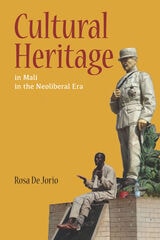
Cultural Heritage in Mali in the Neoliberal Era
Rosa De Jorio
University of Illinois Press, 2016
Cultural Histories of the Material World
Peter N. Miller, Editor
University of Michigan Press, 2013
All across the humanities fields there is a new interest in materials and materiality. This is the first book to capture and study the “material turn” in the humanities from all its varied perspectives. Cultural Histories of the Material World brings together top scholars from all these different fields—from Art History, Anthropology, Archaeology, Classics, Folklore, History, History of Science, Literature, Philosophy—to offer their vision of what cultural history of the material world looks like and attempt to show how attention to materiality can contribute to a more precise historical understanding of specific times, places, ways, and means. The result is a spectacular kaleidoscope of future possibilities and new perspectives.
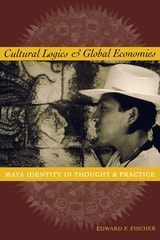
Cultural Logics and Global Economies
Maya Identity in Thought and PracticeBy Edward F. Fischer
University of Texas Press, 2002
A Choice Outstanding Academic Book, 2002
As ideas, goods, and people move with increasing ease and speed across national boundaries and geographic distances, the economic changes and technological advances that enable this globalization are also paradoxically contributing to the balkanization of states, ethnic groups, and special interest movements. Exploring how this process is playing out in Guatemala, this book presents an innovative synthesis of the local and global factors that have led Guatemala's indigenous Maya peoples to assert and defend their cultural identity and distinctiveness within the dominant Hispanic society.
Drawing on recent theories from cognitive studies, interpretive ethnography, and political economy, Edward F. Fischer looks at individual Maya activists and local cultures, as well as changing national and international power relations, to understand how ethnic identities are constructed and expressed in the modern world. At the global level, he shows how structural shifts in international relations have opened new venues of ethnic expression for Guatemala's majority Maya population. At the local level, he examines the processes of identity construction in two Kaqchikel Maya towns, Tecpán and Patzún, and shows how divergent local norms result in different conceptions and expressions of Maya-ness, which nonetheless share certain fundamental similarities with the larger pan-Maya project. Tying these levels of analysis together, Fischer argues that open-ended Maya "cultural logics" condition the ways in which Maya individuals (national leaders and rural masses alike) creatively express their identity in a rapidly changing world.
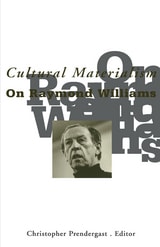
Cultural Materialism
On Raymond WilliamsChristopher Prendergast
University of Minnesota Press, 1995
"Raymond Williams was the last of the great European male revolutionary socialist intellectuals born before the end of the age of Europe (1492-1945)."-Cornel West
The work of Raymond Williams is of seminal importance in rethinking the idea of culture. He is widely regarded as one of the founding figures of international cultural studies. In tribute to his legacy, this edited volume is devoted to his theories of cultural materialism and is the most substantial and wide-ranging collection of essays on his work to be offered since his death in 1988. For all readers grappling with Williams's complex legacy, this volume is not to be missed.Contributors include Stanley Aronowitz, Graduate School, CUNY; John Brenkman, Baruch College, CUNY; Peter de Bolla, Cambridge University; Catherine Gallagher, University of California, Berkeley; Stephen Heath, University of California, Santa Cruz; John Higgins, University of Cape Town; Peter Hitchcock, Baruch College, CUNY; Cora Kaplan, Rutgers University; David Lloyd, University of California, Berkeley; Robert Miklitsch, Ohio University; Michael Moriarty, Cambridge University; Morag Shiach, Queen Mary and Westfield College, University of London; David Simpson, University of Colorado, Boulder; Gillian Skirrow; Kenneth Surin, Duke University; Paul Thomas, University of California, Berkeley; Gauri Viswanathan, Columbia University; and Cornel West, Harvard University.
Cultural Memory and Biodiversity
Virginia D. Nazarea
University of Arizona Press, 1998
Cultural Memory
Resistance, Faith, and IdentityBy Jeanette Rodriguez and Ted Fortier
University of Texas Press, 2007
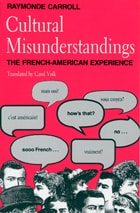
Cultural Misunderstandings
The French-American ExperienceRaymonde Carroll
University of Chicago Press, 1990
Raymonde Carroll presents an intriguing and thoughtful analysis of the many ways French and Americans—and indeed any members of different cultures—can misinterpret each other, even when ostensibly speaking the same language.Cultural misunderstandings, Carroll points out, can arise even where we least expect them—in our closest relationships. The revealing vignettes that Carroll relates, and her perceptive comments, bring to light some fundamental differences in French and American presuppositions about love, friendship, and raising children, as well as such everyday activities as using the telephone or asking for information.
Cultural Struggles
Performance, Ethnography, PraxisDwight Conquergood
University of Michigan Press, 2013
The late Dwight Conquergood’s research has inspired an entire generation of scholars invested in performance as a meaningful paradigm to understand human interaction, especially between structures of power and the disenfranchised. Conquergood’s research laid the groundwork for others to engage issues of ethics in ethnographic research, performance as a meaningful paradigm for ethnography, and case studies that demonstrated the dissolution of theory/practice binaries.Cultural Struggles is the first gathering of Conquergood’s work in a single volume, tracing the evolution of one scholar’s thinking across a career of scholarship, teaching, and activism, and also the first collection of its kind to bring together theory, method, and complete case studies.
The collection begins with an illuminating introduction by E. Patrick Johnson and ends with commentary by other scholars (Micaela di Leonardo, Judith Hamera, Shannon Jackson, D. Soyini Madison, Lisa Merrill, Della Pollock, and Joseph Roach), engaging aspects of Conquergood’s work and providing insight into how that work has withstood the test of time, as scholars still draw on his research to inform their current interests and methods.
Cultural Theory after 9/11
Terror, Religion, Media: Special Issue of SubStance, Issue 115, 37:1 (2008)Robert Doran
University of Wisconsin Press, 2008
This collection of material seeks to interpret the events of September 11, 2001 from the perspective of cultural theory — that is, from the perspective of anthropological and social forces that motivate human beings and give meaning to their thoughts, actions, and feelings. Though contributors to this volume work within various disciplines, their approach is necessarily holistic—because of the very nature of the event, which resonates on many levels and in diverse spheres of human activity.
Clearly the perception of who one’s enemy is has a cultural and psychological impact that goes far beyond the superficial media representations consumed on a daily basis; the very curriculum of American universities has been altered as a result of the 9/11 attacks, and this will have profound and far-reaching effects.
Cultural and Environmental History of Cienega Valley, Southeastern Arizona
Frank W. Eddy and Maurice E. Cooley
University of Arizona Press, 1983
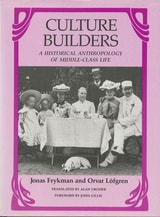
Culture Builders
A Historical Anthropology of Middle Class LifeFrykman, Jonas
Rutgers University Press, 1987
Culture Builders deals primarily with the ways in which ideas about the good and proper life are anchored in the trivialities and routines of everyday life: in the sharing of a meal, in holiday-making, and in the upbringing of children. The authors describe how the attitudes of the bourgeoisie toward. Time and time-keeping set them apart from the peasantry. Uses and perceptions of naturals increasingly divided the classes. For peasants, nature consisted of natural resources to be used. Fr the bourgeoisie, nature had only non-productive connotations. Another change was the growing importance of home over the community. Life became a romantic ideal, not an economic necessity. For the first time, parents became self-conscious about how to raise their children.
Frykman and Lögnen also show how the middle-class developed new perceptions of dirt, pollution, orderliness, health, sexuality, and bodily functions, and how they disdained the filth of peasant households. By stressing refinement, rationality, morality, and discipline, the middle classes were able to differentiate themselves not only from the peasants, but also from the degenerate aristocracy and the disordered and uncontolled emerging working class. The bourgeoisie viewed their own form of culture as the highest on the evolutionary ladder, and turned it into a national culture against which all other groups would be measured.
Culture Change and Shifting Populations in Central Northern Mexico
William B. Griffen
University of Arizona Press, 1969
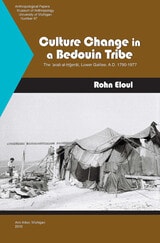
Culture Change in a Bedouin Tribe
The ‘arab al-?gerat, Lower Galilee, A.D. 1790-1977Rohn Eloul
University of Michigan Press, 2010
Culture In The Plural
Michel De Certeau
University of Minnesota Press, 1997
Culture Troubles
Politics and the Interpretation of MeaningPatrick Chabal and Jean-Pascal Daloz
University of Chicago Press, 2005
Culture Troubles is a systematic reevaluation of the role of culture in political analysis. Here, Patrick Chabal and Jean-Pascal Daloz contend that it is unwise to compare different societies without taking into account culture, which in their interpretation is not a system of values, but rather a system of inherited meanings and symbols. This cultural approach, they argue, can attribute meaning to political comparison, and they outline the shape of that approach, one that draws from an eclectic range of sources. Illustrating the sharpness and acuity of their methods, they proceed with a comparative study of the state and political representation in three very different nations—France, Nigeria, and Sweden—to untangle the many ways that culture informs our understanding of political events. As a result, Culture Troubles offers a rational starting point from which we may begin to understand foreign politics.
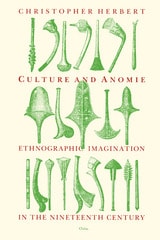
Culture and Anomie
Ethnographic Imagination in the Nineteenth CenturyChristopher Herbert
University of Chicago Press, 1991
Making wide reference to twentieth-century anthropologists from Malinowski and Benedict to Evans-Pritchard, Geertz, and Lévi-Strauss as well as to nineteenth-century social theorists like Tylor, Spencer, Mill, and Arnold, Herbert stresses the philosophically dubious, unstable character that has clung to the "culture" idea and embarrassed its exponents even as it was developing into a central principle of interpretation.
In a series of detailed studies ranging from political economy to missionary ethnography, Mayhew, and Trollope's fiction, Herbert then focuses on the intellectual and historical circumstances that gave to "culture" the appearance of a secure category of scientific analysis despite its apparent logical incoherence. What he describes is an intimate relationship between the idea of culture and its antithesis, the myth or fantasy of a state of boundless human desire—a conception that binds into a single tradition of thought such seemingly incompatible writers as John Wesley, who called this state original sin, and Durkheim, who gave it its technical name in sociology: anomie.
Methodologically provocative and rich in unorthodox conclusions, Culture and Anomie will be of interest not only to specialists in nineteenth-century literature and intellectual history, but also to readers across the wide range of fields in which the concept of culture plays a determining role.
Culture and Economy
The Shaping of Capitalism in Eastern AsiaTimothy Brook and Hy Van Luong, Editors
University of Michigan Press, 1999

Culture and Enchantment
Mark A. Schneider
University of Chicago Press, 1993
For interpretive disciplines, Schneider suggests, meaning often behaves behaves as mysteriously as the apparitions pursued by centuries ago by natural philosophers. He demonstrates this using two case studies from anthropology: Clifford Geertz's description of Balinese cockfights and Yoruba statuary, and Claude Levi-Strauss's analyses of myths. These provide a basis for actively engaging disputes over the meaning and interpretation of culture.
Culture and Enchantment will appeal to an interdisciplinary audience in anthropology, sociology, history, history and sociology of science, culture studies, and literary theory. Schneider's provocative arguments will make this book a fulcrum in the continuing debate over the nature and prospects of cultural inquiry.
Culture and Global Change
Social Perceptions of Deforestation in the Lacandona Rain Forest in MexicoLourdes Arizpe, Fernanda Paz, and Margarita Velazquez
University of Michigan Press, 1996
The authors of this compelling book argue that before suitable solutions can be found to pressing environmental problems, we need a way to gather information on the human dimensions of global changes. How do small and everyday individual actions add up to the intricate networks of global interactions? What are our rights and responsibilities as humans toward the planet and its natural resources?
The Lacandon rain forest in Mexico provides a vivid example of an environmental challenge that will demand the concerted efforts of many different groups, and not only technical solutions, to resolve successfully. Using data taken largely from in-depth interviews with landowners, farm workers, cattle raisers, housewives, professionals, and civil servants, the authors draw a rich portrait of the varied perceptions and positions these groups and individuals hold. At issue are the social, rather than psychological, bases of their perspectives.
Culture and Global Change offers a model for how the social sciences, and anthropology in particular, can lead the way in developing comprehensive understandings of the interrelationships between groups at the local, regional, and international levels that affect perceptions of the environment and thus the viability of solutions. It is required reading for anthropologists and environmental activists alike.
Lourdes Arizpe is Assistant Director-General for Culture, UNESCO. Fernanda Paz and Margarita Vel´zquez work for the Centro Regional de Investigaciones Multidisciplinarias, Universidad Nacional Autonoma de México.

Culture and Human Nature
Theoretical Papers of Melford E. SpiroMelford E. Spiro
University of Chicago Press, 1987
This volume of Spiro's major theoretical writings concentrates on theories of culture and human nature, functional analysis, and religion. Spiro argues that important dimensions of the human family are the same everywhere and that a theory of human nature is both possible and necessary. He discusses religious beliefs, analyzing not only their structures but also the ways such beliefs are held and the meanings attributed to them. This analysis, Spiro shows, can be done most successfully by means of a theory of the human family, of infant and child development and socialization, of panhuman unconscious processes, and of universal psychodynamic constellations such as the Oedipus complex.
Culture and Practical Reason
Marshall Sahlins
University of Chicago Press, 1978
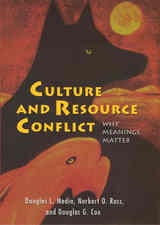
Culture and Resource Conflict
Why Meanings MatterDouglas L. Medin
Russell Sage Foundation, 2006

Culture and Well-Being
Anthropological Approaches to Freedom and Political EthicsAlberto Corsin Jimenez
Pluto Press, 2008
This book takes a critical look at the notion of well-being by examining what well-being means, or could mean, to people living in a number of different regions including Sudan, Nepal, Papua New Guinea, India, Sierra Leone, and the UK.
The contributors take issue with some of the assumptions behind Western concepts of well-being. They explore what characterizes a "good life" and how this idea has been affected by globalization and neoliberalism.
The book makes a major contribution to social theory by presenting new analytical models that make sense of the changing shapes of people's life and ethical values.
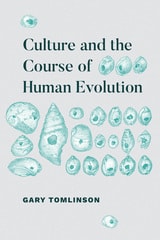
Culture and the Course of Human Evolution
Gary Tomlinson
University of Chicago Press, 2018
Tomlinson offers a new model for understanding this period in our emergence, one based on analysis of advancing human cultures in an evolution that was simultaneously cultural and biological—a biocultural evolution. He places front and center the emergence of culture and the human capacities to create it, in a fashion that expands the conceptual framework of recent evolutionary theory. His wide-ranging vision encompasses arguments on the development of music, modern technology, and metaphysics. At the heart of these developments, he shows, are transformations in our species’ particular knack for signmaking. With its innovative synthesis of humanistic and scientific ideas, this book will be an essential text.

Culture as Judicial Evidence
Expert Testimony in Latin AmericaEdited by Leila Rodriguez
University of Minnesota Press, 2020
Culture as Judicial Evidence in Latin America summarizes the current state of this work in six countries: Mexico, Costa Rica, Peru, Chile, Colombia, and Uruguay, and lays out the challenges and dilemmas involved in the creation and use of cultural expert testimony. Organized into three sections, the book advances a framework for the use of cultural evidence, and presents readers with nine case studies based on trials in six individual countries. These countries have implemented legal reform, constitutional amendments and the adoption of international legislation to create the legal frameworks that enable this new form of legal evidence to be admissible in Latin American courts. The contributing authors are cultural anthropologists with vast experience researching the impact of cultural expert witness testimony. A forward-looking final section examines the dilemmas and challenges of this work that remain to be solved.
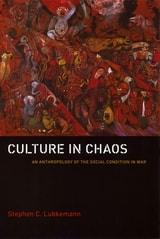
Culture in Chaos
An Anthropology of the Social Condition in WarStephen C. Lubkemann
University of Chicago Press, 2007
Lubkemann focuses on how Ndau social networks were fragmented by wartime displacement and the profound effect this had on gender relations. Demonstrating how wartime migration and post-conflict return were shaped by social struggles and interests that had little to do with the larger political reasons for the war, Lubkemann contests the assumption that wartime migration is always involuntary. His critical reexamination of displacement and his engagement with broader theories of agency and social change will be of interest to anthropologists, political scientists, historians, and demographers, and to anyone who works in a war zone or with refugees and migrants.

Culture in the Marketplace
Gender, Art, and Value in the American SouthwestMolly H. Mullin
Duke University Press, 2001
Drawing on fiction, memoirs, journalistic accounts, and extensive interviews with artists, collectors, and dealers, Mullin shows how anthropological notions of culture were used to valorize Indian art and create a Southwest Indian art market. By turning their attention to Indian affairs and art in Santa Fe, New Mexico, she argues, these women escaped the gender restrictions of their eastern communities and found ways of bridging public and private spheres of influence. Tourism, in turn, became a means of furthering this cultural colonization. Mullin traces the development of aesthetic worth as it was influenced not only by politics and profit but also by gender, class, and regional identities, revealing how notions of “culture” and “authenticity” are fundamentally social ones. She also shows how many of the institutions that the early patrons helped to establish continue to play an important role in the contemporary market for American Indian art.
This book will appeal to audiences in cultural anthropology, art history, American studies, women’s studies, and cultural history.

Culture, Ethnicity, and Justice in the South
The Southern Anthropological Society, 1968-1971Southern Anthropological Southern Anthropological Society
University of Alabama Press, 2004
An important anthology putting the leading topics in Southern anthropology in the context of the 1960s
Proceedings of the Southern Anthropological Society:
No. 1, Essays on Medical Anthropology (1968), edited by Thomas Weaver, with contributions by Frank J. Essene, Thomas Weaver, Charles Hudson, Helen Phillips, Hazel Hitson Weidman, Dorothea C. Leighton, Nora F. Cline, Peter Goethals, Berton H. Kaplan, Alice H. Murphree, John G. Peck, and Gianna Hochstein
No. 2, Urban Anthropology: Research Perspectives and Strategies (1968, edited by Elizabeth M. Eddy, with contributions by Charles Hudson, Elizabeth M. Eddy, Conrad M. Arensberg, Charles H. Fairbanks, H. W. Hutchinson, Anthony Leeds, Hans C. Buechler, Brian M. de Toit, Emilio Willems, Michael D. Olien, and John Gulick
No. 3, Concepts and Assumptions in Contemporary Anthropology (1969), edited by Stephen A. Tyler, with contributions by Charles Hudson, Stephen A. Tyler, Eric R. Wolf, Ann Fischer, E. Pendleton Banks, Munro S. Edmonson, Francis E. Johnston, William G. Haag, Arden R. King, and Jan Brukman
No. 4, The Not So Solid South: Anthropological Studies in a Regional Subculture (1971), edited by J. Kenneth Morland, with contributions by Charles Hudson, J. Kenneth Morland, Helen Phillips Keber, Jared Harper, Edward E. Knipe, Helen M. Lewis, Milton B. Newton Jr., Ronald J. Duncan, John Gordon, H. Eugene Hodges, William L. Partridge, Max E. Stanton, Robert Sayers, James L. Peacock, and Christopher Crocker
No. 5, Red, White, and Black: Symposium on Indians in the Old South (1971), edited by Charles M. Hudson, with contributions by Charles Hudson, Louis De Vorsey Jr., William S. Pollitzer, Mary R. Haas, David J. Hally, Charles H. Fairbanks, F. N. Boney, Joseph L. Brent III, William S. Willis Jr., John H. Peterson Jr., and Charles Crowe.
Originally distributed by the University of Georgia Press, are all combined herein with a historical overview in the new introduction by Miles Richardson and with a new index to the complete anthology.
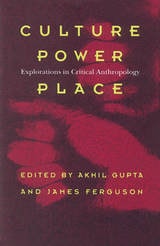
Culture, Power, Place
Explorations in Critical AnthropologyAkhil Gupta and James Ferguson, eds.
Duke University Press, 1997
This collection of both new and well-known essays begins by critically exploring the concepts of locality and community; first, as they have had an impact on contemporary global understandings of displacement and mobility, and, second, as they have had a part in defining identity and subjectivity itself. With sites of discussion ranging from a democratic Spain to a Puerto Rican barrio in North Philadelphia, from Burundian Hutu refugees in Tanzania to Asian landscapes in rural California, from the silk factories of Hangzhou to the long-sought-after home of the Palestinians, these essays examine the interplay between changing schemes of categorization and the discourses of difference on which these concepts are based. The effect of the placeless mass media on our understanding of place—and the forces that make certain identities viable in the world and others not—are also discussed, as are the intertwining of place-making, identity, and resistance as they interact with the meaning and consumption of signs. Finally, this volume offers a self-reflective look at the social and political location of anthropologists in relation to the questions of culture, power, and place—the effect of their participation in what was once seen as their descriptions of these constructions. Contesting the classical idea of culture as the shared, the agreed upon, and the orderly, Culture, Power, Place is an important intervention in the disciplines of anthropology and cultural studies.
Contributors. George E. Bisharat, John Borneman, Rosemary J. Coombe, Mary M. Crain, James Ferguson, Akhil Gupta, Kristin Koptiuch, Karen Leonard, Richard Maddox, Lisa H. Malkki, John Durham Peters, Lisa Rofel
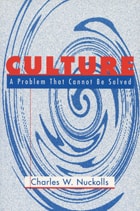
Culture
A Problem That Cannot Be SolvedCharles W. Nuckolls
University of Wisconsin Press, 1998
French historian Alexis de Tocqueville observed that the conflict between the ideals of individualism and community defines American culture. In this groundbreaking new work, anthropologist Charles Nuckolls discovers that every culture consists of such paradoxes, thus making culture a problem that cannot be solved. He does, however, find much creative tension in these unresolvable opposites.
Nuckolls presents three fascinating case studies that demonstrate how values often are expressed in the organization of social roles. First he treats the Micronesian Ifaluks’ opposition between cooperation and self-gratification by examining the nature versus nurture debate. Nuckolls then shifts to the values of community and individual adventure by looking at the conflicts in the identities of public figures in Oklahoma. Finally, he investigates the cultural significance in the diagnostic system and practices of psychiatry in the United States. Nuckolls asserts that psychiatry treats genders differently, assigning dependence to women and independence to men and, in some cases, diagnoses the extreme forms of these values as disorders.
Nuckolls elaborates on the theory of culture that he introduced in his previous book, The Cultural Dialectics of Knowledge and Desire, which proposed that the desire to resolve conflicts is central to cultural knowledge. In Culture: A Problem that Cannot Be Solved, Nuckolls restores the neglected social science concept of values, which addresses both knowledge and motivation. As a result, he brings together cognition and psychoanalysis, as well as sociology and psychology, in his study of cultural processes.

Cultured States
Youth, Gender, and Modern Style in 1960s Dar es SalaamAndrew Ivaska
Duke University Press, 2011
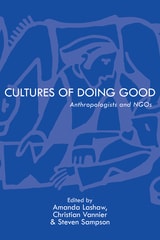
Cultures of Doing Good
Anthropologists and NGOsEdited by Amanda Lashaw, Christian Vannier, and Steven Sampson
University of Alabama Press, 2018
Cultures of Doing Good: Anthropologists and NGOs serves as a foundational text to advance a growing subfield of social science inquiry: the anthropology of nongovernmental organizations (NGOs). Thorough introductory chapters provide a short history of NGO anthropology, address how the study of NGOs contributes to anthropology more broadly, and examine ways that anthropological studies of NGOs expand research agendas spawned by other disciplines. In addition, the theoretical concepts and debates that have anchored the analysis of NGOs since they entered scholarly discourse after World War II are explained.
The wide-ranging volume is organized into thematic parts: “Changing Landscapes of Power,” “Doing Good Work,” and “Methodological Challenges of NGO Anthropology.” Each part is introduced by an original, reflective essay that contextualizes and links the themes of each chapter to broader bodies of research and to theoretical and methodological debates. A concluding chapter synthesizes how current lines of inquiry consolidate and advance the first generation of anthropological NGO studies, highlighting new and promising directions in this field.
In contrast to studies about surveys of NGOs that cover a single issue or region, this book offers a survey of NGO dynamics in varied cultural and political settings. The chapters herein cover NGO life in Tanzania, Serbia, the Czech Republic, Egypt, Peru, the United States, and India. The diverse institutional worlds and networks include feminist activism, international aid donors, USAID democracy experts, Romani housing activism, academic gender studies, volunteer tourism, Jewish philanthropy, Islamic faith-based development, child welfare, women’s legal arbitration, and environmental conservation.
The collection explores issues such as normative democratic civic engagement, elitism and professionalization, the governance of feminist advocacy, disciplining religion, the politics of philanthropic neutrality, NGO tourism and consumption, blurred boundaries between anthropologists as researchers and activists, and barriers to producing critical NGO ethnographies.
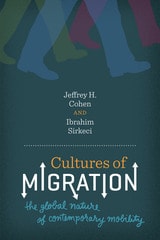
Cultures of Migration
The Global Nature of Contemporary MobilityBy Jeffrey H. Cohen and Ibrahim Sirkeci
University of Texas Press, 2011
Around the globe, people leave their homes to better themselves, to satisfy needs, and to care for their families. They also migrate to escape undesirable conditions, ranging from a lack of economic opportunities to violent conflicts at home or in the community. Most studies of migration have analyzed the topic at either the macro level of national and global economic and political forces, or the micro level of the psychology of individual migrants. Few studies have examined the "culture of migration"—that is, the cultural beliefs and social patterns that influence people to move.
Cultures of Migration combines anthropological and geographical sensibilities, as well as sociological and economic models, to explore the household-level decision-making process that prompts migration. The authors draw their examples not only from their previous studies of Mexican Oaxacans and Turkish Kurds but also from migrants from Europe, sub-Saharan Africa, the Pacific, and many parts of Asia. They examine social, economic, and political factors that can induce a household to decide to send members abroad, along with the cultural beliefs and traditions that can limit migration. The authors look at both transnational and internal migrations, and at shorter- and longer-term stays in the receiving location. They also consider the effect that migration has on those who remain behind. The authors' "culture of migration" model adds an important new dimension to our understanding of the cultural beliefs and social patterns associated with migration and will help specialists better respond to increasing human mobility.

Cultures of United States Imperialism
Amy Kaplan and Donald Pease, editors
Duke University Press, 1994
Drawing on a broad range of interpretive practices, these essays range across American history, from European representations of the New World to the mass media spectacle of the Persian Gulf War. The volume breaks down the boundary between the study of foreign relations and American culture to examine imperialism as an internal process of cultural appropriation and as an external struggle over international power. The contributors explore how the politics of continental and international expansion, conquest, and resistance have shaped the history of American culture just as much as the cultures of those it has dominated. By uncovering the dialectical relationship between American cultures and international relations, this collection demonstrates the necessity of analyzing imperialism as a political or economic process inseparable from the social relations and cultural representations of gender, race, ethnicity, and class at home.
Contributors. Lynda Boose, Mary Yoko Brannen, Bill Brown, William Cain, Eric Cheyfitz, Vicente Diaz, Frederick Errington, Kevin Gaines, Deborah Gewertz, Donna Haraway, Susan Jeffords, Myra Jehlen, Amy Kaplan, Eric Lott, Walter Benn Michaels, Donald E. Pease, Vicente Rafael, Michael Rogin, José David Saldívar, Richard Slotkin, Doris Sommer, Gauri Viswanathan, Priscilla Wald, Kenneth Warren, Christopher P. Wilson

Cultures of Yusin
South Korea in the 1970sYoungju Ryu, Editor
University of Michigan Press, 2018

Cumbe Reborn
An Andean Ethnography of HistoryJoanne Rappaport
University of Chicago Press, 1993
Joanne Rappaport examines the Cumbales' reappropriation of history and the resulting reinvention of tradition. She explores the ways in which personal memories are interpreted in nonverbal expression, such as ritual and material culture, as well as in oral and written communication. This novel approach to historical consciousness is grounded on a unique combination of historical and ethnographical analysis.
Cumbe Reborn makes a significant contribution both to our understanding of ethnic militancy in the Americas and to the broader methodological discussion of non-western historical consciousness under colonial domination. It will attract a wide audience of anthropologists, historians, specialists in Andean ethnohistory and Latin American studies and literature, and folklore specialists interested in subaltern discourse.

Curating Conception
Race and Reproduction in South AfricaTessa Moll
Rutgers University Press, 2026
South Africa’s private fertility clinics promise hope: expert care, measurable success rates, and the possibility of long-desired children. While seemingly insulated from the legacies of apartheid and the stark inequalities of the present, these clinics operate within a society still shaped by racial stratification and uneven access to care. But what happens once patients step through the clinic doors? Based on fieldwork conducted over a decade, Curating Conception offers the first book-length study of IVF in sub-Saharan Africa. Tessa Moll turns to the polished, private clinics of Cape Town and Johannesburg to show how racial hierarchies are quietly sustained through everyday decisions—about donor selection, embryo grading, success statistics, and patient eligibility—that shape ideas of legitimate parenthood and belonging in the post-apartheid era. Introducing the concept of curating, Moll shows how medical authority, patient desire, and enduring social orders work together to shape which reproductive futures are seen as natural and desirable. In doing so, Curating Conception demonstrates how racial imaginaries—and the normalization of whiteness as the default family form—are woven into the intimate and technological processes of IVF. Blending vivid storytelling with careful analysis, it invites readers to rethink fertility care not simply as a technology of hope, but as a powerful site where history, inequality, and aspiration converge.
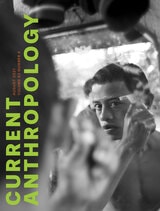
Current Anthropology, volume 62 number 4 (August 2021)
The University of Chicago Press
University of Chicago Press Journals, 2021
Current Anthropology, volume 62 number 5 (October 2021)
The University of Chicago Press
University of Chicago Press Journals, 2021
Current Anthropology, volume 62 number 6 (December 2021)
The University of Chicago Press
University of Chicago Press Journals, 2021
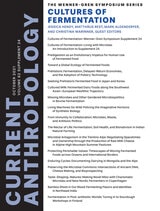
Current Anthropology, volume 62 number S24 (October 2021)
The University of Chicago Press
University of Chicago Press Journals, 2021
Current Anthropology, volume 63 number 1 (February 2022)
The University of Chicago Press
University of Chicago Press Journals, 2022
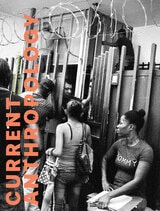
Current Anthropology, volume 63 number 2 (April 2022)
The University of Chicago Press
University of Chicago Press Journals, 2022
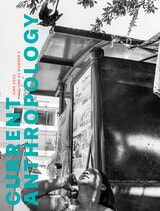
Current Anthropology, volume 63 number 3 (June 2022)
The University of Chicago Press
University of Chicago Press Journals, 2022

Current Anthropology, volume 63 number 4 (August 2022)
The University of Chicago Press
University of Chicago Press Journals, 2022
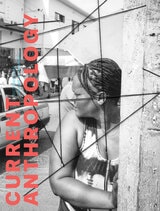
Current Anthropology, volume 63 number 5 (October 2022)
The University of Chicago Press
University of Chicago Press Journals, 2022

Current Anthropology, volume 63 number 6 (December 2022)
The University of Chicago Press
University of Chicago Press Journals, 2022

Current Anthropology, volume 63 number S25 (December 2022)
The University of Chicago Press
University of Chicago Press Journals, 2022
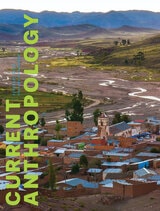
Current Anthropology, volume 64 number 1 (February 2023)
The University of Chicago Press
University of Chicago Press Journals, 2023