Results by title
4038 books match the query 'Social aspects' and 308 start with c
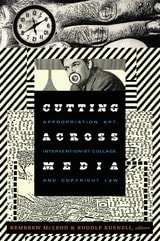
Cutting Across Media
Appropriation Art, Interventionist Collage, and Copyright LawKembrew McLeod and Rudolf Kuenzli, eds.
Duke University Press, 2011
Contributors. Craig Baldwin, David Banash, Marcus Boon, Jeff Chang, Joshua Clover, Lorraine Morales Cox, Lloyd Dunn, Philo T. Farnsworth, Pierre Joris, Douglas Kahn, Rudolf Kuenzli, Rob Latham, Jonathan Lethem, Carrie McLaren, Kembrew McLeod, Negativland, Davis Schneiderman, David Tetzlaff, Gábor Vályi, Warner Special Products, Eva Hemmungs Wirtén
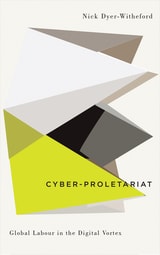
Cyber-Proletariat
Global Labour in the Digital VortexNick Dyer-Witheford
Pluto Press, 2015
Cyber-Proletariat brings Marxist analysis to bear on a range of modern informational technologies. The result is a book indispensable to social theorists and hacktivists alike and essential reading for anyone who wants to understand how Silicon Valley shapes the way we live today.

Cyberchiefs
Autonomy and Authority in Online TribesMathieu O'Neil
Pluto Press, 2009
People are inventing new ways of working together on the internet. Decentralised production thrives on weblogs, wikis and free software projects. In Cyberchiefs, Mathieu O’Neil focuses on the regulations of these working relationships. He examines the transformation of leadership and expertise in online networks, and the emergence of innovative forms of participatory politics.
What are the costs and benefits of alternatives to hierarchical organisation? Using case studies of online projects or ‘tribes’ such as the radical Primitivism archive, the Daily Kos political weblog, the Debian free software project, and Wikipedia, O’Neil shows that leaders must support maximum autonomy for participants, and he analyses the tensions generated by this distribution of authority.
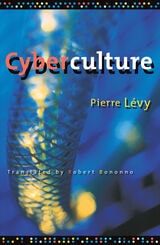
Cyberculture
Pierre Levy
University of Minnesota Press, 2001
A clear explanation and provocative look at the impact of new technologies on world society.
Needing guidance and seeking insight, the Council of Europe approached Pierre Lévy, one of the world’s most important and well-respected theorists of digital culture, for a report on the state (and, frankly, the nature) of cyberspace. The result is this extraordinary document, a perfectly lucid and accessible description of cyberspace—from infrastructure to practical applications-along with an inspired, far-reaching exploration of its ramifications. A window on the digital world for the technologically timid, the book also offers a brilliant vision of the philosophical and social realities and possibilities of cyberspace for the adept and novice alike.
In an overview, Lévy discusses the distinguishing features of cyberspace and cyberculture from anthropological, philosophical, cultural, and sociological points of view. An optimist about the future potential of cyberspace, he eloquently argues that technology—and specifically the infrastructure of cyberspace, the Internet—can have a transformative effect on global society. Some of the issues he takes up are new art forms; changes in relationships to knowledge, education, and training; the preservation of linguistic and cultural differences; the emergence and implications of collective intelligence; the problems of social exclusion; and the impact of new technology on the city and democracy in general. In considerable detail, Lévy describes the ways in which cyberspace will help promote the growth of democracy, primarily through the participation of individuals or groups. His analysis is enlivened by his own personal impressions of cyberculture—garnered from bulletin boards, mailing lists, virtual reality demonstrations, and simulations. Immediate in its details, visionary in its scope, deeply informed yet free of unnecessary technical language, Cyberculture is the book we require in our digital age.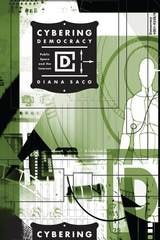
Cybering Democracy
Public Space And The InternetDiana Saco
University of Minnesota Press, 2002
Reconceptualizes the relationship between participatory democracy, technology, and space
The Internet has been billed by some proponents as an "electronic agora" ushering in a "new Athenian age of democracy." That assertion assumes that cyberspace’s virtual environment is compatible with democratic practice. But the anonymous sociality that is intrinsic to the Internet seems at odds with theories of democracy that presuppose the possibility, at least, of face-to-face meetings among citizens. The Internet, then, raises provocative questions about democratic participation: Must the public sphere exist as a physical space? Does citizenship require a bodily presence?
In Cybering Democracy, Diana Saco boldly reconceptualizes the relationship between democratic participation and spatial realities both actual and virtual. She argues that cyberspace must be viewed as a produced social space, one that fruitfully confounds the ordering conventions of our physical spaces. Within this innovative framework, Saco investigates recent and ongoing debates over cryptography, hacking, privacy, national security, information control, and Internet culture, focusing on how different online practices have shaped this particular social space. In the process, she highlights fundamental issues about the significance of corporeality in the development of civic-mindedness, the exercise of citizenship, and the politics of collective action.
Cyberlibertarianism
The Right-Wing Politics of Digital TechnologyDavid Golumbia
University of Minnesota Press, 2024
An urgent reckoning with digital technology’s fundamentally right-wing legal and economic underpinnings
In a timely challenge to the potent political role of digital technology, Cyberlibertarianism argues that right-wing ideology was built into both the technical and social construction of the digital world from the start. Leveraging more than a decade of research, David Golumbia traces how digital evangelism has driven the worldwide shift toward the political right, concealing inequality, xenophobia, dishonesty, and massive corporate concentrations of wealth and power beneath the utopian presumption of digital technology as an inherent social good.
Providing an incisive critique of the push for open access and open-source software and the legal battles over online censorship and net neutrality, Cyberlibertarianism details how the purportedly democratic internet has been employed as an organizing tool for terror and hate groups and political disinformation campaigns. As he unpacks our naively utopian conception of the digital world, Golumbia highlights technology’s role in the advancement of hyperindividualist and antigovernment agendas, demonstrating how Silicon Valley corporations and right-wing economists; antiestablishment figures such as Julian Assange, Elon Musk, Peter Thiel, Edward Snowden, and Mark Zuckerberg; and seemingly positive voices such as John Perry Barlow, Cory Doctorow, the Electronic Freedom Foundation, and Wikipedia all have worked to hamper regulation and weaken legal safeguards against exploitation.
Drawing from a wide range of thought in digital theory, economics, law, and political philosophy as well as detailed research and Golumbia’s own experience as a software developer, Cyberlibertarianism serves as a clarion call to reevaluate the fraught politics of the internet. In the hope of providing a way of working toward a more genuinely democratic and egalitarian future for digital technology, this magisterial work insists that we must first understand the veiled dogmas from which it has been constructed.
Retail e-book files for this title are screen-reader friendly.
Cyberwars in the Middle East
Ahmed Al-Rawi
Rutgers University Press, 2021
On the one hand, nation-states as well as their affiliated hacking groups like cyber warriors employ hacking as offensive and defensive tools in connection to the cyber activity or inactivity of other nation-states, such as the role of Russian Trolls disseminating disinformation on social media during the US 2016 presidential election. This is regarded as a horizontal flow of political disruption. Sometimes, nation-states, like the UAE, Saudi Arabia, and Bahrain, use hacking and surveillance tactics as a vertical flow (top-bottom) form of online political disruption by targeting their own citizens due to their oppositional or activists’ political views. On the other hand, regular hackers who are often politically independent practice a form of bottom-top political disruption to address issues related to the internal politics of their respective nation-states such as the case of a number of Iraqi, Saudi, and Algerian hackers. In some cases, other hackers target ordinary citizens to express opposition to their political or ideological views which is regarded as a horizontal form of online political disruption. This book is the first of its kind to shine a light on many ways that governments and hackers are perpetrating cyber attacks in the Middle East and beyond, and to show the ripple effect of these attacks.
Cyclonic Lives in an Indian Ocean World
Environment, Disaster, and Identity in Modern MauritiusRobert M. Rouphail
Ohio University Press, 0
Disasters as historical processes shaping identity, governance, and diasporic memory in colonial and postcolonial Mauritius
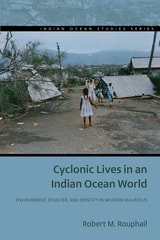
In a world marked by increasingly destructive ecological and meteorological upheavals, Cyclonic Lives in an Indian Ocean World offers a historical analysis of how these catastrophes shape people’s understanding of themselves, their collective history, and their relationship to the institutions that govern them. An examination of cyclonic disasters in the multiethnic Indian Ocean island of Mauritius throws into stark relief how deep histories of diasporic identity formation, of imperial governance, and of the informal practices of racial difference making graft onto how everyday people interpret these moments of loss and the futures that emerge in their wake.
Cyclonic Lives shows that disasters are not only events; they are also processes through which people evaluate and rethink the most elemental social and cultural categories that give meaning to their lives. Beginning in the late nineteenth century and continuing until the early postcolonial era, this book tracks, for example, how Mauritians of African descent integrated these disasters into broader collective histories and memories of the Indian Ocean slave trade, how Hindu Indo-Mauritians understood cyclones’ ecological effects as material elements to be accounted for in a broader Hindu diasporic space, and how the late colonial and early postcolonial state built infrastructures—material, conceptual, and financial—to mitigate the threats posed by these storms and ensure their own long-term durability.
The increasing political, social, and economic instability that climate change has already triggered demands that humanists develop analytical geographies and methodologies that shed light on how power can modulate in asymmetrical ways at moments of crisis. If there is one central takeaway from this historical study of this small island in a big ocean, it is that catastrophic events are not things that merely happen to people; they are processes that remake them.