Results by title
18284 books match the query 'United States' and 1260 start with c
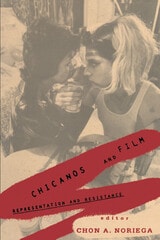
Chicanos And Film
Representation and ResistanceChon A. Noriega
University of Minnesota Press, 1992
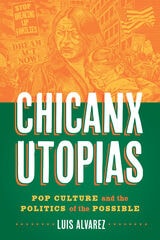
Chicanx Utopias
Pop Culture and the Politics of the PossibleLuis Alvarez
University of Texas Press, 2022
2023 Honorable Mention Best History Book, International Latino Book Awards
Broad and encompassing examination of Chicanx popular culture since World War II and the utopian visions it articulated
Amid the rise of neoliberalism, globalization, and movements for civil rights and global justice in the post–World War II era, Chicanxs in film, music, television, and art weaponized culture to combat often oppressive economic and political conditions. They envisioned utopias that, even if never fully realized, reimagined the world and linked seemingly disparate people and places. In the latter half of the twentieth century, Chicanx popular culture forged a politics of the possible and gave rise to utopian dreams that sprang from everyday experiences.
In Chicanx Utopias, Luis Alvarez offers a broad study of these utopian visions from the 1950s to the 2000s. Probing the film Salt of the Earth, brown-eyed soul music, sitcoms, poster art, and borderlands reggae music, he examines how Chicanx pop culture, capable of both liberation and exploitation, fostered interracial and transnational identities, engaged social movements, and produced varied utopian visions with divergent possibilities and limits. Grounded in the theoretical frameworks of Walter Benjamin, Stuart Hall, and the Zapatista movement, this book reveals how Chicanxs articulated pop cultural utopias to make sense of, challenge, and improve the worlds they inhabited.
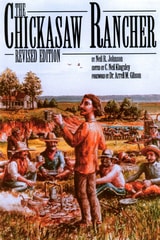
Chickasaw Rancher, Revised Edition
Neil R. Johnson
University Press of Colorado, 2001
The Chickasaw Rancher follows Montford T. Johnson's family and friends for the next thirty-two years. Neil R. Johnson describes the work, the ranch parties, cattle rustling, gun fights, tornadoes, the run of 1889, the hard deaths of many along the way, and the rise, fall, and revival of the Chickasaw Nation.
This revised edition of The Chickasaw Rancher, edited by C. Neil Kingsley, Neil R. Johnson's grandson, is the perfect addition to any reader's collection of the history of the American West.
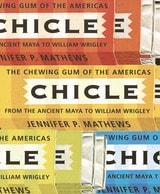
Chicle
The Chewing Gum of the Americas, From the Ancient Maya to William WrigleyJennifer P. Mathews
University of Arizona Press, 2009
Chicle is a history in four acts, all of them focused on the sticky white substance that seeps from the sapodilla tree when its bark is cut. First, Jennifer Mathews recounts the story of chicle and its earliest-known adherents, the Maya and Aztecs. Second, with the assistance of botanist Gillian Schultz, Mathews examines the sapodilla tree itself, an extraordinarily hardy plant that is native only to Mesoamerica and the Caribbean. Third, Mathews presents the fascinating story of the chicle and chewing gum industry over the last hundred plus years, a tale (like so many twentieth-century tales) of greed, growth, and collapse. In closing, Mathews considers the plight of the chicleros, the “extractors” who often work by themselves tapping trees deep in the forests, and how they have emerged as icons of local pop culture—portrayed as fearless, hard-drinking brawlers, people to be respected as well as feared.
Before Dentyne® and Chiclets®, before bubble gum comic strips and the Doublemint® twins, there was gum, oozing from jungle trees like melting candle wax under the slash of a machete. Chicle tells us everything that happened next. It is a spellbinding story.
Child Benefits
The Smart Investment for America's FutureJane Waldfogel
Russell Sage Foundation, 2025
Drawing on research from peer countries in the Organization for Economic Cooperation and Development as well as the United States, Waldfogel shows that a child benefit would prevent poverty and hardship and protect children from deep poverty and income instability. The research is clear that families would spend the money from a child benefit on food, clothing, and other items for their children and that a child benefit would not have large negative impacts on parental employment or family decisions about fertility. It also shows that a child benefit would promote short- and longer-term child and family wellbeing. Child benefits have been shown to enhance opportunity and benefit society through healthier and better-educated young adults and stronger and more stable families. And rigorous benefit-cost analyses indicate that a child benefit, while costly, would more than pay for itself, yielding a large return on investment.
Waldfogel evaluates four current, major proposals for a child benefit and provides recommendations for a policy that would deliver the best outcomes for children and families and the best return on investment. She argues that such a policy would be more generous, not tied to parental employment or earnings, available to all parents but phased out for higher-income families, delivered in monthly payments through the tax system, and provided in addition to existing social programs.
Child Benefits provides fascinating insights on the history and impacts of child benefits and makes a clear and definitive argument for the establishment of a child benefit in the United States.

Child Brides and Intruders
Carol Wershoven
University of Wisconsin Press, 1993
Child Care Problem
An Economic AnalysisDavid M. Blau
Russell Sage Foundation, 2001
Child Support
The Next FrontierJ. Thomas Oldham and Marygold S. Melli, Editors
University of Michigan Press, 2000
Reforms have moved the child support system from one of minimal effort, based on the assumption that children in single parent households would be supported by their custodial parents or by government welfare, to a formula-based system for calculating child support and an aggressive enforcement program to collect that support from the noncustodial parent.
The essays range from a review of child support history, with a focus on the changing mores of parental responsibility, to empirical studies of whether increased establishment of paternity and child support enforcement results in more father-child contacts, to how child support affects fathers and whether the support obligation impoverishes noncustodial fathers. The essays explore the failure of the current child support reforms to reduce child poverty, consider the need to study how to determine what is a "fair amount" of child support, and debate proposals to follow the example of a number of other industrialized nations and provide more generous public benefits for poor children.
This book will be of interest to public policy makers and professionals--lawyers, legal scholars, social workers, and administrators--who work in and study the child support system.
Contributors are June R. Carbone, John Eekelaar, Martha A. Fineman, Irwin Garfinkel, Marsha Garrison, Paul K. Legler, Mavis Maclean, Marygold S. Melli, Daniel R. Meyer, J. Thomas Oldham, Allen M. Parkman, Judith A. Seltzer, and Andrea Warman.
J. Thomas Oldham is John H. Freeman Professor Law, University of Houston Law School. Marygold S. Melli is Voss-Bascom Professor of Law Emerita, University of Wisconsin-Madison Law School.
Child Survivors of the Holocaust
The Youngest Remnant and the American ExperienceCohen, Beth B
Rutgers University Press, 2018
The majority of European Jewish children alive in 1939 were murdered during the Holocaust. Of 1.5 million children, only an estimated 150,000 survived. In the aftermath of the Shoah, efforts by American Jews brought several thousand of these child survivors to the United States. In Child Survivors of the Holocaust, historian Beth B. Cohen weaves together survivor testimonies and archival documents to bring their story to light. She reveals that even as child survivors were resettled and “saved,” they struggled to adapt to new lives as members of adoptive families, previously unknown American Jewish kin networks, or their own survivor relatives. Nonetheless, the youngsters moved ahead. As Cohen demonstrates, the experiences both during and after the war shadowed their lives and relationships through adulthood, yet an identity as “survivors” eluded them for decades. Now, as the last living link to the Holocaust, the voices of Child Survivors are finally being heard.
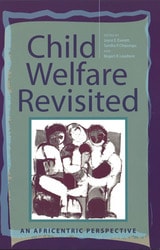
Child Welfare Revisited
An Africentric PerspectiveEverett, Joyce E
Rutgers University Press, 2004
Why are there proportionally more African American children in foster care than white children? Why are white children often readily adoptable, while African American children are difficult to place? Are these imbalances an indication of institutional racism or merely a coincidence?
In this revised and expanded edition of the classic volume, Child Welfare, twenty-one educators call attention to racial disparities in the child welfare system by demonstrating how practices that are successful for white children are often not similarly successful for African American children. Moreover, contributors insist that policymakers and care providers look at African American family life and child-development from a culturally-based Africentric perspective. Such a perspective, the book argues, can serve as a catalyst for creativity and innovation in the formulation of policies and practices aimed at improving the welfare of African American children.
Child Welfare Revisited offers new chapters on the role of institutional racism and economics on child welfare; the effects of substance abuse, homelessness, HIV/AIDS, and domestic violence; and the internal strengths and challenges that are typical of African American families. Bringing together timely new developments and information, this book will continue to be essential reading for all child welfare policymakers and practitioners.
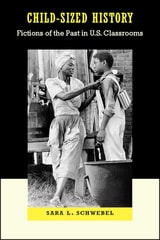
Child-Sized History
Fictions of the Past in U.S. ClassroomsSara L. Schwebel
Vanderbilt University Press, 2011
Books like Johnny Tremain, The Witch of Blackbird Pond, Island of the Blue Dolphins, and Roll of Thunder, Hear My Cry stimulate children's imagination, transporting them into the American past and projecting them into an American future. As works of historical interpretation, however, many are startlingly out of step with current historiography and social sensibilities, especially with regard to race. Unlike textbooks, which are replaced on regular cycles and subjected to public tugs-of-war between the left and right, historical novels have simply--and quietly--endured. Taken individually, many present troubling interpretations of the American past. But embraced collectively, this classroom canon provides a rare pedagogical opportunity: it captures a range of interpretive voices across time and place, a kind of "people's history" far removed from today's state-sanctioned textbooks.
Teachers who employ historical novels in the classroom can help students recognize and interpret historical narrative as the product of research, analytical perspective, and the politics of the time. In doing so, they sensitize students to the ways in which the past is put to moral and ideological uses in the present.
Featuring separate chapters on American Indians, war, and slavery, Child-Sized History tracks the changes in how young readers are taught to conceptualize history and the American nation.
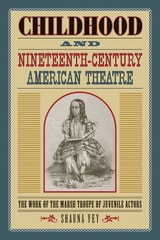
Childhood and Nineteenth-Century American Theatre
The Work of the Marsh Troupe of Juvenile ActorsShauna Vey
Southern Illinois University Press, 2015
Looking at the daily work lives of five members of the Marsh Troupe—the father and manager, Robert Marsh, and four child performers, Mary Marsh, Alfred Stewart, Louise Arnot, and Georgie Marsh—Vey reveals the realities of the antebellum theatre and American society: the rise of the nineteenth-century impresario; the emerging societal constructions of girlhood and goodness; the realities of child labor; the decline of the apprenticeship model of actor training; shifts in gender roles and the status of working women; and changes in the economic models of theatre production, including the development of the stock company system.
Both a microhistory of a professional theatre company and its juvenile players in the decade before the Civil War and a larger narrative of cultural change in the United States, Childhood and Nineteenth-Century American Theatre sheds light on how childhood was idealized both on and off the stage, how the role of the child in society shifted in the nineteenth century, and the ways economic value and sentiment contributed to how children were viewed.
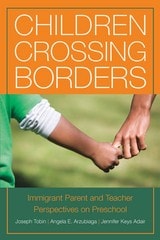
Children Crossing Borders
Immigrant Parent and Teacher Perspectives on Preschool for Children of ImmigrantsJoseph Tobin
Russell Sage Foundation, 2013
Children Crossing Borders
Latin American Migrant ChildhoodsEdited by Alejandra J. Josiowicz and Irasema Coronado
University of Arizona Press, 2022
Unified in their common interest in the well-being of children, the contributors bring an unrivaled breadth of experience and research to offer a transnational, multidimensional, and multilayered look at migrant childhoods in Latin America. Organized around three main themes—educational experiences; literature, art and culture, and media depictions; and the principle of the “best interest of the child”—this work offers both theoretical and practical approaches to the complexity of migrant childhood. The essays discuss family and school lives, children’s experience as wage laborers, and the legislation and policies that affect migrants.
This volume draws much-needed attention to the plight of migrant children and their families, illuminating the human and emotional toll that children experience as they crisscross the Americas. Exploring the connections between education, policy, cultural studies, and anthropology, the essays in this volume navigate a space of transnational children’s rights central to Latin American life in the twentieth and twenty-first centuries.
Contributors
Marissa Bejarano-Fernbaugh
Nancie Bouchard
Lina M. Caswell
Irasema Coronado
Valentina Glockner
Alejandra J. Josiowicz
Patrícia Nabuco Martuscelli
María Inés Pacecca
Martha Rodríguez-Cruz
Emily Ruehs-Navarro
Kathleen Tacelosky
Élisabeth Vallet
Children and Childhood in American Religions
Browning, Don S
Rutgers University Press, 2009
- How the Catholic Church confronts the tension between its teachings about children and actual practic
- The Oglala Lakota's struggle to preserve their spiritual tradition
- The impact of modernity on Hinduism
Only by discussing the unique challenges faced by all religions, and their followers, can we take the first step toward a greater understanding for all of us.

Children of Alcoholics
A Critical Appraisal of Theory and ResearchKenneth J. Sher
University of Chicago Press, 1991
Children of the Atomic Bomb
An American Physician’s Memoir of Nagasaki, Hiroshima, and the Marshall IslandsJames N. Yamazaki and Louis B. Fleming
Duke University Press, 1995
Children of the Atomic Bomb is Dr. Yamazaki’s account of a lifelong effort to understand and document the impact of nuclear explosions on children, particularly the children conceived but not yet born at the time of the explosions. Assigned in 1949 as Physician-in-Charge of the United States Atomic Bomb Casualty Commission in Nagasaki, Yamazaki had served as a combat surgeon at the Battle of the Bulge where he had been captured and held as a prisoner of war by the Germans. In Japan he was confronted with violence of another dimension—the devastating impact of a nuclear blast and the particularly insidious effects of radiation on children.
Yamazaki’s story is also one of striking juxtapositions, an account of a Japanese-American’s encounter with racism, the story of a man who fought for his country while his parents were interned in a concentration camp in Arkansas. Once the object of discrimination at home, Yamazaki paradoxically found himself in Japan for the first time as an American, part of the Allied occupation forces, and again an outsider. This experience resonates through his work with the children of Nagasaki and Hiroshima and with the Marshallese people who bore the brunt of America’s postwar testing of nuclear weapons in the Pacific.
Recalling a career that has spanned five decades, Dr. Yamazaki chronicles the discoveries that helped chart the dangers of nuclear radiation and presents powerful observations of both the medical and social effects of the bomb. He offers an indelible picture of human tragedy, a tale of unimaginable suffering, and a dedication to healing that is ultimately an unwavering, impassioned plea for peace.
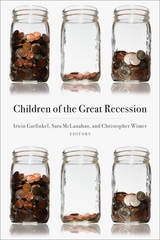
Children of the Great Recession
Irwin Garfinkel
Russell Sage Foundation, 2016
Several contributors examine the recession’s impact on the economic well-being of families, including changes to income, poverty levels, and economic insecurity. Irwin Garfinkel and Natasha Pilkauskas find that in cities with high unemployment rates during the recession, incomes for families with a college-educated mother fell by only about 5 percent, whereas families without college degrees experienced income losses three to four times greater. Garfinkel and Pilkauskas also show that the number of non-college-educated families enrolled in federal safety net programs—including Medicaid, the Earned Income Tax Credit, and the Supplemental Nutrition Assistance Program (or food stamps)—grew rapidly in response to the Great Recession.
Other researchers examine how parents’ physical and emotional health, relationship stability, and parenting behavior changed over the course of the recession. Janet Currie and Valentina Duque find that while mothers and fathers across all education groups experienced more health problems as a result of the downturn, health disparities by education widened. Daniel Schneider, Sara McLanahan and Kristin Harknett find decreases in marriage and cohabitation rates among less-educated families, and Ronald Mincy and Elia de la Cruz-Toledo show that as unemployment rates increased, nonresident fathers’ child support payments decreased. William Schneider, Jeanne Brooks-Gunn, and Jane Waldfogel show that fluctuations in unemployment rates negatively affected parenting quality and child well-being, particularly for families where the mother did not have a four-year college degree.
Although the recession affected most Americans, Children of the Great Recession reveals how vulnerable parents and children paid a higher price. The research in this volume suggests that policies that boost college access and reinforce the safety net could help protect disadvantaged families in times of economic crisis.
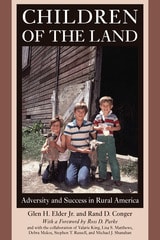
Children of the Land
Adversity and Success in Rural AmericaGlen H. Elder Jr. and Rand D. Conger
University of Chicago Press, 2000
In Children of the Land, the authors ask whether traditional observations about farm families—strong intergenerational ties, productive roles for youth in work and social leadership, dedicated parents and a network of positive engagement in church, school, and community life—apply to three hundred Iowa children who have grown up with some tie to the land. The answer, as this study shows, is a resounding yes. In spite of the hardships they faced during the agricultural crisis of the 1980s, these children, whose lives we follow from the seventh grade to after high school graduation, proved to be remarkably successful, both academically and socially.
A moving testament to the distinctly positive lifestyle of Iowa families with connections to the land, this uplifting book also suggests important routes to success for youths in other high risk settings.
Children of the Series and How They Grew
or A Century of Heroines & Heroes, Romantic, Comic, MoralFaye Riter Kensinger
University of Wisconsin Press, 1987
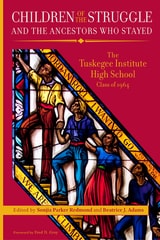
Children of the Struggle and the Ancestors Who Stayed
The Tuskegee Institute High School Class of 1964Edited by Sonjia Parker Redmond and Beatrice J. Adams, Foreword by Fred D. Gray
University of Alabama Press, 2025
WINNER OF THE ANNE B. AND JAMES B. MCMILLAN PRIZE
A powerful collection of firsthand stories from the Tuskegee Institute High School Class of 1964—students who came of age in the crucible of the Civil Rights Movement. Their stories uncover the bold choices of their ancestors who chose to stay and help shape the South.
Children of the Struggle and the Ancestors Who Stayed, edited by Sonjia Parker Redmond and Beatrice J. Adams, brings together twenty-one deeply personal narratives from members of the Tuskegee Institute High School Class of 1964. These students grew up at the heart of the Civil Rights Movement, coming of age during landmark legal battles, community-led voter registration efforts, and the long shadow of Jim Crow.
Graduating in the year of the Civil Rights Act and Freedom Summer, these young people had already helped desegregate Alabama schools. They marched from Selma to Montgomery, mourned the assassination of classmate Sammy Younge Jr., and witnessed firsthand the violent resistance to change that defined the era.
Rather than join the Great Migration northward, many of them followed the lead of their ancestors and chose to stay—becoming educators, organizers, and civic leaders. Their lives reflect a powerful legacy of resistance and renewal, rooted in a deep sense of place and purpose. This collection preserves their voices and honors the generations of Black families who fought for justice not only through protest, but by staying, building, and believing in the promise of the South.

Children's Literature Gems
Choosing and Using Them in Your Library CareerElizabeth American Library Association
American Library Association, 2009

Children's Mental Health
Problems and ServicesA Report by the Office of Technology Assessment
Duke University Press, 1987
This book was prepared by the Office of Technology Assessment at the request of Senators Mark Hatfield and Daniel Inouye. It acknowledges that there are no simple solutions to the problems we face or easy answers to questions concerning the best system of mental health service delivery. Yet Children's Mental Health makes it abundantly clear that there is a need for a mental health system response to these issues and that this response must be coordinated with other existing service systems.
This book should be of value to concerned parents and community leaders, health system planners, and health care practitioners involved with both the needs of children and mental illness.
Children's Services
Betsy Diamant-Cohen
American Library Association, 2010
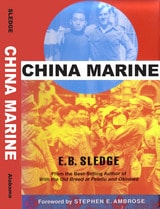
China Marine
E. B. Sledge
University of Alabama Press, 2002
From the respected author of one of the best books on World War II combat, comes an equally captivating saga of battle recovery, healing, and homecoming.
China Marine is the long-awaited sequel to E. B. Sledge’s critically acclaimed memoir, With the Old Breed at Peleliu and Okinawa. Picking up where his previous memoir leaves off, Sledge, a young marine in the First Division, traces his company’s movements and charts his own difficult passage to peace following his horrific experiences in the Pacific. He reflects on his duty in the ancient city of Peiping (now Beijing) and recounts the difficulty of returning to his hometown of Mobile, Alabama, and resuming civilian life haunted by the shadows of close combat.
Distinguished historians have praised Sledge’s first book as the definitive rifleman’s account of World War II, ranking it with the Civil War’s Red Badge of Courage and World War I’s All Quiet on the Western Front. Although With the Old Breed ends with the surrender of Japan, marines in the Pacific were still faced with the mission of disarming the immense Japanese forces on the Asian mainland and reestablishing order. For infantrymen so long engaged in the savage and surreal world of close combat, there remained the personal tasks of regaining normalcy and dealing with suppressed memories, fears, and guilt.
In China Marine, E. B. Sledge completes his story and provides emotional closure to the searing events detailed in his first memoir. He speaks frankly about the real costs of war, emotional and psychological as well as physical, and explains the lifetime loyalties that develop between men who face fear, loss, and horror together. That bond becomes one of the newfound treasures of life after battle.
With his hallmark style of simplicity, directness, and lack of sentimentality, "Sledgehammer" has given us yet another great document of war literature.
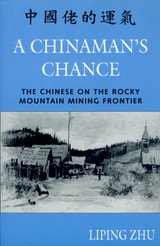
Chinaman's Chance
The Chinese on the Rocky Mountain Mining FrontierLiping Zhu
University Press of Colorado, 2000
Thus, the Chinese portrayed all the stereotypical frontier roles-victors, victims, and villains. Their basic material needs were guaranteed, and many individuals were able to climb up the economic ladder. Frontier justice was used to settle disputes; Chinese-Americans frequently challenged white opponents in the various courts as well as in gun battles.
Interesting and provocative, A Chinaman's Chance not only offers general readers a narrative account of the Rocky Mountain mining frontier, but also introduces a fresh interpretation of the Chinese experience in nineteenth-century America to scholars interested in Asian American studies, immigration history, and ethnicity in the American West.
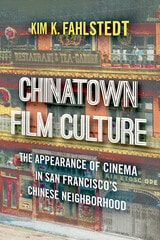
Chinatown Film Culture
The Appearance of Cinema in San Francisco’s Chinese NeighborhoodKim K. Fahlstedt
Rutgers University Press, 2020
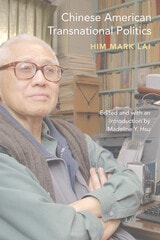
Chinese American Transnational Politics
Him Mark Lai, Edited and with an Introduction by Madeline Y. Hsu
University of Illinois Press, 2010
Born and raised in San Francisco, Lai was trained as an engineer but blazed a trail in the field of Asian American studies. Long before the field had any academic standing, he amassed an unparalleled body of source material on Chinese America and drew on his own transnational heritage and Chinese patriotism to explore the global Chinese experience.
In Chinese American Transnational Politics, Lai traces the shadowy history of Chinese leftism and the role of the Kuomintang of China in influencing affairs in America. With precision and insight, Lai penetrates the overly politicized portrayals of a history shaped by global alliances and enmities and the hard intolerance of the Cold War era. The result is a nuanced and singular account of how Chinese politics, migration to the United States, and Sino-U.S. relations were shaped by Chinese and Chinese American groups and organizations.
Lai revised and expanded his writings over more than thirty years as changing political climates allowed for greater acceptance of leftist activities and access to previously confidential documents. Drawing on Chinese- and English-language sources and echoing the strong loyalties and mobility of the activists and idealists he depicts, Lai delivers the most comprehensive treatment of Chinese transnational politics to date.
Chinese American Transnationalism
The Flow of People, ResourcesSucheng Chan
Temple University Press, 2005
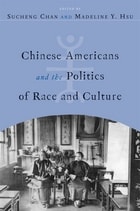
Chinese Americans and the Politics of Race and Culture
Sucheng Chan
Temple University Press, 2008
Sucheng Chan introduces this valuable new anthology with a commanding discussion of the field of Chinese American studies, in which she examines its history and points the way ahead. Here she and Madeline Y. Hsu have brought together leading-edge scholarship from a new generation of thinkers, as useful for scholars as it is for undergraduate readers.
The contributors address a broad range of issues, from the activism of left-wing and Communist Chinese immigrants to the U.S. in the 1920s and early 1930s and humanitarian relief during the Sino-Japanese War to the construction of new Chinese regional identities in New York.
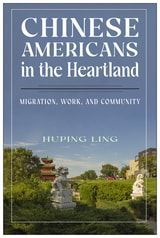
Chinese Americans in the Heartland
Migration, Work, and CommunityHuping Ling
Rutgers University Press, 2022
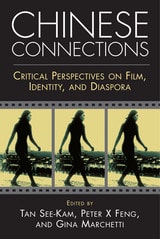
Chinese Connections
Critical Perspectives on Film, Identity, and DiasporaGina Marchetti
Temple University Press, 2009
Chinese Connections is a valuable new anthology that provides a prismatic look at the cross-fertilization between Chinese film and global popular culture. Leading film scholars consider the influence of world cinema on China-related and Chinese-related cinema over the last five decades. Highlighting the neglected connections between Chinese films and American and European cinema, the editors and contributors examine popular works such as Ang Lee’s The Hulk and Olivier Assayas’ Irma Vep to show the nexus of international film production and how national, political, social and sexual identities are represented in the Chinese diaspora.
With talent flowing back and forth between East and West, Chinese Connections explores how issues of immigration, class, race and economic displacement are viewed on a global level, ultimately providing a greater understanding of the impact of Chinese filmmaking at home and abroad.
Contributors include: Grace An, Aaron Anderson, Chris Berry, Evans Chan, Li-Mei Chang, Frances Gateward, Andrew Grossman, Peter Hitchcock, Chuck Kleinhans, Jenny Kwok Wah Lau, Helen Leung, Aaron Magnan-Park, Gayle Wald, Esther C.M. Yau, Emilie Yueh-yu Yeh, Xuelin Zhou and the editors.
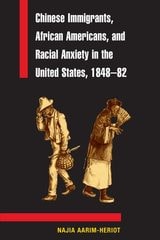
Chinese Immigrants, African Americans, and Racial Anxiety in the United States, 1848-82
Najia Aarim-Heriot
University of Illinois Press, 2003
The “Chinese question” and the “Negro problem” were bound up with one another in nineteenth-century America. Indeed, the negative stereotypes, exclusionary laws, and incendiary rhetoric employed against both populations bore striking similarities.
Najia Aarim-Heriot forcefully demonstrates that the anti-Chinese sentiment behind the passage of the Chinese Exclusion Act of 1882 is inseparable from the racial double standards applied by mainstream white society toward white and nonwhite groups during the same period. Aarim-Heriot argues that previous studies on American Sinophobia have overemphasized the resentment labor organizations felt toward incoming Chinese workers. As a result, scholars have overlooked the broader ways in which the growing nation sought to define and unify itself through the exclusion and oppression of nonwhite peoples.
A challenge to traditional approaches to Chinese American history, Chinese immigrants, African Americans, and Racial Anxiety in the United States, 1848–82 offers a holistic examination of American Sinophobia and the racialization of national immigration policies.

Chinese Whispers
Toward a Transpacific PoeticsYunte Huang
University of Chicago Press, 2022
In this new book, the noted critic and best-selling author Yunte Huang explores the dynamics of poetry and poetics in the age of globalization, particularly questions of translatability, universality, and risk in the transpacific context. “Chinese whispers” refers to an American children’s game dating to the years of the Cold War, a period in which everything Chinese, or even Chinese sounding, was suspect. Taking up various manifestations of the phrase in the twentieth and twenty-first centuries, Huang investigates how poetry, always to a significant degree untranslatable, complicates the transpacific production of meanings and values.
The book opens with the efforts of I. A. Richards, arguably the founder of Anglo-American academic literary criticism, to promote Basic English in China in the early twentieth century. It culminates by resituating Ernest Fenollosa’s famous essay “The Chinese Written Character as a Medium for Poetry,” exploring the ways in which Chinese has historically enriched but also entrapped the Western conception of language.
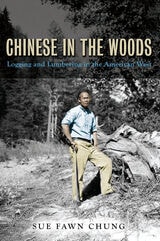
Chinese in the Woods
Logging and Lumbering in the American WestSue Fawn Chung
University of Illinois Press, 2015

Chineseness across Borders
Renegotiating Chinese Identities in China and the United StatesAndrea Louie
Duke University Press, 2004
Louie focuses on “In Search of Roots,” a program that takes young Chinese American adults of Cantonese descent to visit their ancestral villages in China’s Guangdong province. Through ethnographic interviews and observation, Louie examines the experiences of Chinese Americans both during village visits in China and following their participation in the program, which she herself took part in as an intern and researcher. She presents a vivid portrait of two populations who, though connected through family ties generations back, are meeting for the first time in the context of a rapidly changing contemporary China. Louie situates the participants’ and hosts’ shifting understandings of China and Chineseness within the context of transnational flows of people, media, goods, and money; China’s political and economic policies; and the racial and cultural politics of the United States.
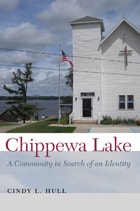
Chippewa Lake
A Community in Search of an IdentityCindy L. Hull
Michigan State University Press, 2012
Chippewa Lake is an idyllic waterfront community in north-central Michigan, popular with retirees and weekenders. The lake is surrounded by a rural farming community, but the area is facing a difficult transition as local demographics shift, and as it transforms from an agriculture-based economy to one that relies on wage labor. As farms have disappeared, local residents have employed a variety of strategies to adapt to a new economic structure. The community, meanwhile, has been indelibly affected by the advent of newcomers and retirees challenging the rural cultural values. An anthropologist with a background in sociology, Cindy L. Hull deftly weaves together oral accounts, historic documents, and participant surveys compiled from her nearly thirty years of living in the area to create a textured portrait of a community in flux.
Chippewa Treaty Rights
The Reserved Rights of Wisconsin's Chippewa Indians in Historical PerspectiveRonald Satz
University of Wisconsin Press, 1996
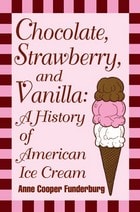
Chocolate, Strawberry, and Vanilla
A History Of American Ice CreamAnne Cooper Funderburg
University of Wisconsin Press, 1995
Chocolate, Strawberry, and Vanilla traces the evolution of ice cream from a rarity to an everyday indulgence. It covers the genesis of ice cream in America, the invention of the hand-cranked ice cream freezer, the natural ice industry, the beginnings of wholesale ice cream manufacturing, and the origins of the ice cream soda, sundae, cone, sandwich, and bar. It also recounts the histories of many brands, including Dairy Queen, Good Humor, Eskimo Pie, Ben and Jerry's, Baskin-Robbins, and Haagen-Dazs. This history of ice cream reflects and reveals changes in social customs, diet and nutrition, class distinctions, leisure activities, and everyday life.
Choices and Changes
Interest Groups in the Electoral ProcessMichael M. Franz
Temple University Press, 2008
Choices and Changes is the most comprehensive examination to date of the impact of interest groups on recent American electoral politics. Richly informed, theoretically and empirically, it is the first book to explain the emergence of aggressive interest group electioneering tactics in the mid-1990s—including “soft money” contributions, issue ads, and “527s” (IRS-classified political organizations).
Michael Franz argues that changing political and legal contexts have clearly influenced the behavior of interest groups. To support his argument, he tracks in detail the evolution of campaign finance laws since the 1970s, examines all soft money contributions—nearly $1 billion in total—to parties by interest groups from 1991-2002, and analyzes political action committee (PAC) contributions to candidates and parties from 1983-2002. He also draws on his own interviews with campaign finance leaders.
Based on this rigorous data analysis and a formidable knowledge of its subject, Choices and Changes substantially advances our understanding of the significance of interest groups in U.S. politics.
Chomsky's Challenge to American Power
A Guide for the Critical ReaderAnthony F. Greco
Vanderbilt University Press, 2013
Chomsky is as controversial as he is influential. Admirers see him as a courageous teller of unpleasant truths about political power and those who wield it in the United States. Critics view him as a propagandist and ideologue who sees only black and white where there are multiple shades of gray. While Chomsky's fans tend to view him uncritically, his critics often don't take him seriously. Unlike any previous work, this book takes Chomsky seriously while treating him critically. The author gives Chomsky credit for valuable contributions to our understanding of the contemporary political world, but spares no criticism of the serious deficiencies he sees in Chomsky's political analyses.

Choosing Books for Children
A COMMONSENSE GUIDEBetsy Hearne with Deborah Stevenson
University of Illinois Press, 1999
If you have ever stood in the children's section of a bookstore or library wondering how to go about matching a book to the age, abilities, and interests of a particular child, Choosing Children's Books is for you. Renowned children's librarian and children's book review editor Betsy Hearne offers practical guidance on sorting through the bewildering array of picture books, pop-up books, books for beginning readers, young adult titles, classics, poetry, folktales, and factual books. Each chapter includes an annotated list of recommended titles.
A gold mine of commonsense, sound advice, this newly revised and completely updated edition of Betsy Hearne's classic guide is an indispensable tool for choosing books for children of all ages.
Newly available in paperback, this revised and updated third edition of Betsy Hearne's classic guide stands as the lodestar for navigating through the bewildering array of books for young readers. Hearne surveys everything from picture books, pop-up books, classics, and books for beginning readers to young adult titles, poetry, folktales, and factual books, with an annotated list of recommended titles accompanying each chapter. A gold mine of common sense and sound advice, her guide remains an indispensable tool for choosing books for children of all ages.
Choosing Ethnicity, Negotiating Race
Korean Adoptees in AmericaMia Tuan
Russell Sage Foundation, 2011
Choosing Homes, Choosing Schools
Annette Lareau
Russell Sage Foundation, 2014
Choosing State Supreme Court Justices
Merit Selection and the Consequences of Institutional ReformGreg Goelzhauser
Temple University Press, 2016
Since 1940, more than half of all states have switched at least in part from popular election or elite appointment to experiment with merit selection in choosing some or all of their state supreme court justices. Under merit selection, a commission—often comprising some combination of judges, attorneys, and the general public—is tasked with considering applications from candidates vying to fill a judicial vacancy. Ostensibly, the commission forwards the best candidates to the governor, who ultimately appoints them. Presently, numerous states are debating whether to adopt or abolish merit selection.
In his short, sharp book, Choosing State Supreme Court Justices, Greg Goelzhauser utilizes new data on more than 1,500 state supreme court justices seated from 1960 through 2014 to answer the question, Does merit selection produce better types of judges? He traces the rise of merit selection and explores whether certain judicial selection institutions favor candidates who have better qualifications, are more diverse, and have different types of professional experience.
Goelzhauser’s results ultimately contribute to the broader debate concerning comparative institutional performance with respect to state judicial selection.
Choosing Truman
The Democratic Convention of 1944Robert H. Ferrell
University of Missouri Press, 2000
As Franklin D. Roosevelt's health deteriorated in the months leading up to the Democratic National Convention of 1944, Democratic leaders confronted a dire situation. Given the inevitability of the president's death during a fourth term, the choice of a running mate for FDR was of profound importance. The Democrats needed a man they could trust. They needed Harry S. Truman.
Robert Ferrell tells an engrossing tale of ruthless ambition, secret meetings, and party politics. Roosevelt emerges as a manipulative leader whose desire to retain power led to a blatant disregard for the loyalty of his subordinates and the aspirations of his vice presidential hopefuls. Startling in its conclusions, impeccable in its research, Choosing Truman is an engrossing, behind-the-scenes look at the making of the nation's thirty-third president.
Choosing to Lead
Understanding Congressional Foreign Policy EntrepreneursRalph G. Carter and James M. Scott
Duke University Press, 2009
Carter and Scott combine extensive quantitative analysis, interviews with members of Congress and their staff, and case studies of key foreign policy entrepreneurs, including Frank Church, William Fulbright, Jesse Helms, Edward Kennedy, Pat McCarran, and Curt Weldon. Drawing on their empirical data, the authors identify the key variables in foreign policy entrepreneurship, including membership in the Senate or House, seniority and committee assignments, majority or minority party status, choice of foreign policy issues, and the means used to influence policy. By illuminating the roles and impact of individual members of Congress, Carter and Scott contribute to a more nuanced understanding of the broader U.S. foreign policy-making process.
Chop Suey and Sushi from Sea to Shining Sea
Chinese and Japanese Restaurants in the United StatesBruce Makoto Arnold
University of Arkansas Press, 2018
The essays in Chop Suey and Sushi from Sea to Shining Sea fill gaps in the existing food studies by revealing and contextualizing the hidden, local histories of Chinese and Japanese restaurants in the United States.
The writer of these essays show how the taste and presentation of Chinese and Japanese dishes have evolved in sweat and hardship over generations of immigrants who became restaurant owners, chefs, and laborers in the small towns and large cities of America. These vivid, detailed, and sometimes emotional portrayals reveal the survival strategies deployed in Asian restaurant kitchens over the past 150 years and the impact these restaurants have had on the culture, politics, and foodways of the United States.
Some of these authors are family members of restaurant owners or chefs, writing with a passion and richness that can only come from personal investment, while others are academic writers who have painstakingly mined decades of archival data to reconstruct the past. Still others offer a fresh look at the amazing continuity and domination of the “evil Chinaman” stereotype in the “foreign” world of American Chinatown restaurants. The essays include insights from a variety of disciplines, including history, sociology, anthropology, ethnography, economics, phenomenology, journalism, food studies, and film and literary criticism.
Chop Suey and Sushi from Sea to Shining Sea not only complements the existing scholarship and exposes the work that still needs to be done in this field, but also underscores the unique and innovative approaches that can be taken in the field of American food studies.
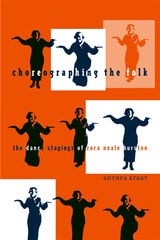
Choreographing the Folk
The Dance Stagings of Zora Neale HurstonAnthea Kraut
University of Minnesota Press, 2008
Recovers an important dimension of the work of the renowned African American artist
While Zora Neale Hurston and her 1937 novel Their Eyes Were Watching God have become widely celebrated, she was also a prolific stage director and choreographer. In the 1930s Hurston produced theatrical concerts that depicted a day in the life of a railroad work camp in Florida and featured a rousing Bahamian Fire Dance as the dramatic finale. In Choreographing the Folk, Anthea Kraut traces the significance and influence of Hurston’s little-known choreographic work.
Hurston’s concerts were concrete illustrations of the “real Negro art theatre” she was eager to establish, and they compellingly demonstrate how she used the arena of performance to advance a nuanced understanding of the black diaspora. Her version of the Fire Dance was staged in a variety of venues during the 1930s. In its multiple representations, Kraut asserts, the dance raised critical issues about ownership, artistry, and authenticity. Choreographing the Folk argues for the significance of Hurston’s choreography, and with perceptiveness, sensitivity, and originality, Kraut illuminates the important and often-contested place of black folk dance in American culture.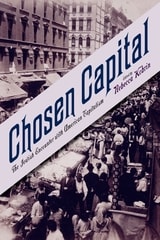
Chosen Capital
The Jewish Encounter with American CapitalismKobrin, Rebecca
Rutgers University Press, 2012
Surveying such diverse topics as Jews’ participation in the real estate industry, the liquor industry, and the scrap metal industry, as well as Jewish political groups and unions bent on reforming American capital, such as the American Labor Party and the International Ladies’ Garment Workers’ Union, contributors to this volume provide a new prism through which to view the Jewish encounter with America. The volume also lays bare how American capitalism reshaped Judaism itself by encouraging the mass manufacturing and distribution of foods like matzah and the transformation of synagogue cantors into recording stars. These essays force us to rethink not only the role Jews played in American economic development but also how capitalism has shaped Jewish life and Judaism over the course of the twentieth century.
Contributors:
Marni Davis, Georgia State University
Phyllis Dillon, independent documentary producer, textile conservator, museum curator
Andrew Dolkart, Columbia University
Andrew Godley, Henley Business School, University of Reading
Jonathan Karp, executive director, American Jewish Historical Society
Daniel Katz, Empire State College, State University of New York
Ira Katznelson, Columbia University
David S. Koffman, New York University
Eli Lederhendler, Hebrew University, Jerusalem
Jonathan Z. S. Pollack, University of Wisconsin—Madison
Jonathan D. Sarma, Brandeis University
Jeffrey Shandler, Rutgers University
Daniel Soyer, Fordham University