Results by title
22279 books match the query 'Social Science' and 1700 start with c
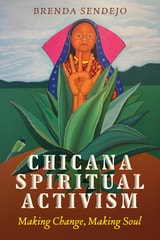
Chicana Spiritual Activism
Making Change, Making SoulBrenda Sendejo
University of Arizona Press, 2026
This book explores the profound impact of spiritual activism within the Chicana feminist movement in Texas. It illuminates how a cohort of Texas Chicanas embraced spiritual activism in pursuit of social change during the movement and into the present day.
The book draws on an array of qualitative methodologies—including interviews, autoethnography, testimonio, pláticas, and archival analysis—to develop what the author formulates as “methodologies of the spirit.” Focusing on the lived experiences, histories, and spiritual activism of sixteen Chicanas/Tejanas, Sendejo shows how these trailblazing women confronted the enduring impacts and repercussions of colonial legacies in Texas through their involvement in movement initiatives such as electoral politics through Mujeres Por La Raza, the cultural arts movement, developing Chicana feminist thought, and the establishment of bilingual education and Chicana/o studies programs.
The activists highlighted in the book include well-known figures such as Santa Barraza, Norma E. Cantú, Rosie Castro, Martha P. Cotera, Inés Hernández-Ávila, and others. Through their work, these activists emerged as architects of their own healing and transformation. Simultaneously, they opened avenues for others to embark on similar journeys reshaping religious practices and unearthing and disseminating spiritual, feminist, and ancestral knowledges.
Chicana Ways
Conversations With Ten Chicana WritersKarin Rosa Ikas
University of Nevada Press, 2001
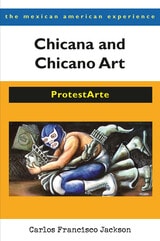
Chicana and Chicano Art
ProtestArteCarlos Francisco Jackson
University of Arizona Press, 2009
Although the word “Chicano” once held negative connotations, students—along with civil rights activists and artists—adopted it in the late 1960s in order to reimagine and redefine what it meant to be Mexican American in the United States. Chicanismo is the ideology and spirit behind the Chicano Movement and Chicanismo unites the artists whose work is revealed and celebrated in this book.
Jackson’s scope is wide. He includes paintings, prints, murals, altars, sculptures, and photographs—and, of course, the artists who created them. Beginning with key influences, he describes the importance of poster and mural art, focusing on the work of the Mexican artist José Guadalupe Posada and the significance of Mexican and Cuban talleres (print workshops). He examines the importance of art collectives in the United States, as well as Chicano talleres and community art centers, for the growth of the Chicano art movement. In conclusion, he considers how Chicano art has been presented to the general American public.
As Jackson shows, the visual arts have both reflected and created Chicano culture in the United States. For college students—and for all readers who want to learn more about this fascinating subject—his book is an ideal introduction to an art movement with a social conscience.
Chicana and Chicano Mental Health
Alma, Mente y CorazónYvette G. Flores
University of Arizona Press, 2013
Chicana and Chicano Mental Health offers a model to understand and to address the mental health challenges and service disparities affecting Mexican immigrants and Mexican Americans/Chicanos. Yvette G. Flores, who has more than thirty years of experience as a clinical psychologist, provides in-depth analysis of the major mental health challenges facing these groups: depression; anxiety disorders, including post-traumatic stress disorder; substance abuse; and intimate partner violence. Using a life-cycle perspective that incorporates indigenous health beliefs, Flores examines the mental health issues affecting children and adolescents, adult men and women, and elderly Mexican Americans.
Through case studies, Flores examines the importance of understanding cultural values, class position, and the gender and sexual roles and expectations Chicanas/os negotiate, as well as the legacies of migration, transculturation, and multiculturality. Chicana and Chicano Mental Health is the first book of its kind to embrace both Western and Indigenous perspectives.
Ideally suited for students in psychology, social welfare, ethnic studies, and sociology, the book also provides valuable information for mental health professionals who desire a deeper understanding of the needs and strengths of the largest ethnic minority and Hispanic population group in the United States.
Chicana/o Identity in a Changing U.S. Society
¿Quién Soy? ¿Quiénes Somos?Aída Hurtado and Patricia Gurin
University of Arizona Press, 2004
As the United States witnesses a major shift in its population—from a white majority to a country where no single group predominates—the new mix not only affects relations between ethnic groups but also influences how individuals view themselves. This book addresses the development of individual and social identity within the context of these new demographic and cultural shifts. It identifies the contemporary forces that shape group identity in order to show how Chicana/os' sense of personal identity and social identity develops and how these identities are affected by changes in social relations.
The authors, both nationally recognized experts in social psychology, are concerned with the subjective definitions individuals have about the social groups with which they identify, as well as with linguistic, cultural, and social contexts. Their analysis reveals what the majority of Chicanas/os experience, using examples from music, movies, and the arts to illustrate complex concepts. In considering ¿Quién Soy? ("Who Am I?"), they discuss how individuals develop a positive sense of who they are as Chicanas/os, with an emphasis on the influence of family, schools, and community. Regarding ¿Quiénes Somos? ("Who Are We?"), they explore Chicanas/os' different group memberships that define who they are as a people, particularly reviewing the colonization history of the American Southwest to show how Chicanas/os' group identity is influenced by this history. A chapter on "Language, Culture, and Community" looks at how Chicanas/os define their social identities inside and outside their communities, whether in the classroom, neighborhood, or region. In a final chapter, the authors speculate how Chicana/o identity will change as Chicanas/os become a significant proportion of the U.S. population and as such factors as immigration, intermarriage, and improvements in social standing influence the process of identification. At the end of each chapter is an engaging exercise that reinforces its main argument and shows how psychological approaches are applicable to real life. Chicana/o Identity in a Changing U.S. Society is an unprecedented introduction to psychological issues that students can relate to and understand. It complements other titles in the Mexican American Experience series to provide a balanced view of issues that affect Mexican Americans today.
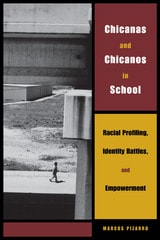
Chicanas and Chicanos in School
Racial Profiling, Identity Battles, and EmpowermentBy Marcos Pizarro
University of Texas Press, 2005
By any measure of test scores and graduation rates, public schools are failing to educate a large percentage of Chicana/o youth. But despite years of analysis of this failure, no consensus has been reached as to how to realistically address it. Taking a new approach to these issues, Marcos Pizarro goes directly to Chicana/o students in both urban and rural school districts to ask what their school experiences are really like, how teachers and administrators support or thwart their educational aspirations, and how schools could better serve their Chicana/o students.
In this accessible, from-the-trenches account of the Chicana/o school experience, Marcos Pizarro makes the case that racial identity formation is the crucial variable in Chicana/o students' success or failure in school. He draws on the insights of students in East Los Angeles and rural Washington State, as well as years of research and activism in public education, to demonstrate that Chicana/o students face the daunting challenge of forming a positive sense of racial identity within an educational system that unintentionally yet consistently holds them to low standards because of their race. From his analysis of this systemic problem, he develops a model for understanding the process of racialization and for empowering Chicana/o students to succeed in school that can be used by teachers, school administrators, parents, community members, and students themselves.
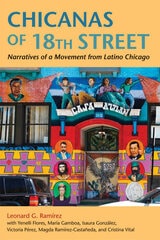
Chicanas of 18th Street
Narratives of a Movement from Latino ChicagoLeonard G. Ramirez
University of Illinois Press, 2011
Chicanas/Chicanos at the Crossroads
Social, Economic, and Political ChangeEdited by David R. Maciel and Isidro D. Ortiz
University of Arizona Press, 1996
Chicanas/Chicanos at the Crossroads is a state-of-the-art assessment of the most significant developments in the conditions, fortunes, and experiences of Chicanas/os since the late seventies, with an emphasis on the years after 1980, which have thus far received little scholarly attention. Ten essays by leading Chicana and Chicano scholars on economic, social, educational, and political trends in Chicana/o life examine such issues as the rapid population growth of Chicanas/os and other Latinos; the ascendancy of Reaganomics and the turn to the right of American politics; the rise of anti-immigrant sentiment; the launching of new initiatives by the Mexican government toward the Chicano community; and the emergence of a new generation of political activists. The authors have been drawn from a broad array of disciplines, ranging from economics to women's studies, in order to offer a multidisciplinary perspective on Chicana/o developments in the contemporary era. The inclusion of authors from different regions of the United States and from divergent backgrounds enhances the broad perspective of the volume.
The editors offer this anthology with the intent of providing timely and useful insights and stimulating reflection and scholarship on a diverse and complex population. A testament to three decades of intense social struggle, Chicanas/Chicanos at the Crossroads is ample evidence that the legacy of the Movimiento is alive and well.
Contents
Part One: Demographic and Economic Trends Among Chicanas/os
1. Demographic Trends in the Chicano Population: Policy Implications for the Twenty First Century, Susan Gonzalez-Baker
2. Mexican Immigration in the 1980s and Beyond: Implications for Chicanos/as, Leo R. Chavez and Rebecca Martinez
3. Chicanas/os in the Economy: Issues and Challenges Since 1970, Refugio Rochin and Adela de la Torre
Part Two: Chicano Politics: Trajectories and Consequences
4. The Chicano Movement: Its Legacy for Politics and Policy, John A. Garcia
5. Chicano Organizational Politics and Strategies in the Era of Retrenchment, Isidro D. Ortiz
6. Return to Aztlan: Mexican Policy Design Toward Chicanos, María Rosa Garcia-Acevedo
Part Three: Chicana/o Educational Struggles: Dimensions, Accomplishments and Challenges
7. Actors Not Victims: Chicanos in the Struggle for Educational Equality, Guadalupe San Miguel
8. Juncture in the Road: Chincano Studies Since El Plan de Santa Barbara, Ignacio Garcia
Part Four: Gender Feminism and Chicanas/os: Developments and Perspectives
9. Gender and Its Discontinuities in Male/Female Domestic Relations: Mexicans in Cross Cultural Context, Adelaida R. Del Castillo
10. With Quill and Torch: A Chicana Perspective on the American Women's Movement and Feminist Theories, Beatríz Pesquera and Denise A. Segura
Chicane Mental Health, Second Edition
Alma, Mente y CorazónYvette G. Flores
University of Arizona Press, 2026
Chicane Mental Health offers an intersectional and developmental framework for understanding and addressing the mental health needs of Chicane communities. Drawing on over four decades of clinical and academic experience, Yvette G. Flores addresses the entire lifespan from children and youth to emerging adults, adults, and elders.
Foregrounding cultural humility and an understanding of Chicane strengths and community cultural wealth, the author uses vivid vignettes and community-based insights to address how historical trauma, systemic oppression, and sociocultural dynamics shape mental well-being. Flores highlights the cultural strengths and protective factors that foster resilience.
This new edition expands on Flores’s influential work by integrating Indigenous healing practices, decolonial theory, and liberatory models of care. It challenges dominant Western paradigms and calls for culturally affirming, community-engaged approaches to mental health. With a focus on issues such as depression, substance use, intimate partner violence, and intergenerational trauma, the book provides practical tools for scholars, clinicians, and students committed to social justice and healing in Chicane and Latine communities.
Chicanismo
The Forging of a Militant Ethos among Mexican AmericansIgnacio M. García
University of Arizona Press, 1997
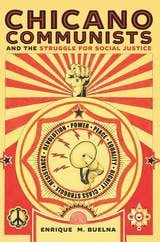
Chicano Communists and the Struggle for Social Justice
Enrique M. Buelna
University of Arizona Press, 2019
Lesser known is the influence that Communism and socialism had on the early roots of the Chicano Movement, a legacy that continues today. Examining the role of Mexican American working-class and radical labor activism in American history, Enrique M. Buelna focuses on the work of the radical Left, particularly the Communist Party (CP) USA.
Buelna delves into the experiences of Cuarón, in particular, as well as those of his family. He writes about the family’s migration from Mexico; work in the mines in Morenci, Arizona; move to Los Angeles during the Great Depression; service in World War II; and experiences during the Cold War as a background to exploring the experiences of many Mexican Americans during this time period.
The author follows the thread of radical activism and the depth of its influence on Mexican Americans struggling to achieve social justice and equality. The legacy of Cuarón and his comrades is significant to the Chicano Movement and in understanding the development of the labor and civil rights movements in the United States. Their contributions, in particular during the 1960s and 1970s, informed a new generation to demand an end to the Vietnam War and to expose educational inequality, poverty, civil rights abuses, and police brutality.
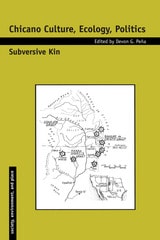
Chicano Culture, Ecology, Politics
Subversive KinDevon G. Peña
University of Arizona Press, 1998
Employing a variety of genres ranging from poetry to autobiography to theoretical and empirical essays, the voices in this collection speak to the most significant issues of environmentalism and social justice, recognizing throughout the need for a pluralism of Chicana/o philosophies. The contributors provide an excellent basis for understanding how multiple Chicana/o views on the environment play out in the context of dominant social, political and economic views. Chicano Culture, Ecology, Politics examines a number of Chicana/o ecological perspectives. How can the ethics of reciprocity present in Chicana/o agropastoral life be protected and applied on a broader scale? How can the dominant society, whose economic structure is invested in "placeless mobility," take note of the harm caused to land-based cultures, take responsibility for it, and take heed before it is too late? Will the larger society be "ecologically housebroken" before it destroys its home?
Grounded in actual political struggles waged by Chicana/o communities over issues of environmental destruction, cultural genocide, and socioeconomic domination, this volume provides an important series of snapshots of Chicana/o history. Chicano Culture, Ecology, Politics illuminates the bridges that exist—and must be understood—between race, ethnicity, class, gender, politics, and ecology.
CONTENTS
Part 1: IndoHispano Land Ethics
Los Animalitos: Culture, Ecology, and the Politics of Place in the Upper R¡o Grande, Devon G. Peña
Social Action Research, Bioregionalism, and the Upper Río Grande, Rubén O. Martínez
Notes on (Home)Land Ethics: Ideas, Values, and the Land, Reyes García
Part 2: Environmental History and Ecological Politics
Ecological Legitimacy and Cultural Essentialism: Hispano Grazing in Northern New Mexico, Laura Pulido
The Capitalist Tool, the Lawless, and the Violent: A Critique of Recent Southwestern Environmental History, Devon G. Peña and Rubén O. Martínez
Ecofeminism and Chicano Environmental Struggles: Bridges across Gender and Race, Gwyn Kirk
Philosophy Meets Practice: A Critique of Ecofeminism through the Voices of Three Chicana Activists, Malia Davis
Part 3: Alternatives to Destruction
The Pasture Poacher (a poem), Joseph C. Gallegos
Acequia Tales: Stories from a Chicano Centennial Farm, Joseph C. Gallegos
A Gold Mine, an Orchard, and an Eleventh Commandment, Devon G. Peña
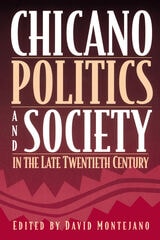
Chicano Politics and Society in the Late Twentieth Century
Edited by David Montejano
University of Texas Press, 1999
The various protest movements that together constituted the Chicano Movement of the 1960s and 1970s urged a "politics of inclusion" to bring Mexican Americans into the mainstream of United States political and social life. This volume of ten specially commissioned essays assesses the post-movement years, asking "what went wrong? what went right? and where are we now?" Collectively, the essays offer a wide-ranging portrayal of the complex situation of Mexican Americans as the twenty-first century begins.
The essays are grouped into community, institutional, and general studies, with an introduction by editor Montejano. Geographically, they point to the importance of "Hispanic" politics in the Southwest, as well as in Chicago wards and in the U.S. Congress, with ramifications in Mexico and Central America. Thematically, they discuss "non-traditional" politics stemming from gender identity, environmental issues, theatre production, labor organizing, university policymaking, along with the more traditional politics revolving around state and city government, the Congressional Hispanic Caucus, and various advocacy organizations.
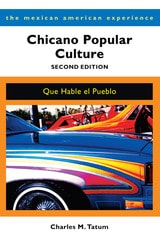
Chicano Popular Culture, Second Edition
Que Hable el PuebloCharles M. Tatum
University of Arizona Press, 2017
This edition features:
- Chicanas in the Chicano Movement and Chicanos since the Chicano Movement
- New material on popular authors such as Denise Chávez, Alfredo Vea, Luis Alberto Urrea, and Juan Felipe Herrera
- Suggested Readings to supplement each chapter
- Theoretical approaches to popular culture, including the perspectives of Norma Cantú, Alicia Gaspar de Alba, Pancho McFarland, Michelle Habell-Pallán, and Víctor Sorell
With clear examples, an engaging writing style, and helpful discussion questions, Chicano Popular Culture, Second Edition invites readers to discover and enjoy Mexican American popular culture.
Chicano Popular Culture
Que Hable el PuebloCharles M. Tatum
University of Arizona Press, 2001
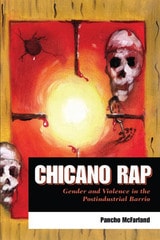
Chicano Rap
Gender and Violence in the Postindustrial BarrioBy Pancho McFarland
University of Texas Press, 2008
Powered by a driving beat, clever lyrics, and assertive attitudes, rap music and hip hop culture have engrossed American youth since the mid-1980s. Although the first rappers were African Americans, rap and hip hop culture quickly spread to other ethnic groups who have added their own cultural elements to the music. Chicano Rap offers the first in-depth look at how Chicano/a youth have adopted and adapted rap music and hip hop culture to express their views on gender and violence, as well as on how Chicano/a youth fit into a globalizing world.
Pancho McFarland examines over five hundred songs and seventy rap artists from all the major Chicano rap regions—San Diego, San Francisco and Northern California, Texas, and Chicago and the Midwest. He discusses the cultural, political, historical, and economic contexts in which Chicano rap has emerged and how these have shaped the violence and misogyny often expressed in Chicano rap and hip hop. In particular, he argues that the misogyny and violence of Chicano rap are direct outcomes of the "patriarchal dominance paradigm" that governs human relations in the United States. McFarland also explains how globalization, economic restructuring, and the conservative shift in national politics have affected Chicano/a youth and Chicano rap. He concludes with a look at how Xicana feminists, some Chicano rappers, and other cultural workers are striving to reach Chicano/a youth with a democratic, peaceful, empowering, and liberating message.
Chicano Renaissance
Contemporary Cultural TrendsEdited by David R. Maciel, Isidro D. Ortiz, and María Herrera-Sobek
University of Arizona Press, 2000
This collection examines changes across a broad range of cultural forms--art, literature, music, cinema and television, radio, and theater--with an emphasis on the last two decades. Original articles by both established and emerging scholars review such subjects as the growth of Tejano music and the rise of Selena, how films and television have affected the Chicana/o experience, the evolution of Chicana/o art over the last twenty years, and postmodern literary trends.
In all of the essays, the contributors emphasize that, contrary to the popular notion that Chicanas/os have succumbed to a victim mentality, they continue to actively struggle to shape the conditions of their lives and to influence the direction of American society through their arts and social struggle. Despite decades usually associated with self-interest in the larger society, the spirit of commitment and empowerment has continued to infuse Chicana/o cultural expression and points toward a vibrant future.
CONTENTSAll Over the Map: La Onda Tejana and the Making of Selena, Roberto R. Calderón
Outside Inside-The Immigrant Workers: Creating Popular Myths, Cultural Expressions, and Personal Politics in Borderlands Southern California, Juan Gómez-Quiñones
"Yo soy chicano": The Turbulent and Heroic Life of Chicanas/os in Cinema and Television, David R. Maciel and Susan Racho
The Politics of Chicano Representation in the Media, Virginia Escalante
Chicana/o and Latina/o Gazing: Audiences of the Mass Media, Diana I. Ríos
An Historical Overview/Update on the State of Chicano Art, George Vargas
Contemporary Chicano Theater, Arturo Ramírez
Breaking the Silence: Developments in the Publication and Politics of Chicana Creative Writing, 1973-1998, Edwina Barvosa-Carter
Trends and Themes in Chicana/o Writings in Postmodern Times, Francisco A. Lomelí, Teresa Márquez, and María Herrera-Sobek
Chicano Studies
The Genesis of a DisciplineMichael Soldatenko
University of Arizona Press, 2009
Chicano Studies is a comparatively new academic discipline. Unlike well-established fields of study that long ago codified their canons and curricula, the departments of Chicano Studies that exist today on U.S. college and university campuses are less than four decades old. In this edifying and frequently eye-opening book, a career member of the discipline examines its foundations and early years. Based on an extraordinary range of sources and cognizant of infighting and the importance of personalities, Chicano Studies is the first history of the discipline.
What are the assumptions, models, theories, and practices of the academic discipline now known as Chicano Studies? Like most scholars working in the field, Michael Soldatenko didn't know the answers to these questions even though he had been teaching for many years. Intensely curious, he set out to find the answers, and this book is the result of his labors. Here readers will discover how the discipline came into existence in the late 1960s and how it matured during the next fifteen years-from an often confrontational protest of dissatisfied Chicana/o college students into a univocal scholarly voice (or so it appears to outsiders).
Part intellectual history, part social criticism, and part personal meditation, Chicano Studies attempts to make sense of the collision (and occasional wreckage) of politics, culture, scholarship, ideology, and philosophy that created a new academic discipline. Along the way, it identifies a remarkable cast of scholars and administrators who added considerable zest to the drama.
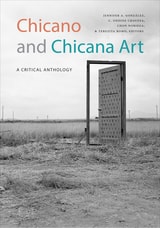
Chicano and Chicana Art
A Critical AnthologyJennifer A. Gonzalez, C. Ondine Chavoya, Chon Noriega, and Terezita Romo, editors
Duke University Press, 2019
Contributors. Carlos Almaraz, David Avalos, Judith F. Baca, Raye Bemis, Jo-Anne Berelowitz, Elizabeth Blair, Chaz Bojóroquez, Philip Brookman, Mel Casas, C. Ondine Chavoya, Karen Mary Davalos, Rupert García, Alicia Gaspar de Alba, Shifra Goldman, Jennifer A. González, Rita Gonzalez, Robb Hernández, Juan Felipe Herrera, Louis Hock, Nancy L. Kelker, Philip Kennicott, Josh Kun, Asta Kuusinen, Gilberto “Magu” Luján, Amelia Malagamba-Ansotegui, Amalia Mesa-Bains, Dylan Miner, Malaquias Montoya, Judithe Hernández de Neikrug, Chon Noriega, Joseph Palis, Laura Elisa Pérez, Peter Plagens, Catherine Ramírez, Matthew Reilly, James Rojas, Terezita Romo, Ralph Rugoff, Lezlie Salkowitz-Montoya, Marcos Sanchez-Tranquilino, Cylena Simonds, Elizabeth Sisco, John Tagg, Roberto Tejada, Rubén Trejo, Gabriela Valdivia, Tomás Ybarra-Frausto, Victor Zamudio-Taylor
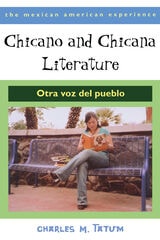
Chicano and Chicana Literature
Otra voz del puebloCharles M. Tatum
University of Arizona Press, 2006
In this comprehensive examination of Chicano and Chicana literature, Charles M. Tatum brings a new and refreshing perspective to the ethnic identity of Mexican Americans. From the earliest sixteenth-century chronicles of the Spanish Period, to the poetry and narrative fiction of the second half of the nineteenth century and the first half of the twentieth century, and then to the flowering of all literary genres in the post–Chicano Movement years, Chicano/a literature amply reflects the hopes and aspirations as well as the frustrations and disillusionments of an often marginalized population.
Exploring the work of Rudolfo Anaya, Sandra Cisneros, Luis Alberto Urrea, and many more, Tatum examines the important social, historical, and cultural contexts in which the writing evolved, paying special attention to the Chicano Movement and the flourishing of literary texts during the 1960s and early 1970s. Chapters provide an overview of the most important theoretical and critical approaches employed by scholars over the past forty years and survey the major trends and themes in contemporary autobiography, memoir, fiction, and poetry.
The most complete and up-to-date introduction to Chicana/o literature available, this book will be an ideal reference for scholars of Hispanic and American literature. Discussion questions and suggested reading included at the end of each chapter are especially suited for classroom use.
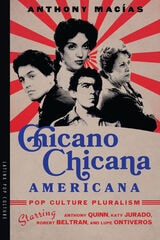
Chicano-Chicana Americana
Pop Culture Pluralism Starring Anthony Quinn, Katy Jurado, Robert Beltran, and Lupe OntiverosAnthony Macías
University of Arizona Press, 2023
Each biographical chapter analyzes an underappreciated actor, revealing their artistic contributions to U.S. common culture. Their long-shot careers tell a tale of players taking action with agency and fighting for screen time and equal opportunity despite disadvantages and differential treatment in Hollywood. These dynamic and complex individuals altered cinematic representations—and audience expectations—by surpassing stereotypes.
The book explores American national character by showing how ethnic Mexicans attained social and cultural status through fair, open competition without a radical realignment of political or economic structures. Their creative achievements demanded dignity and earned respect. Anthony Macías argues that these performances demonstrated a pop culture pluralism that subtly changed mainstream America, transforming it from the mythological past of the Wild West to the speculative future of science fiction.
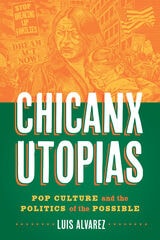
Chicanx Utopias
Pop Culture and the Politics of the PossibleLuis Alvarez
University of Texas Press, 2022
2023 Honorable Mention Best History Book, International Latino Book Awards
Broad and encompassing examination of Chicanx popular culture since World War II and the utopian visions it articulated
Amid the rise of neoliberalism, globalization, and movements for civil rights and global justice in the post–World War II era, Chicanxs in film, music, television, and art weaponized culture to combat often oppressive economic and political conditions. They envisioned utopias that, even if never fully realized, reimagined the world and linked seemingly disparate people and places. In the latter half of the twentieth century, Chicanx popular culture forged a politics of the possible and gave rise to utopian dreams that sprang from everyday experiences.
In Chicanx Utopias, Luis Alvarez offers a broad study of these utopian visions from the 1950s to the 2000s. Probing the film Salt of the Earth, brown-eyed soul music, sitcoms, poster art, and borderlands reggae music, he examines how Chicanx pop culture, capable of both liberation and exploitation, fostered interracial and transnational identities, engaged social movements, and produced varied utopian visions with divergent possibilities and limits. Grounded in the theoretical frameworks of Walter Benjamin, Stuart Hall, and the Zapatista movement, this book reveals how Chicanxs articulated pop cultural utopias to make sense of, challenge, and improve the worlds they inhabited.
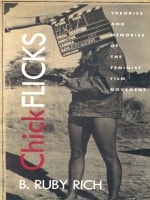
Chick Flicks
Theories and Memories of the Feminist Film MovementB. Ruby Rich
Duke University Press, 1998
For over three decades Rich has been one of the most important voices in feminist film criticism. Her presence at film festivals (such as Sundance, where she is a member of the selection committee), her film reviews in the Village Voice, Elle, Out, and the Advocate, and her commentaries on the public radio program “The World” have secured her a place as a central figure in the remarkable history of what she deems “cinefeminism.” In the hope that a new generation of feminist film culture might be revitalized by reclaiming its own history, Rich introduces each essay with an autobiographical prologue that describes the intellectual, political, and personal moments from which the work arose. Travel, softball, sex, and voodoo all somehow fit into a book that includes classic Rich articles covering such topics as the antiporn movement, the films of Yvonne Rainer, a Julie Christie visit to Washington, and the historically evocative film Maedchen in Uniform. The result is a volume that traces the development not only of women’s involvement in cinema but of one of its key players as well.
The first book-length work from Rich—whose stature and influence in the world of film criticism and theory continue to grow—Chick Flicks exposes unexplored routes and forgotten byways of a past that’s recent enough to be remembered and far away enough to be memorable.
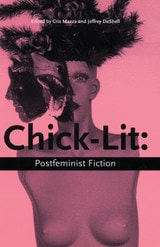
Chick Lit Postfeminist Fiction
Cris Mazza
University of Alabama Press, 2000
A provocative critique of chick lit’s glossy narratives and their complex relationship with postfeminist ideals.
Chick-Lit: Postfeminist Fiction is the fourth volume in “On the Edge: New Women’s Fiction,” FC2’s ongoing effort to discover new and innovative voices in women’s fiction. Determined to contradict the myth that “women don't write experimental fiction,” Chick-Lit discovers women writers with a fresh and irreverent wit and honesty, but no less powerful in their rendering of human experience.
Chick-Lit collects the original fiction of newly discovered writers, but also the award winning work of notable writers like Carole Maso, Jonis Agee, Stacy Levinne and Carolyn Banks. Marked by innovations in form and point-of-view, the writers in this collection are not satisfied with the terrain commonly referred to as “women’s writing.” Insane asylum sex, board games that control people’s lives, a masochistic pedophile humiliated by his victim, an obese woman paying nickels and quarters for attention from teenage girls, a deranged hair stylist and her disloyal dog, a men's impotence therapy group, a surreal landscape constantly producing the body of a woman's mother: this is writing that shouts, yes, there is such a thing as postfeminist fiction.
Chiefs, Scribes, and Ethnographers
Kuna Culture from Inside and OutBy James Howe
University of Texas Press, 2009
Child Abuse in the Deep South
Geographical Modifiers of Abuse CharacteristicsLee W. Badger
University of Alabama Press, 1988
A powerful, data-driven investigation into how race, geography, and community shape the reporting and response to child abuse in Alabama.
Child Abuse in the Deep South is a groundbreaking examination of how child maltreatment is reported, confirmed, and understood in Alabama—a state shaped by deep historical, racial, and geographic divides. Drawing on over 7,000 case reports, this study reveals how factors such as race, community size, and regional culture influence the identification and handling of abuse cases. With a focus on both rural and urban settings, the book uncovers patterns of systemic bias, underreporting, and institutional response that have long gone unaddressed.
Through rigorous data analysis and a compassionate lens, this work challenges assumptions about child welfare in the American South and offers critical insights for policymakers, social workers, legal professionals, and scholars. Child Abuse in the Deep South is both a call to action and a vital resource for understanding the intersection of social justice, public policy, and child protection in one of the nation’s most complex regions.
Child Abuse in the Deep South provides a quantitative benchmark that investigators and policy-makers will find invaluable on the path to defining at-risk populations, effective interventions, and treatments.

Child Benefits
The Smart Investment for America's FutureJane Waldfogel
Russell Sage Foundation, 2025
Drawing on research from peer countries in the Organization for Economic Cooperation and Development as well as the United States, Waldfogel shows that a child benefit would prevent poverty and hardship and protect children from deep poverty and income instability. The research is clear that families would spend the money from a child benefit on food, clothing, and other items for their children and that a child benefit would not have large negative impacts on parental employment or family decisions about fertility. It also shows that a child benefit would promote short- and longer-term child and family wellbeing. Child benefits have been shown to enhance opportunity and benefit society through healthier and better-educated young adults and stronger and more stable families. And rigorous benefit-cost analyses indicate that a child benefit, while costly, would more than pay for itself, yielding a large return on investment.
Waldfogel evaluates four current, major proposals for a child benefit and provides recommendations for a policy that would deliver the best outcomes for children and families and the best return on investment. She argues that such a policy would be more generous, not tied to parental employment or earnings, available to all parents but phased out for higher-income families, delivered in monthly payments through the tax system, and provided in addition to existing social programs.
Child Benefits provides fascinating insights on the history and impacts of child benefits and makes a clear and definitive argument for the establishment of a child benefit in the United States.

Child Brides and Intruders
Carol Wershoven
University of Wisconsin Press, 1993
Child Care Problem
An Economic AnalysisDavid M. Blau
Russell Sage Foundation, 2001
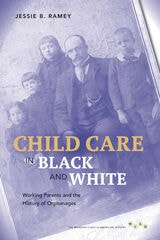
Child Care in Black and White
Working Parents and the History of OrphanagesJessie B. Ramey
University of Illinois Press, 2013
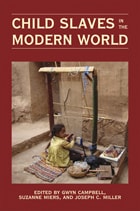
Child Slaves in the Modern World
Gwyn Campbell
Ohio University Press, 2011
Child Slaves in the Modern World is the second of two volumes that examine the distinctive uses and experiences of children in slavery in the nineteenth and twentieth centuries. This collection of previously unpublished essays exposes the global victimization of child slaves from the period of abolition of legal slavery in the nineteenth century to the human rights era of the twentieth century. It contributes to the growing recognitionthat the stereotypical bonded male slave was in fact a rarity.
Nine of the studies are historical, with five located in Africa and three covering Latin America from the British Caribbean to Chile. One study follows the children liberated in the famousAmistad incident (1843). The remaining essays cover contemporary forms of child slavery, from prostitution to labor to forced soldiering.
Child Slaves in the Modern World adds historical depth to the current literature on contemporary slavery, emphasizing the distinctive vulnerabilities of children, or effective equivalents,that made them particularly valuable to those who could acquire and control them. The studies also make clear the complexities of attempting to legislate or decree regulations limiting practices that appear to have been—and continue to be —ubiquitous around the world.
Contributors: Benjamin N. Lawrance, Gwyn Campbell, Cecily Jones, Sue Taylor, Nara Milanich, Martin Klein, Bernard Moitt, Trevor R. Getz, William G. Clarence-Smith, Jonathan Blagbrough, Philip Whalen, Malika Id’ Salah, Zosa de Sas Kropiwnicki, Sarah Maguire, and Mike Dottridge.
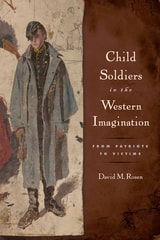
Child Soldiers in the Western Imagination
From Patriots to VictimsRosen, David M
Rutgers University Press, 2015
In this daring new study, anthropologist David M. Rosen investigates why our cultural perception of the child soldier has changed so radically over the past two centuries. Child Soldiers in the Western Imagination reveals how Western conceptions of childhood as a uniquely vulnerable and innocent state are a relatively recent invention. Furthermore, Rosen offers an illuminating history of how human rights organizations drew upon these sentiments to create the very term “child soldier,” which they presented as the embodiment of war’s human cost.
Filled with shocking historical accounts and facts—and revealing the reasons why one cannot spell “infantry” without “infant”—Child Soldiers in the Western Imagination seeks to shake us out of our pervasive historical amnesia. It challenges us to stop looking at child soldiers through a biased set of idealized assumptions about childhood, so that we can better address the realities of adolescents and pre-adolescents in combat. Presenting informative facts while examining fictional representations of the child soldier in popular culture, this book is both eye-opening and thought-provoking.
Child Support
The Next FrontierJ. Thomas Oldham and Marygold S. Melli, Editors
University of Michigan Press, 2000
Reforms have moved the child support system from one of minimal effort, based on the assumption that children in single parent households would be supported by their custodial parents or by government welfare, to a formula-based system for calculating child support and an aggressive enforcement program to collect that support from the noncustodial parent.
The essays range from a review of child support history, with a focus on the changing mores of parental responsibility, to empirical studies of whether increased establishment of paternity and child support enforcement results in more father-child contacts, to how child support affects fathers and whether the support obligation impoverishes noncustodial fathers. The essays explore the failure of the current child support reforms to reduce child poverty, consider the need to study how to determine what is a "fair amount" of child support, and debate proposals to follow the example of a number of other industrialized nations and provide more generous public benefits for poor children.
This book will be of interest to public policy makers and professionals--lawyers, legal scholars, social workers, and administrators--who work in and study the child support system.
Contributors are June R. Carbone, John Eekelaar, Martha A. Fineman, Irwin Garfinkel, Marsha Garrison, Paul K. Legler, Mavis Maclean, Marygold S. Melli, Daniel R. Meyer, J. Thomas Oldham, Allen M. Parkman, Judith A. Seltzer, and Andrea Warman.
J. Thomas Oldham is John H. Freeman Professor Law, University of Houston Law School. Marygold S. Melli is Voss-Bascom Professor of Law Emerita, University of Wisconsin-Madison Law School.
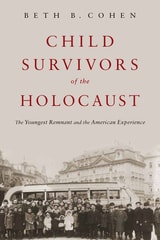
Child Survivors of the Holocaust
The Youngest Remnant and the American ExperienceCohen, Beth B
Rutgers University Press, 2018
The majority of European Jewish children alive in 1939 were murdered during the Holocaust. Of 1.5 million children, only an estimated 150,000 survived. In the aftermath of the Shoah, efforts by American Jews brought several thousand of these child survivors to the United States. In Child Survivors of the Holocaust, historian Beth B. Cohen weaves together survivor testimonies and archival documents to bring their story to light. She reveals that even as child survivors were resettled and “saved,” they struggled to adapt to new lives as members of adoptive families, previously unknown American Jewish kin networks, or their own survivor relatives. Nonetheless, the youngsters moved ahead. As Cohen demonstrates, the experiences both during and after the war shadowed their lives and relationships through adulthood, yet an identity as “survivors” eluded them for decades. Now, as the last living link to the Holocaust, the voices of Child Survivors are finally being heard.
Child Welfare Revisited
An Africentric PerspectiveEverett, Joyce E
Rutgers University Press, 2004
Why are there proportionally more African American children in foster care than white children? Why are white children often readily adoptable, while African American children are difficult to place? Are these imbalances an indication of institutional racism or merely a coincidence?
In this revised and expanded edition of the classic volume, Child Welfare, twenty-one educators call attention to racial disparities in the child welfare system by demonstrating how practices that are successful for white children are often not similarly successful for African American children. Moreover, contributors insist that policymakers and care providers look at African American family life and child-development from a culturally-based Africentric perspective. Such a perspective, the book argues, can serve as a catalyst for creativity and innovation in the formulation of policies and practices aimed at improving the welfare of African American children.
Child Welfare Revisited offers new chapters on the role of institutional racism and economics on child welfare; the effects of substance abuse, homelessness, HIV/AIDS, and domestic violence; and the internal strengths and challenges that are typical of African American families. Bringing together timely new developments and information, this book will continue to be essential reading for all child welfare policymakers and practitioners.
Child of the Holy Ghost
Robert Laxalt
University of Nevada Press, 1997

Child's Play
Sport in Kids' WorldsMessner, Michael A
Rutgers University Press, 2016
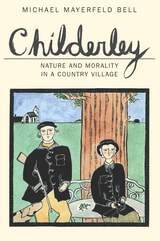
Childerley
Nature and Morality in a Country VillageMichael Mayerfeld Bell
University of Chicago Press, 1994
Why do these villagers find country living so compelling? Why, despite our urban lives, do so many of us strive for a home in the country, closer to nature? Michael Bell suggests that we are looking for a natural conscience: an unshakeable source of identity and moral value that is free from social interests—comfort and solace and a grounding of self in a world of conflict and change.
During his interviews with over a hundred of Childerley's 475 residents—both working-class and professional—Bell heard time and again of their desire to be "country people" and of their anxiety over their class identities. Even though they often knowingly participate in class discrimination themselves—and see their neighbors doing the same—most Childerleyans feel a deep moral ambivalence over class. Bell argues they find in class and its conflicts the restraints and workings of social interests and feel that by living "close to nature" they have an alternative: the identity of a "country person," a "villager that the natural consicence gives."
Yet there are clear parallels between the ways in which the villagers conceive of nature and of social life, and Bell traces these parallels across Childerleyans' perspectives on class, gender, and politics. Where conventional theories would suggest that what the villagers see as nature is a reflection of how they see society, and that the natural conscience must be a product of social interests, Bell argues that ideological processes are more complex. Childerleyans' understandings of society and of the natural conscience shape each other, says Bell, through a largely intuitive process he calls resonance.
For anyone who has ever lived in the countryside or considered doing so, this book is not to be missed. It will also be of particular interest to scholars of British studies and the sociology of knowledge and culture, and to those who work on problems of environment, community, class, and rural life.
"[An] exemplary piece of fieldwork. . . . These gentle conclusions . . . reminds us (when we most need reminding) of the skillful ethnographer's enduring capacity to make the everyday seem truly extraordinary."—Laurie Taylor, New Statesman & Society
"Bell's achievement, and his perceptions, are impressive."—J.W.M. Thompson, London Times
"Races along with all the gossipy compulsion of a blockbuster."—Frances Hardy, Daily Mill
"I believe this view of how people relate to the different domains of their experience is absolutely right. . . . The reader, this ready anyway, finishes Childerley with the feeling that she has just returned from visiting a remote Hampshire village and has learned something, not just about that place, but about human social life lived in other places and lived through place itself."—Wendy Griswold, American Journal of Sociology
Childfree across the Disciplines
Academic and Activist Perspectives on Not Choosing ChildrenDavinia Thornley
Rutgers University Press, 2022
Recently, childfree people have been foregrounded in mainstream media. More than seven percent of Western women choose to remain childfree and this figure is increasing. Being childfree challenges the ‘procreation imperative’ residing at the center of our hetero-normative understandings, occupying an uneasy position in relation to—simultaneously—traditional academic ideologies and prevalent social norms. After all, as Adi Avivi recognizes, "if a woman is not a mother, the patriarchal social order is in danger." This collection engages with these (mis)perceptions about childfree people: in media representations, demographics, historical documents, and both psychological and philosophical models. Foundational pieces from established experts on the childfree choice--Rhonny Dam, Laurie Lisle, Christopher Clausen, and Berenice Fisher--appear alongside both activist manifestos and original scholarly work, comprehensively brought together. Academics and activists in various disciplines and movements also riff on the childfree life: its implications, its challenges, its conversations, and its agency—all in relation to its inevitability in the 21st century. Childfree across the Disciplines unequivocally takes a stance supporting the subversive potential of the childfree choice, allowing readers to understand childfreedom as a sense of continuing potential in who—or what—a person can become.
Childfree and Happy
Transforming the Rhetoric of Women's Reproductive ChoicesCourtney Adams Wooten
Utah State University Press, 2023
Through interviews with thirty-four childfree women and analysis of childfree rhetorics circulating in historical and contemporary texts and events, this book demonstrates how childfree women individually and collectively try to speak back to common beliefs about their reproductive experiences, even as they struggle to make their identities legible in a sociocultural context that centers motherhood. Childfree and Happy theorizes how affect and rhetoric work together to circulate reproductive doxa by using Sara Ahmed’s theories of gendered happiness scripts to analyze what reproductive doxa is embedded in those scripts and how they influence rhetoric by, about, and around childfree women.
Delving into how childfree women position their decision not to have children and the different types of interactions they have with others about this choice, including family members, friends, colleagues, and medical professionals, Childfree and Happy also explores how communities that make space for alternative happiness scripts form between childfree women and those who support them. It will be of interest to scholars in the fields of the rhetoric of motherhood/mothering, as well as feminist rhetorical studies.
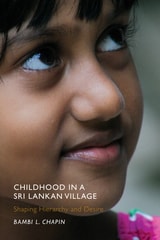
Childhood in a Sri Lankan Village
Shaping Hierarchy and DesireChapin, Bambi L
Rutgers University Press, 2014
Over ten years ago, anthropologist Bambi Chapin traveled to a rural Sri Lankan village to begin answering this question, getting to know the toddlers in the village, then returning to track their development over the course of the following decade. Childhood in a Sri Lankan Village offers an intimate look at how these children, raised on the tenets of Buddhism, are trained to set aside selfish desires for the good of their families and the community. Chapin reveals how this cultural conditioning is carried out through small everyday practices, including eating and sleeping arrangements, yet she also explores how the village’s attitudes and customs continue to evolve with each new generation.
Combining penetrating psychological insights with a rigorous observation of larger social structures, Chapin enables us to see the world through the eyes of Sri Lankan children searching for a place within their families and communities. Childhood in a Sri Lankan Village offers a fresh, global perspective on child development and the transmission of culture.
Children Crossing Borders
Immigrant Parent and Teacher Perspectives on Preschool for Children of ImmigrantsJoseph Tobin
Russell Sage Foundation, 2013
Children Crossing Borders
Latin American Migrant ChildhoodsEdited by Alejandra J. Josiowicz and Irasema Coronado
University of Arizona Press, 2022
Unified in their common interest in the well-being of children, the contributors bring an unrivaled breadth of experience and research to offer a transnational, multidimensional, and multilayered look at migrant childhoods in Latin America. Organized around three main themes—educational experiences; literature, art and culture, and media depictions; and the principle of the “best interest of the child”—this work offers both theoretical and practical approaches to the complexity of migrant childhood. The essays discuss family and school lives, children’s experience as wage laborers, and the legislation and policies that affect migrants.
This volume draws much-needed attention to the plight of migrant children and their families, illuminating the human and emotional toll that children experience as they crisscross the Americas. Exploring the connections between education, policy, cultural studies, and anthropology, the essays in this volume navigate a space of transnational children’s rights central to Latin American life in the twentieth and twenty-first centuries.
Contributors
Marissa Bejarano-Fernbaugh
Nancie Bouchard
Lina M. Caswell
Irasema Coronado
Valentina Glockner
Alejandra J. Josiowicz
Patrícia Nabuco Martuscelli
María Inés Pacecca
Martha Rodríguez-Cruz
Emily Ruehs-Navarro
Kathleen Tacelosky
Élisabeth Vallet
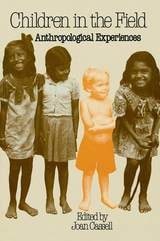
Children In The Field
edited by Joan Cassell
Temple University Press, 1994

Children Of Strangers
Kathryn Morgan
Temple University Press, 1981
Children and Childhood in American Religions
Browning, Don S
Rutgers University Press, 2009
- How the Catholic Church confronts the tension between its teachings about children and actual practic
- The Oglala Lakota's struggle to preserve their spiritual tradition
- The impact of modernity on Hinduism
Only by discussing the unique challenges faced by all religions, and their followers, can we take the first step toward a greater understanding for all of us.
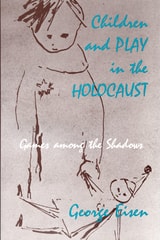
Children and Play in the Holocaust
Games among the ShadowsGeorge Eisen
University of Massachusetts Press, 1988

Children and the Communities
Paul Henderson
Pluto Press, 1995
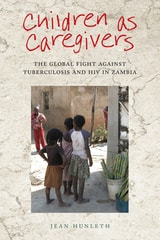
Children as Caregivers
The Global Fight against Tuberculosis and HIV in ZambiaHunleth, Jean
Rutgers University Press, 2017
In Zambia, due to the rise of tuberculosis and the closely connected HIV epidemic, a large number of children have experienced the illness or death of at least one parent. Children as Caregivers examines how well intentioned practitioners fail to realize that children take on active caregiving roles when their guardians become seriously ill and demonstrates why understanding children’s care is crucial for global health policy.
Using ethnographic methods, and listening to the voices of the young as well as adults, Jean Hunleth makes the caregiving work of children visible. She shows how children actively seek to “get closer” to ill guardians by providing good care. Both children and ill adults define good care as attentiveness of the young to adults’ physical needs, the ability to carry out treatment and medication programs in the home, and above all, the need to maintain physical closeness and proximity. Children understand that losing their guardians will not only be emotionally devastating, but that such loss is likely to set them adrift in Zambian society, where education and advancement depend on maintaining familial, reciprocal relationships.
View a gallery of images from the book (https://www.flickr.com/photos/childrenascaregivers)
Download the open access ebook.
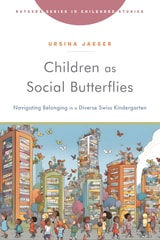
Children as Social Butterflies
Navigating Belonging in a Diverse Swiss KindergartenUrsina Jaeger
Rutgers University Press, 2025
This book is also freely available online as an open-access digital edition, published with the support of the Swiss National Science Foundation.