Results by title
150 books match the query 'Academic libraries' and 12 start with d
Data Culture in Academic Libraries
A Practical Guide to Building Communities, Partnerships, and CollaborationsMarcela Y. Isuster
Assoc of College & Research Libraries, 2025
In five parts, Data Culture in Academic Libraries: A Practical Guide to Building Communities, Partnerships, and Collaborations can help you foster an institutional culture that favors the curation, creation, and wider use of datasets.
- Data at all Levels
- Data Services and Instruction
- Data Outreach
- Data Communities
- Data Partnerships
Data Literacy in Academic Libraries
Teaching Critical Thinking with NumbersJulia Bauder
American Library Association, 2021
We live in a data-driven world, much of it processed and served up by increasingly complex algorithms, and evaluating its quality requires its own skillset. As a component of information literacy, it's crucial that students learn how to think critically about statistics, data, and related visualizations. Here, Bauder and her fellow contributors show how librarians are helping students to access, interpret, critically assess, manage, handle, and ethically use data. Offering readers a roadmap for effectively teaching data literacy at the undergraduate level, this volume explores such topics as
- the potential for large-scale library/faculty partnerships to incorporate data literacy instruction across the undergraduate curriculum;
- how the principles of the ACRL Framework for Information Literacy for Higher Education can help to situate data literacy within a broader information literacy context;
- a report on the expectations of classroom faculty concerning their students’ data literacy skills;
- various ways that librarians can partner with faculty;
- case studies of two initiatives spearheaded by Purdue University Libraries and University of Houston Libraries that support faculty as they integrate more work with data into their courses;
- Barnard College’s Empirical Reasoning Center, which provides workshops and walk-in consultations to more than a thousand students annually;
- how a one-shot session using the PolicyMap data mapping tool can be used to teach students from many different disciplines;
- diving into quantitative data to determine the truth or falsity of potential “fake news” claims; and
- a for-credit, librarian-taught course on information dissemination and the ethical use of information.

Data Management for Libraries
Carly A. Strasser
American Library Association, 2013

Databrarianship
The Academic Data Librarian in Theory and PracticeLynda Kellam
Assoc of College & Research Libraries, 2016
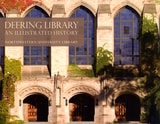
Deering Library
An Illustrated HistoryNina Barrett
Northwestern University Press, 2008
Published to commemorate the Deering Library’s 75th anniversary, this book explores the Deering and McCormick families, who funded the project; the building’s distinctive Collegiate Gothic architecture; its lore as a campus institution; and its role in the evolution of Northwestern University Library into one of the country’s most prominent research libraries. Richly illustrated, it is both an authoritative account of a landmark library and a rich keepsake for Northwestern alumni.
Demystifying Online Instruction in Libraries
People, Process, and ToolsDominique Turnbow and Amanda Roth
American Library Association, 2019
The design of information literacy instruction and the building of it are two distinct skillsets and processes; yet all too often everything gets mashed together, creating needless confusion and stress. In this book Turnbow, an instructional designer, and Roth, an instructional technologist, suggest a better way to organize the work. They shed light on the people, processes, and resources required to create a sustainable portfolio of online instruction. With the goal of fostering conversations in your library about the most streamlined and effective ways to get the work done, they provide guidance on such topics as
- design and development processes, complete with “I.D. in Action” examples and sample design documents;
- thumbnail descriptions of ADDIE, SAM, and design thinking methods;
- creating learning objects;
- types of software tools and how to evaluate them;
- crafting the best documentation of your work for efficient maintenance and reuse;
- adapting assessment to your learning outcomes and purpose;
- when to design for performance support, an underutilized method in libraries; and
- starting points for those interested in developing instructional design and development skills.
Demystifying the instructional design and development process used to create online learning objects, this book will help you understand how instructional design principles and approaches can benefit your learners.
Desk and Beyond
Next Generation Reference ServicesSarah K. American Library Association
Assoc of College & Research Libraries, 2011
Difficult Decisions Closing An D Merging Academic Libraries
Sara Holder
Assoc of College & Research Libraries, 2015
Difficult Decisions
Closing and Merging Academic LibrariesSara Holder
Assoc of College & Research Libraries, 2015
Digital Humanities In The Library
Challenges AndAdrianne Hartsell-Gundy
Assoc of College & Research Libraries, 2015
Digital Humanities in the Library
Challenges and Opportunities for Subject SpecialistsArianne Hartsell-Gundy
Assoc of College & Research Libraries, 2015
Diversity, Equity, and Inclusion in Action
Planning, Leadership, and ProgrammingChristine Bombaro
American Library Association, 2020
All too often, in a hurried attempt to “catch up,” diversity training can create division among staff or place undue burdens on a handful of employees. Instead, academic libraries need approaches to diversity, equity, and inclusion (DEI) that position these priorities as ongoing institutional and professional goals. This book’s model programs will help academic libraries do exactly that, sharing a variety of initiatives that possess clear goals, demonstrable outcomes, and reproducible strategies. Librarians, administrators, and directors will all benefit from the programs detailed inside, which include such topics as
- a university library’s community of practice for interactions and learning around DEI;
- cultural competency training to create more welcoming instruction spaces;
- student workshops on literature searches that mitigate bias;
- overcoming the historic tendency to marginalize LGBTQ+ representation in archives;
- a curriculum and design workshop that moved from discussing social values to embedding them in actions;
- the founding of a library-led LGBT club for students at a rural community college;
- a liberal arts college’s retention-boosting program for first-generation students;
- tailoring a collection and library services to the unique needs of student veterans; and
- a framework for moving from diversity to equity and inclusion, toward a goal of social justice.