Results by title
234 books match the query 'Americas (North, Central, South, West Indies)' and 7 start with d
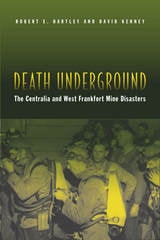
Death Underground
The Centralia and West Frankfort Mine DisastersRobert E. Hartley and David Kenney
Southern Illinois University Press, 2006
Death Underground: The Centralia and West Frankfort Mine Disasters examines two of the most devastating coal mine disasters in United States history since 1928. In two southern Illinois towns only forty miles apart, explosions killed 111 men at the Centralia No. 5 mine in 1947 and 119 men at the New Orient No. 2 mine in West Frankfort in 1951. Robert E. Hartley and David Kenney explain the causes of the accidents, identify who was to blame, and detail the emotional impact the disasters had on the survivors, their families, and their communities.
Politics at the highest level of Illinois government played a critical role in the conditions that led to the accidents. Hartley and Kenney address how safety was compromised when inspection reports were widely ignored by state mining officials and mine company supervisors. Highlighted is the role of Driscoll Scanlan, a state inspector at Centralia, who warned of an impending disaster but whose political enemies shifted the blame to him, ruining his career. Hartley and Kenney also detail the New Orient No. 2 mine explosion, the attempts at rescue, and the resulting political spin circulated by labor, management, and the state bureaucracy. They outline the investigation, the subsequent hearings, and the efforts in Congress to legislate greater mine safety.
Hartley and Kenney include interviews with the survivors, a summary of the investigative records, and an analysis of the causes of both mine accidents. They place responsibility for the disasters on individual mine owners, labor unions, and state officials, providing new interpretations not previously presented in the literature. Augmented by twenty-nine illustrations, the volume also covers the history, culture, and ethnic pluralism of coal mining in Illinois and the United States.
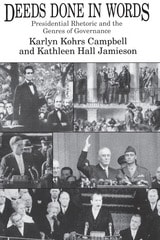
Deeds Done in Words
Presidential Rhetoric and the Genres of GovernanceKarlyn Kohrs Campbell and Kathleen Hall Jamieson
University of Chicago Press, 1990
"Deeds Done in Words is a thoughtful survey of how a democracy uses language to transact its business. Based on an enlivened understanding of genre theory and on numerous pieces of original criticism, Campbell and Jamieson vividly show how central public discourse has become the lifeblood of the American polity."—Roderick Hart, author of The Sound of Leadership
"The rhetoric that issues from the White House is becoming an ever more salient part of what the presidency means and does. This acute inquiry provides a great many insights into the forms, meanings, and functions of presidential discourse. It is an enlightening contribution to our understanding of American politics."—Murray Edelman, author of Constructing the Political Spectacle
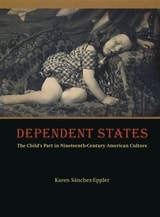
Dependent States
The Child's Part in Nineteenth-Century American CultureKaren Sánchez-Eppler
University of Chicago Press, 2005
Dependent States examines the ties between children's literacy training and the growing cultural prestige of the novel; the way children functioned rhetorically in reform literature to enforce social norms; the way the risks of death to children shored up emotional power in the home; how Sunday schools socialized children into racial, religious, and national identities; and how class identity was produced, not only in terms of work, but also in the way children played. For Sánchez-Eppler, nineteenth-century childhoods were nothing less than vehicles for national reform. Dependent on adults for their care, children did not conform to the ideals of enfranchisement and agency that we usually associate with historical actors. Yet through meticulously researched examples, Sánchez-Eppler reveals that children participated in the making of social meaning. Her focus on childhood as a dependent state thus offers a rewarding corrective to our notions of autonomous individualism and a new perspective on American culture itself.

Dirty Work
Domestic Service in Progressive-Era Women’s FictionAnn Mattis
University of Michigan Press, 2019
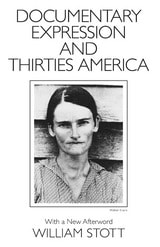
Documentary Expression and Thirties America
William Stott
University of Chicago Press, 1986
"[Scott] might be called the Aristotle of documentary. No one before him has so comprehensively surveyed the achievement of the 1930s, suggesting what should be admired, what condemned, and why; no one else has so persuasively furnished an aesthetic for judging the form."—Times Literary Supplement

Drawing Theories Apart
The Dispersion of Feynman Diagrams in Postwar PhysicsDavid Kaiser
University of Chicago Press, 2005
Drawing on rich archival materials, interviews, and more than five hundred scientific articles from the period, Drawing Theories Apart uses the Feynman diagrams as a means to explore the development of American postwar physics. By focusing on the ways young physicists learned new calculational skills, David Kaiser frames his story around the crafting and stabilizing of the basic tools in the physicist's kit—thus offering the first book to follow the diagrams once they left Feynman's hands and entered the physics vernacular.
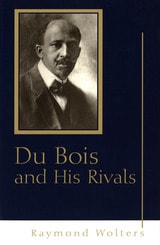
Du Bois and His Rivals
Raymond Wolters
University of Missouri Press, 2002
In Du Bois and His Rivals, Raymond Wolters provides a distinctive biography of this great pioneer of the American civil rights movement. Readers are able to follow the outline of Du Bois’s life, but the book’s main emphasis is on discrete scenes in his life, especially the controversies that pitted Du Bois against his principal black rivals. He challenged Booker T. Washington because he could not abide Washington’s conciliatory approach toward powerful whites. At the same time, Du Bois’s pluralism led him to oppose the leading separatists and integrationists of his day. He berated Marcus Garvey for giving up on America and urging blacks to pursue a separate destiny. He also rejected Walter White’s insistence that integration was the best way to promote the advancement of black people.
Du Bois felt that American blacks should be full-fledged Americans, with all the rights of other American citizens. However, he believed that they should also preserve and develop enough racial distinctiveness to enable them to maintain and foster a sense of racial identity, community, and pride. Du Bois and His Rivals shows that Du Bois stood for much more than protest against racial oppression. He was also committed to pluralism, and his pluralism emphasized the importance of traditional standards and of internal cooperation within the black community. Anyone interested in the civil rights movement, black history, or the history of the United States during the early twentieth century will find this book valuable.