Results by title
664 books match the query 'Ancient & Classical' and 19 start with d
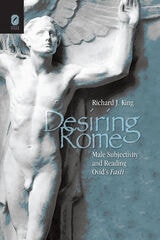
DESIRING ROME
Male Subjectivity and Reading Ovid’s FastiRichard J. King
The Ohio State University Press, 2006
Desiring Rome expands upon recent recognition of the Fasti’s centrality to early imperial politics by situating the poem’s “failure” within broader negotiations of identity between early imperial citizen-subjects and the cultural ideology of Roman manhood.

Darkness Visible
A Study of Vergil's "Aeneid"W. R. Johnson
University of Chicago Press, 1976
With an approach to the text that is both grounded in scholarship and intensely personal, and in a style both rhetorically elegant and passionate, Johnson offers readings of specific passages that are nuanced and suggestive as he focuses on the “somber and nourishing fictions” in Vergil’s poem. A timeless work of scholarship, Darkness Visible will enthrall classicists as well as students and scholars of the history of criticism—specifically the way in which politics influence modern readings of the classics—and of poetry and literature.
Debating Rhetorical Narratology
On the Synthetic, Mimetic, and Thematic Aspects of NarrativeMatthew Clark and James Phelan
The Ohio State University Press, 2020
Clark and Phelan’s deep dive into the synthetic, mimetic, and thematic leads them to explore many other aspects of narrative and narrative theory: style, audiences, the mimetic illusion, fictionality, and more. Their investigation also leads them into questions about rhetorical narratology’s relation to other projects in narrative theory, especially unnatural narratology, and, indeed, about how to assess the explanatory power of competing theories. Ultimately, their debate is compelling testimony about the power of both narrative theory and narrative itself.
Democracy Ancient and Modern
Finley, M. I.
Rutgers University Press, 2019
This classic study of democratic principles is thus now more relevant than ever. A renowned historian of antiquity and political philosophy, Sir M.I. Finley offers a comparative analysis of Greek and modern conceptions of democracy. As he puts the ancient Greeks in dialogue with their contemporary counterparts, Finley tackles some of the most pressing issues of our day, including public apathy, partisanship, consensus politics, distrust of professional politicians, and the limits of free speech.
Including three lectures that Finley delivered at Rutgers University, plus two additional essays that further illuminate his thinking, Democracy Ancient and Modern explores the dramatic differences between the close-knit civil society of the ancient Greeks and our own atomized mass societies. By mapping out democracy’s past and its present manifestations, this book helps us plot a course for democracy’s future.
Democratic Swarms
Ancient Comedy and the Politics of the PeoplePage duBois
University of Chicago Press, 2022
With Democratic Swarms, Page duBois revisits the role of Greek comedy in ancient politics, considering how it has been overlooked as a political medium by modern theorists and critics. Moving beyond the popular readings of ancient Greece through the lens of tragedy, she calls for a revitalized look at Greek comedy. Rather than revisiting the sufferings of Oedipus and his family or tragedy’s relationship to questions of sovereignty, this book calls for comedy—its laughter, its free speech, its wild swarming animal choruses, and its rebellious women—to inform another model of democracy.
Ancient comedy has been underplayed in the study of Greek drama. Yet, with the irrepressible energy of the comic swarm, it provides a unique perspective on everyday life, gender and sexuality, and the utopian politics of the classical period of Athenian democracy. Using the concepts of swarm intelligence and nomadic theory, duBois augments tragic thought with the resistant, utopian, libidinous, and often joyous communal legacy of comedy, and she connects the lively anti-authoritarianism of the ancient comic chorus with the social justice movements of today.
Demosthenes, Speeches 18 and 19
Translated by Harvey Yunis
University of Texas Press, 2005
2006 — Soeurette Diehl Fraser Award for Best Translation of a Book, Texas Institute of Letters
This is the ninth volume in the Oratory of Classical Greece. This series presents all of the surviving speeches from the late fifth and fourth centuries BC in new translations prepared by classical scholars who are at the forefront of the discipline. These translations are especially designed for the needs and interests of today's undergraduates, Greekless scholars in other disciplines, and the general public.
Classical oratory is an invaluable resource for the study of ancient Greek life and culture. The speeches offer evidence on Greek moral views, social and economic conditions, political and social ideology, law and legal procedure, and other aspects of Athenian culture that have recently been attracting particular interest: women and family life, slavery, and religion, to name just a few.
Demosthenes is regarded as the greatest orator of classical antiquity. The two speeches translated here grew out of his longtime rivalry with the orator Aeschines. In Speech 19 (On the Dishonest Embassy) delivered in 343 BC, Demosthenes attacks Aeschines for corruption centered around an ultimately disastrous embassy to Philip of Macedon that both men took part in. This speech made Demosthenes the leading politician in Athens for a time. Speech 18 (On the Crown or De Corona), delivered in 330 BC, is Demosthenes' most famous and influential oration. It resulted not only in Demosthenes receiving one of Athens' highest political honors but also in the defeat and disgrace of Aeschines, who retired from public life and left Athens forever.
Demosthenes, Speeches 1–17
Translated by Jeremy Trevett
University of Texas Press, 2011
This is the fourteenth volume in the Oratory of Classical Greece. This series presents all of the surviving speeches from the late fifth and fourth centuries BC in new translations prepared by classical scholars who are at the forefront of the discipline. These translations are especially designed for the needs and interests of today's undergraduates, Greekless scholars in other disciplines, and the general public.
Classical oratory is an invaluable resource for the study of ancient Greek life and culture. The speeches offer evidence on Greek moral views, social and economic conditions, political and social ideology, law and legal procedure, and other aspects of Athenian culture that have recently been attracting particular interest: women and family life, slavery, and religion, to name just a few.
This volume contains translations of all the surviving deliberative speeches of Demosthenes (plus two that are almost certainly not his, although they have been passed down as part of his corpus), as well as the text of a letter from Philip of Macedon to the Athenians. All of the speeches were purportedly written to be delivered to the Athenian assembly and are in fact almost the only examples in Attic oratory of the genre of deliberative oratory. In the Olynthiac and Philippic speeches, Demosthenes identifies the Macedonian king Philip as a major threat to Athens and urges direct action against him. The Philippic speeches later inspired the Roman orator Cicero in his own attacks against Mark Antony, and became one of Demosthenes' claims to fame throughout history.
Demosthenes, Speeches 20-22
Translated by Edward M. Harris
University of Texas Press, 2008
This is the twelfth volume in the Oratory of Classical Greece. This series presents all of the surviving speeches from the late fifth and fourth centuries BC in new translations prepared by classical scholars who are at the forefront of the discipline. These translations are especially designed for the needs and interests of today's undergraduates, Greekless scholars in other disciplines, and the general public.
Classical oratory is an invaluable resource for the study of ancient Greek life and culture. The speeches offer evidence on Greek moral views, social and economic conditions, political and social ideology, law and legal procedure, and other aspects of Athenian culture that have recently been attracting particular interest: women and family life, slavery, and religion, to name just a few.
Demosthenes is regarded as the greatest orator of classical antiquity. This volume contains three important speeches from the earliest years of his political career: Against Leptines, a prosecution brought against a law repealing all exemptions from liturgies; Against Meidias, a prosecution for aggravated insult (hybris) brought against an influential politician; and Against Androtion, an indictment of a decree of honors for the Council of Athens. Edward M. Harris provides contemporary English translations of these speeches, two of which (Leptines and Androtion) have not been translated into English in over sixty years, along with introductions and extensive notes that take account of recent developments in Classical scholarship.
Demosthenes, Speeches 23-26
Translated by Edward M. Harris
University of Texas Press, 2018
This is the fifteenth volume in the Oratory of Classical Greece. This series presents all of the surviving speeches from the late fifth and fourth centuries BC in new translations prepared by classical scholars who are at the forefront of the discipline. These translations are especially designed for the needs and interests of today’s undergraduates, Greekless scholars in other disciplines, and the general public.
Classical oratory is an invaluable resource for the study of ancient Greek life and culture. The speeches offer evidence on Greek moral views, social and economic conditions, political and social ideology, law and legal procedure, and other aspects of Athenian culture that have recently been attracting particular interest: women and family life, slavery, and religion, to name just a few.
This volume provides introductions, translations, and notes for four speeches found in the Demosthenic corpus that have not been translated in recent times. Against Aristocrates deals with matters of foreign policy involving a mercenary general, Charidemus, and is a valuable source for Athenian homicide law. Against Timocrates involves domestic politics and provides important information about Athenian procedures for enacting legislation. In both speeches, the litigants stress the importance of the rule of law in Athenian democracy and emphasize key ideas, such as the monopoly of legitimate force by the state, the need for consistency in statutes, and the principle of no punishment without a written law. The remaining two speeches, Against Aristogeiton, are forgeries composed in the Hellenistic period, as Edward Harris demonstrates conclusively through a study of laws and legal procedures and an analysis of style and vocabulary.
Demosthenes, Speeches 27-38
Translated by Douglas M. MacDowell
University of Texas Press, 2004
This is the eighth volume in the Oratory of Classical Greece. This series presents all of the surviving speeches from the late fifth and fourth centuries BC in new translations prepared by classical scholars who are at the forefront of the discipline. These translations are especially designed for the needs and interests of today's undergraduates, Greekless scholars in other disciplines, and the general public.
Classical oratory is an invaluable resource for the study of ancient Greek life and culture. The speeches offer evidence on Greek moral views, social and economic conditions, political and social ideology, law and legal procedure, and other aspects of Athenian culture that have recently been attracting particular interest: women and family life, slavery, and religion, to name just a few.
Demosthenes is regarded as the greatest orator of classical antiquity. This volume contains five speeches written for lawsuits in which Demosthenes sought to recover his inheritance, which he claimed was fraudulently misappropriated and squandered by the trustees of the estate. These speeches shed light on Athenian systems of inheritance, marriage, and dowry. The volume also contains seven speeches illustrating the legal procedure known as paragraphe, or "counter-indictment." Four of these are for lawsuits involving commercial shipping, a vital aspect of the Athenian economy that was crucial to maintaining the city's imported food supply. Another concerns the famous Athenian silver mines.
Demosthenes, Speeches 39-49
Translated by Adele C. Scafuro
University of Texas Press, 2011
This is the thirteenth volume in the Oratory of Classical Greece. This series presents all of the surviving speeches from the late fifth and fourth centuries BC in new translations prepared by classical scholars who are at the forefront of the discipline. These translations are especially designed for the needs and interests of today's undergraduates, Greekless scholars in other disciplines, and the general public.
Classical oratory is an invaluable resource for the study of ancient Greek life and culture. The speeches offer evidence on Greek moral views, social and economic conditions, political and social ideology, law and legal procedure, and other aspects of Athenian culture that have recently been attracting particular interest: women and family life, slavery, and religion, to name just a few.
Demosthenes is regarded as the greatest orator of classical antiquity. This volume contains eleven law court speeches ascribed to Demosthenes, though modern scholars believe that only two or three of them are actually his. Most of the speeches here concern inheriting an estate, recovering debts owed to an estate, or exchanging someone else's estate for one's own. Adele Scafuro's supplementary material allows even non-specialists to follow the ins and outs of the legal arguments as she details what we know about the matters involved in each case, including marriage laws, adoptions, inheritances, and the financial obligations of the rich. While Athenian laws and family institutions (e.g., the marriages of heiresses) differ from ours in quite interesting ways, nevertheless the motives and strategies of the litigants often have a contemporary resonance.
Demosthenes, Speeches 50-59
Translated by Victor Bers
University of Texas Press, 2003
This is the sixth volume in the Oratory of Classical Greece. This series presents all of the surviving speeches from the late fifth and fourth centuries BC in new translations prepared by classical scholars who are at the forefront of the discipline. These translations are especially designed for the needs and interests of today's undergraduates, Greekless scholars in other disciplines, and the general public.
Classical oratory is an invaluable resource for the study of ancient Greek life and culture. The speeches offer evidence on Greek moral views, social and economic conditions, political and social ideology, law and legal procedure, and other aspects of Athenian culture that have been largely ignored: women and family life, slavery, and religion, to name just a few.
Demosthenes is regarded as the greatest orator of classical antiquity; indeed, his very eminence may be responsible for the inclusion under his name of a number of speeches he almost certainly did not write. This volume contains four speeches that are most probably the work of Apollodorus, who is often known as "the Eleventh Attic Orator." Regardless of their authorship, however, this set of ten law court speeches gives a vivid sense of public and private life in fourth-century BC Athens. They tell of the friendships and quarrels of rural neighbors, of young men joined in raucous, intentionally shocking behavior, of families enduring great poverty, and of the intricate involvement of prostitutes in the lives of citizens. They also deal with the outfitting of warships, the grain trade, challenges to citizenship, and restrictions on the civic role of men in debt to the state.
Demosthenes, Speeches 60 and 61, Prologues, Letters
Translated by Ian Worthington
University of Texas Press, 2006
This is the tenth volume in the Oratory of Classical Greece. This series presents all of the surviving speeches from the late fifth and fourth centuries BC in new translations prepared by classical scholars who are at the forefront of the discipline. These translations are especially designed for the needs and interests of today's undergraduates, Greekless scholars in other disciplines, and the general public.
Classical oratory is an invaluable resource for the study of ancient Greek life and culture. The speeches offer evidence on Greek moral views, social and economic conditions, political and social ideology, law and legal procedure, and other aspects of Athenian culture that have recently been attracting particular interest: women and family life, slavery, and religion, to name just a few.
Demosthenes is regarded as the greatest orator of classical antiquity. This volume contains his Funeral Oration (Speech 60) for those who died in the Battle of Chaeronea in 338 BC, in which Philip of Macedonia secured his dominance over Greece, as well as the so-called Erotic Essay (Speech 61), a rhetorical exercise in which the speaker eulogizes the youth Epicrates for his looks and physical prowess and encourages him to study philosophy in order to become a virtuous and morally upright citizen. The volume also includes fifty-six prologues (the openings to political speeches to the Athenian Assembly) and six letters apparently written during the orator's exile from Athens. Because so little literature survives from the 330s and 320s BC, these works provide valuable insights into Athenian culture and politics of that era.
Dialectic and Dialogue
Plato's Practice of Philosophical InquiryFrancisco J. Gonzalez
Northwestern University Press, 1998
Dinarchus, Hyperides, and Lycurgus
Translated by Ian Worthington, Craig Cooper, and Edward M. Harris
University of Texas Press, 2001
This is the fifth volume in the Oratory of Classical Greece. This series presents all of the surviving speeches from the late fifth and fourth centuries B.C. in new translations prepared by classical scholars who are at the forefront of the discipline. These translations are especially designed for the needs and interests of today's undergraduates, Greekless scholars in other disciplines, and the general public.
Classical oratory is an invaluable resource for the study of ancient Greek life and culture. The speeches offer evidence on Greek moral views, social and economic conditions, political and social ideology, law and legal procedure, and other aspects of Athenian culture that have been largely ignored: women and family life, slavery, and religion, to name just a few.
This volume combines the surviving speeches of three orators who stand at the end of the classical period. Dinarchus was not an Athenian, but he was called on to write speeches in connection with a corruption scandal (the Harpalus affair) that put an end to the career of Demosthenes. His speeches thus raise many of the vital issues surrounding the Macedonian conquest of Athens and the final years of Athenian democracy. Hyperides was an important public figure who was involved in many of the events described by Dinarchus and Lycurgus. His speeches open a window into many interesting facets of Athenian life. Lycurgus was one of the leading politicians in Athens during the reign of Alexander the Great and put Athenian public finances on a more secure footing. He was also a deeply religious man, who tried to revive Athenian patriotism after the crushing defeat at Chaeronea.
Discourse, Knowledge, and Power in Apuleius’ Metamorphoses
Evelyn Adkins
University of Michigan Press, 2022
In ancient Rome, where literacy was limited and speech was the main medium used to communicate status and identity face-to-face in daily life, an education in rhetoric was a valuable form of cultural capital and a key signifier of elite male identity. To lose the ability to speak would have caused one to be viewed as no longer elite, no longer a man, and perhaps even no longer human. We see such a fantasy horror story played out in the Metamorphoses or The Golden Ass, written by Roman North African author, orator, and philosopher Apuleius of Madauros—the only novel in Latin to survive in its entirety from antiquity. In the novel’s first-person narrative as well as its famous inset tales such as the Tale of Cupid and Psyche, the Metamorphoses is invested in questions of power and powerlessness, truth and knowledge, and communication and interpretation within the pluralistic but hierarchical world of the High Roman Empire (ca. 100–200 CE).
Discourse, Knowledge, and Power presents a new approach to the Metamorphoses: it is the first in-depth investigation of the use of speech and discourse as tools of characterization in Apuleius’ novel. It argues that discourse, broadly defined to include speech, silence, written text, and nonverbal communication, is the primary tool for negotiating identity, status, and power in the Metamorphoses. Although it takes as its starting point the role of discourse in the characterization of literary figures, it contends that the process we see in the Metamorphoses reflects the real world of the second century CE Roman Empire. Previous scholarship on Apuleius’ novel has read it as either a literary puzzle or a source-text for social, philosophical, or religious history. In contrast, this book uses a framework of discourse analysis, an umbrella term for various methods of studying the social political functions of discourse, to bring Latin literary studies into dialogue with Roman rhetoric, social and cultural history, religion, and philosophy as well as approaches to language and power from the fields of sociology, linguistics, and linguistic anthropology. Discourse, Knowledge, and Power argues that a fictional account of a man who becomes an animal has much to tell us not only about ancient Roman society and culture, but also about the dynamics of human and gendered communication, the anxieties of the privileged, and their implications for swiftly shifting configurations of status and power whether in the second or twenty-first centuries.
Dream, Fantasy, and Visual Art in Roman Elegy
Emma Scioli
University of Wisconsin Press, 2015
By treating dreams as a mode for viewing, an analogy suggested by diverse ancient authors, Emma Scioli extracts new information from the poetry of Propertius, Tibullus, and Ovid about the Roman concept of “seeing” dreams. Through comparison with other visual modes of description, such as ekphrasis and simile, as well as with related types of visual experience, such as fantasy and voyeurism, Scioli demonstrates similarities between artist, dreamer, and poet as creators, identifying the dreamer as a particular type of both viewer and narrator.
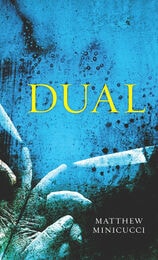
Dual
PoemsMatthew Minicucci
Acre Books, 2023
In his fourth poetry collection, Matthew Minicucci examines masculinity and gun violence as he brings to life the grammatical concept of the dual, a number that is neither singular nor plural. Though now lost in English, the concept is present in other languages both extant and ancient. The poems’ forms fittingly include the elegy, palinode, and contrapuntal, which is both a single poem and two poems intertwined. They align contemporary moments with key texts from Western literature, including ancient Greek epics, in a way that helps us reconsider the aggression of young men. “The world kills kind boys,” Minicucci writes, and “we bury the bodies inside men.”
Minicucci recategorizes our idea of “West,” the Western canon, and the Old West and its bullets, comparing them to modern-day landscapes in Utah, Oregon, Washington, California, and Hawai’i. Whether memorializing a woodworking grandfather or poets Brigit Pegeen Kelly and James Longenbach, Dual notes that loss has a double vision. While weighty in their subjects, Dual’s poems make room for unexpected moments of lightness, such as when the speaker compares the complications of love to “reading the Iliad and realizing, sure, there's anger, // but before that there’s just a lot of camping.”
The book argues, in the end, that there is an unalienable dual between the observer and the observed, the self and the self as confessed to another.
Dual
PoemsMatthew Minicucci
Acre Books, 2023
In his fourth poetry collection, Matthew Minicucci examines masculinity and gun violence as he brings to life the grammatical concept of the dual, a number that is neither singular nor plural. Though now lost in English, the concept is present in other languages both extant and ancient. The poems’ forms fittingly include the elegy, palinode, and contrapuntal, which is both a single poem and two poems intertwined. They align contemporary moments with key texts from Western literature, including ancient Greek epics, in a way that helps us reconsider the aggression of young men. “The world kills kind boys,” Minicucci writes, and “we bury the bodies inside men.”
Minicucci recategorizes our idea of “West,” the Western canon, and the Old West and its bullets, comparing them to modern-day landscapes in Utah, Oregon, Washington, California, and Hawai’i. Whether memorializing a woodworking grandfather or poets Brigit Pegeen Kelly and James Longenbach, Dual notes that loss has a double vision. While weighty in their subjects, Dual’s poems make room for unexpected moments of lightness, such as when the speaker compares the complications of love to “reading the Iliad and realizing, sure, there's anger, // but before that there’s just a lot of camping.”
The book argues, in the end, that there is an unalienable dual between the observer and the observed, the self and the self as confessed to another.