Results by title
99 books match the query 'Art, Modern' and 5 start with d

Delirium and Resistance
Activist Art and the Crisis of CapitalismGregory Sholette
Pluto Press, 2017
In the aftermath of the 2016 US election, Brexit, and a global upsurge of nationalist populism, it is evident that the delirium and the crisis of neoliberal capitalism is now the delirium and crisis of liberal democracy and its culture. And though capitalist crisis does not begin within art, art can reflect and amplify its effects to positive and negative ends.
In this follow-up to his influential 2010 book, Dark Matter: Art and Politics in the Age of Enterprise Culture, Sholette engages in critical dialogue with artists’ collectives, counter-institutions, and activist groups to offer an insightful firsthand account of the relationship between politics and art in neoliberal society. Sholette lays out clear examples of art’s deep involvement in capitalism: the dizzying prices achieved by artists who pander to the financial elite, the proliferation of museums that contribute to global competition between cities in order to attract capital, and the strange relationship between art and rampant gentrification that restructures the urban landscape.
With a preface by noted author Lucy R. Lippard and an introduction by theorist Kim Charnley, Delirium and Resistance draws on over thirty years of critical debates and practices both in and beyond the art world to historicize and advocate for the art activist tradition that radically—and, at times, deliriously—entangles the visual arts with political struggles.
[more]

Dimensions of the Americas
Art and Social Change in Latin America and the United StatesShifra M. Goldman
University of Chicago Press, 1994
Acclaimed art historian Shifra Goldman here provides the first overview of the social history of modern and contemporary Latin American and Latino art. Long needed in the field of art history, this collection of thirty-three essays focuses on Latin American artists throughout Mexico, Central and South America, the Caribbean, and the United States.
Goldman's extensive introduction provides an up-to-date chronology of modern Latin American art; a history of "social art history" in the United States; and synopses of recent theoretical and historical writings by major scholars from Mexico, Cuba, Brazil, Peru, Uruguay, Chile, and the United States. In her essays, Goldman discusses a vast array of topics including: the influence of the Mexican muralists on the American continent; the political and artistic significance of poster art and printmaking in Cuba, Puerto Rico, and among Chicanos; the role of women artists such as Guatemalan painter Isabel Ruiz; and the increasingly important role of politics and multinational businesses in the art world of the 1970s and 1980s. She explores the reception of Latin American and Latino art in the United States, focusing on major historical exhibits as well as on exhibits by artists such as Chilean Alfredo Jaar and Argentinian Leandro Katz. Finally, she examines the significance of nationalist and ethnic themes in Latin American and Latino art.
Written in a straightforward style equally accessible to specialists, students, and general audiences, this book will become essential reading for anyone interested in understanding the importance of Latin American art and the complex dynamic shaping it.
[more]
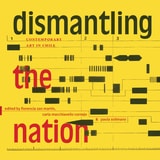
Dismantling the Nation
Contemporary Art in ChileEdited by Florencia San Martín, Carla Macchiavello Cornejo, and Paula Solimano
Amherst College Press, 2023
The first volume to theorize and historicize contemporary artistic practices from Chile in the English language, Dismantling the Nation begins from a position of radical criticism against the nation-state of Chile and its capitalist, heteronormative, and extractivist rule. At a truly pivotal moment in the country’s history, when it is redefining what it wants to be, the works here propose a way of forging a feminist and decolonial future for Chile. The authors attend to practices from distinct locations in Chile, reconceptualizing geographical borders from a transnational and transdisciplinary perspective while engaging with ecocriticism and Indigenous epistemologies. This is an essential volume for anyone looking to understand the current social, political, and artistic movements in Chile.
[more]

Distant Early Warning
Marshall McLuhan and the Transformation of the Avant-GardeAlex Kitnick
University of Chicago Press, 2021
Marshall McLuhan (1911–1980) is best known as a media theorist—many consider him the founder of media studies—but he was also an important theorist of art. Though a near-household name for decades due to magazine interviews and TV specials, McLuhan remains an underappreciated yet fascinating figure in art history. His connections with the art of his own time were largely unexplored, until now. In Distant Early Warning, art historian Alex Kitnick delves into these rich connections and argues both that McLuhan was influenced by art and artists and, more surprisingly, that McLuhan’s work directly influenced the art and artists of his time.
Kitnick builds the story of McLuhan’s entanglement with artists by carefully drawing out the connections among McLuhan, his theories, and the artists themselves. The story is packed with big names: Marcel Duchamp, Niki de Saint Phalle, Jasper Johns, Andy Warhol, Nam June Paik, and others. Kitnick masterfully weaves this history with McLuhan’s own words and his provocative ideas about what art is and what artists should do, revealing McLuhan’s influence on the avant-garde through the confluence of art and theory. The illuminating result sheds light on new aspects of McLuhan, showing him not just as a theorist, or an influencer, but as a richly multifaceted figure who, among his many other accolades, affected multiple generations of artists and their works. The book finishes with Kitnick overlaying McLuhan’s ethos onto the state of contemporary and post-internet art. This final channeling of McLuhan is a swift and beautiful analysis, with a personal touch, of art’s recent transgressions and what its future may hold.
Kitnick builds the story of McLuhan’s entanglement with artists by carefully drawing out the connections among McLuhan, his theories, and the artists themselves. The story is packed with big names: Marcel Duchamp, Niki de Saint Phalle, Jasper Johns, Andy Warhol, Nam June Paik, and others. Kitnick masterfully weaves this history with McLuhan’s own words and his provocative ideas about what art is and what artists should do, revealing McLuhan’s influence on the avant-garde through the confluence of art and theory. The illuminating result sheds light on new aspects of McLuhan, showing him not just as a theorist, or an influencer, but as a richly multifaceted figure who, among his many other accolades, affected multiple generations of artists and their works. The book finishes with Kitnick overlaying McLuhan’s ethos onto the state of contemporary and post-internet art. This final channeling of McLuhan is a swift and beautiful analysis, with a personal touch, of art’s recent transgressions and what its future may hold.
[more]

Dwan Gallery
Los Angeles to New York, 1959–1971James Meyer
University of Chicago Press, 2016
Copublished with the National Gallery of Art in celebration of Virginia Dwan’s gift to the Gallery of her extraordinary personal collection, Dwan Gallery explores her remarkable career. Dwan is one of the most influential figures in the history of twentieth-century American art. Her eponymously named galleries, the first established in a Los Angeles storefront in 1959, followed by a second in New York in 1965, became a beacon for influential postwar American and European artists. She sponsored the debut show for Yves Klein in the United States, and she championed such artists as Franz Kline, Robert Rauschenberg, Claes Oldenburg, Sol LeWitt, and Ad Reinhardt. Her Los Angeles gallery featured abstract expressionism, neo-Dada, and pop, while the New York branch became associated with the emerging movements of minimalism and conceptualism. At the same time, the gallery’s influence expanded to remote locations in Nevada, Utah, and Arizona, where Dwan sponsored such iconic earthworks as Robert Smithson’s Spiral Jetty, Michael Heizer’s Double Negative, and Walter De Maria’s Lightning Field. Though Dwan was a major force in the art world of the sixties and seventies, her story and the history of her gallery have been largely unexplored—until now.
Alongside lush full-color images of one hundred leading artworks, the book deepens our understanding of the artistic exchanges Dwan facilitated during this age of mobility, when air travel and the interstate highway system linked the two coasts and transformed the making of art and the sites of its exhibition. James Meyer, the curator of the exhibition and the foremost authority on minimal art, contributes an essay that is a sophisticated and broad-ranging analysis of Dwan’s legacy.
Honoring Dwan’s significant influence and impact on postwar art, Dwan Gallery is a rich and informative collection that will be treasured by fans of contemporary art.
[more]