Results by title
138 books match the query 'Art and society' and 4 start with d

Delirium and Resistance
Activist Art and the Crisis of CapitalismGregory Sholette
Pluto Press, 2017
In the aftermath of the 2016 US election, Brexit, and a global upsurge of nationalist populism, it is evident that the delirium and the crisis of neoliberal capitalism is now the delirium and crisis of liberal democracy and its culture. And though capitalist crisis does not begin within art, art can reflect and amplify its effects to positive and negative ends.
In this follow-up to his influential 2010 book, Dark Matter: Art and Politics in the Age of Enterprise Culture, Sholette engages in critical dialogue with artists’ collectives, counter-institutions, and activist groups to offer an insightful firsthand account of the relationship between politics and art in neoliberal society. Sholette lays out clear examples of art’s deep involvement in capitalism: the dizzying prices achieved by artists who pander to the financial elite, the proliferation of museums that contribute to global competition between cities in order to attract capital, and the strange relationship between art and rampant gentrification that restructures the urban landscape.
With a preface by noted author Lucy R. Lippard and an introduction by theorist Kim Charnley, Delirium and Resistance draws on over thirty years of critical debates and practices both in and beyond the art world to historicize and advocate for the art activist tradition that radically—and, at times, deliriously—entangles the visual arts with political struggles.
[more]

Dimensions of the Americas
Art and Social Change in Latin America and the United StatesShifra M. Goldman
University of Chicago Press, 1994
Acclaimed art historian Shifra Goldman here provides the first overview of the social history of modern and contemporary Latin American and Latino art. Long needed in the field of art history, this collection of thirty-three essays focuses on Latin American artists throughout Mexico, Central and South America, the Caribbean, and the United States.
Goldman's extensive introduction provides an up-to-date chronology of modern Latin American art; a history of "social art history" in the United States; and synopses of recent theoretical and historical writings by major scholars from Mexico, Cuba, Brazil, Peru, Uruguay, Chile, and the United States. In her essays, Goldman discusses a vast array of topics including: the influence of the Mexican muralists on the American continent; the political and artistic significance of poster art and printmaking in Cuba, Puerto Rico, and among Chicanos; the role of women artists such as Guatemalan painter Isabel Ruiz; and the increasingly important role of politics and multinational businesses in the art world of the 1970s and 1980s. She explores the reception of Latin American and Latino art in the United States, focusing on major historical exhibits as well as on exhibits by artists such as Chilean Alfredo Jaar and Argentinian Leandro Katz. Finally, she examines the significance of nationalist and ethnic themes in Latin American and Latino art.
Written in a straightforward style equally accessible to specialists, students, and general audiences, this book will become essential reading for anyone interested in understanding the importance of Latin American art and the complex dynamic shaping it.
[more]

Dissident Practices
Brazilian Women Artists, 1960s–2020sClaudia Calirman
Duke University Press, 2023
In Dissident Practices, Claudia Calirman examines sixty years of visual art by prominent and emerging Brazilian women artists from the 1960s to the present, covering the period from the military dictatorship to the return to democracy in the mid-1980s, the social changes of the 2000s, the rise of the Right in the late-2010s, and the recent development of an overtly feminist art practice. Though they were lauded as key figures in Brazilian art, these artists still faced adversity and constraints because of their gender. Although many of them in the 1960s and 1970s disavowed the term feminism, Calirman gives a nuanced account of how they responded to authoritarianism, engaged with trauma in the aftermath of the military dictatorship, interrogated social gender norms, and fought against women’s objectification. By battling social inequalities, structures of power, and state violence, these artists create political agency in a society in which women remain targets of brutality and discrimination.
[more]
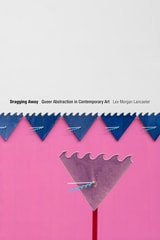
Dragging Away
Queer Abstraction in Contemporary ArtLex Morgan Lancaster
Duke University Press, 2022
In Dragging Away Lex Morgan Lancaster traces the formal and material innovations of contemporary queer and feminist artists, showing how they use abstraction as a queering tactic for social and political ends. Through a process Lancaster theorizes as a drag—dragging past aesthetics into the present and reworking them while pulling their work away from direct representation—these artists reimagine midcentury forms of abstraction and expose the violence of the tendency to reduce abstract form to a bodily sign or biographical symbolism. Lancaster outlines how the geometric enamel objects, grid paintings, vibrant color, and expansive installations of artists ranging from Ulrike Müller, Nancy Brooks Brody, and Lorna Simpson to Linda Besemer, Sheila Pepe, and Shinique Smith offer direct challenges to representational and categorical legibility. In so doing, Lancaster demonstrates that abstraction is not apolitical, neutral, or universal; it is a form of social praxis that actively contributes to queer, feminist, critical race, trans, and crip politics.
[more]