Results by title
133 books match the query 'Artists' and 7 start with d
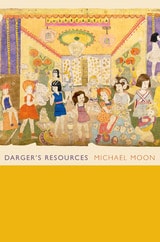
Darger's Resources
Michael Moon
Duke University Press, 2012
Henry Darger (1892–1973) was a hospital janitor and an immensely productive artist and writer. In the first decades of adulthood, he wrote a 15,145-page fictional epic, In the Realms of the Unreal. He spent much of the rest of his long life illustrating it in astonishing drawings and watercolors. In Darger's unfolding saga, pastoral utopias are repeatedly savaged by extreme violence directed at children, particularly girls. Given his disturbing subject matter and the extreme solitude he maintained throughout his life, critics have characterized Darger as eccentric, deranged, and even dangerous, as an outsider artist compelled to create a fantasy universe. Contesting such pathologizing interpretations, Michael Moon looks to Darger's resources, to the narratives and materials that inspired him and often found their way into his writing, drawings, and paintings. Moon finds an artist who reveled in the burgeoning popular culture of the early twentieth century, in its newspaper comic strips, pulp fiction, illustrated children's books, and mass-produced religious art. Moon contends that Darger's work deserves and rewards comparison with that of contemporaries of his, such as the "pulp historians" H. P. Lovecraft and Robert Howard, the Oz chronicler L. Frank Baum, and the newspaper cartoonist Bud Fisher.
[more]

Dark Matter
Art and Politics in the Age of Enterprise CultureGregory Sholette
Pluto Press, 2011
Art is big business, with some artists able to command huge sums of money for their works, while the vast majority are ignored or dismissed by critics. This book shows that these marginalised artists, the 'dark matter' of the art world, are essential to the survival of the mainstream and that they frequently organize in opposition to it.
Gregory Sholette, a politically engaged artist, argues that imagination and creativity in the art world originate thrive in the non-commercial sector shut off from prestigious galleries and champagne receptions. This broader creative culture feeds the mainstream with new forms and styles that can be commodified and used to sustain the few artists admitted into the elite.
This dependency, and the advent of inexpensive communication, audio and video technology, has allowed this 'dark matter' of the alternative art world to increasingly subvert the mainstream and intervene politically as both new and old forms of non-capitalist, public art. This book is essential for anyone interested in interventionist art, collectivism, and the political economy of the art world.
[more]
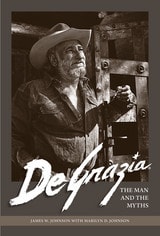
De Grazia
The Man and the MythsJames W. Johnson with Marilyn D. Johnson
University of Arizona Press, 2014
Artist Ted De Grazia (1909–1982) lived life with passion and verve, embracing risk and romance, becoming a legend in Arizona, and gaining international acclaim. De Grazia: The Man and the Myths is a biography that reveals the eccentric, colorful man behind the myths.
Born in Arizona Territory to Italian immigrant parents, De Grazia had a humble childhood as a copper miner’s son, which later influenced his famous persona. De Grazia often held forth at his gallery in Tucson’s Catalina foothills dressed in a pseudo-prospector’s getup of scraggly beard, jeans, flannel shirt, boots, and beat-up cowboy hat. Outrageous stories of womanizing, scores of children, and drinking binges created an eclectic image that fueled stories of mythic proportions, along with global sales of his colorful paintings inspired by the Southwest and Mexico. He made millions through his paintings and the licensing of his art for greeting cards and trinkets. Critics called his work kitsch or commercial, yet thousands of admirers continue to love it.
Calling De Grazia a complicated man doesn’t begin to explain him. He once described himself as “not saint nor devil, but both.” In this first comprehensive biography of De Grazia, authors James W. Johnson with Marilyn D. Johnson tell the story of a life remarkably lived.
[more]
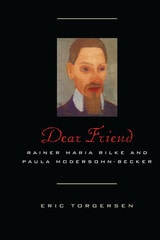
Dear Friend
Rainer Maria Rilke and Paula Modersohn-BeckerEric Torgersen
Northwestern University Press, 2000
Waterlings are the mysterious beings at the center of Veno Taufer's collection of poems. Employing his trademark concise language with hypercondensed imagery and rhythmic drive, Taufer presents a world that at once invokes shamanistic rituals and children's games and riddles. Lyric poetry has long been the most celebrated branch of literature in Slovenia, and Taufer is considered one of the strongest poets of his generation.
[more]
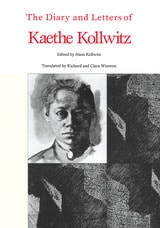
Diary and Letters of Kaethe Kollwitz
Kaethe Kollwitz
Northwestern University Press, 1988
One of the great German Expressionist artists, Kaethe Kollwitz wrote little of herself. But her diary, kept from 1900 to her death in 1945, and her brief essays and letters express, as well as explain, much of the spirit, wisdom, and internal struggle which was eventually transmuted into her art.
[more]

Don Proch
Masking and MappingPatricia Bovey
University of Manitoba Press, 2019
[more]
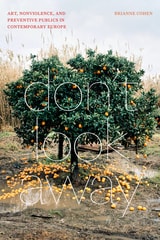
Don't Look Away
Art, Nonviolence, and Preventive Publics in Contemporary EuropeBrianne Cohen
Duke University Press, 2023
In Don’t Look Away Brianne Cohen considers the role of contemporary art in developing a public commitment to end structural violence in Europe. Cohen focuses on art activism of the early twenty-first century that confronts the slow violence perpetuated against precarious peoples. Exploring the work of German filmmaker Harun Farocki, Swiss artist Thomas Hirschhorn, and the art collective Henry VIII’s Wives, Cohen argues that their recursive art practices offer a more sustained counter to the violence undergirding the public sphere than do artworks premised on immediate rupture. Their art reflects on a variety of flashpoints of violence and vulnerability in Europe, from the legacy of the Holocaust to Islamophobia and rising anti-immigrant sentiment. Because this violence has often cultivated fear-based publics, Cohen contends that art must foster ethical and civil relations between strangers across physical and virtual borders. In contrast to art-critical practices that privilege direct action in contemporary art activism, Cohen advocates for the imaginative, messier, often more elusive potential of art to change mindsets and foster a nonviolent social imaginary.
[more]