Results by title
428 books match the query 'Authorship' and 16 start with d
Dante's Epistle to Cangrande
Robert Hollander
University of Michigan Press, 1994
In Dante's Epistle to Cangrande Robert Hollander commandingly marshals new evidence to demonstrate that the epistle should be considered authentically Dantean. He further provides enlightening discussion of the nature of tragedy and comedy in the Divine Comedy. The author draws authoritatively on the extensive array of medieval and modern commentaries stored in electronic form by the Dartmouth Dante Project, of which he is the director.
Dante's Epistle to Cangrande makes a signal contribution to Dante studies. Naturally of interest to students of Dante's work, it will also be important reading for those concerned with literary critical questions such as authorial intent, programmatic statements, and allegorical interpretations of literature.
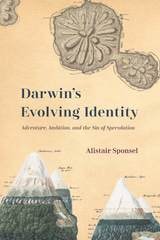
Darwin's Evolving Identity
Adventure, Ambition, and the Sin of SpeculationAlistair Sponsel
University of Chicago Press, 2018
Drawing on his own ambitious research in Darwin’s manuscripts and at the Beagle’s remotest ports of call, Sponsel takes us from the ocean to the Origin and beyond. He provides a vivid new picture of Darwin’s career as a voyaging naturalist and metropolitan author, and in doing so makes a bold argument about how we should understand the history of scientific theories.
Dear World
Contemporary Uses of the DiaryKylie Cardell
University of Wisconsin Press, 2014
In Dear World, Kylie Cardell is sensitive to how changes to our notions of privacy and the personal—spurred by the central presence the Internet has come to occupy in our daily lives—impact how and why diaries are written, and for whom. She considers what these new uses of the diary tell us about the cultural politics of self-representation in a time of mass attention to (and anxiety about) the personal. Cardell sees the twenty-first-century diary as a vibrant and popular cultural practice as much as a literary form, one that plays a key role in mass-mediated notions of authenticity, subjectivity, and truth. Dear World provides much-needed new attention to the innovation, evolution, and persistence of a familiar yet complex autobiographical mode.
Death to the Death of Poetry
Essays, Reviews, Notes, InterviewsDonald Hall
University of Michigan Press, 1994
Donald Hall believes that American poetry, at the present moment, thrives both in quality and in leadership. In his latest collection of essays, reviews, and interviews, Hall counters the increasingly publicized view that poetry has an ever-diminishing importance in contemporary American culture. He resents the endlessly repeated cliché that finds poetry unpopular and losing popularity. Thus: Death to the Death of Poetry.
Throughout the pages of this latest offering in the Poets on Poetry series, Hall returns again and again to the theme of poetry's health, and offers essays praising contemporary poets, who serve as examples of poetry's thriving condition. In addition, Death to the Death of Poetry collects interviews in which Hall discusses the work of poetry--revisions, standards, the psychology and sociology of the poet's life.
The collection will be warmly received by Donald Hall's large readership, enhanced in 1993 by publication of two exemplary volumes: The Museum of Clear Ideas, his eleventh book of poetry; and his essay Life Work, which brought him both new and returning readers.
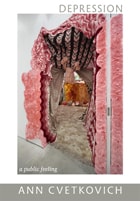
Depression
A Public FeelingAnn Cvetkovich
Duke University Press, 2012
Cvetkovich draws on an unusual archive, including accounts of early Christian acedia and spiritual despair, texts connecting the histories of slavery and colonialism with their violent present-day legacies, and utopian spaces created from lesbian feminist practices of crafting. She herself seeks to craft a queer cultural analysis that accounts for depression as a historical category, a felt experience, and a point of entry into discussions about theory, contemporary culture, and everyday life. Depression: A Public Feeling suggests that utopian visions can reside in daily habits and practices, such as writing and yoga, and it highlights the centrality of somatic and felt experience to political activism and social transformation.
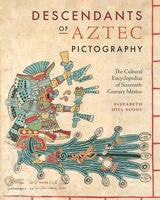
Descendants of Aztec Pictography
The Cultural Encyclopedias of Sixteenth-Century MexicoBy Elizabeth Hill Boone
University of Texas Press, 2021
In the aftermath of the sixteenth-century Spanish conquest of Mexico, Spanish friars and authorities partnered with indigenous rulers and savants to gather detailed information on Aztec history, religious beliefs, and culture. The pictorial books they created served the Spanish as aids to evangelization and governance, but their content came from the native intellectuals, painters, and writers who helped to create them. Examining the nine major surviving texts, preeminent Latin American art historian Elizabeth Hill Boone explores how indigenous artists and writers documented their ancestral culture.
Analyzing the texts as one distinct corpus, Boone shows how they combined European and indigenous traditions of documentation and considers questions of motive, authorship, and audience. For Spanish authorities, she shows, the books revealed Aztec ideology and practice, while for the indigenous community, they preserved venerated ways of pictorial expression as well as rhetorical and linguistic features of ancient discourses. The first comparative analysis of these encyclopedias, Descendants of Aztec Pictography analyzes how the painted compilations embraced artistic traditions from both sides of the Atlantic.
Designs for an Anthropology of the Contemporary
Paul Rabinow, George E. Marcus with James D. Faubion and Tobias Rees
Duke University Press, 2008
Both Rabinow and Marcus participated in the milestone collection Writing Culture: The Poetics and Politics of Ethnography. Published in 1986, Writing Culture catalyzed a reassessment of how ethnographers encountered, studied, and wrote about their subjects. In the opening conversations of Designs for an Anthropology of the Contemporary, Rabinow and Marcus take stock of anthropology’s recent past by discussing the intellectual scene in which Writing Culture intervened, the book’s contributions, and its conceptual limitations. Considering how the field has developed since the publication of that volume, they address topics including ethnography’s self-reflexive turn, scholars’ increased focus on questions of identity, the Public Culture project, science and technology studies, and the changing interests and goals of students. Designs for an Anthropology of the Contemporary allows readers to eavesdrop on lively conversations between anthropologists who have helped to shape their field’s recent past and are deeply invested in its future.
Dialogue, Dialectic and Conversation
A Social Perspective on the Function of WritingGregory Clark. Foreword by Robert J. Connors
Southern Illinois University Press, 1990
This book articulates an ethics for reading that places primary responsibility for the social influences of a text on the response of its readers.
We write and read as participants in a process through which we negotiate with others whom we must live or work with and with whom we share values, beliefs, and actions. Clark draws on current literary theory, rhetoric, philosophy, communication theory, and composition studies as he builds on this argument.
Because reading and writing are public actions that address and direct matters of shared belief, values, and action, reading and writing should be taught as public discourse. We should teach not writing or reading so much as the larger practice of public discourse—a discourse that sustains the many important communities of which students are and will be active members.

Dickens' Working Notes for His Novels
Charles Dickens
University of Chicago Press, 1987
Harry Stone, an internationally recognized Dickens scholar, provides the reader with a full account of Dickens' methods of planning and working. In a comprehensive introduction and extensive notes, he uses Dickens' written plans to illuminate the thought and technique of the novels. He examines creative concerns, such as Dickens' process of naming and visualization, and technical matters, such as his use of various pen nibs, ink colors, and papers.
By making fully available and comprehensible Dickens' own cache of in-process plans, possibilities, and alternatives for shaping his novels, Dickens' Working Notes offers unparalleled insights into the novelist's art and into the nature of the creative imagination.
Disciplinary Discourses, Michigan Classics Ed.
Social Interactions in Academic WritingKen Hyland
University of Michigan Press, 2004
As issues of linguistic and rhetorical expression of disciplinary conventions are becoming more central to teachers, students, and researchers, the careful analysis and straightforward style of Disciplinary Discourses make it a remarkable asset.
The Michigan Classics Edition features a new preface by the author and a new foreword by John M. Swales.
Dispelling Fantasies
Authors of Color Reimagine a GenreJoy Sanchez-Taylor
The Ohio State University Press, 2025
In Dispelling Fantasies, Joy Sanchez-Taylor examines how authors of color, such as R. F. Kuang, N. K. Jemisin, Nnedi Okorafor, Tomi Adeyemi, Tasha Suri, Aiden Thomas, Nghi Vo, and Marlon James, among others, offer critical counterpoints to the history of white-dominated, Eurocentric fantasy. The traditional fantasy that these authors are writing against reinforces Christian virtues and colonial, white supremacist structures; Sanchez-Taylor argues that its racial tropes are tied to a history of colonization and Christian missionary practices, with popular fantasy narratives often depicting Indigenous groups as primitive, deviant peoples in need of salvation. Such representations are based on a Western binary of rational versus magical and are influenced by tenets of Christianity, ultimately contributing to depictions of “the dark fantastic” or fantasy worlds where dark and othered characters are implicitly portrayed as evil and irredeemable. Organized around four Christian ideals that appear frequently in Western fantasy texts—virtue, envy, patriarchy, and salvation—Dispelling Fantasies demonstrates how non-Eurocentric fantasy worlds offer alternative versions of morality, race, gender, and sexuality and make space for authors to move away from hierarchical, binary systems of good and evil.
Dissonance (if you are interested)
Rosmarie Waldrop
University of Alabama Press, 2005
Incisive essays on modern poetry and translation by a noted poet, translator, and critic.
In this comprehensive collection of her essays, Waldrop addresses considerations central to her life’s work: typical genres and ways of countering the conventions of genre; how concrete poets have made syntax spatial rather than grammatical; and the move away from metaphor in poetry toward contiguity and metonymy. Three essays on translation struggle with the sources and targets of translation, of the degree of strangeness or foreignness a translator should allow into any English translation. Finally, other essays examine the two-way traffic between reading and writing, and Waldrop’s notion of reading as experience.
Distant Readings of Disciplinarity
Knowing and Doing in Composition/Rhetoric Dissertationsby Benjamin Miller
Utah State University Press, 2022
Writing studies has long been marked by a multitude of methods and interlocking purposes, partaking of not just humanities approaches but also social scientific ones, with data drawn from interviews and surveys alongside historical and philosophical arguments and with corpus analytics in large-scale collections jostling against small-scale case studies of individuals. These areas of study aren’t always cleanly separable; shifting modes mark the discipline as open and welcoming to many different angles of research. The field needs to embrace that vantage point and generate new degrees of familiarity with methods beyond those of any individual scholar.
Not only a training genre and not only a knowledge-making genre, the dissertation is also a discipline-producing genre. Illustrating what the field has been studying, and how, Distant Readings of Disciplinarity supports more fruitful collaborations within and across research areas and methods.
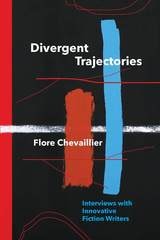
Divergent Trajectories
Interviews with Innovative Fiction WritersFlore Chevaillier
The Ohio State University Press, 2017
Including interviews with R. M. Berry, Debra Di Blasi, Percival Everett, Thalia Field, Renee Gladman, Bhanu Kapil, Lance Olsen, Michael Martone, Carole Maso, Joseph McElroy, Christina Milletti, Alan Singer, and Steve Tomasula, Divergent Trajectories provides a framework that allows innovative authors to discuss in some depth their works, backgrounds, formal research, thematic preferences, genre treatment, aesthetic philosophies, dominant linguistic expressions, cultural trends, and the literary canon. Through an examination of these concepts, writers ask what “traditional” and “innovative” writing is, and most of all, what fiction is today.
Don't Ask
Philip Levine
University of Michigan Press, 1981
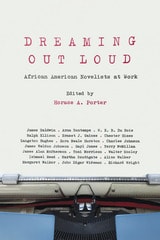
Dreaming Out Loud
African American Novelists at WorkHorace Porter
University of Iowa Press, 2015
Some essays explore the challenges of being an African American writer in the United States, broadly addressing aesthetic and racial prejudice in American publishing and literature and its changing face over the decades. Others are more specific and personal, recounting how the authors came to be a reader and writer in a culture that did not always encourage them to do so. Some are more general and focus on practice and craft, while still other essays offer detailed behind-the-scenes accounts of how famous novels, such as Native Son, Invisible Man, The Autobiography of Miss Jane Pittman, and The Color Purple, came to life. Ranging from the Harlem Renaissance, through the Civil Rights movement, and into the twenty-first century, this anthology explores what it has meant to be an African American novelist over the past hundred years.
Found within are essays by twenty-one African American novelists, including Nobel Prize-winner Toni Morrison, National Book Award-winners Ralph Ellison and Charles Johnson, Pulitzer Prize-winners Alice Walker and James Alan McPherson, and well-known canonical writers such as W. E. B. Du Bois, James Weldon Johnson, Langston Hughes, Richard Wright, Zora Neale Hurston, and Margaret Walker. Dreaming Out Loud seeks to inspire writers and readers alike, while offering a fascinating and important portrait of novelists at work in their own words.
CONTRIBUTORS
James Baldwin, Arna Bontemps, W. E. B. Du Bois, Ralph Ellison, Ernest Gaines, Chester Himes, Langston Hughes, Zora Neale Hurston, Charles Johnson, James Weldon Johnson, Gayl Jones, Terry McMillan, James Alan McPherson, Toni Morrison, Walter Mosley, Ishmael Reed, Martha Southgate, Alice Walker, Margaret Walker, John Edgar Wideman, Richard Wright