Results by title
211 books match the query 'Campaigns & Elections' and 9 start with d
Deliberating Ghana
Postcolonial Rhetorics, Culture, and DemocracyStephen Kwame Dadugblor
Michigan State University Press, 2025
Demanding Choices
Opinion, Voting, and Direct DemocracyShaun Bowler and Todd Donovan
University of Michigan Press, 2000
Democracy Vouchers and the Promise of Fairer Elections in Seattle
Jennifer A. Heerwig and Brian J. McCabe
Temple University Press, 2024
Democracy Vouchers and the Promise of Fairer Elections in Seattle critically evaluates the success and impact of this program. Jennifer Heerwig and Brian J. McCabe emphasize how local elections now attract a much wider and more diverse field of both donors and candidates. They also consider external threats to the program, from litigation about the constitutionality of a voucher program to the rise of independent expenditures.
Offering important lessons on how other cities can adopt a similar program, this compelling case study also highlights the obstacles that will likely arise in its implementation.
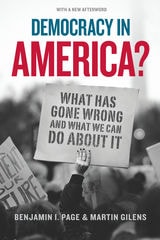
Democracy in America?
What Has Gone Wrong and What We Can Do About ItBenjamin I. Page and Martin Gilens
University of Chicago Press, 2017
How did we get here? Through decades of dysfunctional government. In Democracy in America? veteran political observers Benjamin I. Page and Martin Gilens marshal an unprecedented array of evidence to show that while other countries have responded to a rapidly changing economy by helping people who’ve been left behind, the United States has failed to do so. Instead, we have actually exacerbated inequality, enriching corporations and the wealthy while leaving ordinary citizens to fend for themselves.
What’s the solution? More democracy. More opportunity for citizens to shape what their government does. To repair our democracy, Page and Gilens argue, we must change the way we choose candidates and conduct our elections, reform our governing institutions, and curb the power of money in politics. By doing so, we can reduce polarization and gridlock, address pressing challenges, and enact policies that truly reflect the interests of average Americans.
This book presents a damning indictment. But the situation is far from hopeless. With increased democratic participation as their guide, Page and Gilens lay out a set of proposals that would boost citizen participation, curb the power of money, and democratize the House and Senate. The only certainty is that inaction is not an option. Now is the time to act to restore and extend American democracy.
Democracy in America?
What Has Gone Wrong and What We Can Do About ItBenjamin I. Page and Martin Gilens
University of Chicago Press, 2020
What’s the solution? More democracy. More opportunities for citizens to shape what their government does. To repair our democracy, Page and Gilens argue, we must change the way we choose candidates and conduct our elections, reform our governing institutions, and curb the power of money in politics. By doing so, we can reduce polarization and gridlock, address pressing challenges, and enact policies that truly reflect the interests of average Americans.
Updated with new information, this book lays out a set of proposals that would boost citizen participation, curb the power of money, and democratize the House and Senate.
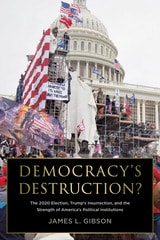
Democracy’s Destruction? Changing Perceptions of the Supreme Court, the Presidency, and the Senate after the 2020 Election
Changing Perceptions of the Supreme Court, the Presidency, and the Senate after the 2020 ElectionJames L. Gibson
Russell Sage Foundation, 2024
Focusing on the U.S. Supreme Court, the presidency, and the U.S. Senate, Gibson reveals that how people assessed the election, the insurrection, and even the second Trump impeachment has little connection to their willingness to view American political institutions as legitimate. Instead, legitimacy is grounded in more general commitments to democratic values and support for the rule of law. On most issues of institutional legitimacy, those who denied the election results and supported the insurrection were not more likely to be alienated from political institutions and to consider them illegitimate.
Gibson also investigates whether Black people might have responded differently to the events of the 2020 election and its aftermath. He finds that in comparison to the White majority, Black Americans were less supportive of America’s democratic institutions and of democratic values, such as reverence for the rule of law, because they often have directly experienced unfair treatment by legal authorities. But he emphasizes that the actions of Trump and his followers are not the cause of those weaker commitments.
Democracy’s Destruction? offers rigorous analysis of the effect of the Trump insurrection on the state of U.S. democracy today. While cautioning that Trump and many Republicans may be devising schemes to subvert the next presidential election more effectively, the book attests to the remarkable endurance of American political institutions.
Design for Democracy
Ballot and Election DesignMarcia Lausen
University of Chicago Press, 2007
Handsomely designed itself, this volume showcases adaptable design models that can improve almost every part of the election process by maximizing the clarity and usability of ballots, registration forms, posters and signs, informational brochures and guides, and even administrative materials for poll workers. Design for Democracy also lays out specific guidelines—covering issues of color palette, typography, and image use—that anchor the comprehensive election design system devised by the group of design specialists from whose name the book takes its title. Part of a major AIGA strategic program, this group's prototypes and recommendations have already been used successfully in major Illinois and Oregon elections and, collected here, are likely to spread across the country as more people become aware of the myriad benefits and broad applicability of improved election design.
An essential tool for designers and election officials, lawmakers and citizens, Design for Democracy harnesses the power of design to increase voter confidence, promote government transparency, and, perhaps most important, create an informed electorate.
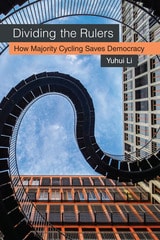
Dividing the Rulers
How Majority Cycling Saves DemocracyYuhui Li
University of Michigan Press, 2019
The election of populist politicians in recent years seems to challenge the commitment to democracy, if not its ideal. This book argues that majority rule is not the problem; rather, the institutions that stabilize majorities are responsible for the suppression of minority interests. Despite the popular notion that social choice instability (or “cycling”) makes it impossible for majorities to make sound legislation, Yuhui Li argues that the best part of democracy is not the large number of people on the winning side; it is that the winners can be easily divided and realigned with the losers in the cycling process. He shows that minorities’ bargaining power depends on their ability to exploit division within the winning coalition and induce its members to defect, an institutionalized uncertainty that is missing in one-party authoritarian systems.
Dividing the Rulers theorizes why such division within the majority is important and what kind of institutional features can help a democratic system maintain such division, which is crucial in preventing the “tyranny of the majority.” These institutional solutions point to a direction of institutional reform that academics, politicians, and voters should collectively pursue.
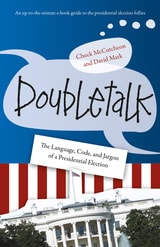
Doubletalk
The Language, Code, and Jargon of a Presidential ElectionChuck McCutcheon and David Mark
University Press of New England, 2016