Results by title
340 books match the query 'Folklore' and 20 start with a
A Deeper Sense of Place
Stories and Journeys of Collaboration in Indigenous ResearchJay T. Johnson and Soren C. Larsen
Oregon State University Press, 2013
These first-person narratives offer insight into the challenges faced by Native and non-Native scholars to their academic and personal approaches during research with Indigenous communities. By addressing the ethical, political, intellectual, and practical meanings of collaboration with Indigenous peoples, A Deeper Sense of Place highlights the ways in which collaborative research can help Indigenous and settler communities find common ground through a shared commitment to land, people, and place.
A Deeper Sense of Place will inform students and academics engaged in research with Indigenous communities, as well as those interested in the challenges of employing critical, qualitative methodologies.
A Scattering of Jades
Stories, Poems, and Prayers of the AztecsThelma D. Sullivan
University of Arizona Press, 2003
A Year with Nature
An AlmanacMarty Crump
University of Chicago Press, 2018
With Crump, we mark the publication of classics like Carson’s Silent Spring and White’s Charlotte’s Web, and even the musical premiere of Tchaikovsky’s Swan Lake. We note the discovery of the structure of DNA and the mountain gorilla, the rise of citizen science projects, and the work of people who’ve shaped how we view and protect nature—from Aristotle to E. O. Wilson. Some days feature US celebrations, like National Poinsettia Day and National Cat Day; others highlight country-specific celebrations, like Australia’s Wombat Day and Thailand’s Monkey Buffet Festival, during which thousands of macaques feast on an ornately arranged spread of fruits and vegetables. Crump also highlights celebrations that span borders, from World Wildlife Conservation Day to International Mountain Day and global festivities for snakes, sea turtles, and chocolate. Interweaving fascinating facts on everything from jellyfish bodies to monthly birth flowers with folkloric entries featuring the Loch Ness Monster, unicorns, and ancient Greek, Roman, and Egyptian mythology, the almanac is as exhaustive as it is enchanting.
A Year with Nature celebrates the wonder and beauty of our natural world as we have expressed it in visual arts, music, literature, science, natural history, and everyday experience. But more than this, the almanac’s vignettes encourage us to contemplate how we can help ensure that future generations will be able to enjoy the landscapes and rich biodiversity we so deeply cherish.
Abalone Tales
Collaborative Explorations of Sovereignty and Identity in Native CaliforniaLes W. Field
Duke University Press, 2008
Tales about abalone and their historical and contemporary meanings are related by Field and his coauthors, who include the chair and other members of the Muwekma Ohlone Tribe; a Point Arena Pomo elder; the chair of the Wiyot tribe and her sister; several Hupa Indians; and a Karuk scholar, artist, and performer. Reflecting the divergent perspectives of various Native groups and people, the stories and analyses belie any presumption of a single, unified indigenous understanding of abalone. At the same time, they shed light on abalone’s role in cultural revitalization, struggles over territory, tribal appeals for federal recognition, and connections among California’s Native groups. While California’s abalone are in danger of extinction, their symbolic power appears to surpass even the environmental crises affecting the state’s vulnerable coastline.
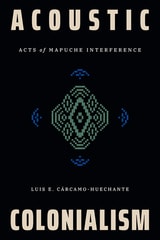
Acoustic Colonialism
Acts of Mapuche InterferenceLuis E. Cárcamo-Huechante
Duke University Press, 2025
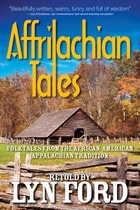
Affrilachian Tales
Folktales from the African-American Appalachian TraditionLynette Ford
Parkhurst Brothers, Inc., 2012
Folktales from the African American Appalachian tradition. Told by Lyn Ford, one of America’s busiest touring storytellers. The power of Lyn's storytelling comes straight out of her family heritage, which is the content of this, her first book. Here she tells how she learned stories from her father and grandfather—and she includes many of the stories they told her.
Alas Poor Ghost
Gillian Bennett
Utah State University Press, 1999
In the rational modern world, belief in the supernatural seemingly has been consigned to the worlds of entertainment and fantasy. Yet belief in other worldly phenomena, from poltergeists to telepathy, remains strong, as Gillian Bennett's research shows. Especially common is belief in continuing contact with, or the continuing presence of, dead family members. Bennett interviewed women in Manchester, England, asking them questions about ghosts and other aspects of the supernatural. (Her discussion of how her research methods and interview techniques evolved is in itself valuable.) She first published the results of the study in the well-received Traditions of Belief: Women and the Supernatural, which has been widely used in folklore and women's studies courses. "Alas, Poor Ghost!" extensively revises and expands that work. In addition to a fuller presentation and analysis of the original field research and other added material, the author, assisted by Kate Bennett, a gerontological psychologist, presents and discusses new research with a group of women in Leicester, England.
Bennett is interested in more than measuring the extent of belief in other worldly manifestations. Her work explores the relationship between narrative and belief. She anticipated that her questions would elicit from her interviewees not just yes or no replies but stories about their experiences that confirmed or denied notions of the supernatural. The more controversial the subject matter, the more likely individuals were to tell stories, especially if their answers to questions of belief were positive. These were most commonly individualized narratives of personal experience, but they contained many of the traditional motifs and other content, including belief in the supernatural, of legends. Bennett calls them memorates and discusses the cultural processes, including ideas of what is a "proper" experience of the supernatural and a "proper" telling of the story, that make them communal as well as individual. These memorates provide direct and vivid examples of what the storytellers actually believe and disbelieve. In a final section, Bennett places her work in historical context through a discussion of case studies in the history of supernatural belief.
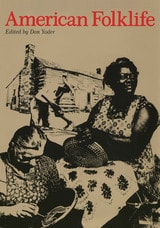
American Folklife
Edited by Don Yoder
University of Texas Press, 1976
Knowledge of folk custom and folk belief can help to explain ways of thought and behavior in modern America. American Folklife, a unique collection of essays dedicated to the presentation of American tradition, broadens our understanding of the regional differences and ethnic folkways that color American life.
Folklife research examines the entire context of everyday life in past and present. It includes every aspect of traditional life, from regional architecture through the full range of material culture into spiritual culture, folk religion, witchcraft, and other forms of folk belief. This collection is especially useful in its application to American society, where countless influences from European, American Indian, and African cultural backgrounds merge. American Folklife relates folklife research to history, anthropology, cultural geography, architectural history, ethnographic film, folk technology, folk belief, and ethnic tensions in American society. It documents the folk-cultural background that is the root of our society.
American Folklore
Richard M. Dorson
University of Chicago Press, 1961
Tracing the forms and content of American folklore, Mr. Dorson reveals the richness, pathos, and humor of genuine folklore, which he distinguishes from the "fakelore" of popularizers and chauvinists. At the same time, however, he shows what the creation of spurious folklore (the Paul Bunyan legends, for instance) discloses about our national character. Based upon authentic field collections and research, the examples cited include folkways, jests, boasts, tall tales, ballads, folk and legendary heroes.
"His volume enlarges our understanding of the American past and present through an empirical survey of the extant folk traditions and it also provides us with the means for appreciating what is valuable in these folk traditions."—Virginia Quarterly Review

An Amulet of Greek Earth
Generations of Immigrant Folk CultureHelen Papanikolas
Ohio University Press, 2002
The boys and men who left their Greek valley and mountain villages in the early 1900s for America came with amulets their mothers had made for them. Some were miniature sacks attached to a necklace; more often they were merely a square of fabric enclosing the values of their lives: a piece of a holy book or a sliver of the True Cross representing their belief in Greek Orthodoxy; a thyme leaf denoting their wild terrain; a blue bead to ward off the Evil Eye; and a pinch of Greek earth.
In her evocative and meticulously researched book An Amulet of Greek Earth, author Helen Papanikolas explains and examines the vibrant culture these immigrants brought with them to the new world. The Romiosini culture, as it was called, provided the foundation for their new lives and was oftentimes the cause of strife as they passed on their beliefs and traditions to successive generations of Greek Americans.
In the tradition of her fictional accounts of Greek immigrant life, Helen Papanikolas unearths the cultural beliefs and passions that compelled the Greek-American community to make its own way into the broader culture of America. Based on extensive study, personal interviews, and a lifetime of experience, An Amulet of Greek Earth is a revealing and informative chronicle of the immigrant’s experience in becoming an American.
An Arkansas Folklore Sourcebook
W.K. McNeil
University of Arkansas Press, 1992
Arkansas’s rich folk tradition is shown by the variety of its manifestations: a 250-year-old ballad, an archaic method of hewing railroad crossties with a broadax, the use of poultices and toddies to treat the common cold, and swamps of evil repute are all parts of the tradition that constitutes Arkansas folklore. In fact, as the essays selected by W.K. McNeil and William M. Clements show, these few examples only begin to tell the story.
Starting with a working description of folklore as “cultural material that is traditional and unofficial” and characterized by a pattern of oral transmission, variation, formulaic structures, and usually uncertain origin, the authors survey in detail a wide array of folk objects, activities, beliefs, and customs. Among the rich offerings in this sourcebook are a discussion of the history of folklore research in Arkansas, an examination of some of the traditional songs and music still being preformed, a thoughtful exploration of the serious side of “tall tales” and “windies,” an investigation of folk architecture in Arkansas and what it reveals about our cultural origins, a study of many traditional foods and there preparation methods, an analysis of superstitions and beliefs, and a description of festivals and celebrations that are observed to this day.
Complemented by biographies of reference works and audio and video recordings of the state’s folk materials, An Arkansas Folklore Sourcebook is the first complete guide to the study of one state’s “unofficial culture.”

An Epoch of Miracles
Oral Literature of the Yucatec MayaTranslated with Commentaries by Allan F. Burns
University of Texas Press, 1983
“Mr. Allan Burns, I am here to tell you an example, the example of the Hunchbacks.” So said Paulino Yamá, traditionalist and storyteller, to Allan Burns, anthropologist and linguist, as he began one story that found its way into this book.
Paulino Yamá was just one of several master storytellers from the Yucatán Peninsula of Mexico from whom Burns learned not only the Mayan language but also the style and performance of myths, stories, riddles, prayers, and other forms of speech of their people. The result is An Epoch of Miracles, a wonderfully readable yet thoroughly scholarly set of translations from the oral literature of the Yucatec Maya, an important New World tradition never before systematically described.
An Epoch of Miracles brings us over thirty-five long narratives of things large, small, strange, and “regular” and as many delightful short pieces, such as bird lore, riddles, and definitions of anteaters, rainbows, and other commonplaces of the Mayan world. Here are profound narratives of the Feathered Serpent, the mighty Rain God Chac and his helpers, and the mysterious cult of the Speaking Cross. But because these are modern, “Petroleum Age” Maya, here too are a discussion with Cuba’s Fidel Castro and a greeting to former president Richard Nixon.
All pieces are translated ethnopoetically; examples of several genres are presented bilingually. An especially valuable feature is the indication of performance style, such as pauses and voice quality, given with each piece.

And Other Neighborly Names
Social Process and Cultural Image in Texas FolkloreEdited by Richard Bauman and Roger D. Abrahams
University of Texas Press, 1981
"And Other Neighborly Names"—the title is from a study by Americo Paredes of the names, complimentary and otherwise, exchanged across cultural boundaries by Anglos and Mexicans—is a collection of essays devoted to various aspects of folk tradition in Texas. The approach builds on the work of the folklorists who have helped give the study of folklore in Texas such high standing in the field-Mody Boatright, J. Frank Dobie, John Mason Brewer, the Lomaxes, and of course Paredes himself, to whom this book is dedicated.
Focusing on the ways in which traditions arise and are maintained where diverse peoples come together, the editors and other essayists—John Holmes McDowell, Joe Graham, Alicia María González, Beverly J. Stoeltje, Archie Green, José E. Limón, Thomas A. Green, Rosan A. Jordan, Patrick B. Mullen, and Manuel H. Peña—examine conjunto music, the corrido, Gulf fishermen's stories, rodeo traditions, dog trading and dog-trading tales, Mexican bakers' lore, Austin's "cosmic cowboy" scene, and other fascinating aspects of folklore in Texas. Their emphasis is on the creative reaction to socially and culturally pluralistic situations, and in this they represent a distinctively Texan way of studying folklore, especially as illustrated in the performance-centered approach of Paredes, Boatright, and others who taught at the University of Texas at Austin. As an overview of this approach—its past, present, and future—"And Other Neighborly Names" makes a valuable contribution both to Texas folklore and to the discipline as a whole.
Anguish of Snails
Native American Folklore in the WestBarre Toelken
Utah State University Press, 2003
Winner of the 2004 Chicago Folklore Prize, The Anguish of Snails is an essential work for the collection of any serious reader in folklore or Native American studies.
Animal Myths and Metaphors in South America
URTON
University of Utah Press, 1985
The contributors to this anthology have not limited themselves to the notion that clans and moieties are the only sources and objects of metaphorical comparisons between humans and animals. They suggest a shift in perspective that has metaphorical comparisons generated by conceived similarities and differences between animals and particular types of human beings. Some examples of this include macaw fledglings as adolescents; pumas as fully initiated men, and foxes as young married men. With this shift of emphasis, a significantly different analytic focus in the study of human-animal relations is produced.

Archie Green
The Making of a Working-Class HeroSean Burns
University of Illinois Press, 2011
Arts in Earnest
North Carolina FolklifeDaniel W. Patterson and Charles G. Zugg, III, eds.
Duke University Press, 1990
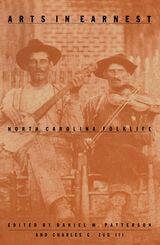
Personal interviews are an important element in the book. Laura Lee, an elderly black woman from Chatham County, describes the quilts she made from funeral flower ribbons; witnesses and friends each remember varying details of the Duke University football player who single-handedly vanquished a gang of would-be muggers; Clyde Jones leads a safari through his backyard, which is filled with animals made of wood and cement that represent nontraditional folk art; the songs and sermon of a Primitive Baptist service flow together as one—“it tills you up all over”; Durham bluesman Willie Trice, one of a handful of Durham musicians who recorded in the 1930s and early 1940s, remembers when the active tobacco warehouses offered ready audiences—“They’d tip us a heap of change to play some music”; and Goldsboro tobacco auctioneer H. L. “Speed” Riggs chants 460 words per minute, five to six times faster than a normal conversational rate.
As Legend Has It
History, Heritage, and the Construction of Swedish American IdentityJennifer Eastman Attebery
University of Wisconsin Press, 2023
The legends Swedish Americans tell about their past are both similar to and distinct from those of others who migrated westward; they participated in settler colonialism while maintaining a sense of their specific, Swedish ethnicity. Unlike racial minority groups, Swedish Americans could claim membership in a majority white community without abandoning their cultural heritage. Their legends and local histories reflect that positioning. Attebery reveals how Swedish American legends are embedded within local history writing, how ostension and rhetoric operate in historical legends, and how vernacular local history writing works in tandem with historical legends to create a common message about a communal past. This impeccably researched study points to ways in which legends about the past possess qualities unique to their subgenre yet can also operate similarly to contemporary legends in their social impact.
At Play in Belfast
Children's Folklore and Identities in Northern IrelandLanclos, Donna M
Rutgers University Press, 2003
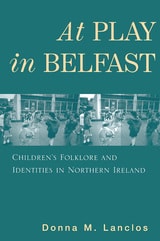
For Lanclos, children's experiences stimulate discussions about culture and society. In her words, "Children's everyday lives are more than just preparation for their futures, but are life itself."
At Play in Belfast is a volume in the Rutgers Series in Childhood Studies, edited by Myra Bluebond-Langner.
Aztec Philosophy
Understanding a World in MotionJames Maffie
University Press of Colorado, 2014
Aztec Philosophy focuses on the ways Aztec metaphysics—the Aztecs’ understanding of the nature, structure and constitution of reality—underpinned Aztec thinking about wisdom, ethics, politics,\ and aesthetics, and served as a backdrop for Aztec religious practices as well as everyday activities such as weaving, farming, and warfare. Aztec metaphysicians conceived reality and cosmos as a grand, ongoing process of weaving—theirs was a world in motion. Drawing upon linguistic, ethnohistorical, archaeological, historical, and contemporary ethnographic evidence, Maffie argues that Aztec metaphysics maintained a processive, transformational, and non-hierarchical view of reality, time, and existence along with a pantheistic theology.
Aztec Philosophy will be of great interest to Mesoamericanists, philosophers, religionists, folklorists, and Latin Americanists as well as students of indigenous philosophy, religion, and art of the Americas.