Results by title
53 books match the query 'Capital punishment' and 5 start with d
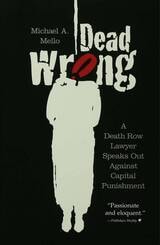
Dead Wrong
A Death Row Lawyer Speaks Out Against Capital PunishmentMichael A. Mello
University of Wisconsin Press, 1999
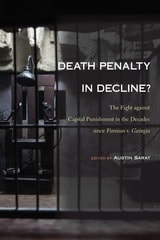
Death Penalty in Decline?
The Fight against Capital Punishment in the Decades since Furman v. GeorgiaAustin Sarat
Temple University Press, 2024
At a time when the United States is undertaking an unprecedented national reconsideration of the death penalty, Death Penalty in Decline? seeks to evaluate how abolitionists might succeed today.
Contributors: John Bessler, Corinna Barrett Lain, James R. Martel, Linda Ross Meyer, Carol S. Steiker, Jordan M. Steiker, and the editor
Deathwork
Defending The CondemnedMichael Mello
University of Minnesota Press, 2002
A gripping exposé of what lawyers face when they defend prisoners in capital cases.
Legal cases are stories, and some of the most compelling-and the most disturbing-are those that take place on death row: the innocent man executed, juveniles and the mentally ill condemned to die, a smoking electric chair, a napping defense attorney, a senile hit man. These are the stories in which Michael Mello, as a capital public defender, played a crucial role, and they are the cases that make up Deathwork, a moment-by-moment, behind-the-scenes look at the life and work of a death row lawyer and his clients.
Part memoir, part legal casebook, Deathwork offers a gritty, often anguishing picture of what Supreme Court Justice Harry Blackmun called the American legal "machinery of death." The stories Mello tells raise questions about legal issues-from prosecutorial misconduct to the racial inequities of sentencing, from the rules of evidence to the rights of the mentally ill-that here take on a life-and-death urgency. They describe in detail how constitutional issues are raised postconviction, and how those issues are adjudicated by the courts and in accordance with bizarre claims of objectivity. And they show, with a painful immediacy and authenticity, what it is like to live and work under an impending death sentence, the adrenaline rush of the stay or unexpected success, the inconsolable sadness upon the execution of the sick, the afflicted, the innocent.As DNA reversals, last-minute confessions, and revelations of corruption are bringing capital punishment to the forefront of public debate nationwide, this firsthand account of the legalities and realities of the death penalty is as relevant as it is enthralling, as edifying as it is impossible to ignore.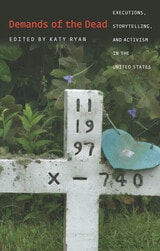
Demands of the Dead
Executions, Storytelling, and Activism in the United StatesKaty Ryan
University of Iowa Press, 2012
The first work to combine literary criticism with other forms of death penalty–abolitionist writing, Demands of the Dead demonstrates the active importance of literature and literary criticism to the struggle for greater justice in the United States. Gathering personal essays, scholarly articles, and creative writings on the death penalty in American culture, this striking collection brings human voices and literary perspectives to a subject that is often overburdened by statistics and angry polemics. Contributors include death-row prisoners, playwrights, poets, activists, and literary scholars.
Highlighting collaborations between writers inside and outside prison, all within the context of the history of state killing laws and foundational concepts that perpetuate a culture of violent death, Demands of the Dead opens with a pamphlet dictated by Willie Francis, a teenager who survived a first execution attempt in Louisiana’s electric chair before he was subsequently killed by the state in 1947.
Writers are a conspicuous part of U.S. death-penalty history, composing a vibrant literary record of resistance to state killing. This multigenre collection both recalls and contributes to this tradition through discussions of such writers as Walt Whitman, Herman Melville, Gertrude Atherton, Ernest Gaines, Sonia Sanchez, Kia Corthron, and Sherman Alexie. A major contribution to literary studies and American prison studies, Demands of the Dead asserts the relevance of storytelling to ethical questions and matters of public policy.
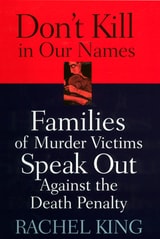
Don't Kill in Our Names
Families of Murder Victims Speak Out against the Death PenaltyKing, Rachel
Rutgers University Press, 2003
Could you forgive the murderer of your husband? Your mother? Your son?
Families of murder victims are often ardent and very public supporters of the death penalty. But the people whose stories appear in this book have chosen instead to forgive their loved ones’ murderers, and many have developed personal relationships with the killers and have even worked to save their lives. They have formed a nationwide group, Murder Victims’ Families for Reconciliation (MVFR), to oppose the death penalty.
MVFR members are often treated as either saints or lunatics, but the truth is that they are neither. They are ordinary people who have responded to an extraordinary and devastating tragedy with courage and faith, choosing reconciliation over retribution, healing over hatred. Believing that the death penalty is a form of social violence that only repeats and perpetuates the violence that claimed their loved one’s lives, they hold out the hope of redemption even for those who have committed the most hideous crimes.
Weaving third-person narrative with wrenching first-hand accounts, King presents the stories of ten MVFR members. Each is a heartrending tale of grief, soul searching, and of the challenge to choose forgiveness instead of revenge. These stories, which King sets in the context of the national discussion over the death penalty debate and restorative versus retributive justice, will appeal not only to those who oppose the death penalty, but also to those who strive to understand how people can forgive the seemingly unforgivable.