50 books match the query 'Catholics' and 5 start with d

cover of Detroit's Cold War: The Origins of Postwar Conservatism

Detroit's Cold War

The Origins of Postwar Conservatism

Colleen Doody

University of Illinois Press, 2017
Detroit's Cold War locates the roots of American conservatism in a city that was a nexus of labor and industry in postwar America. Drawing on meticulous archival research focusing on Detroit, Colleen Doody shows how conflict over business values and opposition to labor, anticommunism, racial animosity, and religion led to the development of a conservative ethos in the aftermath of World War II.
 
Using Detroit--with its large population of African-American and Catholic immigrant workers, strong union presence, and starkly segregated urban landscape--as a case study, Doody articulates a nuanced understanding of anticommunism during the Red Scare. Looking beyond national politics, she focuses on key debates occurring at the local level among a wide variety of common citizens. In examining this city's social and political fabric, Doody illustrates that domestic anticommunism was a cohesive, multifaceted ideology that arose less from Soviet ideological incursion than from tensions within the American public.
[more]
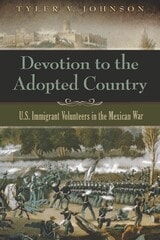
cover of Devotion to the Adopted Country: U.S. Immigrant Volunteers in the Mexican War

Devotion to the Adopted Country

U.S. Immigrant Volunteers in the Mexican War

Tyler V. Johnson

University of Missouri Press, 2012
In Devotion to the Adopted Country, Tyler V. Johnson looks at the efforts of America’s Democratic Party and Catholic leadership to use the service of immigrant volunteers in the U.S.–Mexican War as a weapon against nativism and anti-Catholicism. Each chapter focuses on one of the five major events or issues that arose during the war, finishing with how the Catholic and immigrant community remembered the war during the nativist resurgence of the 1850s and in the outbreak of the Civil War. Johnson’s book uncovers a new social aspect to military history by connecting the war to the larger social, political, and religious threads of antebellum history.
Having grown used to the repeated attacks of nativists upon the fidelity and competency of the German and Irish immigrants flooding into the United States, Democratic and Catholic newspapers vigorously defended the adopted citizens they valued as constituents and congregants. These efforts frequently consisted of arguments extolling the American virtues of the recent arrivals, pointing to their hard work, love of liberty, and willingness to sacrifice for their adopted country.
However, immigrants sometimes undermined this portrayal by prioritizing their ethnic and/or religious identities over their identities as new U.S. citizens. Even opportunities seemingly tailor-made for the defenders of Catholicism and the nation’s adopted citizens could go awry. When the supposedly well-disciplined Irish volunteers from Savannah brawled with soldiers from another Georgia company on a Rio Grande steamboat, the fight threatened to confirm the worst stereotypes of the nation’s new Irish citizens. In addition, although the Jesuits John McElroy and Anthony Rey gained admirers in the army and in the rest of the country for their untiring care for wounded and sick soldiers in northern Mexico, anti-Catholic activists denounced them for taking advantage of vulnerable young men to win converts for the Church.         
Using the letters and personal papers of soldiers, the diaries and correspondence of Fathers McElroy and Rey, Catholic and Democratic newspapers, and military records, Johnson illuminates the lives and actions of Catholic and immigrant volunteers and the debates over their participation in the war. Shedding light on this understudied and misunderstood facet of the war with Mexico, Devotion to the Adopted Country adds to the scholarship on immigration and religion in antebellum America, illustrating the contentious and controversial process by which immigrants and their supporters tried to carve out a place in U.S. society.
[more]
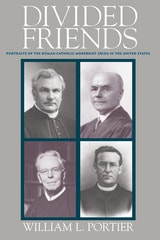
cover of Divided Friends

Divided Friends

William L. Portier

Catholic University of America Press, 2013
In two sets of intertwined biographical portraits, spanning two generations, Divided Friends dramatizes the theological issues of the modernist crisis, highlighting their personal dimensions and extensively reinterpreting their long-range effects. The four protagonists are Bishop Denis J. O?Connell, Josephite founder John R. Slattery, together with the Paulists William L. Sullivan and Joseph McSorley. Their lives span the decades from the Americanist crisis of the 1890s right up to the eve of Vatican II. In each set, one leaves the church and one stays. The two who leave come to see their former companions as fundamentally dishonest. Divided Friends entails a reinterpretation of the intellectual fallout from the modernist crisis and a reframing of the 20th century debate about Catholic intellectual life.
[more]
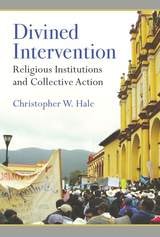
cover of Divined Intervention: Religious Institutions and Collective Action

Divined Intervention

Religious Institutions and Collective Action

Christopher W. Hale

University of Michigan Press, 2020

Divined Intervention provides an innovative institutionalist account for why religion enables political activism in some settings, but not others. Christopher W. Hale argues that decentralized religious institutions facilitate grassroots collective action, and he uses a multimethod approach to test this explanation against several theoretical alternatives. Utilizing nationally representative Mexican survey data, the book’s statistical analyses demonstrate that decentralization by the Catholic Church is positively associated with greater individual political activism across the country. Using case studies centered in the Mexican states of Chiapas, Yucatán, and Morelos, the author shows that religious decentralization encourages reciprocal cooperative interactions at a local level. This then increases the ability of religion to provide goods and services to its local adherents. These processes then prompt the growth of organizational capacities at the grassroots, enabling secular political activism.

Because this theoretical framework is grounded in human behavior, it shows how local institutions politically organize at the grassroots level. Divined Intervention also offers an improved understanding of religion’s relationship with political activism, a topic of ever-increasing significance as religion fuels political engagement across the globe. The book further synthesizes seemingly disparate approaches to the study of collective action into a cohesive framework. Finally, there is some debate as to the impact of ethnic diversity on the provision of public goods, and this study helps us understand how local institutional configurations can enable collective action across ethnic boundaries.
[more]
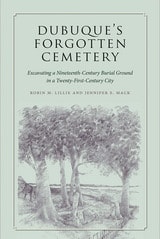
cover of Dubuque's Forgotten Cemetery: Excavating a Nineteenth-Century Burial Ground in a Twenty-first Century City

Dubuque's Forgotten Cemetery

Excavating a Nineteenth-Century Burial Ground in a Twenty-first Century City

Robin M. Lillie and Jennifer E. Mack

University of Iowa Press, 2015

Atop a scenic bluff overlooking the Mississippi River and downtown Dubuque there once lay a graveyard dating to the 1830s, the earliest days of American settlement in Iowa. Though many local residents knew the property had once been a Catholic burial ground, they believed the graves had been moved to a new cemetery in the late nineteenth century in response to overcrowding and changing burial customs. But in 2007, when a developer broke ground for a new condominium complex here, the heavy machinery unearthed human bones. Clearly, some of Dubuque’s early settlers still rested there—in fact, more than anyone expected. For the next four years, staff with the Burials Program of the University of Iowa Office of the State Archaeologist excavated the site so that development could proceed.

The excavation fieldwork was just the beginning. Once the digging was done each summer, skeletal biologist Robin M. Lillie and archaeologist Jennifer E. Mack still faced the enormous task of teasing out life histories from fragile bones, disintegrating artifacts, and the decaying wooden coffins the families had chosen for the deceased. Poring over scant documents and sifting through old newspapers, they pieced together the story of the cemetery and its residents, a story often surprising and poignant. Weaving together science, history, and local mythology, the tale of the Third Street Cemetery provides a fascinating glimpse into Dubuque’s early years, the hardships its settlers endured, and the difficulties they did not survive.

While they worked, Lillie and Mack also grappled with the legal and ethical obligations of the living to the dead. These issues are increasingly urgent as more and more of America’s unmarked (and marked) cemeteries are removed in the name of progress. Fans of forensic crime shows and novels will find here a real-world example of what can be learned from the fragments left in time’s wake.
[more]