Results by title
36 books match the query 'White'

"Negro and White, Unite and Fight!"
A Social History of Industrial Unionism in Meatpacking, 1930-90Roger Horowitz
University of Illinois Press, 1997
This pathbreaking study traces the rise--and subsequent fall--of the United Packinghouse Workers of America (UPWA). Roger Horowitz looks at local leaders and meatpacking workers in Chicago, Kansas City, Sioux City, and Austin, Minnesota, closely examining the unionizing of the workplace and the prominent role of black workers and women in UPWA.
Horowitz shows how three major firms in U.S. meat production and distribution became dominant by virtually eliminating union power. The union's decline, he argues, reflected massive pressure by capital for lower labor costs and greater control over the work process. In the end, the victorious firms were those that had been most successful at increasing the rate of exploitation of their workers, who now labor in conditions as bad as those of a century ago.
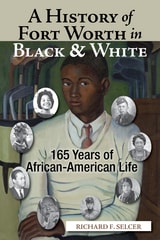
A History of Fort Worth in Black & White
165 Years of African-American LifeRichard F. Selcer
University of North Texas Press, 2015
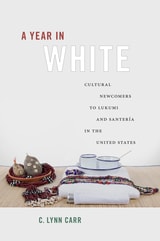
A Year in White
Cultural Newcomers to Lukumi and Santería in the United StatesCarr, C. Lynn
Rutgers University Press, 2016
In her intimate investigation of the “year in white,” Carr draws on fifty-two in-depth interviews with other participants, an online survey of nearly two hundred others, and almost a decade of her own ethnographic fieldwork, gathering stories that allow us to see how cultural newcomers and natives thought, felt, and acted with regard to their initiation. She documents how, during the iyawo year, the ritual slowly transforms the initiate’s identity. For the first three months, for instance, the iyawo may not use a mirror, even to shave, and must eat all meals while seated on a mat on the floor using only a spoon and their own set of dishes. During the entire year, the iyawo loses their name and is simply addressed as “iyawo” by family and friends.
Carr also shows that this year-long religious ritual—which is carried out even as the iyawo goes about daily life—offers new insight into religion in general, suggesting that the sacred is not separable from the profane and indeed that religion shares an ongoing dynamic relationship with the realities of everyday life. Religious expression happens at home, on the streets, at work and school.
Offering insight not only into Santería but also into religion more generally, A Year in White makes an important contribution to our understanding of complex, dynamic religious landscapes in multicultural, pluralist societies and how they inhabit our daily lives.
America Beyond Black and White
How Immigrants and Fusions Are Helping Us Overcome the Racial DivideRonald Fernandez
University of Michigan Press, 2007
“This book is both powerful and important. Powerful for the testimony it provides from Americans of many different (and even mixed races) about their experiences. And important because there is a racial revolution underway that will upend race as we know it during the twenty-first century.”
—John Kenneth White, Catholic University of America
America Beyond Black and White is a call for a new way of imagining race in America. For the first time in U.S. history, the black-white dichotomy that has historically defined race and ethnicity is being challenged, not by a small minority, but by the fastest-growing and arguably most vocal segment of the increasingly diverse American population—Mexicans, Chinese, Japanese, Koreans, Indians, Arabs, and many more—who are breaking down and recreating the very definitions of race.
Drawing on interviews with hundreds of Americans who don’t fit conventional black/white categories, the author invites us to empathize with these “doubles” and to understand why they may represent our best chance to throw off the strictures of the black/white dichotomy.
The revolution is already underway, as newcomers and mixed-race “fusions” refuse to engage in the prevailing Anglo- Protestant culture. Americans face two choices: understand why these individuals think as they do, or face a future that continues to define us by what divides us rather than by what unites us.
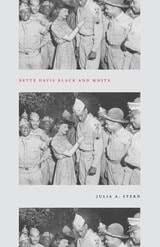
Bette Davis Black and White
Julia A. Stern
University of Chicago Press, 2021
Bette Davis was not only one of Hollywood’s brightest stars, but also one of its most outspoken advocates on matters of race. In Bette Davis Black and White, Julia A. Stern explores this largely untold facet of Davis’s brilliant career.
Bette Davis Black and White analyzes four of Davis’s best-known pictures—Jezebel (1938), The Little Foxes (1941), In This Our Life (1942), and What Ever Happened to Baby Jane? (1962)—against the history of American race relations. Stern also weaves in memories of her own experiences as a young viewer, coming into racial consciousness watching Davis’s films on television in an all-white suburb of Chicago.
Davis’s egalitarian politics and unique collaborations with her Black costars offer Stern a window into midcentury American racial fantasy and the efforts of Black performers to disrupt it. This book incorporates testimony from Davis’s Black contemporaries, including James Baldwin and C. L. R. James, as well as the African American fans who penned letters to Warner Brothers praising Davis’s work. A unique combination of history, star study, and memoir, Bette Davis Black and White allows us to contemplate cross-racial spectatorship in new ways.
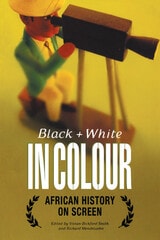
Black and White in Colour
African History on ScreenVivian Bickford-Smith
Ohio University Press, 2007
Black and White in Colour: African History on Screen considers how the African past has been represented in a wide range of historical films. Written by a team of eminent international scholars, the volume provides extensive coverage of both place and time and deals with major issues in the written history of Africa. Themes include the slave trade, imperialism and colonialism, racism, and anticolonial resistance. Many of the films will be familiar to readers: they include Out of Africa, Hotel Rwanda, Breaker Morant, Cry Freedom, The Battle of Algiers, and Chocolat.
This collection of essays is a highly original and useful contribution to African historiography, as well as a significant addition to the growing body of work within the emerging subdiscipline of “film and history.” It will appeal to those interested in African history and the ways in which films use the past to raise questions about the present.
Contributors: Mahir Saul, Ralph A. Austen, Robert Baum, Robert Harms, Nigel Worden, Carolyn Hamilton and Litheko Modisane, Richard Mendelsohn, Shamil Jeppie, Bill Nasson, Nigel Penn, Ruth Watson, Patrick Harries, David Moore, Teresa Barnes, Vivian Bickford-Smith, Mohamed Adhikari, and David Philips.
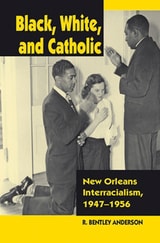
Black, White, and Catholic
New Orleans Interracialism, 1947-1956R. Bentley Anderson
Vanderbilt University Press, 2005
Anderson leads readers through the tumultuous years just after World War II when the Roman Catholic Church in the American South struggled to reconcile its commitment to social justice with the legal and social heritage of Jim Crow society. Though these early efforts at reform, by and large, failed, they did serve to galvanize Catholic supporters and opponents of the Civil Rights Movement and provided a model for more successful efforts at desegregation in the '60s.
As a Jesuit himself, Anderson has access to archives that remain off-limits to other scholars. His deep knowledge of the history of the Catholic Church also allows him to draw connections between this historical period and the present. In the resistance to desegregation, Anderson finds expression of a distinctly American form of Catholicism, in which lay people expect Church authorities to ratify their ideas and beliefs in an almost democratic fashion. The conflict he describes is as much between popular and hierarchical models of the Church as between segregation and integration.
This book has been made possible through a grant from the Louisiana Endowment for the Humanities, a state affiliate of the National Endowment for the Humanities.
Black, White, and Huckleberry Finn
Re-imagining the American DreamElaine Mensh
University of Alabama Press, 2001
Takes a hard, systematic look at the depiction of blacks, whites, and race relations in Mark Twain's classic novel, raising questions about its canonical status in American literature
Huckleberry Finn, one of the most widely taught novels in American literature, has long been the subject of ongoing debates over issues ranging from immorality to racism. Here, Elaine Mensh and Harry Mensh enter the debate with a careful and thoughtful examination of racial messages imbedded in the tale of Huck and Jim.Using as a gauge for analysis the historical record left by both slaves and slaveholders, the Menshes compare Twain's depiction with historical reality, attempting to determine where the book either undermines or upholds traditional racial attitudes. Surveying the opinions of fellow critics, they challenge the current consensus that Huckleberry Finn fosters rapport between blacks and whites, arguing that the book does not subvert ingrained beliefs about race, and demonstrating that the argument over black-white relations in the novel is also an argument over non-fictional racial relations and conflicting perceptions of racial harmony.
Reading the novel in its historical context, the Menshes conclude that Twain, in the character of Huck, never questions the institution of slavery, and even supports it in both thought and action. In response to student and parent challenges to the inclusion of the book in literature classes, they suggest that it should remain in school libraries but not be required reading.Of importance to scholars of Mark Twain and American literature, African American cultural studies, or anyone interested in issues of literature and race, this book adds a strong voice to the long-ranging debate over Huckleberry Finn.
Black, White, and in Color
Essays on American Literature and CultureHortense J. Spillers
University of Chicago Press, 2003
Black, White, and in Color offers a long-awaited collection of major essays by Hortense Spillers, one of the most influential and inspiring black critics of the past twenty years. Spanning her work from the early 1980s, in which she pioneered a broadly poststructuralist approach to African American literature, and extending through her turn to cultural studies in the 1990s, these essays display her passionate commitment to reading as a fundamentally political act-one pivotal to rewriting the humanist project.
Spillers is best known for her race-centered revision of psychoanalytic theory and for her subtle account of the relationships between race and gender. She has also given literary criticism some of its most powerful readings of individual authors, represented here in seminal essays on Ralph Ellison, Gwendolyn Brooks, and William Faulkner. Ultimately, the essays collected in Black, White, and in Color all share Spillers's signature style: heady, eclectic, and astonishingly productive of new ideas. Anyone interested in African American culture and literature will want to read them.
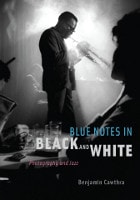
Blue Notes in Black and White
Photography and JazzBenjamin Cawthra
University of Chicago Press, 2011
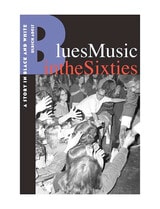
Blues Music in the Sixties
A Story in Black and WhiteUlrich Adelt
Rutgers University Press, 2010
In the 1960s, within the larger context of the civil rights movement and the burgeoning counterculture, the blues changed from black to white in its production and reception, as audiences became increasingly white. Yet, while this was happening, blackness--especially black masculinity--remained a marker of authenticity. Crossing color lines and mixing the beats of B.B. King, Eric Clapton, and Janis Joplin; the Newport Folk Festival and the American Folk Blues Festival; and publications such as Living Blues, Ulrich Adelt discusses these developments, including the international aspects of the blues. He highlights the performers and venues that represented changing racial politics and addresses the impact and involvement of audiences and cultural brokers.
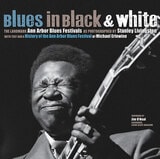
Blues in Black and White
The Landmark Ann Arbor Blues FestivalsAs photographed by Stanley Livingston with Text and a History of the Ann Arbor Blues Festival by Michael Erlewine
University of Michigan Press, 2010
"This was really the first time that blues music, especially Chicago/urban blues, was showcased in this way. Sadly, the festivals were not recorded professionally. So Mr. Livingston's photos are the best record of the festivals."
---Michael Jewett, longtime weekday afternoon host of 89.1 Jazz and host of "Blues & Some Uthuh Stuff"
"The photos are works of art. It is great to see photos of musicians such as Buddy Guy and James Cotton looking so young and vibrant. And it is great to see photos of blues legends such as John Lee Hooker, Roosevelt Sykes, Howlin' Wolf, and Son House, who have long since passed away."
---Peter Madcat Ruth, Grammy-winning blues harmonica player
"If Woodstock was one of the Fifty Moments That Changed Rock 'n' Roll History, as honored in Rolling Stone magazine, then the Ann Arbor Blues Festival was the coronation for the blues roots that sired rock to begin with. . . . finally we have this amazing book of Stanley Livingston's priceless images, along with Michael Erlewine's detailed chronology."
---From the foreword by Jim O'Neal, Cofounder, Living Blues Magazine
In 1969 and 1970, the first Ann Arbor Blues Festivals brought together the greatest-ever selection of blues performers---an enormous blues party that seemed to feature every big name in the world of blues.
The Ann Arbor Blues Festival was just that: a festival and celebration of city blues. It helped to mark the discovery of modern blues music (and the musicians who made that music) by a much larger audience. The festival, however, was something more than just a white audience discovering black music.
Never before had such a far-reaching list of performers been assembled, including the grandfathers of southern country blues and the hottest electric bands from Chicago. These groundbreaking festivals were the seed that grew into the Ann Arbor Blues and Jazz Festival, which was continued annually for many years. To name just a few of the dozens of artists who performed at the festival: Luther Allison, John Lee Hooker, Howlin' Wolf, B.B. King, Muddy Waters, Otis Rush, Hound Dog Taylor, Big Mama Thorton, T-Bone Walker, Sippie Wallace, Junior Wells, and Mighty Joe Young.
Stanley Livingston, a professional photographer from Ann Arbor, captured these legendary performances onstage---as well as the goings-on backstage. Livingston's thousands of photographs from these festivals, previously unpublished and known only to a few, are among the finest candid blues shots ever taken. Together with editor and archivist Michael Erlewine's text accompaniments, these photographs, reproduced here as high-quality duotones, comprise a visual history and important keepsake for blues aficionados everywhere.
Stanley Livingston was an award-winning photographer living and working in Ann Arbor until he passed away in 2010, after the book was released.
Michael Erlewine, also from Ann Arbor, is a renowned archivist of popular culture and founder of the All-Music Guide (allmusic.com) and editor of a number of books on blues and jazz.
Cover photo of B.B. King by Stanley Livingston
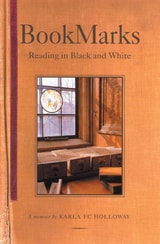
Bookmarks
Reading in Black and White, First Paperback EditionKarla F. Holloway
Rutgers University Press, 2006
"BookMarks is a moving and revelatory memoir... a work of fiercely intelligent scholarship." - Susan Larson,
"Erudite and emotional in turns, [BookMarks] is full of truths that appeal to the head and the heart." - Charlotte News Observer"
What are you reading? What books have been important to you? Whether you are interviewing for a job, chatting with a friend or colleague, or making small talk, these questions arise almost unfailingly. Some of us have stock responses, which may or may not be a fiction of our own making. Others gauge their answers according to who is asking the question. Either way, the replies that we give are thoughtfully crafted to suggest the intelligence, worldliness, political agenda, or good humor that we are hoping to convey. We form our answers carefully because we know that our responses say a lot.
But what exactly do our answers say? In BookMarks, Karla FC Holloway explores the public side of reading, and specifically how books and booklists form a public image of African Americans. Revealing her own love of books and her quirky passion for their locations in libraries and on bookshelves, Holloway reflects on the ways that her parents guided her reading when she was young and her bittersweet memories of reading to her children. She takes us on a personal and candid journey that considers the histories of reading in children’s rooms, prison libraries, and “Negro” libraries of the early twentieth century, and that finally reveals how her identity as a scholar, a parent, and an African American woman has been subject to judgments that public cultures make about race and our habits of reading.
Holloway is the first to call our attention to a remarkable trend of many prominent African American writers—including Maya Angelou, W.E.B. Du Bois, Henry Louis Gates, Malcolm X, and Zora Neale Hurston. Their autobiographies and memoirs are consistently marked with booklists—records of their own habits of reading. She examines these lists, along with the trends of selection in Oprah Winfrey’s popular book club, raising the questions: What does it mean for prominent African Americans to associate themselves with European learning and culture? How do books by black authors fare in the inevitable hierarchy of a booklist?
BookMarks provides a unique window into the ways that African Americans negotiate between black and white cultures. This compelling rumination on reading is a book that everyone should add to their personal collections and proudly carry “cover out.”
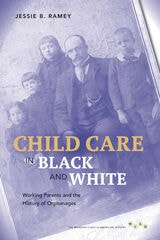
Child Care in Black and White
Working Parents and the History of OrphanagesJessie B. Ramey
University of Illinois Press, 2013
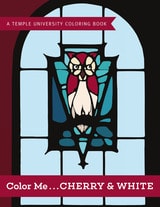
Color me...Cherry & White
A Temple University Coloring BookTemple University Press, 2018
The first ever Temple University adult coloring book, Color Me...Cherry & White contains more than twenty iconic Temple University landmarks. From the magnificent Baptist Temple with its ornate stained glass windows, to Hooter the Owl, the campus food trucks, and the SEPTA rail station, students, parents, and alumni—even future Owls—now have a personal campus canvas to color with markers, pencils or crayons.
The images in Color Me...Cherry & White were created from photographs from the University Photography Department and crafted into pages for amateur artists to beautify. The designs will stoke memories as well as provide stress relief as artists create their own impressions of the campus. Moreover, this keepsake will make the perfect gift and provide memories for the worldwide Temple community.
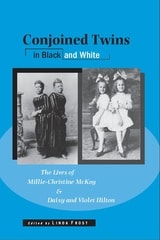
Conjoined Twins in Black and White
The Lives of Millie-Christine McKoy and Daisy and Violet HiltonEdited by Linda Frost
University of Wisconsin Press, 2009
Conjoined Twins in Black and White provides contemporary readers with the twins’ autobiographies, the first two “show histories” to be republished since their original appearance, a previously unpublished novella, and a nineteenth-century medical examination, each of which attempts to define these women and reveal the issues of race, gender, and the body prompted by the twins themselves. The McKoys, born slaves, were kidnapped and taken to Britain, where they worked as entertainers until they were reunited with their mother in an emotional chance encounter. The Hiltons, cast away by their horrified mother at birth, worked the carnival circuit as vaudeville performers until the WWII economy forced them to the burlesque stage. The hardships, along with the triumphs, experienced by these very different sister sets lend insight into our fascination with conjoined twins.
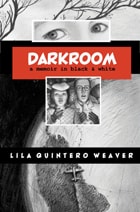
Darkroom
A Memoir in Black and WhiteLila Quintero Weaver
University of Alabama Press, 2012
A Latina girl’s journey through the shadows of the civil rights era.
Darkroom is a deeply moving graphic memoir that chronicles Lila Quintero Weaver’s experience growing up as an Argentine immigrant in 1960s Alabama during the height of the civil rights movement. Through striking black-and-white illustrations and heartfelt narrative, Weaver explores the complexities of race, identity, and belonging in a society divided by segregation. Neither Black nor White, her family occupies a unique position that offers a powerful lens on the struggles for justice and equality. This coming-of-age story blends personal history with pivotal social change, inviting readers to reflect on themes of immigration, cultural assimilation, and moral courage. Darkroom is both an intimate portrait and a universal tale of resilience, making it an essential read for those interested in civil rights, memoirs, and graphic storytelling.

Downed by Friendly Fire
Black Girls, White Girls, and Suburban SchoolingSignithia Fordham
University of Minnesota Press, 2016
Most Americans would never willingly revisit their high school experiences; the nation’s school systems reflect the broader society’s hierarchical emphasis on race, class, and gender. While schools purport to provide equal opportunities for all students, this rarely happens in actuality—particularly for girls.
In Downed by Friendly Fire, Signithia Fordham unmasks and examines female-centered bullying in schools, arguing that it is essential to unmask female aggression, bullying, and competition, all of which directly relate to the structural violence embedded in the racialized and gendered social order. For two and a half years, Fordham conducted field research at “Underground Railroad High School,” a suburban high school in upstate New York. Through a series of composite student profiles, she examines the girls’ relationships to academic achievement, social competition, and aggression toward one another. Fordham argues that girls academically “compete to lose,” which only perpetuates their subordination through the misrecognition of their own competitive behaviors. She goes further to expand the meaning of violence to include what is seen as normal, including suffering, humiliation, and social and economic abuse.
Using the concept “symbolic violence,” Fordham theorizes the psychological and social damage suffered especially by black girls in schools. The five narratives in Downed by Friendly Fire ultimately highlight the pain and suffering this violence produces as well as the ways in which it promotes inequality, exclusion, and marginalization among girls.

Europe in Black and White
Immigration, Race, and Identity in the ‘Old Continent'Edited by Manuela Ribeiro Sanches, Fernando Clara, João Ferreira Duarte, and Leonor Pires Martins
Intellect Books, 2011
The essays in Europe in Black and White offer new critical perspectives on race, immigration, and identity on the Old Continent. In reconsidering the various forms of encounters with difference, such as multiculturalism and hybridity, the contributors address a number of issues, including the cartography of postcolonial Europe, its relation to the production of "difference" and "race," and national and identity politics and their dependence on linguistic practices inherited from imperial times. Featuring scholars from a wide variety of nationalities and disciplinary areas, this collection will speak to an equally wide readership.
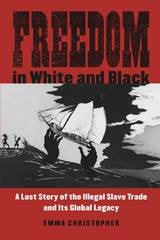
Freedom in White and Black
A Lost Story of the Illegal Slave Trade and Its Global LegacyEmma Christopher
University of Wisconsin Press, 2020
This story can be told because of an exceptional trove of court documents that provides unparalleled insight into one small link in the great, horrific chain of slavery. Emma Christopher follows a trail of evidence across four continents to examine the lives of this barracoon's owners, their workers, and their tragic human merchandise. She reveals how an American, Charles Mason, escaped justice, while British subjects Robert Bostock and John McQueen were arrested. In court five African men—Tamba, Tom Ball, Yarra, Noah, and Sessay—courageously testified against their former owners/captors. They, and 233 other liberated men, women, and children, were relocated to Freetown, Sierra Leone. There they endured harsh lives of "freedom," while the punishment of Bostock and McQueen was fleeting.
From the fragmented facts of these lives, Christopher sheds fascinating light on the early development of the nations of Sierra Leone, Liberia, and Australia (where Bostock and McQueen were banished) and the role of former slaves in combatting the illegal trade.
Language Variety in the South
Perspectives in Black and WhiteMichael B. Montgomery
University of Alabama Press, 1986
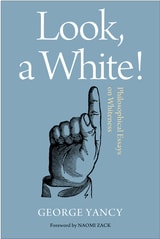
Look, A White!
Philosophical Essays on WhitenessGeorge Yancy
Temple University Press, 2012
Look, a White! returns the problem of whiteness to white people. Prompted by Eric Holder's charge, that as Americans, we are cowards when it comes to discussing the issue of race, noted philosopher George Yancy's essays map out a structure of whiteness.
He considers whiteness within the context of racial embodiment, film, pedagogy, colonialism, its "danger," and its position within the work of specific writers. Identifying the embedded and opaque ways white power and privilege operate, Yancy argues that the Black countergaze can function as a "gift" to whites in terms of seeing their own whiteness more effectively.
Throughout Look, a White! Yancy pays special attention to the impact of whiteness on individuals, as well as on how the structures of whiteness limit the capacity of social actors to completely untangle the way whiteness operates, thus preventing the erasure of racism in social life.
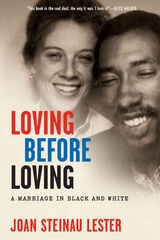
Loving Before Loving
A Marriage in Black and WhiteJoan Steinau Lester
University of Wisconsin Press, 2026
Braiding intellectual, personal, and political history, Lester tells the story of a writer and activist fighting for love and justice before, during, and after the Supreme Court’s 1967 decision striking down bans on interracial marriage in Loving v. Virginia. She describes her own shifts in consciousness, from an activist climbing police barricades by day and reading and writing late into the night to a woman navigating the coming-out process in midlife, before finding the publishing success she had dreamed of. Speaking candidly about every facet of her life, Lester illuminates her journey to fulfillment and healing.
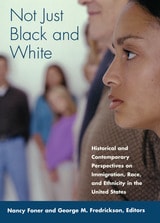
Not Just Black and White
Historical and Contemporary Perspectives on Immgiration, Race, and Ethnicity in the United StatesNancy Foner
Russell Sage Foundation, 2004
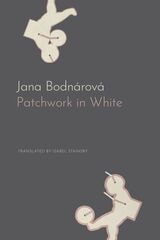
Patchwork in White
Jana Bodnárová
Seagull Books, 2026
An intimate story of otherness and care by a major voice in Slovak literature.
For more than three decades, Jana Bodnárová has been one of Slovak literature’s most distinctive voices, writing with a lyricism that is at once tender and unflinchingly harsh. Patchwork in White is a brief yet powerful novel that stitches together fragments of lives bound by intimacy, difference, and care, set against the social fabric of Czechoslovakia from the mid-1950s to the present.
At the center of the novel are Ota and Andrej, a couple whose shared memories unfold through shards of childhood, marriage, and parenthood. Their lives are irrevocably shaped by the decision to adopt albino twins—children marked by abuse and exclusion because of their otherness. As these fragments accumulate, the novel becomes a meditation on motherhood, femininity, love, and the quiet imminence of death.
Poetic, restrained, and brutally honest, Bodnárová’s prose finds resonance in what is left unsaid. Illustrations by Eva Moflárová deepen the book’s emotional texture, creating a work of rare intimacy and moral force.
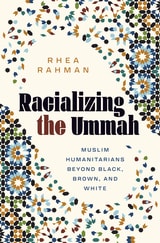
Racializing the Ummah
Muslim Humanitarians beyond Black, Brown, and WhiteRhea Rahman
University of Minnesota Press, 2026
A robust ethnography of Islamic Relief explores difficult questions about the extensive reach of white supremacy
An ethnography of Islamic Relief (IR), the largest Islamic NGO based in the West, Racializing the Ummah explores how a Muslim organization can do good in a world that defines Muslimness as less than human. Rooted in more than a decade of international research, Rhea Rahman’s study on the organization’s projects, methods, and limitations reveals how racial capitalism permeates all aspects of humanitarianism.
Beginning with a counterhistory of Muslims in the United Kingdom following World War II, Rahman analyzes IR’s mission and transnational activities in and across places including the UK, South Africa, and Mali in the broader context of global white supremacy. She shows how IR’s approaches often effectively secularize Islam to evade anti-Muslim racism and Islamophobia, implicating concepts such as the “good” Muslim aid worker, who complies with War on Terror surveillance while attending to victims of Western colonialism. Meanwhile, Rahman theorizes the tactics of aid workers on the ground, who creatively draw on an Islamic Black radical tradition to drive real change.
Through her engagement with IR and other organizations, Rahman paints a frank, nuanced portrait of the constraints Islamic aid entities face in the effort to disentangle themselves from neocolonialism and Western hegemony. Yet she also locates the possibility of escape from the all-encompassing dictates of racial capitalism in alternative visions of doing good—ones that are grounded in Islam as the foundation of a revolutionary praxis.
Retail e-book files for this title are screen-reader friendly.
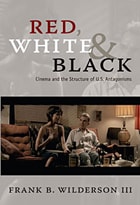
Red, White & Black
Cinema and the Structure of U.S. AntagonismsFrank B. Wilderson III
Duke University Press, 2010
Wilderson provides detailed readings of two films by Black directors, Antwone Fisher (Denzel Washington) and Bush Mama (Haile Gerima); one by an Indian director, Skins (Chris Eyre); and one by a White director, Monster’s Ball (Marc Foster). These films present Red and Black people beleaguered by problems such as homelessness and the repercussions of incarceration. They portray social turmoil in terms of conflict, as problems that can be solved (at least theoretically, if not in the given narratives). Wilderson maintains that at the narrative level, they fail to recognize that the turmoil is based not in conflict, but in fundamentally irreconcilable racial antagonisms. Yet, as he explains, those antagonisms are unintentionally disclosed in the films’ non-narrative strategies, in decisions regarding matters such as lighting, camera angles, and sound.
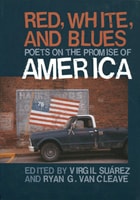
Red, White, and Blues
Poets on the Promise of AmericaVirgil & Ryan G. Suarez & Van Cleave
University of Iowa Press, 2004
Red, White, and Blues, a new anthology from the award-winning editors of Like Thunder: Poets Respond to Violence in America and Vespers: Contemporary American Poems of Religion and Spirituality, offers a chorus of contemporary American poets on the idea of liberty, democracy, patriotism, and the American Dream;a twenty-first-century "Song of Myself” for the entire country.
The poems in Red, White, and Blues reflect our collective memory—from icons of pop culture to national disasters and times of unrest. Yet they are not simply reflections of the headline news or political diatribes of the day; instead, they provide roadmaps of American history—roadmaps of where we’ve been, who we are, and where we’re going as a nation.
Poets as diverse as Martín Espada and Paisley Rekdal, J. P. Dancing Bear and Vivian Shipley seek to answer questions that resonate within the heart of our national identity—what does it mean to be an American? What is the American Dream? How does one define patriotism? Regardless of ethnicity, gender, or class, each poet’s answer to such questions proves that our experiences unite us more than they divide us.
Red, White, and Blues is an ambitious collection of the finest contemporary poetry on the subject of America and the indefatigable spirit of its citizens. Its poems don’t pull punches, nor do they celebrate without cause. They show spirit and excitement, outrage and joy, solemnity and ambiguity—all reflections of our wonderfully diverse nation.
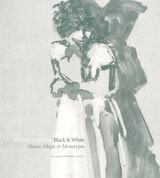
Richard Segalman Black & White
Muses, Magic & MonotypesRichard Segalman
The Artist Book Foundation, 2015
For many, the name Richard Segalman conjures up a vision of light-infused paintings of women gathered on a beach, gazing out the window of a New York City brownstone, or dressed in vcostumes from another era. But just as Edgar Degas, approaching his 60th year, surprised gallery goers with an exhibition not of ballerinas or race horses, but of highly atmospheric monotype landscapes, so too does Segalman surprise us with this exceptional collection of monotypes he began to produce in 1993, at nearly 60. "I reached a sort of plateau and needed a new direction," says the artist. "I came across a monotype... took a course... made one and I was hooked."
The significance of Segalman's shift into this medium is most powerfully conveyed through his arresting black-and-white prints that range from anonymous crowds on Coney Island beaches or New York City streets to a solitary figure in private contemplation. This monochromatic focus makes perfect sense: Segalman's first gallery appearance in New York—a sold-out show that gave him the courage to embrace the life of an artist—consisted entirely of black-and-white charcoal drawings, several stunning examples of which open this book.
Author Susan F. Castle's essay about the artist and his muses—the people, places, and things for which Richard Segalman has an abiding love—illuminates the exceptional work collected for this monograph. She combines excerpts from interviews with the artist and the three master printmakers with whom he has worked in Woodstock and Brooklyn, New York, and in Santa Fe, New Mexico. In addition, Anthony Kirk's insightful introudction provides an essential historical perspective on the artist and his printmaking process.
Shades of White
White Kids and Racial Identities in High SchoolPamela Perry
Duke University Press, 2002
Through ethnographic research and in-depth interviews of students in two demographically distinct U.S. high schools—one suburban and predominantly white; the other urban, multiracial, and minority white—Perry shares students’ candor about race and self-identification. By examining the meanings students attached (or didn’t attach) to their social lives and everyday cultural practices, including their taste in music and clothes, she shows that the ways white students defined white identity were not only markedly different between the two schools but were considerably diverse and ambiguous within them as well. Challenging reductionist notions of whiteness and white racism, this study suggests how we might go “beyond whiteness” to new directions in antiracist activism and school reform.
Shades of White is emblematic of an emerging second wave of whiteness studies that focuses on the racial identity of whites. It will appeal to scholars and students of anthropology, sociology, and cultural studies, as well as to those involved with high school education and antiracist activities.
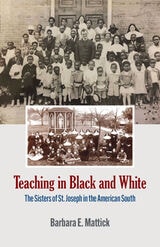
Teaching in Black and White
The Sisters of St. Joseph in the American SouthBarbara E. Mattick
Catholic University of America Press, 2022
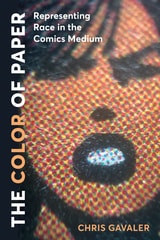
The Color of Paper
Representing Race in the Comics MediumChris Gavaler
The Ohio State University Press, 2026
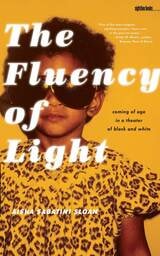
The Fluency of Light
Coming of Age in a Theater of Black and WhiteAisha Sabatini Sloan
University of Iowa Press, 2013
Tracing Southern Storytelling in Black and White
Sarah Gilbreath Ford
University of Alabama Press, 2014
Exploring the shared storytelling traditions that shaped Southern literature across racial lines.
Tracing Southern Storytelling in Black and White is a study of the historical use of oral storytelling by southern writers in written works. In each chapter, Sarah Gilbreath Ford pairs a white and an African American writer to highlight points of confluence in black and white southern oral traditions. She argues that the connections between white and African American southern writers run deeper than critics have yet explored, and she uses textual comparisons to examine the racial mixing of oral culture.
On porches, in kitchens, and on the pages of their work, black and white southerners exchanged not just stories but strategies for telling stories. As a boy, Joel Chandler Harris listened to the stories of African American slaves, and he devised a framework to turn the oral stories into written ones. Harris’s use of the frame structure influenced how Charles Chesnutt recorded oral stories, but it led Alice Walker to complain that her heritage had been stolen. Mark Twain listened to African American storytellers as a child. His use of oral dialects then impacts how Ralph Ellison and William Faulkner employ oral storytelling and how Toni Morrison later writes in response to Faulkner. The interactions are not linear, not a chain of influence, but a network of interactions, borrowings, and revisions.
Ford’s pairings lead to new readings that reveal how the writers employ similar strategies in their narratives, due in part to shared historical context. While Zora Neale Hurston and William Faulkner, for example, use oral storytelling in the 1930s to examine the fear of racial mixing, Ellen Douglas and Ernest Gaines use it in the 1970s to build bridges between the races. Exploring the cultural crossing that occurs in the use of oral storytelling, Ford offers a different view of this common strategy in southern narrative and a new perspective on how culture is shared.
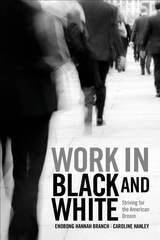
Work in Black and White
Striving for the American DreamEnobong Hannah Branch
Russell Sage Foundation, 2022
The ability to achieve economic security through hard work is a central tenet of the American Dream, but significant shifts in today’s economy have fractured this connection. While economic insecurity has always been a reality for some Americans, Black Americans have historically long experienced worse economic outcomes than Whites. In Work in Black and White, sociologists Enobong Hannah Branch and Caroline Hanley draw on interviews with 80 middle-aged Black and White Americans to explore how their attitudes and perceptions of success are influenced by the stories American culture has told about the American Dream – and about who should have access to it and who should not.
Branch and Hanley find that Black and White workers draw on racially distinct histories to make sense of today’s rising economic insecurity. White Americans have grown increasingly pessimistic and feel that the American Dream is now out of reach, mourning the loss of a sense of economic security which they took for granted. But Black Americans tend to negotiate their present insecurity with more optimism, since they cannot mourn something they never had. All educated workers bemoaned the fact that their credentials no longer guarantee job security, but Black workers lamented the reality that even with an education, racial inequality continues to block access to good jobs for many.
The authors interject a provocative observation into the ongoing debate over opportunity, security, and the American Dream: Among policymakers and the public alike, Americans talk too much about education. The ways people navigate insecurity, inequality, and uncertainty rests on more than educational attainment. The authors call for a public policy that ensures dignity in working conditions and pay while accounting for the legacies of historical inequality.
Americans want the game of life to be fair. While the survey respondents expressed common ground on the ideal of meritocracy, opinions about to achieve economic security for all diverge along racial lines, with the recognition – or not – of differences in current and past access to opportunity in America.
Work in Black and White is a call to action for meaningful policies to make the premise of the American Dream a reality.
Young, White, and Miserable
Growing Up Female in the FiftiesWini Breines
University of Chicago Press, 2001