Results by title
162 books match the query 'Comparative Politics' and 14 start with d

Darfur Allegory
Rogaia Mustafa Abusharaf
University of Chicago Press, 2021
Elaborated in colonial times and enshrined in policy afterwards, such binary categories have been adopted by the media to explain the civil war in Darfur. The narratives that circulate internationally are thus highly fraught and cover over—to counterproductive effect—forms of Darfurian activism that have emerged in the conflict’s wake. Darfur Allegory marries the analytical precision of a committed anthropologist with an insider’s view of Sudanese politics at home and in the diaspora, laying bare the power of words to heal or perpetuate civil conflict.
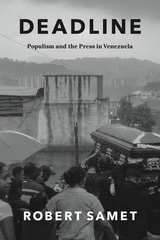
Deadline
Populism and the Press in VenezuelaRobert Samet
University of Chicago Press, 2019
In Deadline, anthropologist Robert Samet answers this question by focusing on the relationship between populism, the press, and what he calls “the will to security.” Drawing on nearly a decade of ethnographic research alongside journalists on the Caracas crime beat, he shows how the media shaped the politics of security from the ground up. Paradoxically, Venezuela’s punitive turn was not the product of dictatorship, but rather an outgrowth of practices and institutions normally associated with democracy. Samet reckons with this apparent contradiction by exploring the circulation of extralegal denuncias (accusations) by crime journalists, editors, sources, and audiences. Denuncias are a form of public shaming or exposé that channels popular anger against the powers that be. By showing how denuncias mobilize dissent, Deadline weaves a much larger tale about the relationship between the press, popular outrage, and the politics of security in the twenty-first century.

Decentering the Regime
Ethnicity, Radicalism, and Democracy in Juchitán, MexicoJeffrey W. Rubin
Duke University Press, 1997
Employing an interdisciplinary approach, Rubin shows that the Juchitecos’ ability to organize and sustain a radical political movement grew out of a century-long history of negotiation of political rule. He argues that factors outside the realm of formal politics—such as ethnicity, language, gender, and religion—play an important part in the dynamics of regional political struggles and relationships of power. While offering a detailed view of the Zapotec community and its interactions, Rubin reconceptualizes democracy by considering the question of how meaningful autonomy, self-government, cultural expression, and material well-being can be forged out of violence and repression.
Democracy Ancient and Modern
Finley, M. I.
Rutgers University Press, 2019
This classic study of democratic principles is thus now more relevant than ever. A renowned historian of antiquity and political philosophy, Sir M.I. Finley offers a comparative analysis of Greek and modern conceptions of democracy. As he puts the ancient Greeks in dialogue with their contemporary counterparts, Finley tackles some of the most pressing issues of our day, including public apathy, partisanship, consensus politics, distrust of professional politicians, and the limits of free speech.
Including three lectures that Finley delivered at Rutgers University, plus two additional essays that further illuminate his thinking, Democracy Ancient and Modern explores the dramatic differences between the close-knit civil society of the ancient Greeks and our own atomized mass societies. By mapping out democracy’s past and its present manifestations, this book helps us plot a course for democracy’s future.

Democracy and Revolution
Latin America and Socialism TodayD. L. Raby
Pluto Press, 2006
Raby argues passionately that the way forward for progressives is not the dogmatic formulae of the Old Left, nor in the spontaneous autonomism of Antonio Negri. Instead, it is to be found in broad popular movements with bold leadership. Examining key leaders, including Hugo Chávez and the Sandinistas in Nicaragua, Raby shows that it is more necessary than ever to take power, peacefully where possible, but in all cases with the strength that comes from popular unity backed by force where necessary. In this way it is possible to build democratic power, which may or may not be socialist depending on one's definition, but which represent the real anti-capitalist alternative for the twenty-first century.
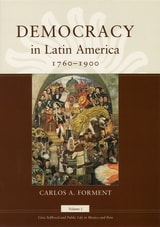
Democracy in Latin America, 1760-1900
Volume 1, Civic Selfhood and Public Life in Mexico and PeruCarlos A. Forment
University of Chicago Press, 2003
This first volume of Democracy in Latin America considers the development of democratic life in Mexico and Peru from independence to the late 1890s. Forment traces the emergence of hundreds of political, economic, and civic associations run by citizens in both nations and shows how these organizations became models of and for democracy in the face of dictatorship and immense economic hardship. His is the first book to show the presence in Latin America of civic democracy, something that gave men and women in that region an alternative to market- and state-centered forms of life.
In looking beneath institutions of government to uncover local and civil organizations in public life, Forment ultimately uncovers a tradition of edification and inculcation that shaped democratic practices in Latin America profoundly. This tradition, he reveals, was stronger in Mexico than in Peru, but its basic outlines were similar in both nations and included a unique form of what Forment calls Civic Catholicism in order to distinguish itself from civic republicanism, the dominant political model throughout the rest of the Western world.
Democracy, Electoral Systems, and Judicial Empowerment in Developing Countries
Vineeta Yadav and Bumba Mukherjee
University of Michigan Press, 2014
Moving next to de facto independence, Yadav and Mukherjee bring together data from 103 democracies in the developing world, complemented by case studies of Brazil, India, and Indonesia. Honing in on the effects of electoral institutions, the authors find that, when faced with short time horizons, governments that operate in personal vote electoral systems are likely to increase de facto judicial independence whereas governments in party-centered systems are likely to reduce it.

Democratic Purgatory
Failure of Consolidated Democracies in Latin America and East-Central EuropeChristopher M. Brown
Central European University Press, 2026
Rather than structural inevitability, these breakdowns stem from contingent choices: negotiated transitions, successor party dominance, and technocratic insulation created fertile ground for popularism, a top-down appropriation of populist rhetoric to dismantle liberal norms. From Orbán’s Hungary to Chávez’s Venezuela, the analysis reveals how democratic procedures can hollow out democracy itself.
In an era of global democratic backsliding, this book offers a timely framework for understanding the fragility of liberal democracy and the decisive role of political agency in preventing breakdown or enabling renewal.
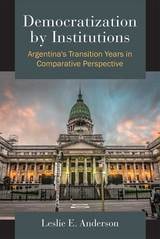
Democratization by Institutions
Argentina's Transition Years in Comparative PerspectiveLeslie E. Anderson
University of Michigan Press, 2016
In this pioneering study of democratization in Argentina, Leslie Anderson challenges Robert Putnam’s thesis that democracy requires high levels of social capital. She demonstrates in Democratization by Institutions that formal institutions (e.g., the executive, the legislature, the courts) can serve not only as operational parts within democracy but as the driving force toward democracy.
As Anderson astutely observes, the American founders debated the merits of the institutions they were creating. Examining how, and how well, Argentina’s American-style institutional structure functions, she considers the advantages and risks of the separation of powers, checks and balances, legislative policymaking, and strong presidential power. During the democratic transition, the Argentinian state has used institutions to address immediate policy challenges in ways responsive to citizens and thereby to provide a supportive environment in which social capital can develop.
By highlighting the role that institutions can play in leading a nation out of authoritarianism, even when social capital is low, Anderson begins a new conversation about the possibilities of democratization. Democratization by Institutions has much to say not only to Latin Americanists and scholars of democratization but also to those interested in the U.S. constitutional structure and its application in other parts of the world.
Development in Multiple Dimensions
Social Power and Regional Policy in IndiaAlexander Lee
University of Michigan Press, 2019

Disruptions as Opportunities
Governing Chinese Society with Interactive AuthoritarianismTaiyi Sun
University of Michigan Press, 2023
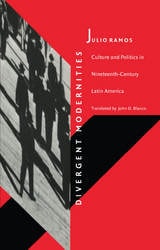
Divergent Modernities
Culture and Politics in Nineteenth-Century Latin AmericaJulio Ramos
Duke University Press, 2001
Since its first publication in Spanish nearly a decade ago, Julio Ramos’s Desenucuentros de la modernidad en America Latina por el siglo XIX has been recognized as one of the most important studies of modernity in the western hemisphere. Available for the first time in English—and now published with new material—Ramos’s study not only offers an analysis of the complex relationships between history, literature, and nation-building in the modern Latin American context but also takes crucial steps toward the development of a truly comparative inter-American cultural criticism.
With his focus on the nineteenth century, Ramos begins his genealogy of an emerging Latin Americanism with an examination of Argentinean Domingo Sarmiento and Chilean Andrés Bello, representing the “enlightened letrados” of tradition. In contrast to these “lettered men,” he turns to Cuban journalist, revolutionary, and poet José Martí, who, Ramos suggests, inaugurated a new kind of intellectual subject for the Americas. Though tracing Latin American modernity in general, it is the analysis of Martí—particularly his work in the United States—that becomes the focal point of Ramos’s study. Martí’s confrontation with the unequal modernization of the New World, the dependent status of Latin America, and the contrast between Latin America’s culture of elites and the northern mass culture of commodification are, for Ramos, key elements in understanding the complex Latin American experience of modernity.
Including two new chapters written for this edition, as well as translations of three of Martí’s most important works, Divergent Modernities will be indispensable for anyone seeking to understand development and modernity across the Americas.
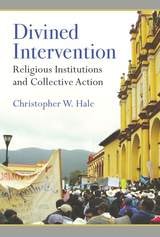
Divined Intervention
Religious Institutions and Collective ActionChristopher W. Hale
University of Michigan Press, 2020
Divined Intervention provides an innovative institutionalist account for why religion enables political activism in some settings, but not others. Christopher W. Hale argues that decentralized religious institutions facilitate grassroots collective action, and he uses a multimethod approach to test this explanation against several theoretical alternatives. Utilizing nationally representative Mexican survey data, the book’s statistical analyses demonstrate that decentralization by the Catholic Church is positively associated with greater individual political activism across the country. Using case studies centered in the Mexican states of Chiapas, Yucatán, and Morelos, the author shows that religious decentralization encourages reciprocal cooperative interactions at a local level. This then increases the ability of religion to provide goods and services to its local adherents. These processes then prompt the growth of organizational capacities at the grassroots, enabling secular political activism.
Because this theoretical framework is grounded in human behavior, it shows how local institutions politically organize at the grassroots level. Divined Intervention also offers an improved understanding of religion’s relationship with political activism, a topic of ever-increasing significance as religion fuels political engagement across the globe. The book further synthesizes seemingly disparate approaches to the study of collective action into a cohesive framework. Finally, there is some debate as to the impact of ethnic diversity on the provision of public goods, and this study helps us understand how local institutional configurations can enable collective action across ethnic boundaries.
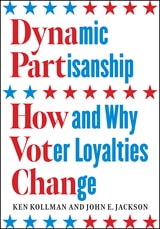
Dynamic Partisanship
How and Why Voter Loyalties ChangeKen Kollman and John E. Jackson
University of Chicago Press, 2021