Results by title
1882 books match the query 'Criticism and interpretation' and 60 start with d
D.A. Pennebaker
Keith Beattie
University of Illinois Press, 2011
D.W. Griffith and the Origins of American Narrative Film
The Early Years at BiographTom Gunning
University of Illinois Press, 1991
In this comprehensive historical investigation, drawing on films preserved by the Library of Congress and the Museum of Modern Art, Tom Gunning reveals that the remarkable cinematic changes between 1900 and 1915 were a response to the radical reorganization within the film industry and the evolving role of film in American society. The Motion Picture Patents Company, the newly formed Film Trust, had major economic aspirations. The newly emerging industry's quest for a middle-class audience triggered Griffith's early experiments in film editing and imagery. His unique solutions permanently shaped American narrative film.
Dance of Life
The Novels of Zakes Mda in Post-apartheid South AfricaGail Fincham
Ohio University Press, 2012
In recent years, the work of Zakes Mda—novelist, painter, composer, theater director and filmmaker—has attracted worldwide critical attention. Gail Fincham’s book examines the five novels Mda has written since South Africa’s transition to democracy: Ways of Dying (1995), The Heart of Redness (2000), The Madonna of Excelsior (2002), The Whale Caller (2005), and Cion (2007). Dance of Life explores how refigured identity is rooted in Mda’s strongly painterly imagination that creates changed spaces in memory and culture. Through a combination of magic realism, African orature, and intertextuality with the Western canon, Mda rejects dualistic thinking of the past and the present, the human and the nonhuman, the living and the dead, the rural and the urban. He imbues his fictional characters with the power to orchestrate a reconfigured subjectivity that is simultaneously political, social, and aesthetic.
Dance of Values
Sergei Eisenstein’s Capital ProjectElena Vogman
Diaphanes, 2018
Dances with Sheep
The Quest for Identity in the Fiction of Murakami HarukiMatthew Carl Strecher
University of Michigan Press, 2002

Daniil Kharms
Writing and the EventBy Branislav Jakovljevic
Northwestern University Press, 2009
The book follows Kharms’s development as a creative thinker, inquiring into the nature of Kharmsian nonsense, the ontological status of the OBERIU object, writing as performance, Kharms’s gestural language, his "language machines," and his ideas of order, number, infinity, and chance. Reading every paper trace (as well as extant memories) of Kharms’s activities as part of a large project of world creation, Branislav Jakovljevic situates him in a twentieth-century effort—exemplified by Kafka, Beckett, Artaud, Malevich, and Khelbnikov, among others—to go beyond an interpretation of meaning circumscribed by rational and logical thought. Examining texts that could conceivably be called "literary" as well as sketches, diagrams, hieroglyphs, photographs, and unclassifiable others, Jakovljevic’s study is the first to provide a properly broad perspective on this creative thinker’s farranging, far-reaching, and finally comprehensive achievement.
Dario Argento
L. Andrew Cooper
University of Illinois Press, 2012
Commanding a cult following among horror fans, Italian film director Dario Argento is best known for his work in two closely related genres, the crime thriller and supernatural horror, as well as his influence on modern horror and slasher movies. In his four decades of filmmaking, Argento has displayed a commitment to innovation, from his directorial debut with 1970's suspense thriller The Bird with the Crystal Plumage to 2009's Giallo. His films, like the lurid yellow-covered murder-mystery novels they are inspired by, follow the suspense tradition of hard-boiled American detective fiction while incorporating baroque scenes of violence and excess.
While considerations of Argento's films often describe them as irrational nightmares, L. Andrew Cooper uses controversies and theories about the films' reflections on sadism, gender, sexuality, psychoanalysis, aestheticism, and genre to declare the anti-rational logic of Argento's oeuvre. Approaching the films as rhetorical statements made through extremes of sound and vision, Cooper places Argento in a tradition of aestheticized horror that includes De Sade, De Quincey, Poe, and Hitchcock. Analyzing individual images and sequences as well as larger narrative structures, he reveals how the director's stylistic excesses, often condemned for glorifying misogyny and other forms of violence, offer productive resistance to the cinema's visual, narrative, and political norms.
Dario Fo
Stage, Text, and TraditionEdited by Joseph Farrell and Antonio Scuderi
Southern Illinois University Press, 2000
Joseph Farrell and Antonio Scuderi present an international collection of essays reevaluating the multifaceted performance art of Nobel laureate Dario Fo.
The contributors, all of whom either have previously published on Fo or have worked with him, are the major Dario Fo scholars of three continents. Going beyond the Marxist criticism of the 1970s and 1980s, the editors and contributors try to establish an appropriate language in which to debate Fo’s theater. They seek to identify the core of Fo’s work, the material that will be of lasting value. This involves locating Fo in history, examining the nature of his development through successive phases, incorporating his politics into a wider framework of radical dissent, and setting his theatrical achievements in a context and a tradition.
The essays cover every aspect of Dario Fo: as actor, playwright, performer, and songwriter. They also provide the historical background of Fo’s theater, as well as an in-depth analyses of specific works and the contribution of Franca Rame.
Dark Directions
Romero, Craven, Carpenter, and the Modern Horror FilmKendall R. Phillips
Southern Illinois University Press, 2012
A Nightmare on Elm Street. Halloween. Night of the Living Dead. These films have been indelibly stamped on moviegoers’ psyches and are now considered seminal works of horror. Guiding readers along the twisted paths between audience, auteur, and cultural history, author Kendall R. Phillips reveals the macabre visions of these films’ directors in Dark Directions: Romero, Craven, Carpenter, and the Modern Horror Film.
Phillips begins by analyzing the works of George Romero, focusing on how the body is used cinematically to reflect the duality between society and chaos, concluding that the unconstrained bodies of the Living Dead films act as a critical intervention into social norms. Phillips then explores the shadowy worlds of director Wes Craven. In his study of the films The Serpent and the Rainbow, Deadly Friend, Swamp Thing, Red Eye, and Shocker, Phillips reveals Craven’s vision of technology as inherently dangerous in its ability to cross the gossamer thresholds of the gothic. Finally, the volume traverses the desolate frontiers of iconic director John Carpenter. Through an exploration of such works as Halloween, The Fog, and In the Mouth of Madness, Phillips delves into the director’s representations of boundaries—and the haunting consequences for those who cross them.
The first volume ever to address these three artists together, Dark Directions is a spine-tingling and thought-provoking study of the horror genre. In analyzing the individual works of Romero, Craven, and Carpenter, Phillips illuminates some of the darkest minds in horror cinema.
Dark Smiles
Race and Desire in George EliotAlicia Carroll
Ohio University Press, 2002
Although George Eliot has long been described as “the novelist of the Midlands,” she often brought the outer reaches of the empire home in her work. Dark Smiles: Race and Desire in George Eliot studies Eliot’s problematic, career-long interest in representing racial and ethnic Otherness.
Placing Eliot’s diverse and wide-ranging treatment of Otherness in its contemporary context, Alicia Carroll argues that Eliot both engages and resists traditional racial and ethnic representations of Otherness. Carroll finds that Eliot, like other women writers of her time, often appropriates narratives of Otherness to explore issues silenced in mainstream Victorian culture, particularly the problem of the desirous woman. But if Otherness in Eliot’s century was usually gendered as woman and constructed as the object of white male desire, Eliot often seeks to subvert that vision. Professor Carroll demonstrates Eliot’s tendency to “exoticize” images of girlhood, vocation, and maternity in order to critique and explore gendered subjectivities. Indeed, the disruptive presence of a racial or ethnic outsider often fractures Eliot’s narratives of community, creating a powerful critique of home culture.
The consistent reliance of Eliot’s work upon racial and ethnic Otherness as a mode of cultural critique is explored here for the first time in its entirety.
Dark Twins
Imposture and Identity in Mark Twain's AmericaSusan Gillman
University of Chicago Press, 1989
Gillman shows that laws regulating race classification, paternity, and rape cases underwrite Twain's critical exploration of racial and sexual difference in the writings of the 1890s and after, most strikingly in the little-known manuscripts that Gillman calls the "tales of transvestism." The "pseudoscience" of spiritualism and the "science" of psychology provide the cultural vocabularies essential to Twain's fantasy and science fiction writings of his last two decades. Twain stands forth finally as a representative man, not only a child of his culture, but also as one implicated in a continuing American anxiety about freedom, race, and identity.
Darwin's Footprint
Cultural Perspectives on Evolution in Greece (1880–1930s)Maria Zarimis
Central European University Press, 2015
Darwin’s Footprint examines the impact of Darwinism in Greece, investigating how it has shaped Greece in terms of its cultural and intellectual history, and in particular its literature.
The book demonstrates that in the late 19th to early 20th centuries Darwinism and associated science strongly influenced celebrated Greek literary writers and other influential intellectuals, which fueled debate in various areas such as ‘man’s place in nature’, eugenics, the nature-nurture controversy, religion, as well as class, race and gender.
In addition, the study reveals that many of these individuals were also considering alternative approaches to these issues based on Darwinian and associated biological post-Darwinian ideas. Their concerns included the Greek “race” or nation, its culture, language and identity; also politics and gender equality.
Zarimis’s monograph devotes considerable space to Xenopoulos (1867-1951), notable novelist, journalist and playwright.
David Lynch
Justus Nieland
University of Illinois Press, 2012
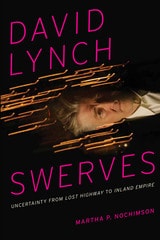
David Lynch Swerves
Uncertainty from Lost Highway to Inland EmpireBy Martha Nochimson
University of Texas Press, 2013
Beginning with Lost Highway, director David Lynch “swerved” in a new direction, one in which very disorienting images of the physical world take center stage in his films. Seeking to understand this unusual emphasis in his work, noted Lynch scholar Martha Nochimson engaged Lynch in a long conversation of unprecedented openness, during which he shared his vision of the physical world as an uncertain place that masks important universal realities. He described how he derives this vision from the Holy Vedas of the Hindu religion, as well as from his layman’s fascination with modern physics.
With this deep insight, Nochimson forges a startlingly original template for analyzing Lynch’s later films—the seemingly unlikely combination of the spiritual landscape envisioned in the Holy Vedas and the material landscape evoked by quantum mechanics and relativity. In David Lynch Swerves, Nochimson navigates the complexities of Lost Highway, The Straight Story, Mulholland Drive, and Inland Empire with uncanny skill, shedding light on the beauty of their organic compositions; their thematic critiques of the immense dangers of modern materialism; and their hopeful conceptions of human potential. She concludes with excerpts from the wide-ranging interview in which Lynch discussed his vision with her, as well as an interview with Columbia University physicist David Albert, who was one of Nochimson’s principal tutors in the discipline of quantum physics.
Dearth
Deconstruction After Speculative Realism. Art and DwellingPhilippe Lynes
Northwestern University Press, 2026
Proposing new insight into the legacies of Derridean thought for contemporary philosophy
In Art and Dwelling, the second volume of his Dearth sequence, Philippe Lynes sheds new light on the most enduring offshoot of the speculative realist movement, object-oriented ontology. Through careful readings of Graham Harman and Timothy Morton, Lynes shows how Jacques Derrida’s seminars offer critical insights into the spacing and distancing that precede and exceed all human practices of art and dwelling, with a deep sensitivity to the ecological and ethico-political consequences that follow.
Dearth: Deconstruction After Speculative Realism argues that Derrida’s seminars on Martin Heidegger and Maurice Blanchot, La Chose (The Thing), anticipated many of the philosophical, literary, and aesthetic questions animating speculative realism today: an anti-anthropocentric critique of Kantian correlationism; an overcoming of the apocalyptic nihilism of extinction through a deeper, affirmative habituation to nothingness; and poignant reflections on the literary and poetic aspects of living and dying in impossible worlds. His is an anti-correlationist plea that resounds now more urgently than ever.
Dearth
Deconstruction After Speculative Realism. The Nothing and NothingnessPhilippe Lynes
Northwestern University Press, 2026
Proposing a radical reconceptualization of deconstruction and nothingness
The first of two volumes exploring Jacques Derrida’s prefiguration of speculative realism, The Nothing and Nothingness examines the transcendental naturalism of Ray Brassier and Iain Hamilton Grant and the speculative materialism of Quentin Meillassoux. Philippe Lynes proposes nothing less than a radical reconceptualization of deconstruction as a call to bear witness to nothingness: let the earth be the earth, let nature be nature, and leave them to their reality, secrecy, and withdrawal without us.
Dearth: Deconstruction After Speculative Realism argues that Derrida’s seminars on Martin Heidegger and Maurice Blanchot, La Chose (The Thing), anticipated many of the philosophical, literary, and aesthetic questions animating speculative realism today: an anti-anthropocentric critique of Kantian correlationism; an overcoming of the apocalyptic nihilism of extinction through a deeper, affirmative habituation to nothingness; and poignant reflections on the literary and poetic aspects of living and dying in impossible worlds. His is an anti-correlationist plea that resounds now more urgently than ever.
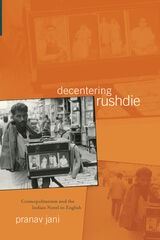
Decentering Rushdie
Cosmopolitanism and the Indian Novel in EnglishPranav Jani
The Ohio State University Press, 2010
Interrogating current theories of cosmopolitanism, nationalism, and aesthetics in Postcolonial Studies, Decentering Rushdie offers a new perspective on the Indian novel in English. Since Salman Rushdie’s Midnight’s Children won the Booker Prize in 1981, its postmodern style and postnational politics have dominated discussions of postcolonial literature. As a result, the rich variety of narrative forms and perspectives on the nation that constitute the field have been obscured, if not erased altogether.
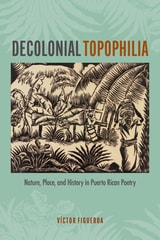
Decolonial Topophilia
Nature, Place, and History in Puerto Rican PoetryVíctor Figueroa
Bucknell University Press, 2026
Decolonial Topophilia: Nature, Place, and History in Puerto Rican Poetry examines how four major poets—Luis Lloréns Torres, Luis Palés Matos, Juan Antonio Corretjer, and Julia de Burgos—address the ecological and human consequences of colonial domination in early twentieth-century Puerto Rico. Their poetry raises questions about the capitalist transformation of land through monocultures like sugarcane, the reduction of nature to exploitable resources, and the ties between attachment to place and nationalism. In tracing these connections, this pathbreaking book reveals how poetic visions of place can challenge colonial histories and imagine more reciprocal ways of inhabiting the world.
Published by Bucknell University Press. Distributed worldwide by Rutgers University Press.
Deep Refrains
Music, Philosophy, and the IneffableMichael Gallope
University of Chicago Press, 2017
In Deep Refrains, Michael Gallope draws together the writings of Arthur Schopenhauer, Friedrich Nietzsche, Ernst Bloch, Theodor Adorno, Vladimir Jankélévitch, Gilles Deleuze, and Félix Guattari in order to revisit the age-old question of music’s ineffability from a modern perspective. For these nineteenth- and twentieth-century European philosophers, music’s ineffability is a complex phenomenon that engenders an intellectually productive sense of perplexity. Through careful examination of their historical contexts and philosophical orientations, close attention to their use of language, and new interpretations of musical compositions that proved influential for their work, Deep Refrains forges the first panoptic view of their writings on music. Gallope concludes that music’s ineffability is neither a conservative phenomenon nor a pious call to silence. Instead, these philosophers ask us to think through the ways in which music’s stunning force might address, in an ethical fashion, intricate philosophical questions specific to the modern world.
Deformative Fictions
Cruelty and Narrative Ethics in Twentieth-Century Latin American LiteratureAshley Hope Pérez
The Ohio State University Press, 2024
Demonic History
From Goethe to the PresentKirk Wetters
Northwestern University Press, 2014
In this ambitious book, Kirk Wetters traces the genealogy of the demonic in German literature from its imbrications in Goethe to its varying legacies in the work of essential authors, both canonical and less well known, such as Gundolf, Spengler, Benjamin, Lukács, and Doderer. Wetters focuses especially on the philological and metaphorological resonances of the demonic from its core formations through its appropriations in the tumultuous twentieth century.
Propelled by equal parts theoretical and historical acumen, Wetters explores the ways in which the question of the demonic has been employed to multiple theoretical, literary, and historico-political ends. He thereby produces an intellectual history that will be consequential both to scholars of German literature and to comparatists.
Denise Levertov
A Poet's LifeDana Greene
University of Illinois Press, 2014
Kenneth Rexroth called Denise Levertov (1923–1997) "the most subtly skillful poet of her generation, the most profound, . . . and the most moving." Author of twenty-four volumes of poetry, four books of essays, and several translations, Levertov became a lauded and honored poet. Born in England, she published her first book of poems at age twenty-three, but it was not until she married and came to the United States in 1948 that she found her poetic voice, helped by the likes of William Carlos Williams, Robert Duncan, and Robert Creeley. Shortly before her death in 1997, the woman who claimed no country as home was nominated to be America's poet laureate.
Levertov was the quintessential romantic. She wanted to live vividly, intensely, passionately, and on a grand scale. She wanted the persistence of Cézanne and the depth and generosity of Rilke. Once she acclimated herself to America, the dreamy lyric poetry of her early years gave way to the joy and wonder of ordinary life. By the late 1960s and early 1970s, however, her poems began to engage the issues of her times. Vehement and strident, her poetry of protest was both acclaimed and criticized. The end of both the Vietnam War and her marriage left her mentally fatigued and emotionally fragile, but gradually, over the span of a decade, she emerged with new energy. The crystalline and luminous poetry of her last years stands as final witness to a lifetime of searching for the mystery embedded in life itself. Through all the vagaries of life and art, her response was that of a "primary wonder."
In this illuminating biography, Dana Greene examines Levertov's interviews, essays, and self-revelatory poetry to discern the conflict and torment she both endured and created in her attempts to deal with her own psyche, her relationships with family, friends, lovers, colleagues, and the times in which she lived. Denise Levertov: A Poet's Life is the first complete biography of Levertov, a woman who claimed she did not want a biography, insisting that it was her work that she hoped would endure. And yet she confessed that her poetry in its various forms--lyric, political, natural, and religious--derived from her life experience. Although a substantial body of criticism has established Levertov as a major poet of the later twentieth century, this volume represents the first attempt to set her poetry within the framework of her often tumultuous life.
Denise Levertov
Selected CriticismEdited with an Introduction by Albert Gelpi
University of Michigan Press, 1993
Depth of Field
Stanley Kubrick, Film, and the Uses of HistoryEdited by Geoffrey Cocks, James Diedrick, and Glenn Perusek
University of Wisconsin Press, 2006
Director of some of the most controversial films of the twentieth century, Stanley Kubrick created a reputation as a Hollywood outsider as well as a cinematic genius. His diverse yet relatively small oeuvre—he directed only thirteen films during a career that spanned more than four decades—covers a broad range of the themes that shaped his century and continues to shape the twenty-first: war and crime, gender relations and class conflict, racism, and the fate of individual agency in a world of increasing social surveillance and control.
In Depth of Field, leading screenwriters and scholars analyze Kubrick's films from a variety of perspectives. They examine such groundbreaking classics as Dr. Strangelove and 2001: A Space Odyssey and later films whose critical reputations are still in flux. Depth of Field ends with three viewpoints on Kubrick's final film, Eyes Wide Shut, placing it in the contexts of film history, the history and theory of psychoanalysis, and the sociology of sex and power. Probing Kubrick's whole body of work, Depth of Field is the first truly multidisciplinary study of one of the most innovative and controversial filmmakers of the twentieth century.
Derek Jarman and Lyric Film
The Mirror and the SeaBy Steven Dillon
University of Texas Press, 2004
Derek Jarman was the most important independent filmmaker in England during the 1980s. Using emblems and symbols in associative contexts, rather than conventional, cause-and-effect narrative, he created films noteworthy for their lyricism and poetic feeling and for their exploration of the gay experience. His style of filmmaking also links Jarman with other prominent directors of lyric film, including Pier Paolo Pasolini, Andrei Tarkovsky, Jean Cocteau, and Jean Genet.
This pathfinding book places Derek Jarman in the tradition of lyric film and offers incisive readings of all eleven of his feature-length films, from Sebastiane to Blue. Steven Dillon looks at Jarman and other directors working in a similar vein to establish how lyric films are composed through the use of visual imagery and actual poetry. He then traces Jarman's use of imagery (notably mirrors and the sea) in his films and discusses in detail the relationship between cinematic representations and sexual identity. This insightful reading of Jarman's work helps us better understand how films such as The Last of England and The Garden can be said to cohere and mean without being reduced to clear messages. Above all, Dillon's book reveals how truly beautiful and brilliant Jarman's movies are.

Dialogic Novels of Malcolm Bradbury and David Lodge
Robert A. Morace
Southern Illinois University Press, 1989
Morace analyzes the novels of Malcolm Bradbury and David Lodge together because they provide a dialogue of conflicting views, styles, and forms of the contemporary novel. This dialogue parallels the views of these two British novelists as critics.
Beginning as realists, as novelists of manners, as writers of campus novels, Bradbury and Lodge explore the possibilities and the limitations of realistic writing. Bradbury and Lodge, however, are not only heirs of English literary tradition. Both are also literary critics with a keen interest in recent critical theories. Morace shows us how the debate between Bradbury and Lodge over the nature and purpose of fiction and criticism has found its way into their novels. The realistic conflicts between civilian and military, English and American, pre- and post-Vatican II values gradually give way to an exploration of the semiotics behind such conflicts.
Morace finds Bradbury’s and Lodge’s works far more open-ended than the "doggedly indeterminate fictions" of many contemporary writers. Using Mikhail Bakhtin’s theory of dialogism, he identifies the ways in which language and values simultaneously compete with and support one another in their novels.
This first book-length study of Bradbury or Lodge deals with all of their novels, including Changing Places, How Far Can You Go?, and Small World by Lodge, as well as Bradbury’s The History of Man and Rates of Exchange.

Dickens The Novelist
Leavis, F. R.
Rutgers University Press, 1979
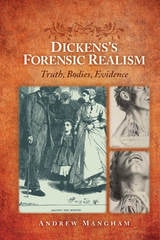
Dickens's Forensic Realism
Truth, Bodies, EvidenceAndrew Mangham
The Ohio State University Press, 2017
As Mangham shows, forensic medicine grew out of a perceived need to understand things with accuracy, leaning in part on the range of objectivities that inspired the inorganic sciences. At the same time, it had the burden of assisting the law in convicting the guilty and in exonerating the innocent. Practitioners of forensic medicine were uniquely mindful of unwanted variables such as human error and the vagaries of interpretation. In readings of Oliver Twist, Our Mutual Friend, Bleak House, The Pickwick Papers, Great Expectations, and Dickens’s early journalism, Mangham demonstrates that these questions about signification, perception, and reality are central to the stylistic complexities and playful tone often associated with Dickens. Moreover, the medico-legal context of Dickens’s fiction illuminates the richness and profundity, style and impact of Dicken’s narratives.
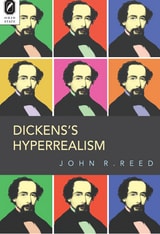
Dickens's Hyperrealism
John R. Reed
The Ohio State University Press, 2009
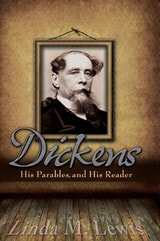
Dickens, His Parables, and His Reader
Linda M. Lewis
University of Missouri Press, 2011

Dickinson and the Boundaries of Feminist Theory
Mary Loeffelholz
University of Illinois Press, 1991
"Mary Loeffelholz has written a book that actually performs what it promises. . . . It illuminates our understanding of Emily Dickinson with readings both elegant and useful, and as importantly suggests modified direction for feminist-psychoanalytic theory."
-- Diana Hume George, author of Oedipus Anne: The Poetry of Anne Sexton
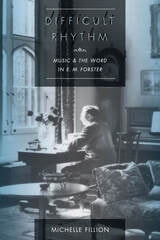
Difficult Rhythm
Music and the Word in E.M. ForsterMichelle Fillion
University of Illinois Press, 2013

Directing Shakespeare
A Scholar OnstageSidney Homan
Ohio University Press, 2004
An impossible question from a Chinese actor—“Why is Shakespeare eternal?”—drove Sidney Homan after fifty years in the theater to ponder just what makes Shakespeare…well, Shakespeare. The result, Directing Shakespeare, reflects the two worlds in which Homan operates—as a scholar and teacher on campus, and as a director and actor in professional and university theaters. His concern is the entire process, beginning in the lonely period when the director develops a concept, and moving into increasingly larger realms: interaction with stage designers; rehearsals; and performances in which the audience’s response further shapes the play.
Homan recounts the experience of staging King Lear accompanied by a musical score for piano, violin, and cello played live onstage. He discusses the challenge of making and trying to justify cuts in Hamlet. A casual remark from an actress leads to a feminist production of A Midsummer Night’s Dream. He describes the delicate collaboration between director and performer as he works with actors preparing for The Merchant of Venice, King Lear, and Hamlet. Other chapters treat a set designer’s bold red drapes that influenced the director’s concept for Julius Caesar, and the cross-influence of back-to-back runs of Stoppard’s Rosencrantz and Guildenstsern Are Dead and Hamlet.
In a highly personal concluding chapter, Homan tells of joyously working with a spontaneous young actor playing Puck and with an audience of unruly teenagers who wept at a performance of Lear.
Delightfully written, and filled with practical insights, Directing Shakespeare draws together scholars, critics, and those who work in the theater to bring the written word to life.
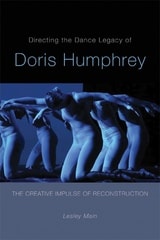
Directing the Dance Legacy of Doris Humphrey
The Creative Impulse of ReconstructionLesley Main
University of Wisconsin Press, 2012
Directing the Dance Legacy of Doris Humphrey looks inside four of Doris Humphrey’s major choreographic works—Water Study (1928), The Shakers (1931), With My Red Fires (1936), and Passacaglia (1938)—with an eye to how directorial strategies applied in recent contemporized stagings in the United States and Europe could work across the modern and contemporary dance genre. Author Lesley Main, a seasoned practitioner of Doris Humphrey choreography, stresses to the reader the need to balance respect for classical works from the modern dance repertory with the necessity for fresh directorial strategies, to balance between traditional practices and a creative role for the reconstructor.
Drawing upon her own dance experience, Main’s book addresses an area of dance research and practice that is becoming increasingly pertinent as the dancer-choreographers of the 20th century modern and contemporary dance are no longer alive to attend to the re-stagings of the body of their works. Insightful and thought-provoking, Directing the Dance Legacy of Doris Humphrey calls for the creation of new forms of directorial practice in dance beyond reconstruction. The radical new practices it proposes to replace the old are sure to spark debate and fresh thinking across the dance field.
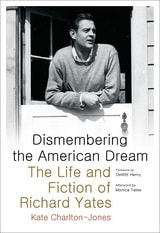
Dismembering the American Dream
The Life and Fiction of Richard YatesKate Charlton-Jones
University of Alabama Press, 2014
Since his death in Alabama in 1992, the work of American writer Richard Yates has enjoyed a renaissance, culminating in director Sam Mendes’s adaption of the novel Revolutionary Road (starring Leonardo DiCaprio and Kate Winslet). Dismembering the American Dream is the first book-length critical study of Yates’s fiction.
Kate Charlton-Jones argues that to read Yates’s tales of disordered lives is to uncover not misery, though the lives he describes are sad ones, but a profound, enriching, and humorous understanding of human weakness and vulnerability. Yates’s narratives absorb his readers so entirely, mirroring their own emotional highs and lows with such skill, that reading becomes recognition. Yates demonstrates his ability to tease powerful human drama out of the most ordinary, quotidian moments. At the same time, Yates’s fiction displays an object lesson in the art of fine prose writing, so it is no surprise that many early fans of Yates were also established writers.
Charlton-Jones explores how Yates extends the realist form and investigates three main recurring themes of his fiction: observations about performative behavior, which are at the heart of all his fictions; his conception of the writer’s role in society; and how he envisages the development of social and sexual relationships. Furthermore, Charlton-Jones illustrates how Yates incorporates some of the concerns and methods of postmodernist writers but how, nevertheless, he resists their ontological challenges.
Drawing on the author’s personal papers and with a foreword by DeWitt Henry and an afterword by Richard Yates’s daughter Monica, Dismembering the American Dream provides an extended critical examination of the often neglected but important work of this gifted and accomplished author.
Disowned by Memory
Wordsworth's Poetry of the 1790sDavid Bromwich
University of Chicago Press, 1998
"This very Wordsworthian combination of apparently low subjects with extraordinary 'high argument' makes for very rewarding, though often challenging reading."—Kenneth R. Johnston, Washington Times
"Wordsworth emerges from this short and finely written book as even stranger than we had thought, and even more urgently our contemporary."—Grevel Lindop, Times Literary Supplement
"[Bromwich's] critical interpretations of the poetry itself offer readers unusual insights into Wordworth's life and work."—Library Journal
"An added benefit of this book is that it restores our faith that criticism can actually speak to our needs. Bromwich is a rigorous critic, but he is a general one whose insights are broadly applicable. It's an intellectual pleasure to rise to his complexities."—Vijay Seshadri, New York Times Book Review
Dissecting Stephen King
From the Gothic to Literary NaturalismHeidi Strengell
University of Wisconsin Press, 2005
Ultimately, Strengell shows how King shatters our illusions of safety and control: "King places his decent and basically good characters at the mercy of indifferent forces, survival depending on their moral strength and the responsibility they may take for their fellow men."
Disturbing Indians
The Archaeology of Southern FictionAnnette Trefzer
University of Alabama Press, 2007
How Faulkner, Welty, Lytle, and Gordon reimagined and reconstructed the Native American past in their work.
In this book, Annette Trefzer argues that not only have Native Americans played an active role in the construction of the South’s cultural landscape—despite a history of colonization, dispossession, and removal aimed at rendering them invisible—but that their under-examined presence in southern literature also provides a crucial avenue for a post-regional understanding of the American South. William Faulkner, Eudora Welty, Andrew Lytle, and Caroline Gordon created works about the Spanish conquest of the New World, the Cherokee frontier during the Revolution, the expansion into the Mississippi Territory, and the slaveholding societies of the American southeast. They wrote 100 years after the forceful removal of Native Americans from the southeast but consistently returned to the idea of an "Indian frontier," each articulating a different vision and discourse about Native Americans—wholesome and pure in the vision of some, symptomatic of hybridity and universality for others.
Trefzer contends that these writers engage in a double discourse about the region and nation: fabricating regional identity by invoking the South’s "native" heritage and pointing to issues of national guilt, colonization, westward expansion, and imperialism in a period that saw the US sphere of influence widen dramatically. In both cases, the "Indian" signifies regional and national self-definitions and contributes to the shaping of cultural, racial, and national "others." Trefzer employs the idea of archeology in two senses: quite literally the excavation of artifacts in the South during the New Deal administration of the 1930s (a surfacing of material culture to which each writer responded) and archeology as a method for exploring texts she addresses (literary digs into the textual strata of America’s literature and its cultural history).
Divining the Oracle
Monteverdi's Seconda pratticaMassimo Ossi
University of Chicago Press, 2003
Challenged in print for the unconventional aspects of his music, Monteverdi found himself at the center of a debate between defenders of Renaissance principles and the newest musical currents of the time. The principles of the seconda prattica, Ossi argues in this sophisticated analysis of Monteverdi's writings, music, and approaches to text-setting, were in fact much more significant to the course of Monteverdi's career than previously thought by modern scholars-not only did Monteverdi continue to pursue their aesthetic and theoretical implications for the rest of his life, but they also affected his dramatic compositions as well as his chamber vocal music and sacred works.
Ossi "divines the oracle" of Monteverdi's ambiguous theoretical concepts in a clear way and in terms of pure music; his book will enhance our understanding of Monteverdi as one of the most significant figures in western music history.
Doing It Right
The Best Criticism on Sam Peckinpah's The Wild BunchEdited with an Introduction by Michael Bliss
Southern Illinois University Press, 1994
Doing It Right brings together the very finest in reviews and criticism of The Wild Bunch since its release in 1969.
Often misinterpreted because of its graphic violence, the film initially generated considerable controversy. Sam Peckinpah, who made the film after a four-year forced hiatus in his career (he had been blacklisted), created it as a depiction of the savage behavior possible in the post– World War I era. However, the ensuing controversy was not restricted only to the explicit story and images. Producer Phil Feldman’s withdrawal of Peckinpah’s cut of the film drew tremendous sympathy for Peckinpah from American and European film critics alike.
This casebook should be read as a supplement to a viewing of the film, which is now available in its uncut form in video. Edited and with an introduction by Michael Bliss, the book explores the film’s production history, giving an overview of its release problems and highlighting its stylistic characteristics, classic structure, use of the widescreen frame, and innovative editing techniques. It also discusses in detail the film’s underlying moral message and its representation of camaraderie and loyalty. In addition to Bliss, essayists include Robert Culp, Paul Schrader, Stephen Farber, Paul Seydor, Jim Kitses, Cordell Strug, John L. Simons, Aljean Harmetz, and Michael Sragow. The book concludes with an appendix and an extensive bibliography.
Don't Forget to Live
Goethe and the Tradition of Spiritual ExercisesPierre Hadot
University of Chicago Press, 2023
With a foreword by Arnold I. Davidson and Daniele Lorenzini.
In his final book, renowned philosopher Pierre Hadot explores Goethe’s relationship with ancient spiritual exercises—transformative acts of intellect, imagination, or will. Goethe sought both an intense experience of the present moment as well as a kind of cosmic consciousness, both of which are rooted in ancient philosophical practices. These practices shaped Goethe’s audacious contrast to the traditional maxim memento mori (Don’t forget that you will die) with the aim of transforming our ordinary consciousness. Ultimately, Hadot reveals how Goethe cultivated a deep love for life that brings to the forefront a new maxim: Don’t forget to live.
Donald Barthelme
An ExhibitionJerome Klinkowitz
Duke University Press, 1991
Klinkowitz argues that the central piece in the Barthelme canon, and the key to his artistic method, is his widely acknowledged masterpiece, The Dead Father. In turning to this pivotal work, as well as to Barthelme’s short stories and other novels, Klinkowitz explores the way in which Barthelme reinvented the tools of narration, characterization, and thematics at a time when fictive techniques were largely believed to be exhausted.
Klinkowitz, who was one of the first scholars to study Barthelme’s work and became its definitive bibliographer, situates Barthelme’s life and work within a broad spectrum of influences and affinities. A consideration of developments in painting and sculpture, for example, as well as those of contemporaneous fiction, contribute to Klinkowitz’s analysis. This astute reading will provide great insight for readers, writers, and critics of contemporary American fiction seeking explanations and justifications of Barthelme’s critical importance in the literature of our times.
Doris Lessing
Interrogating the TimesEdited by Debrah Raschke, Phyllis Sternberg Perrakis, and Sandra Singer
The Ohio State University Press, 2010
Doris Lessing
The Alchemy of SurvivalCarey Kaplan
Ohio University Press, 1988
Long neglected by the academic world because of her rejection of belletristic values and resistance to convenient literary taxonomy, Doris Lessing has nonetheless built an international following of serious, dedicated readers. Acknowledging the difficulties posed by the multiple dimensions of Lessing’s work, Kaplan and Rose have gathered eleven essays that address her artistic, philosophical, political, and psychological complexity, and so provide a welcome introduction to the extraordinary depth and diversity of this important contemporary novelist.
Lessing has been described as an “alchemical” writer, in that her work is directed toward changing people’s lives and perceptions rather than simply recording experience. Accordingly, the contributors examine her various postures and tactics for the purpose of discovering how the alchemical elements inform her various personae. Frederick C. Stern discusses Lessing’s commitment to radical humanist thought, while Carey Kaplan examines how Lessing’s imperialist past has shaped her futuristic fiction. Elizabeth Abel offers a feminist interpretation of the pattern of brother-sister incest in Lessing’s work, showing how Lessing has established Antigone as a female alternative to the Oedipal myth of male incest. Particularly insightful is Eve Bertelsen’s report of her interview with Lessing, demonstrating how Lessing’s often evasive style of adversarial dialogue works in concert with her refusal to be conveniently pigeonholed by academic analysis.
For those readers new to her work, Doris Lessing: The Alchemy of Survival will serve as a useful introduction to Lessing’s concerns and techniques. Those who have long admired her writing will find in this collection new keys to understanding Lessing’s philosophical, political, and psychological complexity.
Doris Lessing
The Poetics of ChangeGayle Greene
University of Michigan Press, 1997
Doris Lessing has been a chronicler of our age for nearly half a century, and a study of her writing career does not yield easy generalizations. Difficult though she is to categorize, she is always concerned with change, with a search for "something new" against "the nightmare repetition" of history. The feminist quest she articulated in The Children of Violence and The Golden Notebook entered the culture with the force of a new myth: these books changed lives. The Golden Notebook--together with such works as The Second Sex and The Feminine Mystique--raised the consciousness of a generation of women readers and played a major part in making the second wave of feminism. It is the power of Lessing's novels to change people's lives, the effect she had raising the consciousness of a generation of women and the effect she continues to have on young readers, that is the subject of this book.
Gayle Greene employs an eclectic range of approaches (psychoanalytic, Marxist, biographical, historical, intertextual, formalist, feminist) to shed new light on Lessing's remarkable achievement. She sees Lessing as a feminist writer, not in offering strong female role models who climb top the top of existing social structures, but in envisioning, and indeed helping to bring about, a transformation of those structures. Lessing critiques Western values of individualism, competition, and materialism in terms similar to those developed by feminism; and, in getting us to view our culture from without, in teaching us to read cultural constructs as systems, her novels perform the deconstructing and demystifying work of feminism.
Doris Salcedo
Edited by Julie Rodrigues Widholm and Madeleine Grynsztejn
University of Chicago Press, 2015
Published to accompany Salcedo’s first retrospective exhibition and the American debut of her major work Plegaria muda, Doris Salcedo is the most comprehensive survey of her sculptures and installations to date. In addition to featuring new contributions by respected scholars and curators, the book includes over one hundred color illustrations highlighting many pieces from Salcedo’s thirty-year career. Offering fresh perspectives on a vital body of work, Doris Salcedo is a testament to the power of one of today’s most important international artists.
Dos X
Disability and Racial Dysphoria in Latinx and Filipinx CultureSony Coráñez Bolton
University of Texas Press, 2025
An examination of the interconnectedness of brown-racialized people across multiple identities, told through case studies of television, literature, and writing.
As a Filipinx immigrant to the United States, Sony Coráñez Bolton has frequently been mistaken as Mexican. Dos X theorizes such misrecognition. What does it mean to exist in this liminal state, which Coráñez Bolton dubs the “racial uncanny”? What generative possibilities emerge from the presumed interchangeability of Latinx and Filipinx bodies—and from the in-betweenness of brownness as such?
Dos X tracks misrecognition through cultural products like the TV series Undone, Brian Ascalon Roley’s American Son, and the nonfiction work of Jose Antonio Vargas. Misrecognition, Coráñez Bolton argues, produces moments of uncanniness in which subjects experience dysphoric attachments to identities that aren’t supposed to be theirs. In the context of racial capitalism, racial dysphoria is a disability because it undermines certainty about what one’s body is and therefore what role one is meant to play as a laborer. But racial dysphoria can also be revealing. Coráñez Bolton identifies vast potential in this supposed disability, which compels its “sufferers” to confront their shared position within the social, political, and economic organization of capital’s empire, opening new avenues for liberatory solidarity.
Dostoevsky and the Affirmation of Life
Predrag Cicovacki
St. Augustine's Press, 2008
Dostoevsky and the Catholic Underground
Elizabeth A. Blake
Northwestern University Press, 2019
While Dostoevsky’s relation to religion is well-trod ground, there exists no comprehensive study of Dostoevsky and Catholicism. Elizabeth Blake’s ambitious and learned Dostoevsky and the Catholic Underground fills this glaring omission in the scholarship. Previous commentators have traced a wide-ranging hostility in Dostoevsky’s understanding of Catholicism to his Slavophilism. Blake depicts a far more nuanced picture. Her close reading demonstrates that he is repelled and fascinated by Catholicism in all its medieval, Reformation, and modern manifestations. Dostoevsky saw in Catholicism not just an inspirational source for the Grand Inquisitor but a political force, an ideological wellspring, a unique mode of intellectual inquiry, and a source of cultural production. Blake’s insightful textual analysis is accompanied by an equally penetrating analysis of nineteenth-century European revolutionary history, from Paris to Siberia, that undoubtedly influenced the evolution of Dostoevsky’s thought.
Dostoevsky and the Ethics of Narrative Form
Suspense, Closure, Minor CharactersGreta Matzner-Gore
Northwestern University Press, 2020