Results by title
3369 books match the query 'Cultural & Social' and 131 start with d
Daily Labors
Marketing Identity and Bodies on a New York City Street CornerCarolyn Pinedo-Turnovsky
Temple University Press, 2019
On street corners throughout the country, men stand or sit together patiently while they wait for someone looking to hire un buen trabajador (a good worker). These day laborers are visible symbols of the changing nature of work—and the demographics of workers—in the United States.
Carolyn Pinedo-Turnovsky spent nearly three years visiting with African American men and Latino immigrant men who looked for work as day laborers at a Brooklyn street intersection. Her fascinating ethnography, Daily Labors, considers these immigrants and citizens as active participants in their social and economic life. They not only work for wages but also labor daily to institute change, create knowledge, and contribute new meanings to shape their social world.
Daily Labors reveals how ideologies about race, gender, nation, and legal status operate on the corner and the vulnerabilities, discrimination, and exploitation workers face in this labor market. Pinedo-Turnovsky shows how workers market themselves to conform to employers’ preconceptions of a “good worker” and how this performance paradoxically leads to a more precarious workplace experience. Ultimately, she sheds light on belonging, community, and what a “good day laborer” for these workers really is.
Dance and the Nation
Performance, Ritual, and Politics in Sri LankaSusan A. Reed
University of Wisconsin Press, 2010
As the national dance of Sri Lanka, Kandyan dance is identified with the majority Sinhala ethnic group and heavily supported by the state. Derived from the kohomba kankariya—an elaborate village ritual performed by men of the hereditary drummer caste—the dance was adopted by the state as a symbol of traditional Sinhala culture in the post-independence period. When state officials introduced the dance into the school curriculum, it was opened to individuals of all castes, and high-caste women have emerged as prominent teachers and performers. Reed’s evocative account traces the history and consequences of this transition from ritual to stage, situating the dance in relation to postcolonial nationalism and ethnic politics and emphasizing the voices and perspectives of the hereditary dancers and of women performers.
Although Kandyan dance is related to other south Asian dance forms, it is unique, distinguished by an elegant, energetic style, and lively displays of acrobatics and agility. The companion DVD includes unparalleled footage of this vibrant dance in ritual, stage, and training contexts, and features the most esteemed performers of the Kandyan region.

Dancing Prophets
Musical Experience in Tumbuka HealingSteven M. Friedson
University of Chicago Press, 1996
Tumbuka healers diagnose diseases by enacting divination trances in which they "see" the causes of past events and their consequences for patients. Music is the structural nexus where healer, patient, and spirit meet—it is the energizing heat that fuels the trance, transforming both the bodily and social functioning of the individual. Friedson shows how the sound of the ng'oma drum, the clapping of the choir, call-and-response singing, and the jangle of tin belts and iron anklets do not simply accompany other more important ritual activities—they are the very substance of a sacred clinical reality.
This novel look at the relation between music and mental and biological health will interest medical anthropologists, Africanists, and religious scholars as well as ethnomusicologists.

Dancing Wisdom
Embodied Knowledge in Haitian Vodou, Cuban Yoruba, and Bahian CandombléYvonne Daniel
University of Illinois Press, 2005
Combining her background in dance and anthropology to parallel the participant/scholar dichotomy inherent to dancing's "embodied knowledge," Daniel examines these misunderstood and oppressed performative dances in terms of physiology, psychology, philosophy, mathematics, ethics, and aesthetics.
"Dancing Wisdom offers the rare opportunity to see into the world of mystical spiritual belief as articulated and manifested in ritual by dance. Whether it is a Cuban Yoruba dance ritual, slave Ring Shout or contemporary Pentecostal Holy Ghost possession dancing shout, we are able to understand the relationship with spirit through dancing with the Divine. Yvonne Daniel's work synthesizes the cognitive empirical objectivity of an anthropologist with the passionate storytelling of a poetic artist in articulating how dance becomes prayer in ritual for Africans of the Diaspora."
--Leon T. Burrows, Protestant Chaplain, Smith College’
Dancing the Politics of Pleasure at the New Orleans Second Line
Rachel Carrico
University of Illinois Press, 2024
On many Sundays, Black New Orleanians dance through city streets in Second Lines. These processions invite would-be spectators to join in, grooving to an ambulatory brass band for several hours. Though an increasingly popular attraction for tourists, parading provides the second liners themselves with a potent public expression of Black resistance.
Rachel Carrico examines the parading bodies in motion as a form of negotiating and understanding power. Seeing pleasure as a bodily experience, Carrico reveals how second liners’ moves link joy and liberation, self and communal identities, play and dissent, and reclamations of place. As she shows, dancers’ choices allow them to access the pleasure of reclaiming self and city through motion and rhythm while expanding a sense of the possible in the present and for the future.
In-depth and empathetic, Dancing the Politics of Pleasure at the New Orleans Second Line blends analysis with a chorus of Black voices to reveal an indelible facet of Black culture in the Crescent City.
Dancing with the Dead
Memory, Performance, and Everyday Life in Postwar OkinawaChristopher T. Nelson
Duke University Press, 2008
Nelson analyzes the practices of specific performers, showing how memories are recalled, bodies remade, and actions rethought as Okinawans work through fragments of the past in order to reconstruct the fabric of everyday life. Artists such as the popular Okinawan actor and storyteller Fujiki Hayato weave together genres including Japanese stand-up comedy, Okinawan celebratory rituals, and ethnographic studies of war memory, encouraging their audiences to imagine other ways to live in the modern world. Nelson looks at the efforts of performers and activists to wrest the Okinawan past from romantic representations of idyllic rural life in the Japanese media and reactionary appropriations of traditional values by conservative politicians. In his consideration of eisā, the traditional dance for the dead, Nelson finds a practice that reaches beyond the expected boundaries of mourning and commemoration, as the living and the dead come together to create a moment in which a new world might be built from the ruins of the old.

Dancing with the Devil
Society and Cultural Poetics in Mexican-American South TexasJose Limon
University of Wisconsin Press, 1994
Combining shrewd applications of current cultural theory with compelling autobiography and elegant prose, José E. Limón works at the intersection of anthropology, folklore, popular culture, history, and literary criticism. A native of South Texas, he renders a historical and ethnographic account of its rich Mexican-American folk culture. This folk culture, he shows—whether expressed through male joking rituals, ballroom polka dances, folk healing, or eating and drinking traditions—metaphorically dances with the devil, both resisting and accommodating the dominant culture of Texas.
Critiquing the work of his precursors— John Gregory Bourke, J. Frank Dobie, Jovita Gonzalez, and Americo Paredes—Limón deftly demonstrates that their accounts of Mexican-Americans in South Texas contain race, class, and gender contradictions, revealed most clearly in their accounts of the folkloric figure of the devil. Limón's own field-based ethnography follows, and again the devil appears as a recurrent motif, signaling the ideological contradictions of folk practices in a South Texas on the verge of postmodernity.
Dangerous Liaisons
Gender, Nation, and Postcolonial PerspectivesAnne Mcclintock
University of Minnesota Press, 1997

Dangerous Occupations
Archaeologies of Structural Violence, Immigrants, and Resilience in Early CaliforniaMarco G. Meniketti
University of Alabama Press, 2026
Addresses structural violence through history and archaeology of immigrant workers
Dangerous Occupations: Archaeologies of Structural Violence, Immigrants, and Resilience in Early California is an impactful work of historical archaeology combined with social history that addresses structural violence in key California industries from the Gold Rush in 1849 until 1920. Monopolistic industries, such as railroading, mining, timbering, explosive manufacturing, lime production, meatpacking, textile milling, and fishing/whaling, relied on immigrant laborers who were recruited and perceived as expendable. Restrictive laws and lack of employment opportunities based on bigotry often forced immigrants into the most dangerous occupations. In the days before workmen’s compensation insurance and strict labor safety laws, laborers often risked their health and even their lives for employment.
Marco G. Meniketti’s analysis comes from examining excavation of labor camps and housing, landscape studies, bioarchaeological data, architectural footprints, and archival sources. Each chapter offers a case study of industries to exemplify structural violence and its broader consequences among various immigrant labor groups, such as Chinese, Scandinavian, Irish, Italian, Chilean, Cornish, and Portuguese. The narrative includes a historical overview of the industries, identifies who the immigrant laborers were and how they came to be there, examines the dangers and health risks of their jobs, and details their living conditions and daily life, including foodways, leisure, and efforts to treat their job-inflicted maladies. Dangerous Occupations introduces a new generation of readers to how immigrants built the West Coast and at what great cost.

Darfur Allegory
Rogaia Mustafa Abusharaf
University of Chicago Press, 2021
Elaborated in colonial times and enshrined in policy afterwards, such binary categories have been adopted by the media to explain the civil war in Darfur. The narratives that circulate internationally are thus highly fraught and cover over—to counterproductive effect—forms of Darfurian activism that have emerged in the conflict’s wake. Darfur Allegory marries the analytical precision of a committed anthropologist with an insider’s view of Sudanese politics at home and in the diaspora, laying bare the power of words to heal or perpetuate civil conflict.

Dark Matter of the Mind
The Culturally Articulated UnconsciousDaniel L. Everett
University of Chicago Press, 2016
Everett sketches a blank-slate picture of human cognition that focuses not on what is in the mind but, rather, what the mind is in—namely, culture. He draws on years of field research among the Amazonian people of the Pirahã in order to carefully scrutinize various theories of cognitive instinct, including Noam Chomsky’s foundational concept of universal grammar, Freud’s notions of unconscious forces, Adolf Bastian’s psychic unity of mankind, and works on massive modularity by evolutionary psychologists such as Leda Cosmides, John Tooby, Jerry Fodor, and Steven Pinker. Illuminating unique characteristics of the Pirahã language, he demonstrates just how differently various cultures can make us think and how vital culture is to our cognitive flexibility. Outlining the ways culture and individual psychology operate symbiotically, he posits a Buddhist-like conception of the cultural self as a set of experiences united by various apperceptions, episodic memories, ranked values, knowledge structures, and social roles—and not, in any shape or form, biological instinct.
The result is fascinating portrait of the “dark matter of the mind,” one that shows that our greatest evolutionary adaptation is adaptability itself.

Dark Shamans
Kanaimà and the Poetics of Violent DeathNeil L. Whitehead
Duke University Press, 2002
Neil L. Whitehead tells of his own involvement with kanaimà—including an attempt to kill him with poison—and relates the personal testimonies of kanaimà shamans, their potential victims, and the victims’ families. He then goes on to discuss the historical emergence of kanaimà, describing how, in the face of successive modern colonizing forces—missionaries, rubber gatherers, miners, and development agencies—the practice has become an assertion of native autonomy. His analysis explores the ways in which kanaimà mediates both national and international impacts on native peoples in the region and considers the significance of kanaimà for current accounts of shamanism and religious belief and for theories of war and violence.
Kanaimà appears here as part of the wider lexicon of rebellious terror and exotic horror—alongside the cannibal, vampire, and zombie—that haunts the western imagination. Dark Shamans broadens discussions of violence and of the representation of primitive savagery by recasting both in the light of current debates on modernity and globalization.

Data Dating
Love, Technology, DesireEdited by Ania Malinowska and Valentina Peri
Intellect Books, 2021
Data Dating is a collection of eleven academic essays accompanied by eleven works of media art that provide a comprehensive insight into the construction of love and its practices in the time of digitally mediated relationships. The essays come from recognized researchers in the field of media and cultural studies.

Dawn in Arctic Alaska
Diamond Jenness
University of Chicago Press, 1985
In 1913 a young ethnologist from New Zealand boarded a ship for the Arctic, beginning a personal journey that was to make Diamond Jenness one of the twentieth century's foremost authorities on Alaskan Eskimos. Jenness had been asked to join the Stefansson expedition, and his official duties were to collect ethnographic details on the Eskimos—their culture, technology, religion, and social organization. His account of the expedition was published as People of the Twilight in 1928, but Jenness also kept a diary of his three years among the Eskimos. He was eventually persuaded to publish it as Dawn in Arctic Alaska.
Predating the genre of personal ethnographies that has become so popular and important today, Jenness's tales blend his keen observations of the Arctic and its people with his own reflections and sensory experiences. He expresses great adimiration for the customs and character of the Eskimos and great regret and disappointment over the destruction of their lifeway through contact with white men.

Dawn of Industrial Agriculture in Iowa
Anthropology, Literature, and HistoryE. Paul Durrenberger
University Press of Colorado, 2021
Durrenberger tells the story that Corey aimed to record and preserve of the industrialization of Iowa’s agriculture and the death of its family farms. He analyzes Corey’s regionalist focus on Iowa farming and regionalism’s contemporaneous association in Europe with rising fascism. He explores Corey’s adoption of naturalism, evident in his resistance to heroes and villains, to plot structure and resolution, and to moral judgment, as well as his ethnographic tendency to focus on groups rather than individuals.
An unusual and wide-ranging study, The Dawn of Industrial Agriculture in Iowa offers important insight into the relationships among fiction, individual lives, and anthropological practice, as well as into a pivotal period in American history.

De-blading the Knife
Writing Femicide in MudCristina Rivera Garza
Diaphanes, 2026
Deadline
Populism and the Press in VenezuelaRobert Samet
University of Chicago Press, 2019
In Deadline, anthropologist Robert Samet answers this question by focusing on the relationship between populism, the press, and what he calls “the will to security.” Drawing on nearly a decade of ethnographic research alongside journalists on the Caracas crime beat, he shows how the media shaped the politics of security from the ground up. Paradoxically, Venezuela’s punitive turn was not the product of dictatorship, but rather an outgrowth of practices and institutions normally associated with democracy. Samet reckons with this apparent contradiction by exploring the circulation of extralegal denuncias (accusations) by crime journalists, editors, sources, and audiences. Denuncias are a form of public shaming or exposé that channels popular anger against the powers that be. By showing how denuncias mobilize dissent, Deadline weaves a much larger tale about the relationship between the press, popular outrage, and the politics of security in the twenty-first century.

Deadly Refusals
Kurdish Decolonization in Times of CounterterrorismSerra M. Hakyemez
University of Minnesota Press, 2026
Revolutionary desire and decolonial struggle inside the heart of the carceral state
Deadly Refusals offers an intimate portrait of Kurdish decolonial struggle within the carceral and legal apparatuses of the Turkish state. Set in the counterterrorism courts and maximum-security prisons of Northern Kurdistan, Serra M. Hakyemez’s ethnography examines how prosecuted and imprisoned Kurds from different socioeconomic backgrounds organize in refusal of the criminalization and colonization of their political demands and desires. Through acts of self-criticism, revolutionary education, and comradely care, these prisoners articulate a political subjectivity that challenges the foundations of colonial power.
Based on more than seventeen years of ethnographic research—including interviews with former prisoners, lawyers, judges, and prosecutors; observations of more than one hundred court hearings; and analysis of prison memoirs, poetry, and legal archives—Deadly Refusals uncovers the mechanisms through which counterterrorism law reproduces the colonial state. Yet it is not solely a study of repression. Engaging psychoanalytic concepts of subject, desire, and ethics, Hakyemez illuminates how these carceral spaces also become sites of revolutionary responsibility. Here, refusal is not resignation but a political act in which the colonized self is killed—literally or figuratively—to make way for a larger collective subjectivity.
Using the interplay of comradeship and intimacy, political desire and ordinary pleasure, death and love, Deadly Refusals examines how Kurdish political prisoners forge multilayered relations of decolonization in an ongoing psychopolitical struggle. Hakyemez shows how both small gestures of withdrawal, restraint, and negation as well as radical acts like language protests, hunger strikes, and death protests become part of a shared struggle for alternative futures that state power cannot fully contain or comprehend.
Retail e-book files for this title are screen-reader friendly with images accompanied by short alt text and/or extended descriptions.
Deaf Identities in the Making
Local Lives, Transnational ConnectionsJan-Kåre Breivik
Gallaudet University Press, 0
In his revolutionary new book, Jan-Kåre Breivik profiles ten Norwegian Deaf people and their life stories within a translocal/transnational framework. Breivik notes that, unlike hearing people, who form their identities from familial roots and local senses of place, deaf individuals often find themselves distanced from their own families and akin to other deaf people in far locations. His study records emerging deaf identities, which he observes are always in the making, and if settled, only temporarily so. To capture the identification processes involved, he relies upon a narrative perspective to trace identity as temporarily produced through autobiographical accounts or capsule life stories. As a result, he has produced striking, in-depth accounts of how core questions of identity are approached from different deaf points of view.
The ten stories in Deaf Identities in the Making reveal deaf people who would like a stronger link to the Deaf world. Each story sheds different light on the overriding, empowering master narrative that has become an integral feature of the Deaf community. Like success stories from other minorities, the Deaf life story reinforces the collective empowerment process in a Deaf social milieu. Because of these revelations, Breivik’s findings easily reverberate globally in conjunction to the striking similarities of deaf lives around the world, particularly those connected with the experiences of being translocal signers who have struggled for identity in an overwhelmingly hearing context.
Deaf Mobility Studies
Exploring International Networks, Tourism, and MigrationAnnelies Kusters
Gallaudet University Press, 2024
The text is augmented by direct links to clips in nine ethnographic films, analysis of selected film excerpts and screenshots, and compelling data visualizations. QR codes throughout the book link to the film clips to create this dual narrative experience. Deaf Mobility Studies is an expansive odyssey through the complexities and opportunities inherent in deaf international mobility.
Deaf Mobility Studies: Exploring International Networks, Tourism, and Migration © 2024 by Gallaudet University is licensed under CC BY-NC-ND 4.0.
Deaf to the Marrow
Deaf Social Organizing and Active Citizenship in Viet NamAudrey C. Cooper
Gallaudet University Press, 2017
Drawing on research data and work with Vietnamese Deaf colleagues covering an eight-year span, Cooper develops ethnographic and language-centered accounts of Deaf social organizing. These accounts illuminate the ways that Deaf citizens are assuming self-determining roles, or active citizenship, in decisions of local, national, and international importance. By placing Deaf social action in the historical context of state development and modernization projects, Cooper shows how educational structuring reflects dominant, spoken-language-centered views of Vietnamese Deaf people and signed languages. She also addresses the impact of international aid agendas on education, especially those related to disability. Deaf to the Marrow examines perspectives largely ignored in Deaf education, Deaf studies, signed-language linguistics, and anthropological literatures, thereby contributing to scholarship on language and sociopolitical formation broadly and the study of Deaf people’s citizenship practices specifically.
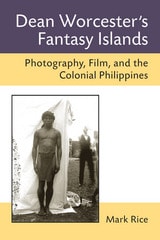
Dean Worcester's Fantasy Islands
Photography, Film, and the Colonial PhilippinesMark Rice
University of Michigan Press, 2014
Dean Worcester’s Fantasy Islands brings to life one of the most significant (but under examined) figures in the history of U.S. colonialism in the Philippines. Upon the outbreak of the Spanish-American War, Worcester, a scientist who had traveled twice to the Philippines on zoological expeditions, established himself as one of America’s leading experts on the Philippines. Over a fourteen-year career as a member of the U.S. colonial regime, Worcester devoted much of his time and energy to traveling among and photographing non-Christian minority groups in the Philippines. He amassed an archive of several thousand photographs taken by him or by government photographers. Worcester deployed those photographs in books, magazine articles, and lectures to promote his belief that the United States should maintain control of the Philippines for decades to come. While many historians have examined American colonial photography in the Philippines, this book is the first lengthy treatment of Worcester’s role in shaping American perceptions of the Philippines in the early twentieth century.

Death Tourism
Disaster Sites as Recreational LandscapeEdited by Brigitte Sion
Seagull Books, 2014

Death in England
An Illustrated HistoryEdited by Peter C. Jupp and Clare Gittings
Rutgers University Press, 2000
Death in England provides the first ever social history of death-from the earliest times to Diana, Princess of Wales. As we discard the taboos surrounding death, this book charts the fascinating story of how people have coped with this fundamental aspect of their daily lives.
Peter C. Jupp and Clare Gittings reveal how attitudes, practices, and beliefs about death have undergone constant change, as well as how, why, and at what ages people died. Examining how death touches all aspects of society, they cover topics such as plagues and violence; wills and deathbeds; funerals and memorials; and beliefs and bereavement. This wide-ranging analysis is lavishly illustrated with photographs and drawings, their diversity reflecting the breadth of issues and periods covered.
The contributors are all specialists in their own fields, including archaeology, history, and sociology. The ten chapters cover: earliest times to the Bronze Age; the Iron and Roman Ages; the Early Middle Ages; from the advent of Purgatory to the Black Death; the Later Middle Ages and the Reformation; from Elizabeth I to the Civil War; the "Age of Decency"; the Enlightenment; the Victorian era; and the twentieth century.
With the pervasive depiction of death through the media and the ensuing public awareness of this topic, Death in England will be of interest not only to the general reader but also to students of archaeology, art, history, medicine, and sociology.

Death's Dream Kingdom
The American Psyche Since 9-11Walter A. Davis
Pluto Press, 2006
Why is fear a dominant emotion in contemporary society? Why are politicians using words like 'terror', 'evil' and 'fundamentalism', and what effect is it having on public consciousness?
Answering these questions, Walter A. Davis taps into the cultural psyche to explore the link between ideology and emotional and psychological manipulation. Starting with the three topics that have preoccupied social discourse since 9-11 -- terror, evil and fundamentalism -- he shows that the Bush administration has been hugely successful in controlling and developing a new political climate through the creation of an almost hypnotic mass consciousness.
Davis's findings take us to the heart of the ideological paralysis of the Left, while offering an innovative approach to understanding contemporary history.
Davis fuses a psychoanalytic and philosophical framework to explain the relation between culture and political events, from the sado-masochist hysteria of Mel Gibson's The Passion of the Christ' to the atrocities at Abu Ghraib prison; and from the genocidal use of depleted uranium in Iraq to the apocalyptic language driving the Christian Right's assault on basic human rights.
He exposes the motives and belief-systems of this new American psyche and shows how it sustains the Bush administration's agenda. Illuminating how psychological needs govern political action, Davis reveals why the relationship between politics and public consciousness has massive implications for all of us beyond America's borders.
Walter A. Davis is Professor Emeritus in the Department of English at Ohio State University. He is the author of six previous books, including Inwardness and Existence: Subjectivity in/and Hegel, Heidegger, Marx and Freud (University of Wisconsin Press, 1989) and Deracination: Historicity, Hiroshima, and the Tragic Imperative (SUNY Press, 2001).
Debating Muslims
Cultural Dialogues in Postmodernity and TraditionMichael M. J. Fischer and Mehdi Abedi
University of Wisconsin Press, 1990
In a world of multinational commerce, satellite broadcasting, migration, terrorism, and global arms dealing, what is said and how it is said in one society can no longer be isolated from what is said and how it is said in another. Debating Muslims focuses on Iranian culture, Shi’ite Islam, and Iranians in the United States, offering an experiment in postmodern ethnography and an invitation to think in a multifaceted way about Islam in the contemporary world.

Debt to Society
Accounting for Life under CapitalismMiranda Joseph
University of Minnesota Press, 2014
It is commonplace to say that criminals pay their debt to society by spending time in prison, but what is a “debt to society”? How is crime understood as a debt? How has time become the equivalent for crime? And how does criminal debt relate to the kind of debt held by consumers and university students?
In Debt to Society, Miranda Joseph explores modes of accounting as they are used to create, sustain, or transform social relations. Envisioning accounting broadly to include financial accounting, managerial accounting of costs and performance, and the calculation of “debts to society” owed by criminals, Joseph argues that accounting technologies have a powerful effect on social dynamics by attributing credits and debts. From sovereign bonds and securitized credit card debt to student debt and mortgages, there is no doubt that debt and accounting structure our lives.
Exploring central components of neoliberalism (and neoliberalism in crisis) from incarceration to personal finance and university management, Debt to Society exposes the uneven distribution of accountability within our society. Joseph demonstrates how ubiquitous the forces of accounting have become in shaping all aspects of our lives, proposing that we appropriate accounting and offer alternative accounts to turn the present toward a more widely shared well-being.
Decay
Ghassan Hage, editor
Duke University Press, 2021
Contributors. Cameo Dalley, Peter D. Dwyer, Akhil Gupta, Ghassan Hage, Michael Herzfeld, Elise Klein, Bart Klem, Tamara Kohn, Michael Main, Fabio Mattioli, Debra McDougall, Monica Minnegal, Violeta Schubert
Decolonial Media Imaginaries
Ian Reilly
Intellect Books, 2026
Decolonial Media Imaginaries (DMI) begins from the basic premise that imaginaries play a crucial role in articulating and elaborating identity, community, and solidarity—particularly through their function in the collaborative shaping of ways of life and living. Historically, however, such imaginaries have been structured by the imperatives of colonialism, capitalism, and global neoliberal expansion. Through the prism of contemporary decolonial politics, the book aims to decenter enduring imaginaries rooted in colonial, capitalist, and neoliberal fantasies about what constitutes the good life, in favor of centering decolonial imaginaries that redraw the lines of possibility surrounding emancipatory futures for human and more-than-human worlds.
DMI presents a concise overview of the terrain prepared by decolonial thinkers (broadly conceived) to foreground the strategies, tools, tactics, and praxis that may be useful in bringing decolonial futures more closely within reach. This wide-ranging work explores ideas surrounding spectacle and display, corporatized technological fantasy, energy infrastructure, community-centered storytelling, pedagogical reparations, artworld decolonial praxis, and Black and Indigenous media futures. The book offers a speculative yet theoretically engaged discussion of how imaginaries-work contributes to a vital redrawing of shared futures grounded in justice, relationality, and collective flourishing.
Decolonisation and Criticism
The Construction of Irish LiteratureGerry Smyth
Pluto Press, 1998
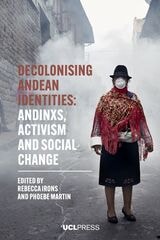
Decolonising Andean Identities
Andinxs, Activism and Social changeEdited by Rebecca Irons and Phoebe Martin
University College London, 2024
The collection Decolonising Andean Identities presents ground-breaking work from scholars carrying out social science research in and from Andean Latin America. It addresses themes of central importance to contemporary perspectives on interdisciplinary gender studies and politics in societies undergoing significant social transformation, by bringing together several in-depth ethnographic accounts and a diverse range of methodologies that will appeal to a wide audience. Taken together, its essays offer insights into the transformative role of gender in Latin America, providing the first academic collection of scholarship to give critical context for the rise of anti-genderism in the Andes.
Decolonising Andean Identities aims to develop the field of decolonial gender studies by showcasing interdisciplinary work at the forefront of scholarship. It draws on international expertise through its diverse contributors, including predominately Latin American scholars. In this way, it addresses the urgent need to broaden the perspectives on gender and gender-based activism in Latin America beyond the Southern Cone and Mexico, so that scholars can bring the region as a whole into dialogue with global scholarship.
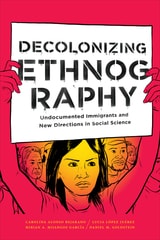
Decolonizing Ethnography
Undocumented Immigrants and New Directions in Social ScienceCarolina Alonso-Bejarano, Lucia López Juárez, Mirian A. Mijangos García, and Daniel M. Goldstein
Duke University Press, 2019
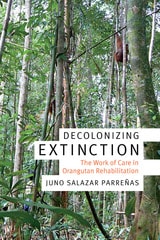
Decolonizing Extinction
The Work of Care in Orangutan RehabilitationJuno Salazar Parreñas
Duke University Press, 2018
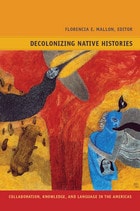
Decolonizing Native Histories
Collaboration, Knowledge, and Language in the AmericasFlorencia E. Mallon, ed.
Duke University Press, 2012
These wide-ranging case studies consider how language, the law, and the archive have historically served as instruments of colonialism and how they can be creatively transformed in constructing autonomy. The collection highlights points of commonality and solidarity across geographical, cultural, and linguistic boundaries and also reflects deep distinctions between North and South. Decolonizing Native Histories looks at Native histories and narratives in an internationally comparative context, with the hope that international collaboration and understanding of local histories will foster new possibilities for indigenous mobilization and an increasingly decolonized future.
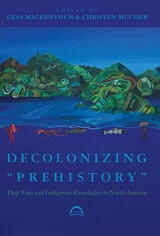
Decolonizing “Prehistory”
Deep Time and Indigenous Knowledges in North AmericaEdited by Gesa Mackenthun and Christen Mucher
University of Arizona Press, 2021
Constructions of America’s ancient past—or the invention of American “prehistory”—occur in national and international political frameworks, which are characterized by struggles over racial and ethnic identities, access to resources and environmental stewardship, the commodification of culture for touristic purposes, and the exploitation of Indigenous knowledges and histories by industries ranging from education to film and fashion. The past’s ongoing appeal reveals the relevance of these narratives to current-day concerns about individual and collective identities and pursuits of sovereignty and self-determination, as well as to questions of the origin—and destiny—of humanity. Decolonizing “Prehistory” critically examines and challenges the paradoxical role that modern scholarship plays in adding legitimacy to, but also delegitimizing, contemporary colonialist practices.
Contributors: Rick Budhwa, Keith Thor Carlson, Kirsten Matoy Carlson, Jessica Christie, Philip J. Deloria, Melissa Gniadek, Annette Kolodny, Gesa Mackenthun, Christen Mucher, Naxaxalhts’i (aka Sonny McHalsie), Jeff Oliver, Mathieu Picas, Daniel Lord Smail, Coll Thrush

Deep Mexico, Silent Mexico
An Anthropology of NationalismClaudio Lomnitz
University of Minnesota Press, 2001
In Mexico, as elsewhere, the national space, that network of places where the people interact with state institutions, is constantly changing. How it does so, how it develops, is a historical process-a process that Claudio Lomnitz exposes and investigates in this book, which develops a distinct view of the cultural politics of nation building in Mexico. Lomnitz highlights the varied, evolving, and often conflicting efforts that have been made by Mexicans over the past two centuries to imagine, organize, represent, and know their country, its relations with the wider world, and its internal differences and inequalities. Firmly based on particulars and committed to the specificity of such thinking, this book also has broad implications for how a theoretically informed history can and should be done.
An exploration of Mexican national space by way of an analysis of nationalism, the public sphere, and knowledge production, Deep Mexico, Silent Mexico brings an original perspective to the dynamics of national cultural production on the periphery. Its blending of theoretical innovation, historical inquiry, and critical engagement provides a new model for the writing of history and anthropology in contemporary Mexico and beyond.
Public Worlds Series, volume 9
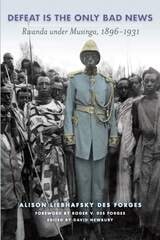
Defeat Is the Only Bad News
Rwanda under Musinga, 1896–1931Alison Des Forges
University of Wisconsin Press, 2011
A Rwandan proverb says “Defeat is the only bad news.” For Rwandans living under colonial rule, winning called not only for armed confrontation, but also for a battle of wits—and not only with foreigners, but also with each other. In Defeat Is the Only Bad News Alison Des Forges recounts the ambitions, strategies, and intrigues of an African royal court under Yuhi Musinga, the Rwandan ruler from 1896 to 1931. These were turbulent years for Rwanda, when first Germany and then Belgium pursued an aggressive plan of colonization there. At the time of the Europeans’ arrival, Rwanda was also engaged in a succession dispute after the death of one of its most famous kings. Against this backdrop, the Rwandan court became the stage for a drama of Shakespearean proportions, filled with deceit, shrewd calculation, ruthless betrayal, and sometimes murder.
Defending Rumba in Havana
The Sacred and the Black Corporeal UndercommonsMaya J. Berry
Duke University Press, 2025
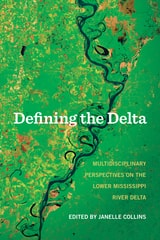
Defining the Delta
Multidisciplinary Perspectives on the Lower Mississippi River DeltaJanelle Collins
University of Arkansas Press, 2015
Here are essays examining the Delta’s physical properties, boundaries, and climate from a geologist, archeologist, and environmental historian. The Delta is also viewed through the lens of the social sciences and humanities—historians, folklorists, and others studying the connection between the land and its people, in particular the importance of agriculture and the culture of the area, especially music, literature, and food.
Every turn of the page reveals another way of seeing the seven-state region that is bisected by and dependent on the Mississippi River, suggesting ultimately that there are myriad ways of looking at, and defining, the Delta.
Defying Displacement
Grassroots Resistance and the Critique of DevelopmentBy Anthony Oliver-Smith
University of Texas Press, 2010
The uprooting and displacement of people has long been among the hardships associated with development and modernity. Indeed, the circulation of commodities, currency, and labor in modern society necessitates both social and spatial mobility. However, the displacement and resettlement of millions of people each year by large-scale infrastructural projects raises serious questions about the democratic character of the development process.
Although designed to spur economic growth, many of these projects leave local people struggling against serious impoverishment and gross violations of human rights. Working from a political-ecological perspective, Anthony Oliver-Smith offers the first book to document the fight against involuntary displacement and resettlement being waged by people and communities around the world.
Increasingly over the last twenty-five years, the voices of people at the grass roots are being heard. People from many societies and cultures are taking action against development-forced displacement and resettlement (DFDR) and articulating alternatives. Taking the promise of democracy seriously, they are fighting not only for their place in the world, but also for their place at the negotiating table, where decisions affecting their well-being are made.

Degrees of Mixture, Degrees of Freedom
Genomics, Multiculturalism, and Race in Latin AmericaPeter Wade
Duke University Press, 2017
Deliberate Acts
Changing Hopi Culture Through the Oraibi SplitPeter M. Whiteley
University of Arizona Press, 1988
Drawing on oral accounts from Hopi consultants and on contemporary documents, Peter M. Whiteley argues that the split was in fact the result of a conspiracy among Hopi politico-religious leaders from both the “hostile” and “friendly” factions, a revolution to overturn the allegedly corrupt Oraibi religious order. A crucial element of Whiteley’s thesis is that, contrary to established theory, Hopi society was not egalitarian but was controlled by a ruling elite, the pavansinom, who clandestinely planned such events as the destruction of Awatovi because of its reacceptance of Franciscan priests.
Through an analysis of Bacavi social structure, Whiteley demonstrates how one fragment of a well-established society went about creating a new social order after the old one drastically fragmented. His detailed portrait of the history and social organization of a Hopi village represents an unusually rich resource for students of Hopi culture and history.
Demanding Images
Democracy, Mediation, and the Image-Event in IndonesiaKaren Strassler
Duke University Press, 2019

Demanding Justice and Security
Indigenous Women and Legal Pluralities in Latin AmericaSieder, Rachel
Rutgers University Press, 2017
Featuring chapters on Bolivia, Colombia, Ecuador, Guatemala, and Mexico, the contributors to Demanding Justice and Security include both leading researchers and community activists. From Kichwa women in Ecuador lobbying for the inclusion of specific clauses in the national constitution that guarantee their rights to equality and protection within indigenous community law, to Me’phaa women from Guerrero, Mexico, battling to secure justice within the Inter-American Court of Human Rights for violations committed in the context of militarizing their home state, this book is a must-have for anyone who wants to understand the struggle of indigenous women in Latin America.
Democracy against Development
Lower-Caste Politics and Political Modernity in Postcolonial IndiaJeffrey Witsoe
University of Chicago Press, 2013
Witsoe looks at the history of colonialism in India and its role in both shaping modern caste identities and linking locally powerful caste groups to state institutions, which has effectively created a postcolonial patronage state. He then looks at the rise of lower-caste politics in one of India’s poorest and most populous states, Bihar, showing how this increase in democratic participation has radically threatened the patronage state by systematically weakening its institutions and disrupting its development projects. By depicting democracy and development as they truly are in India—in tension—Witsoe reveals crucial new empirical and theoretical insights about the long-term trajectory of democratization in the larger postcolonial world.
Demographic Avant-Garde
Jews in Bohemia between the Enlightenment and the ShoahJana Vobecká
Central European University Press, 2013
Demons and Development
The Struggle for Community in a Sri Lankan VillageJames Brow
University of Arizona Press, 1996
James Brow witnessed these possession trances and sorcery accusations as they occurred, enabling him to convey this richly textured story interweaving political factionalism and troubled spirits. Official projects of development have proceeded apace in Sri Lanka, but until now there have been few accounts of their tendency to tear apart the fabric of rural society. Demons and Development combines an engaging narrative of how development was experienced in one particular village with an original contribution to theories of hegemony, the social anthropology of South Asia, the ethnography of nationalism, and the sociology of development.

Desert Patriarchy
Mormon and Mennonite Communities in the Chihuahua ValleyJanet Bennion
University of Arizona Press, 2004
Janet Bennion has lived and worked among these people, and in this book she introduces a new paradigm—"desert patriarchy"—to explain their way of life. This perspective sheds light not only on these particular communities but also on the role of the desert environment in the development and maintenance of fundamentalist ideology in other parts of the United States and around the globe.
Making new connections between the arid environment, opposition to technology, and gender ideology, Bennion shows that it is the interplay of the desert and the unique social traditions and gender dynamics embedded in Anglo patriarchal fundamentalism that accounts for the successful longevity of the Mexican colonies. Her model defines the process by which male supremacy, female autonomous networking, and religious fundamentalism all facilitate successful adaptation to the environment.
More than a theoretical analysis, Desert Patriarchy provides an intimate glimpse into the daily lives of these people, showing how they have taken refuge in the desert to escape religious persecution, the forced secular education of their children, and economic and political marginalization. It particularly sheds light on the ironic autonomy of women within a patriarchal system, showing how fundamentalist women in Chihuahua are finding numerous creative ways to access power and satisfaction in a society structured to subordinate and even degrade them.
Desert Patriarchy richly expands the literature on nontraditional religious movements as it enhances our understanding of how environment can shape society. It offers unique insights into women's status in patriarchal communities and provides a new way of looking at similar communities worldwide.
Desi Land
Teen Culture, Class, and Success in Silicon ValleyShalini Shankar
Duke University Press, 2008
Whether discussing instant messaging or arranged marriages, Desi bling or the pressures of the model minority myth, Shankar foregrounds the teens’ voices, perspectives, and stories. She investigates how Desi teens interact with dialogue and songs from Bollywood films as well as how they use their heritage language in ways that inform local meanings of ethnicity while they also connect to a broader South Asian diasporic consciousness. She analyzes how teens negotiate rules about dating and reconcile them with their longer-term desire to become adult members of their communities. In Desi Land Shankar not only shows how Desi teens of different socioeconomic backgrounds are differently able to succeed in Silicon Valley schools and economies but also how such variance affects meanings of race, class, and community for South Asian Americans.
Design for Independent Living
The Environment and Physically Disabled PeopleRaymond Lifchez
University of Minnesota Press, 2027
A new edition of the classic and innovative resource that relies on personal lived experience to guide accessible design
In 1979, University of California architecture professors Raymond Lifchez and Barbara Winslow published this account of ongoing collaborations with members of a robust disability community in Berkeley, California. In the first attempt by architects to know disabled people and to design from their perspective, they employed an empathetic approach that differed from typical accessible design guidelines.
Instead of presenting architectural designs to resolve existing barriers, Design for Independent Living turns to disabled people to tell their own stories through interviews and photographs of their own homes, workplaces, and lives in public. The disabled informants of the project were members of the Independent Living movement—the activists who shaped the disability rights movement in the late twentieth century in the United States—and their contributions demonstrate the necessity of liberating design from ableist, restrictive ways of thinking about personal and public life.
Now with a new foreword by three scholars of design and disability history, Design for Independent Living is an indispensable resource for architecture and design experts who seek a socially informed practice that looks to the people most affected by design to understand its potentials and its shortcomings.
Retail e-book files for this title are screen-reader friendly with images accompanied by short alt text and/or extended descriptions.