Results by title
110 books match the query 'Cultural pluralism' and 5 start with d
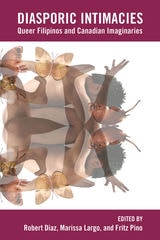
Diasporic Intimacies
Queer Filipinos and Canadian ImaginariesEdited by Robert Diaz, Marissa Largo, and Fritz Pino
Northwestern University Press, 2018
Addressing a wide range of issues beyond the academy, the authors present a rich and under-studied archive of personal reflections, in-depth interviews, creative works, and scholarly essays. Their trandsdisciplinary approach highlights the need for queer, transgressive, and utopian practices that render visible histories of migration, empire building, settler colonialism, and globalization.
Timely, urgent, and fascinating, Diasporic Intimacies offers an accessible entry point for readers who seek to pursue critically engaged community work, arts education, curatorial practice, and socially inflected research on sexuality, gender, and race in this ever-changing world.
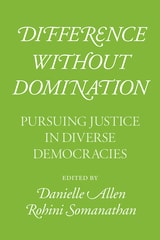
Difference without Domination
Pursuing Justice in Diverse DemocraciesEdited by Danielle Allen and Rohini Somanathan
University of Chicago Press, 2020
Using examples from the United States, India, Germany, and Cameroon, the contributors offer paradigm-changing approaches to the concepts of justice, identity, and social groups while also taking a fresh look at the idea that the demographic make-up of institutions should mirror the make-up of a populace as a whole. After laying out the conceptual framework, the volume turns to a number of provocative topics, among them the pernicious tenacity of implicit bias, the logical contradictions inherent to the idea of universal human dignity, and the paradoxes and problems surrounding affirmative action. A stimulating blend of empirical and interpretive analyses, Difference without Domination urges us to reconsider the idea of representation and to challenge what it means to measure equality and inequality.
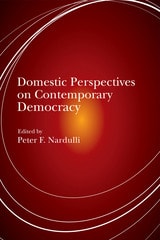
Domestic Perspectives on Contemporary Democracy
Edited by Peter F. Nardulli
University of Illinois Press, 2007
In looking at the remarkable proliferation of democracies since 1974, this volume offers important insight into the challenges and opportunities that democracy faces in the twenty-first century. Distinguished contributors detail difficulties that democracies face from within and how they deal with them. Among the contemporary threats to democracy emanating from internal sources are tensions arising over technology and its uses; ethnic, religious, and racial distinctions; and disparate access to resources, education, and employment. A democratically elected government can behave more or less democratically, even when controlling access to information, using legal authority to aid or intimidate, and applying resources to shape the conditions for the next election. With elections recently disputed in the United States, Mexico, Lebanon, and the Ukraine, debates about the future of democracy are inescapably debates about what kind of democracy is desired.
Contributors are W. Lance Bennett, Bruce Bimber, Jon Fraenkel, Brian J. Gaines, Bernard Grofman, Wayne V. McIntosh, Peter F. Nardulli, Mark Q. Sawyer, Stephen Simon, Paul M. Sniderman, and Jack Snyder.

Downwardly Global
Women, Work, and Citizenship in the Pakistani DiasporaLalaie Ameeriar
Duke University Press, 2017

Du Bois and His Rivals
Raymond Wolters
University of Missouri Press, 2002
In Du Bois and His Rivals, Raymond Wolters provides a distinctive biography of this great pioneer of the American civil rights movement. Readers are able to follow the outline of Du Bois’s life, but the book’s main emphasis is on discrete scenes in his life, especially the controversies that pitted Du Bois against his principal black rivals. He challenged Booker T. Washington because he could not abide Washington’s conciliatory approach toward powerful whites. At the same time, Du Bois’s pluralism led him to oppose the leading separatists and integrationists of his day. He berated Marcus Garvey for giving up on America and urging blacks to pursue a separate destiny. He also rejected Walter White’s insistence that integration was the best way to promote the advancement of black people.
Du Bois felt that American blacks should be full-fledged Americans, with all the rights of other American citizens. However, he believed that they should also preserve and develop enough racial distinctiveness to enable them to maintain and foster a sense of racial identity, community, and pride. Du Bois and His Rivals shows that Du Bois stood for much more than protest against racial oppression. He was also committed to pluralism, and his pluralism emphasized the importance of traditional standards and of internal cooperation within the black community. Anyone interested in the civil rights movement, black history, or the history of the United States during the early twentieth century will find this book valuable.