Results by title
91 books match the query 'Desire' and 12 start with d

Dark Smiles
Race and Desire in George EliotAlicia Carroll
Ohio University Press, 2002
Although George Eliot has long been described as “the novelist of the Midlands,” she often brought the outer reaches of the empire home in her work. Dark Smiles: Race and Desire in George Eliot studies Eliot’s problematic, career-long interest in representing racial and ethnic Otherness.
Placing Eliot’s diverse and wide-ranging treatment of Otherness in its contemporary context, Alicia Carroll argues that Eliot both engages and resists traditional racial and ethnic representations of Otherness. Carroll finds that Eliot, like other women writers of her time, often appropriates narratives of Otherness to explore issues silenced in mainstream Victorian culture, particularly the problem of the desirous woman. But if Otherness in Eliot’s century was usually gendered as woman and constructed as the object of white male desire, Eliot often seeks to subvert that vision. Professor Carroll demonstrates Eliot’s tendency to “exoticize” images of girlhood, vocation, and maternity in order to critique and explore gendered subjectivities. Indeed, the disruptive presence of a racial or ethnic outsider often fractures Eliot’s narratives of community, creating a powerful critique of home culture.
The consistent reliance of Eliot’s work upon racial and ethnic Otherness as a mode of cultural critique is explored here for the first time in its entirety.

Desire and Disaster in New Orleans
Tourism, Race, and Historical MemoryLynnell L. Thomas
Duke University Press, 2014

Desire and Imitation in International Politics
Jodok Troy
Michigan State University Press, 2021

Desire and Truth
Functions of Plot in Eighteenth-Century English NovelsPatricia Meyer Spacks
University of Chicago Press, 1990

Desire in the Canterbury Tales
Elizabeth Scala
The Ohio State University Press, 2015
Desire in the Canterbury Tales coordinates the compulsions of desire with the act of misreading to define the driving force of Chaucer’s story collection. With Chaucer’s competitive pilgrimage as an important point of departure, this study examines the collection’s manner of generating stories out of division, difference, and contestation. It argues that Chaucer’s tales are produced as misreadings and misrecognitions of each other. Looking to the main predicate of the General Prologue’s famous opening sentence (“longen”) as well as the thematic concerns of a number of tale-tellers, and working with a theoretical model that exposes language as the product of such longing, Scala posits desire as the very subject of the Canterbury Tales and misrecognition as its productive effect. In chapters focusing on both the well-discussed tales of fragment 1 and the marriage group as well as the more recalcitrant religious stories, Desire in the Canterbury Tales offers a comprehensive means of accounting for Chaucer’s poem.
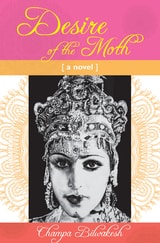
Desire of the Moth
a novelChampa Bilwakesh
UpSet Press, 2017
Hear Champa Bilwakesh reading from Desire of the Moth here: http://voicethread.com/myvoice/#thread/5863247/30058528/31699244

Desire to Serve
The Autobiography of Congresswoman Eddie Bernice JohnsonCheryl Wattley
University of North Texas Press, 2024

Desire
Flaubert, Proust, Fitzgerald, Miller, Lana Del ReyPer Bjørnar Grande
Michigan State University Press, 2020

Dirt and Desire
Reconstructing Southern Women's Writing, 1930-1990Patricia Yaeger
University of Chicago Press, 2000
For Yaeger, works by black and white southern women writers reveal a shared obsession with monstrosity and the grotesque and with the strange zones of contact between black and white, such as the daily trauma of underpaid labor and the workings of racial and gender politics in the unnoticed yet all too familiar everyday. Yaeger also excavates a southern fascination with dirt—who owns it, who cleans it, and whose bodies are buried in it.
Yaeger's brilliant, theoretically informed readings of Zora Neale Hurston, Harper Lee, Carson McCullers, Toni Morrison, Flannery O'Connor, Alice Walker, and Eudora Welty (among many others) explode the mystifications of southern literary tradition and forge a new path for southern studies.
The book won the Barbara Perkins and George Perkins Award given by the Society for the Study of Narrative Literature.
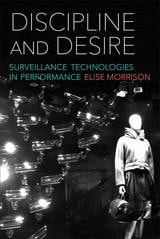
Discipline and Desire
Surveillance Technologies in PerformanceElise Morrison
University of Michigan Press, 2016
While the subject of surveillance continues to provoke fascination and debate in mainstream media and academia, opportunities to critically reflect upon and, more importantly, to imagine alternative, creative responses to living in a rapidly expanding surveillance society have been harder to find. Author Elise Morrison argues that such opportunities are being created through the growing genre of “surveillance art and performance,” defined as works that centrally employ technologies and techniques of surveillance to create theater, installation, and performance art. Introducing readers to a broad range of surveillance art works, including the work of artists and activists such as Surveillance Camera Players, Jill Magid, Steve Mann, Hasan Elahi, Wafaa Bilal, Blast Theory, Electronic Disturbance Theater, George Brant, Janet Cardiff, Mona Hatoum, and Zach Blas, Discipline and Desire provides a practical and analytical framework that can aid the diverse pursuits of new media-arts practitioners, performance scholars, activists, and hobbyists interested in critical and creative uses of surveillance technologies.

Disorders Of Desire
Janice Irvine
Temple University Press, 1991
This revised and expanded edition features new chapters addressing:
- The diagnosis of "sex addiction"in the 1970s and its social and political implications.
- New developments within the field of sexology, including the "Viagra Revolution" that began in the 1990s.
- The pharmaceutical industry's role in the development of sexual enhancements and the search for the female equivalent of Viagra.

Dream Lovers
The Gamification of RelationshipsAlfie Bown
Pluto Press, 2022
'An exciting, astute analysis of how our capacity for desire has been slotted into the grooves of digital capitalism, and made to work for profit - from porn to Pokémon' - Richard Seymour
We are in the middle of a 'desirevolution' - a fundamental and political transformation of the way we desire as human beings. Perhaps as always, new technologies - with their associated and inherited political biases - are organizing and mapping the future. What we don't seem to notice is that the primary way in which our lives are being transformed is through the manipulation and control of desire itself.
Our very impulses, drives and urges are 'gamified' to suit particular economic and political agendas, changing the way we relate to everything from lovers and friends to food and politicians. Digital technologies are transforming the subject at the deepest level of desire - re-mapping its libidinal economy - in ways never before imagined possible.
From sexbots to smart condoms, fitbits to VR simulators and AI to dating algorithms, the 'love industries' are at the heart of the future smart city and the social fabric of everyday life. This book considers these emergent technologies and what they mean for the future of love, desire, work and capitalism.