Results by title
50 books match the query 'Detective and mystery stories, English' and 3 start with d
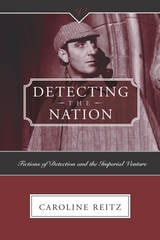
DETECTING THE NATION
FICTIONS OF DETECTION AND THE IMPERIAL VENTURECaroline Reitz
The Ohio State University Press, 2004

Detection and Its Designs
Narrative and Power in Nineteenth-Century Detective FictionPeter Thoms
Ohio University Press, 1998
In readings of Godwin's Caleb Williams, Poe's Dupin stories, Dickens's Bleak House, Collins's The Moonstone, and Doyle's The Hound of the Baskervilles, Thoms argues that the detective's figurative writing emerges out of a desire to exert control over others and sometimes over himself.
Detection and Its Designs demonstrates that, far from being a naïve form, early detective fiction grapples with the medium of storytelling itself. To pursue these inward-turning fictions is to uncover the detective's motives of controlling the representation of both himself and others, a discovery that in turn significantly undermines the authority of his solutions.
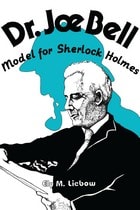
Dr. Joe Bell
Model for Sherlock HolmesEly M. Liebow
University of Wisconsin Press, 1982
A distinguished physician and professor of medicine at Edinburgh University, and a forensic expert for the British Crown, Joseph Bell was well known for his remarkable powers of observation and deduction. In what would become true Sherlockian fashion, he had the ability to deduce facts about his patients from otherwise unremarkable details. In one instance recounted by Arthur Conan Doyle himself—and similar to Sherlock Holmes's own observations in "The Greek Interpreter"—Bell took little time to determine that one of his patients had recently served in the army, a non-commissioned officer discharged from his Highland regiment stationed in Barbados:
“The man was a respectful man, but did not remove his hat. They do not in the army, but he would have learned civilian ways had he been long discharged. He has an air of authority and he is obviously Scottish. As to Barbados, his complaint is elephantitis, which is West Indian and not British.”
Based on extensive research into the life of Bell and including tantalizing accounts of the connections between Bell and Conan Doyle, this biography is required reading for anyone interested in Victorian medicine, in the history of detective fiction, and in Sherlock Holmes and Dr. Watson.