Results by title
63 books match the query 'Detroit' and 12 start with d
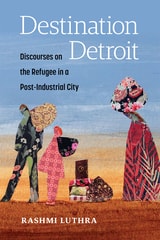
Destination Detroit
Discourses on the Refugee in a Post-Industrial CityRashmi Luthra
University of Michigan Press, 2024
Few U.S. locations provide a more vivid case study of this fight than Metro Detroit, where competing interest groups are waging war over the meaning of the figure of the refugee. This book dives deeply into the discourse on refugees occurring among various institutions in Metro Detroit. The way in which local institutions talk about refugees gives us vital clues as to how they are negotiating competing pressures and how the city overall is negotiating competing imperatives. Indeed, this local discourse gives us a crucial glimpse into how U.S. cities are defining and redefining themselves today. The figure of the refugee becomes a slate on which groups with varied interests write their stories, aspirations, and fears. Consequently, we can figure out from local refugee discourses the ongoing question of what it means to be a Metro Detroiter—and by extension, what it means to be a revitalizing U.S. city in this age.

Detroit Country Music
Mountaineers, Cowboys, and RockabilliesCraig Maki with Keith Cady
University of Michigan Press, 2013
The richness of Detroit’s music history has by now been well established. We know all about Motown, the MC5, and Iggy and the Stooges. We also know about the important part the Motor City has played in the history of jazz. But there are stories about the music of Detroit that remain untold. One of the lesser known but nonetheless fascinating histories is contained within Detroit’s country music roots. At last, Craig Maki and Keith Cady bring to light Detroit’s most important country and western and bluegrass stars, such as Chief Redbird, the York Brothers, and Roy Hall. Beyond the individuals, Maki and Cady also map out the labels, radio programs, and performance venues that sustained Detroit’s vibrant country and bluegrass music scene. In the process, Detroit Country Music examines how and why the city’s growth in the early twentieth century, particularly the southern migration tied to the auto industry, led to this vibrant roots music scene.
This is the first book—the first resource of any kind—to tell the story of Detroit’s contributions to country music. Craig Maki and Keith Cady have spent two decades collecting music and images, and visiting veteran musicians to amass more than seventy interviews about country music in Detroit. Just as astounding as the book’s revelations are the photographs, most of which have never been published before. Detroit Country Musicwill be essential reading for music historians, record collectors, roots music fans, and Detroit music aficionados.
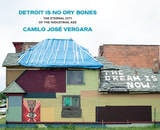
Detroit Is No Dry Bones
The Eternal City of the Industrial AgeCamilo José Vergara
University of Michigan Press, 2016

Detroit Lives
Robert Mast
Temple University Press, 1994
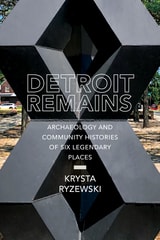
Detroit Remains
Archaeology and Community Histories of Six Legendary PlacesKrysta Ryzewski
University of Alabama Press, 2021
WINNER OF THE UNIVERSITY OF MARY WASHINGTON CENTER FOR HISTORIC PRESERVATION BOOK PRIZE, THE JAMES DEETZ BOOK AWARD, AND THE JOAN GERO BOOK AWARD
An interdisciplinary study of urban archaeology, community heritage, and social justice in modern Detroit.
The city of Detroit has endured periods of unprecedented industrial growth, decline, and revitalization between the late nineteenth century and the present. In Detroit Remains: Archaeology and Community Histories of Six Legendary Places, Krysta Ryzewski presents six archaeological case studies of legendary Detroit institutions—Little Harry speakeasy, the Ransom Gillis house, the Blue Bird Inn, Gordon Park, the Grande Ballroom, and the Halleck Street log cabin—that trace the contours of the city’s underrepresented communities and their relationship to local currents of capitalism and social justice. Through a combination of rigorous historical archaeological research and narrative storytelling, Ryzewski deftly contextualizes the cases within the city’s current struggles, including recovery from bankruptcy, and future-oriented recovery efforts.
This is the first historical archaeology book focused on Detroit and one of the few to foreground the archaeology of the Great Migration era (ca. 1915–1970). The archaeological scholarship is rooted in collaborative, community-involved, and public-facing initiatives. The case studies examine how power is and has been exercised in Detroit’s communities over the past century: how it was stripped from the city’s twentieth- and twenty-first-century residents, but also how they acquired alternative sources of agency by establishing creative and illicit economies, most of which still operated within the city’s capitalist framework.
Throughout this book, connections run deep between archaeology, heritage, politics, historic preservation, and storytelling. Detroit Remains demonstrates how the city’s past, present, and future lie not in ruins but in the tangible archaeological traces of the everyday lives of Detroiters and their legacies.
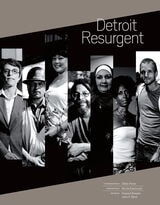
Detroit Resurgent
Howard Bossen
Michigan State University Press, 2014

Detroit's Cold War
The Origins of Postwar ConservatismColleen Doody
University of Illinois Press, 2017
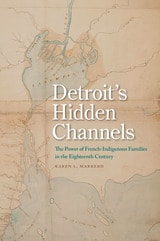
Detroit's Hidden Channels
The Power of French-Indigenous Families in the Eighteenth CenturyKaren L. Marrero
Michigan State University Press, 2020
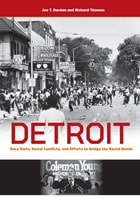
Detroit
Race Riots, Racial Conflicts, and Efforts to Bridge the Racial DivideJoe T. Darden and Richard Thomas
Michigan State University Press, 2013
Detroit
Race and Uneven DevelopmentJoe T. Darden, Richard Child Hill, June Thomas and Richard Thomas
Temple University Press, 1990
Hub of the American auto industry and site of the celebrated Riverfront Renaissance, Detroit is also a city of extraordinary poverty, unemployment, and racial segregation. This duality in one of the mightiest industrial metropolises of twentieth-century North America is the focus of this study. Viewing the Motor City in light of sociology, geography, history, and planning, the authors examine the genesis of modern Detroit. They argue that the current situation of metropolitan Detroit—economic decentralization, chronic racial and class segregation, regional political fragmentation—is a logical result of trends that have gradually escalated throughout the post-World War II era. Examining its recent redevelopment policies and the ensuing political conflicts, Darden, Hill, Thomas, and Thomas, discuss where Detroit has been and where it is going.
In the series Comparative American Cities, edited by Joe T. Darden.
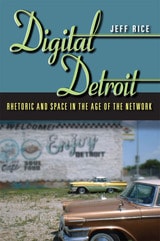
Digital Detroit
Rhetoric and Space in the Age of the NetworkJeff Rice
Southern Illinois University Press, 2012
Since the 1967 riots that ripped apart the city, Detroit has traditionally been viewed either as a place in ruins or a metropolis on the verge of rejuvenation. In Digital Detroit: Rhetoric and Space in the Age of the Network, author Jeff Rice goes beyond the notion of Detroit as simply a city of two ideas. Instead he explores the city as a web of multiple meanings which, in the digital age, come together in the city’s spaces to form a network that shapes the writing, the activity, and the very thinking of those around it.
Rice focuses his study on four of Detroit’s most iconic places—Woodward Avenue, the Maccabees Building, Michigan Central Station, and 8 Mile—covering each in a separate chapter. Each of these chapters explains one of the four features of network rhetoric: folksono(me), the affective interface, response, and decision making. As these rhetorical features connect, they form the overall network called Digital Detroit. Rice demonstrates how new media, such as podcasts, wikis, blogs, interactive maps, and the Internet in general, knit together Detroit into a digital network whose identity is fluid and ever-changing. In telling Detroit’s spatial story, Rice deftly illustrates how this new media, as a rhetorical practice, ultimately shapes understandings of space in ways that computer applications and city planning often cannot. The result is a model for a new way of thinking and interacting with space and the imagination, and for a better understanding of the challenges network rhetorics pose for writing.
Disruption in Detroit
Autoworkers and the Elusive Postwar BoomDaniel J. Clark
University of Illinois Press, 2018