Results by title
81 books match the query 'Disasters & Disaster Relief' and 7 start with d
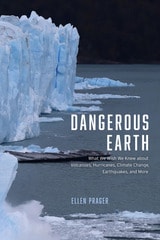
Dangerous Earth
What We Wish We Knew about Volcanoes, Hurricanes, Climate Change, Earthquakes, and MoreEllen Prager
University of Chicago Press, 2020
Today, we know more than ever before about the powerful forces that can cause catastrophe, but significant questions remain. Why can’t we better predict some natural disasters? What do scientists know about them already? What do they wish they knew? In Dangerous Earth, marine scientist and science communicator Ellen Prager explores the science of investigating volcanoes, earthquakes, tsunamis, hurricanes, landslides, rip currents, and—maybe the most perilous hazard of all—climate change. Each chapter considers a specific hazard, begins with a game-changing historical event (like the 1980 eruption of Mt. St. Helens or the landfall and impacts of Hurricane Harvey), and highlights what remains unknown about these dynamic phenomena. Along the way, we hear from scientists trying to read Earth’s warning signs, pass its messages along to the rest of us, and prevent catastrophic loss.
A sweeping tour of some of the most awesome forces on our planet—many tragic, yet nonetheless awe-inspiring—Dangerous Earth is an illuminating journey through the undiscovered, unresolved, and in some cases unimagined mysteries that continue to frustrate and fascinate the world’s leading scientists: the “wish-we-knews” that ignite both our curiosity and global change.
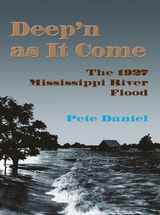
Deep'n as It Come
The 1927 Mississippi River FloodPete Daniel
University of Arkansas Press, 1998
Daniel weaves his narrative with newspaper and firsthand accounts, interviews and survivors, official reports, and over 140 contemporary photographs. The story of the common refugee who suffered most of the effects of the flood emerges alongside the details of the massive rescue and relief operation—one of the largest ever mounted in the United States. The title, Deep’n as It Come, is a phrase from Cora Lee Campbell’s early description of he approaching water, which, Daniel writes, “moved at a pace of some fourteen miles per day,” and in its movement and sound, “had the eeriness of a full eclipse of t he sun, unsettling, chilling.”
“The contradictions of sorrow and humor. . . death and salvation, despair and hope, calm and panic—all reveal the human dimension” in this compassionate and unforgettable portrait of common people confronting a great natural disaster.

Disaster Anarchy
Mutual Aid and Radical ActionRhiannon
Pluto Press, 2022
As disasters become more commonplace, we need to think of alternatives for relief.
'Commendable - a book that prepares us to think about and react to system failures' - Peter Gelderloos
Anarchists have been central in helping communities ravaged by disasters, stepping in when governments wash their hands of the victims. Looking at Hurricane Sandy, Covid-19, and the social movements that mobilized relief in their wake, Disaster Anarchy is an inspiring and alarming book about collective solidarity in an increasingly dangerous world.
As climate change and neoliberalism converge, mutual aid networks, grassroots direct action, occupations, and brigades have sprung up in response to this crisis with considerable success. Occupy Sandy was widely acknowledged to have organized relief more effectively than federal agencies or NGOs, and following Covid-19 the term ‘mutual aid’ entered common parlance.
However, anarchist-inspired relief has not gone unnoticed by government agencies. Their responses include surveillance and co-option, extending at times to violent repression involving police brutality. Arguing that disaster anarchy is one of the most important political phenomena to emerge in the 21st century, Rhiannon Firth shows through her research on and within these movements that anarchist theory and practice are needed to protect ourselves from the disasters of our unequal and destructive economic system.
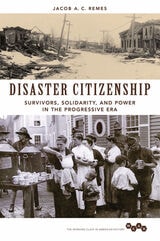
Disaster Citizenship
Survivors, Solidarity, and Power in the Progressive EraJacob Remes
University of Illinois Press, 2015
In Disaster Citizenship, Jacob A. C. Remes draws on histories of the Salem and Halifax events to explore the institutions--both formal and informal--that ordinary people relied upon in times of crisis. He explores patterns and traditions of self-help, informal order, and solidarity and details how people adapted these traditions when necessary. Yet, as he shows, these methods--though often quick and effective--remained illegible to reformers. Indeed, soldiers, social workers, and reformers wielding extraordinary emergency powers challenged these grassroots practices to impose progressive "solutions" on what they wrongly imagined to be a fractured social landscape.
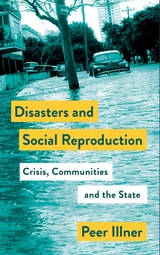
Disasters and Social Reproduction
Crisis Response between the State and CommunityPeer Illner
Pluto Press, 2020
Following the long economic crisis of the 1970s, disaster relief has become increasingly reliant on the unwaged reproductive labor of ordinary people, allowing the US state to cut back on social spending, a shift that has fundamentally reconfigured the responsibilities of the state and civil society. As sea levels rise, climate change worsens and we see an increase in disaster relief led by communities, this analysis of the interrelations between state, society and grassroots initiatives, including Occupy Sandy and the American Black Cross, will prove indispensable.
Disastrous Consequences, Volume 106
Eric Cazdyn, ed.
Duke University Press, 0
From the fields of anthropology, architecture, cultural studies, economics, epidemiology, journalism, and philosophy, the contributors argue that disasters do not only follow from things going horribly wrong (extreme weather, economic collapse, urban decay). Often they are the predictable results of things going according to plan. The meaning of disaster itself is challenged, theorized again, and reconceptualized.
One essay argues that media reports during Hurricane Katrina worked to deny or disguise institutionalized racism, suppressing potential dissent and controversy. Another examines how the state bureaucracy reinforces cycles of death, disease, and poverty in South Africa. A third explores the devastating conditions of everyday life in Detroit that no longer register in the political imaginary of the United States. Still another investigates the connection between unusual weather events and the workings of the Communist Party in Poland. Finally, the renowned architect Isozaki Arata plays with the idea of urban planning in two short fables introduced by Fredric Jameson.
Contributors. Eric Cazdyn, Isobel S. Frye, Jerry Herron, Peter Hitchcock, Isozaki Arata, Fredric Jameson, Walter Kalaidjian, Leszek Koczanowicz, Leah Schinasi, Neil Smith, Carol A. Stabile, Imre Szeman, Steve Wing
Displaced
Life in the Katrina DiasporaEdited by Lynn Weber and Lori Peek
University of Texas Press, 2012
Hurricane Katrina forced the largest and most abrupt displacement in U.S. history. About 1.5 million people evacuated from the Gulf Coast preceding Katrina’s landfall. New Orleans, a city of 500,000, was nearly emptied of life after the hurricane and flooding. Katrina survivors eventually scattered across all fifty states, and tens of thousands still remain displaced. Some are desperate to return to the Gulf Coast but cannot find the means. Others have chosen to make their homes elsewhere. Still others found a way to return home but were unable to stay due to the limited availability of social services, educational opportunities, health care options, and affordable housing.
The contributors to Displaced have been following the lives of Katrina evacuees since 2005. In this illuminating book, they offer the first comprehensive analysis of the experiences of the displaced. Drawing on research in thirteen communities in seven states across the country, the contributors describe the struggles that evacuees have faced in securing life-sustaining resources and rebuilding their lives. They also recount the impact that the displaced have had on communities that initially welcomed them and then later experienced “Katrina fatigue” as the ongoing needs of evacuees strained local resources. Displaced reveals that Katrina took a particularly heavy toll on households headed by low-income African American women who lost the support provided by local networks of family and friends. It also shows the resilience and resourcefulness of Katrina evacuees who have built new networks and partnered with community organizations and religious institutions to create new lives in the diaspora.