Results by title
57 books match the query 'Discourse' and 11 start with d
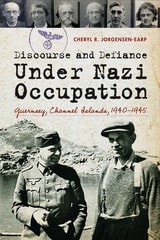
Discourse and Defiance under Nazi Occupation
Guernsey, Channel Islands, 1940–1945Cheryl R. Jorgensen-Earp
Michigan State University Press, 2013
Captured by German forces shortly after Dunkirk, and not relinquished until May of 1945, nearly a year after the Normandy invasion, the British Channel Islands (Guernsey, Jersey, Alderney, Sark, and Herm) were characterized during their occupation by severe deprivation and powerlessness. The Islanders, with few resources to stage an armed resistance, constructed a rhetorical resistance based upon the manipulation of discourse, construction of new symbols, and defiance of German restrictions on information. Though much of modern history has focused on the possibility that Islanders may have collaborated with the Germans, this eye-opening history turns to secret war diaries kept in Guernsey. A close reading of these private accounts, written at great risk to the diarists, allows those who actually experienced the Occupation to reclaim their voice and reveals new understandings of Island resistance. What emerges is a stirring account of the unquenchable spirit and deft improvisation of otherwise ordinary people in extraordinary circumstances. Under the most dangerous of conditions, Guernsey civilians used imaginative methods in reacting to their position as a subjugated population, devising a covert resistance of nuance and sustainability. Violence, this book and the people of Guernsey demonstrate, is not at all the only means with which to confront evil.
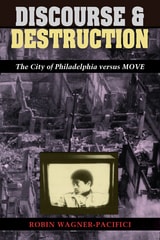
Discourse and Destruction
The City of Philadelphia versus MOVERobin Wagner-Pacifici
University of Chicago Press, 1993
How did this struggle between the city and MOVE go from memos and meetings to tear gas and bombs? And how does the mandate to defend public order become a destructive force? Sifting through the hearings that followed the deadly encounter, Robin Wagner-Pacifici reconstructs the conflict between MOVE and the city of Philadelphia. Against this richly nuanced account, in which the participants—from the mayor and the police officers to members of MOVE and their neighbors—offer opposing versions of their aims, assumptions, and strategies, Wagner-Pacifici develops a compelling analysis of the relation between definition and action, between language and violence.
Was MOVE simply a radical, black separatist group with an alternative way of life? Or was it a terrorist cult that held a neighborhood and politicians hostage to its offensive language and bizarre behavior? Wagner-Pacifici shows how competing definitions of MOVE led to different strategies for managing the conflict. In light of the shockingly similar, and even more deadly, 1993 Branch Davidian disaster in Waco, Texas, such an analysis becomes imperative. Indeed, for those who hope to understand—and, finally, to forestall—the moment when language and violence are inexorably drawn together, this book demands attention.
Discourse and the Other
The Production of the Afro-American TextW. Lawrence Hogue
Duke University Press, 1986
Hogue presents an illuminating discussion of the publication and review history of "major" and neglected texts. He illustrates the acceptance of texts as exotica, as sociological documents, or as carriers of sufficient literary conventions to receive approbation. Although the sixties movement allowed the text to move to the periphery of the dominant ideology, providing some new myths about the Afro-American historical past, this marginal position was subsequently sabotaged, co-opted, or appropriated (Afros became a fad; presidents gave the soul handshake; the hip-talking black was dressing one style and talking another.)
This study includes extended discussion of four works; Ernest J. Gaines's The Autobiography of Miss Jane Pittman, Alice Walker's The Third Life of Grange Copeland, Albert Murray's Train Whistle Guitar, and Toni Morrison's Sula. Hogue assesses the informing worldviews of each and the extent and nature of their acceptance by the dominant American cultural apparatus.
Discourse in Signed Languages
Cynthia B. Roy
Gallaudet University Press, 2011
In this volume, editor Cynthia B. Roy presents a stellar cast of cognitive linguists, sociolinguists, and discourse analysts to discover and demonstrate how sign language users make sense of what is going on within their social and cultural contexts in face-to-face interactions. In the first chapter, Paul Dudis presents an innovative perspective on depiction in discourse. Mary Thumann follows with her observations on constructed dialogue and constructed action. Jack Hoza delineates the discourse and politeness functions of hey and well in ASL as examples of discourse markers in the third chapter.
Laurie Swabey investigates reference in ASL discourse in the fourth chapter. In Chapter 5, Christopher Stone offers insights on register related to genre in British Sign Language discourse, and Daniel Roush addresses in Chapter 6 the “conduit” metaphor in English and ASL. Jeffrey Davis completes this collection by mapping out the nature of discourse in Plains Indian Sign Language, a previously unstudied language. The major thread that ties together the work of these varying linguists is their common focus on the forms and functions of sign languages used by people in actual situations. They each provide new keys to answering how thoughts expressed in one setting with one term or one utterance may mean something totally different when expressed in a different setting with different participants and different purposes.

Discourse on the Origins of Inequality (Second Discourse), Polemics, and Political Economy
Jean-Jacques Rousseau
Dartmouth College Press, 1993
Discourse on the Sciences and Arts (First Discourse) and Polemics
Jean-Jacques Rousseau
Dartmouth College Press, 1992
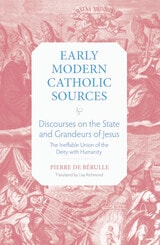
Discourse on the State and Grandeurs of Jesus
The Ineffable Union of the Diety with HumanityPierre de Bérulle
Catholic University of America Press, 2023

Discourse to Lady Lavinia His Daughter
Annibal Guasco
University of Chicago Press, 2003
The Discourse displays an incredibly far-sighted view of women's education. Annibal thought gifted young girls should develop their talents and apply them to careers outside the home. In the Discourse, he details the unique and extremely rigorous educational program to which he had subjected Lavinia almost from the cradle with this end in mind. To complete Lavinia's education, Annibal filled the Discourse with advice on spirituality and morality, health and beauty, and how to behave at court—everything a well-bred lady-in-waiting would need to know. This edition also includes an appendix that traces the later events of Lavinia's life through excerpts from her father's letters.
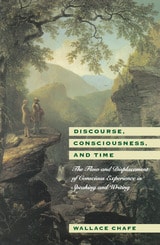
Discourse, Consciousness, and Time
The Flow and Displacement of Conscious Experience in Speaking and WritingWallace Chafe
University of Chicago Press, 1994
Chafe draws on several decades of research to demonstrate that understanding the nature of consciousness is essential to understanding many linguistic phenomena, such as pronouns, tense, clause structure, and intonation, as well as stylistic usages, such as the historical present and the free indirect style. While the book focuses on English, there are also discussions of the North American Indian language Seneca and the music of Mozart and of the Seneca people.
This work offers a comprehensive picture of the dynamic natures of language and consciousness that will interest linguists, psychologists, literary scholars, computer scientists, anthropologists, and philosophers.
Discourse, Figure
lyotard
University of Minnesota Press, 2019
Choice Outstanding Academic Title
Jean-François Lyotard is recognized as one of the most significant French philosophers of the twentieth century. Although nearly all of his major writing has been translated into English, one important work has until now been unavailable. Discourse, Figure is Lyotard’s thesis. Provoked in part by Lacan’s influential seminars in Paris, Discourse, Figure distinguishes between the meaningfulness of linguistic signs and the meaningfulness of plastic arts such as painting and sculpture. Lyotard argues that because rational thought is discursive and works of art are inherently opaque signs, certain aspects of artistic meaning such as symbols and the pictorial richness of painting will always be beyond reason’s grasp.
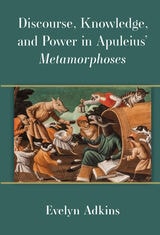
Discourse, Knowledge, and Power in Apuleius’ Metamorphoses
Evelyn Adkins
University of Michigan Press, 2022
In ancient Rome, where literacy was limited and speech was the main medium used to communicate status and identity face-to-face in daily life, an education in rhetoric was a valuable form of cultural capital and a key signifier of elite male identity. To lose the ability to speak would have caused one to be viewed as no longer elite, no longer a man, and perhaps even no longer human. We see such a fantasy horror story played out in the Metamorphoses or The Golden Ass, written by Roman North African author, orator, and philosopher Apuleius of Madauros—the only novel in Latin to survive in its entirety from antiquity. In the novel’s first-person narrative as well as its famous inset tales such as the Tale of Cupid and Psyche, the Metamorphoses is invested in questions of power and powerlessness, truth and knowledge, and communication and interpretation within the pluralistic but hierarchical world of the High Roman Empire (ca. 100–200 CE).
Discourse, Knowledge, and Power presents a new approach to the Metamorphoses: it is the first in-depth investigation of the use of speech and discourse as tools of characterization in Apuleius’ novel. It argues that discourse, broadly defined to include speech, silence, written text, and nonverbal communication, is the primary tool for negotiating identity, status, and power in the Metamorphoses. Although it takes as its starting point the role of discourse in the characterization of literary figures, it contends that the process we see in the Metamorphoses reflects the real world of the second century CE Roman Empire. Previous scholarship on Apuleius’ novel has read it as either a literary puzzle or a source-text for social, philosophical, or religious history. In contrast, this book uses a framework of discourse analysis, an umbrella term for various methods of studying the social political functions of discourse, to bring Latin literary studies into dialogue with Roman rhetoric, social and cultural history, religion, and philosophy as well as approaches to language and power from the fields of sociology, linguistics, and linguistic anthropology. Discourse, Knowledge, and Power argues that a fictional account of a man who becomes an animal has much to tell us not only about ancient Roman society and culture, but also about the dynamics of human and gendered communication, the anxieties of the privileged, and their implications for swiftly shifting configurations of status and power whether in the second or twenty-first centuries.