Results by title
55 books match the query 'Dreams' and 16 start with d
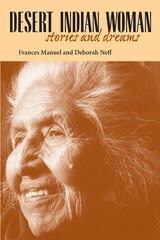
Desert Indian Woman
Stories and DreamsFrances Manuel and Deborah Neff
University of Arizona Press, 2001
Basket weaver, storyteller, and tribal elder, Frances Manuel is a living preserver of Tohono O’odham culture. Speaking in her own words from the heart of the Arizona desert, she now shares the story of her life. She tells of O’odham culture and society, and of the fortunes and misfortunes of Native Americans in the southwestern borderlands over the past century.
In Desert Indian Woman, Frances relates her life and her stories with the wit, humor, and insight that have endeared her to family and friends. She tells of her early childhood growing up in a mesquite brush house, her training in tribal traditions, her acquaintance with Mexican ways, and her education in an American boarding school. Through her recollections of births and deaths, heartache and happiness, we learn of her family’s migration from the reservation to the barrios and back again. In the details of her everyday life, we see how Frances has navigated between O’odham and American societies, always keeping her grandparents’ traditional teachings as her compass.
It is extraordinary to hear from a Native American woman like Frances, in her own words and her own point of view, to enter the complex and sensitive aspects of her life experience, her sorrows, and her dreams. We also become privy to her continuing search for her identity across the border, and the ways in which Frances and Deborah have attempted to make sense of their friendship over twenty-odd years. Throughout the book, Deborah captures the rhythms of Frances’s narrative style, conveying the connectedness of her dreams, songs, and legends with everyday life, bringing images and people from faraway times and places into the present.
Deborah Neff brings a breadth of experience in anthropology and Southwest Native American cultures to the task of placing Frances Manuel’s life in its broader historical context, illuminating how history works itself out in people’s everyday lives. Desert Indian Woman is the story of an individual life lived well and a major contribution to the understanding of history from a Native American point of view.
Destined for Greatness
Passions, Dreams, and Aspirations in a College Music TownRamirez, Michael
Rutgers University Press, 2018
In Destined for Greatness, sociologist Michael Ramirez examines the lives of forty-eight independent rock musicians who seek out such non-normative choices in a college town renowned for its music scene. He explores the rich life course trajectories of women and men to explore the extent to which pathways are structured to allow some, but not all, individuals to fashion careers in music worlds. Ramirez suggests a more nuanced understanding of factors that enable the pursuit of musical livelihoods well into adulthood.
Dreaming and Historical Consciousness in Island Greece
Charles Stewart
University of Chicago Press, 2017
Charles Stewart tells the story of the inhabitants of Kóronos, on the Greek island of Naxos, who, in the 1830s, began experiencing dreams in which the Virgin Mary instructed them to search for buried Christian icons nearby and build a church to house the ones they found. Miraculously, they dug and found several icons and human remains, and at night the ancient owners of them would speak to them in dreams. The inhabitants built the church and in the years since have experienced further waves of dreams and startling prophesies that shaped their understanding of the past and future and often put them at odds with state authorities. Today, Kóronos is the site of one of the largest annual pilgrimages in the Mediterranean. Telling this fascinating story, Stewart draws on his long-term fieldwork and original historical sources to explore dreaming as a mediator of historical change, while widening the understanding of historical consciousness and history itself.
Dreaming in Christianity and Islam
Culture, Conflict, and CreativityEdited and with an Introduction by Kelly Bulkeley, Kate Adams, and Patricia M. Davis
Rutgers University Press, 2009
Dreaming in Christianity and Islam, the first book to explore dreaming in these religions through original essays, fills this void. The editors reach a plateau by focusing on how studying dreams reveals new aspects of social and political reality. International scholars document the impact of dreams on sacred texts, mystical experiences, therapeutic practices, and doctrinal controversies.

Dreaming in Dark Times
Six Exercises in Political ThoughtSharon Sliwinski
University of Minnesota Press, 2017
What do dreams manage to say—or indeed, show—about human experience that is not legible otherwise? Can the disclosure of our dream-life be understood as a form of political avowal? To what does a dream attest? And to whom?
Blending psychoanalytic theory with the work of such political thinkers as Hannah Arendt and Michel Foucault, Sharon Sliwinski explores how the disclosure of dream-life represents a special kind of communicative gesture—a form of unconscious thinking that can serve as a potent brand of political intervention and a means for resisting sovereign power. Each chapter centers on a specific dream plucked from the historical record, slowly unwinding the significance of this extraordinary disclosure. From Wilfred Owen and Lee Miller to Frantz Fanon and Nelson Mandela, Sliwinski shows how each of these figures grappled with dream-life as a means to conjure up the courage to speak about dark times. Here dreaming is defined as an integral political exercise—a vehicle for otherwise unthinkable thoughts and a wellspring for the freedom of expression.
Dreaming in Dark Times defends the idea that dream-life matters—that attending to this thought-landscape is vital to the life of the individual but also vital to our shared social and political worlds.

Dreams and Ideas
The Artistry of Costume Designer Winn MortonMyra Walker
University of North Texas Press, 2026

Dreams and Visions in the Bible and Related Literature
Richard J. Bautch
SBL Press, 2023
The essays in Dreams and Visions in the Bible and Related Literature focus on how the reading community interprets dreams or visions and what is at stake for whom in a dream or vision’s interpretation. Contributors explore the hermeneutics of readership, the relationship between reading and intertextuality, and the interplay of affect and emotion within dreams and visions in religious texts. A variety of methodologies are employed, including rhetorical analysis, critical theory, trauma studies, the analysis of space and society, and the history of emotions. Contributors are Richard J. Bautch, Genevive Dibley, Roy Fisher, Gina Hens-Piazza, Joseph McDonald, Deborah Prince, Jean-François Racine, Andrea Spatafora, and Rodney A. Werline.
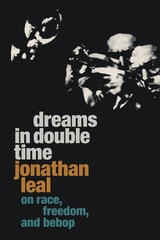
Dreams in Double Time
On Race, Freedom, and BebopJonathan Leal
Duke University Press, 2023
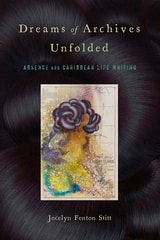
Dreams of Archives Unfolded
Absence and Caribbean Life WritingJocelyn Fenton Stitt
Rutgers University Press, 2021

Dreams of Difference, Songs of the Same
The Musical Moment in FilmAmy Herzog
University of Minnesota Press, 2009
Musical spectacles are excessive and abstract, reconfiguring time and space and creating intense bodily responses. Amy Herzog's engaging work examines those instances where music and movement erupt from within more linear narrative frameworks. The representational strategies found in these films are often formulaic, repeating familiar story lines and stereotypical depictions of race, gender, and class. Yet she finds the musical moment contains a powerful disruptive potential.
Dreams of Difference, Songs of the Same investigates the tension and the fusion of difference and repetition in films to ask, How does the musical moment work? Herzog looks at an eclectic mix of works, including the Soundie and Scopitone jukebox films, the musicals of French director Jacques Demy, the synchronized swimming spectacles of Esther Williams, and an apocalyptic musical by Taiwanese director Tsai Ming-liang. Several refrains circulate among these texts: their reliance on clichés, their rewriting of cultural narratives, and their hallucinatory treatment of memory and history.
Drawing on the philosophical work of Gilles Deleuze, she explores all of these dissonances as productive forces, and in doing so demonstrates the transformative power of the unexpected.

Dreams of Flight
The Lives of Chinese Women Students in the WestFran Martin
Duke University Press, 2022
Dreams of Waking
An Anthology of Iberian Lyric Poetry, 1400-1700Edited and Translated by Vincent Barletta, Mark L. Bajus, and Cici Malik
University of Chicago Press, 2013
In this anthology, Vincent Barletta, Mark L. Bajus, and Cici Malik treat the Iberian lyric in the late Middle Ages and early modernity as a deeply multilingual, transnational genre that needs to break away from the old essentialist ideas about language, geography, and identity in order to be understood properly. More and more, scholars and students are recognizing the limitations of single-language, nationalist, and period-bound canons and are looking for different ways to approach the study of literature. The Iberian Peninsula is an excellent site for this approach, where the history and politics of the region, along with its creative literature, need to be read and studied together with the way the works were composed by poets and eventually consumed by readers.
With a generous selection of more than one hundred poems from thirty-three poets, Dreams of Waking is unique in its coverage of the three main languages—Catalan, Portuguese, and Spanish—and lyrical styles employed by peninsular poets. It contains new translations of canonical poems but also translations of many poems that have never before been edited or translated. Brief headnotes provide essential details of the poets’ lives, and a general introduction by the volume editors shows how the poems and languages fruitfully intersect. With helpful annotations to the poetry, as well as a selected bibliography containing the most important editions and translations from all three of the main Iberian languages, this volume will be an indispensable tool for both specialists and students in comparative literature.
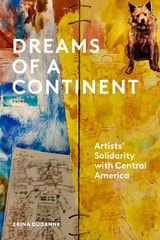
Dreams of a Continent
Artists' Solidarity with Central AmericaErina Duganne
University of Texas Press, 2026
A biography of Artists Call, an influential 1980s artist group that protested US intervention in Latin America.
The 1980s saw the flourishing of neoliberalism in all realms of culture. In the fine arts, libertarian individualism, media sensationalism, and profit motive converged in million-dollar auctions—and a widespread insistence that activism had no place in the arts. Yet even some participants of this elite New York art world resisted. Dreams of a Continent tells the forgotten story of a diverse collective that defied culture-industry norms by condemning Reagan-era imperialism in Latin America while building transnational solidarity.
Drawing on fresh archival discoveries, Erina Duganne reconstructs the political imagination of Artists Call Against U.S. Intervention in Central America. A network with more than a thousand members in New York City, Artists Call produced thirty-one exhibitions in its brief life, along with poetry readings and performances that brought together US and Latin American cultural workers in support of self-determination throughout the hemisphere. This richly illustrated volume shows how the aesthetics of Artists Call emphasized historical contingency in order to envision radically alternative futures. In the process, its activism fostered a global community that overcame stark North-South power imbalances.
Dreams of the Hmong Kingdom
The Quest for Legitimation in French Indochina, 1850–1960Mai Na M. Lee
University of Wisconsin Press, 2015
In China, Vietnam, and Laos, the Hmong continuously negotiated with these states and with the French to maintain political autonomy in a world of shifting boundaries, emerging nation-states, and contentious nationalist movements and ideologies. Often divided by clan rivalries, the Hmong placed their hope in finding a leader who could unify them and recover their sovereignty. In a compelling analysis of Hmong society and leadership throughout the French colonial period, Mai Na M. Lee identifies two kinds of leaders—political brokers who allied strategically with Southeast Asian governments and with the French, and messianic resistance leaders who claimed the Mandate of Heaven. The continuous rise and fall of such leaders led to cycles of collaboration and rebellion. After World War II, the powerful Hmong Ly clan and their allies sided with the French and the new monarchy in Laos, but the rival Hmong Lo clan and their supporters allied with Communist coalitions.
Lee argues that the leadership struggles between Hmong clans destabilized French rule and hastened its demise. Martialing an impressive array of oral interviews conducted in the United States, France, and Southeast Asia, augmented with French archival documents, she demonstrates how, at the margins of empire, minorities such as the Hmong sway the direction of history.
Best books for public & secondary school libraries from university presses, American Library Association

Dreams, Illusion, and Other Realities
Wendy Doniger O'Flaherty
University of Chicago Press, 1984
"Dazzling analysis. . . . The book is firm and convincing once you appreciate its central point, which is that in traditional Hindu thought the dream isn't an accident or byway of experience, but rather the locus of epistemology. In its willful confusion of categories, its teasing readiness to blur the line between the imagined and the real, the dream actually embodies the whole problem of knowledge. . . . [O'Flaherty] wants to make your mental flesh creep, and she succeeds."—Mark Caldwell, Village Voice

Dreams, Questions, Struggles
South Asian Women in BritainAmrit Wilson
Pluto Press, 2006
This book explores the lives and struggles of two generations of British Asian women to present a political account of their experiences: personal and public, individual and collective, their struggles take on power structures within the family, the community and, on occasion, the British state.
Combining their personal testimony within a theoretical framework, Amrit Wilson locates their experiences in the wider context of global and regional politics. She examines what impact the feminist movement has had on their lives, and explores issues such as domestic violence, Asian marriages, representations of Asian women, mental disturbance and suicide.