Results by title
13 books match the query 'Vampires'
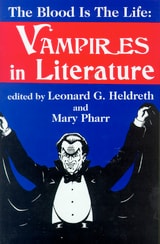
Blood is the Life
Vampires in LiteratureLeonard G. Heldreth
University of Wisconsin Press, 1999
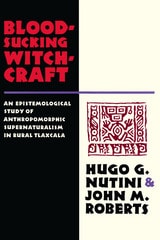
Bloodsucking Witchcraft
An Epistemological Study of Anthropomorphic Supernaturalism in Rural TlaxcalaHugo G. Nutini
University of Arizona Press, 1993
"The most comprehensive statement on this centrally important ethnographic phenomenon in the last forty years. It bears ready comparison with the two great classics, Evans-Pritchard's Witchcraft Among the Azande and Clyde Kluckhohn's Navaho Witchcraft."—Henry H. Selby
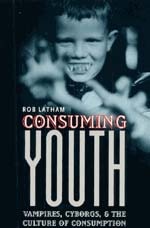
Consuming Youth
Vampires, Cyborgs, and the Culture of ConsumptionRobert Latham
University of Chicago Press, 2002
Inspired by Marx's use of the cyborg vampire as a metaphor for the objectification of physical labor in the factory, Latham shows how contemporary images of vampires and cyborgs illuminate the contradictory processes of empowerment and exploitation that characterize the youth-consumer system. While the vampire is a voracious consumer driven by a hunger for perpetual youth, the cyborg has incorporated the machineries of consumption into its own flesh. Powerful fusions of technology and desire, these paired images symbolize the forms of labor and leisure that American society has staked out for contemporary youth.
A startling look at youth in our time, Consuming Youth will interest anyone concerned with film, television, and popular culture.

Gods and Vampires
Return to ChipayaNathan Wachtel
University of Chicago Press, 1994
Wachtel discovered that a series of recent deaths and misfortunes in Chipaya had been attributed to the evil powers of the Urus, a group usually regarded with suspicion by the other ethnic groups. Those incarcerated were believed to be the chief sorcerers and vampires whose paganistic practices had brought death to Chipaya by upsetting the social order. Wachtel's investigation, told in Gods and Vampires: Back to Chipaya, reveals much about relations between the Urus and the region's dominant ethnic groups and confronts some of the most trenchant issues in contemporary anthropology. His analysis shows that the Urus had become victims of the same set of ideals the Spanish had used, centuries before, to establish their hegemony in the region.
Presented as a personal detective story, Gods and Vampires is Wachtel's latest work in a series studying the ongoing impact of the Spanish conquest on the Andean consciousness and social system. Its insight into Bolivian society and the legacy of hegemony confronts some of the most trenchant issues in contemporary anthropologyand will be of great interest to scholars of anthropology, Latin American studies, and Native American studies.

Horror Readers' Advisory
The Librarian's Guide to Vampires, Killer Tomatoes, and Haunted HousesAmerican Library Association, 2004

Our Vampires, Ourselves
Nina Auerbach
University of Chicago Press, 1995
"[Auerbach] has seen more Hammer movies than I (or the monsters) have had steaming hot diners, encountered more bloodsuckers than you could shake a stick at, even a pair of crossed sticks, such as might deter a very sophisticated ogre, a hick from the Moldavian boonies....Auerbach has dissected and deconstructed them with the tender ruthlessness of a hungry chef, with cogency and wit."—Eric Korn, Times Literary Supplement
"This seductive work offers profound insights into many of the urgent concerns of our time and forces us to confront the serious meanings that we invest, and seek, in even the shadiest manifestations of the eroticism of death."—Wendy Doniger, The Nation
"A vigorous, witty look at the undead as cultural icons."—Kirkus Review
"In case anyone should think this book is merely a boring lit-crit exposition...Auerbach sets matters straight in her very first paragraph. 'What vampires are in any given generation,' she writes, 'is a part of what I am and what my times have become. This book is a history of Anglo-American culture through its mutating vampires.'...Her book really takes off."—Maureen Duffy, New York Times Book Review
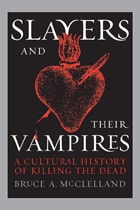
Slayers and Their Vampires
A Cultural History of Killing the DeadBruce A. McClelland
University of Michigan Press, 2010
“A fascinating comparison of the original vampire myths to their later literary transformations.”
—Adam Morton, author of On Evil
“From the Balkan Mountains to Beverly Hills, Bruce has mapped the vampire’s migration. There’s no better guide for the trek.”
—Jan L. Perkowski, Professor, Slavic Department, University of Virginia, and author of Vampires of the Slavs and The Darkling: A Treatise on Slavic Vampirism
“The vampire slayer is our protector, our hero, our Buffy. But how much do we really know about him—or her? Very little, it turns out, and Bruce McClelland shows us why: because the vampire slayer is an unsettling figure, almost as disturbing as the evil she is set to destroy. Prepare to be frightened . . . and enlightened.”
—Corey Robin, author of Fear: The History of a Political Idea
“What is unique about this book is that it is the first of its kind to focus on the vampire hunter, rather than the vampire. As such, it makes a significant contribution to the field. This book will appeal to scholars and researchers of folklore, as well as anyone interested in the literature and popular culture of the vampire.”
—Elizabeth Miller, author of Dracula and A Dracula Handbook
“Shades of Van Helsing! Vampirologist extraordinaire Bruce McClelland has managed that rarest of feats: developing a radically new and thoroughly enlightening perspective on a topic of eternal fascination. Ranging from the icons of popular culture to previously overlooked details of Balkan and Slavic history and folk practice, he has rethought the borders of life and death, good and evil, saint and sinner, vampires and their slayers. Excellent scholarship, and a story that never flags.”
—Bruce Lincoln, Caroline E. Haskell Professor of History of Religions, University of Chicago, and author of Theorizing Myth: Narrative, Ideology, and Scholarship,Authority: Construction and Corrosion, and Death, War, and Sacrifice: Studies in Ideology and Practice

Stage Blood
Vampires of the 19th Century StageRoxana Stuart
University of Wisconsin Press, 1994

The Letters of Mina Harker
Dodie Bellamy; with a new Forward by Dennis Cooper
University of Wisconsin Press, 2004
Bigger-than-life, half goddess, half Bette Davis, Mina sends letter after letter to friends and co-conspirators, holding her reader captive through a display of illusion and longing. Juggling quivering vulnerability on one hand and gossip on the other, Mina spoofs and consumes and spews back up demented reembodiments of trash media and high theory alike. It's all fodder for her ravenous libido and "a messy ambiguous place where pathology meets pleasure." Sensuous and captivating, The Letters of Mina Harker describes one woman's struggles finding the right words to explain her desires and fears without confining herself to one identity.
The Monster with a Thousand Faces
Guises of the Vampire in Myth and LiteratureBrian J. Frost
University of Wisconsin Press, 1989
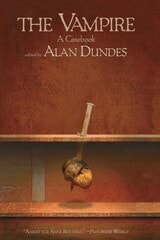
The Vampire
A CasebookEdited by Alan Dundes
University of Wisconsin Press, 1998
Vampires are the most fearsome and fascinating of all creatures of folklore. For the first time, detailed accounts of the vampire and how its tradition developed in different cultures are gathered in one volume by eminent folklorist Alan Dundes. Eleven leading scholars from the fields of Slavic studies, history, anthropology, and psychiatry unearth the true nature of the vampire from its birth in graveyard lore to the modern-day psychiatric patient with a penchant for drinking blood.
The Vampire: A Casebook takes this legend out of the realm of literature and film and back to its dark beginnings in folk traditions. The essays examine the history of the word “vampire;” Romanian vampires; Greek vampires; Serbian vampires; the physical attributes of vampires; the killing of vampires; and the possible psychoanalytic underpinnings of vampires. Much more than simply a scary creature of the human imagination, the vampire has been and continues to haunt the lives of all those who encounter it—in reality or in fiction.
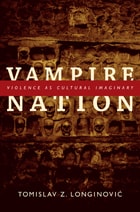
Vampire Nation
Violence as Cultural ImaginaryTomislav Z. Longinovi
Duke University Press, 2011
Interpreting oral and written narratives and visual culture, Longinović traces the early modern invention of ‘the serbs’ and the category’s twentieth-century transformations. He describes the influence of Bram Stoker’s nineteenth-century novel Dracula on perceptions of the Balkan region and reflects on representations of hybrid identities and their violent destruction in the works of the region’s most prominent twentieth-century writers. Concluding on a hopeful note, Longinović considers efforts to imagine a new collective identity in non-nationalist terms. These endeavors include the emigrant Yugoslav writer David Albahari’s Canadian Trilogy and Cyber-Yugoslavia, a mock nation-state with “citizens” in more than thirty countries.

Vampires, Mummies and Liberals
Bram Stoker and the Politics of Popular FictionDavid Glover
Duke University Press, 1996
Glover’s efforts reveal a writer who was more wide-ranging and politically engaged than his current reputation suggests. An Irish Protestant and nationalist, Stoker nonetheless drew his political inspiration from English liberalism at a time of impending crisis, and the tradition’s contradictions and uncertainties haunt his work. At the heart of Stoker’s writing Glover exposes a preoccupation with those sciences and pseudo-sciences—from physiognomy and phrenology to eugenics and sexology—that seemed to cast doubt on the liberal faith in progress. He argues that Dracula should be read as a text torn between the stances of the colonizer and the colonized, unable to accept or reject the racialized images of backwardness that dogged debates about Irish nationhood. As it tracks the phantasmatic form given to questions of character and individuality, race and production, sexuality and gender, across the body of Stoker’s writing, Vampires, Mummies, and Liberals draws a fascinating portrait of an extraordinary transitional figure.
Combining psychoanalysis and cultural theory with detailed historical research, this book will be of interest to scholars of Victorian and Irish fiction and to those concerned with cultural studies and popular culture.