Results by title
447 books match the query 'Eastern' and 9 start with d
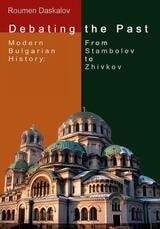
Debating the Past
Modern Bulgarian Historiography—From Stambolov to ZhivkovRoumen Daskalov
Central European University Press, 2011

Deficit and Debt in Transition
The Political Economy of Public Finances in Central and Eastern EuropeIstvan Benczes
Central European University Press, 2014

Democracy Fatigue
An East European EpidemyCarlos García-Rivero
Central European University Press, 2023
Over the early 21st century, democracy worldwide has deteriorated significantly. At the same time, new populist forces have appeared that challenge democracies through legal reforms. The stark contrast between Eastern and Western Europe in this respect is the focus of this collection of essays.
The authors consider the 2008-2012 economic crisis to be at the root of the success of the populist parties and the rise of cultural backlash against liberal values. In turn, European governments’ responses to the crisis—mainly austerity measures demanded by IMF and the EU— help explain desenchantment with the European Union. These policies made the wider public feel that they were being left out of politics, and populist parties promised to return power to them.
The contributors argue that polarization of the electorate can set in motion a radicalization that strengthens authoritarians at the expense of democrats. They also demonstrate that Eastern and Western Europe differ in their attitudes to the decline in quality of democracy. The studies consider how satisfied people are with the political changes they witness, and argue that seemingly more authoritarian attitudes in the East explain why people feel more satisfied with a defective democracy that empowers the populist-authoritarian political actors that they support.

Diaries by Jewish and Christian Adolescents
Reconstructing the Social Reality of Pre- and Post-Holocaust HungaryGergely Kunt
Central European University Press, 2027
Diaries by Jewish and Christian Adolescents
Reconstructing the Social Reality of Pre- and Post-Holocaust HungaryGergely Kunt
Central European University Press, 2027
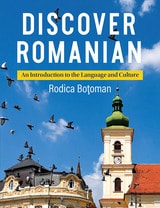
Discover Romanian
An Introduction to the Language and CultureRodica Bo?oman
The Ohio State University Press, 1995
This comprehensive introduction to Romanian for English-speaking students emphasizes communication with a complete treatment of grammar, an extensive vocabulary, and a focus on the four major language skills—listening, speaking, reading, and writing. Cultural information, an integral part of the textbook, is presented both formally, in sections on culture and civilization, and informally, as the setting for dialogues and exercises. Tables of verb conjugations and a glossary round out the book's primary materials.
Straightforward and accessible, Discover Romanian is an essential textbook for all those teaching and learning the language and provides important information for those seeking to understand Romanian culture.

Dostoevsky and the Affirmation of Life
Predrag Cicovacki
St. Augustine's Press, 2008
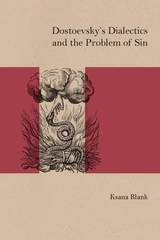
Dostoevsky's Dialectics and the Problem of Sin
Ksana Blank
Northwestern University Press, 2019
In Dostoevsky’s Dialectics and the Problem of Sin, Ksana Blank borrows from ancient Greek, Chinese, and Christian dialectical traditions to formulate a dynamic image of Dostoevsky’s dialectics—distinct from Hegelian dialectics—as a philosophy of “compatible contradictions.” Expanding on the classical triad of Goodness, Beauty, and Truth, Blank guides us through Dostoevsky’s most difficult paradoxes: goodness that begets evil, beautiful personalities that bring about grief, and criminality that brings about salvation.
Dostoevsky’s philosophy of contradictions, this book demonstrates, contributes to the development of antinomian thought in the writings of early twentieth-century Russian religious thinkers and to the development of Bakhtin’s dialogism. Dostoevsky’s Dialectics and the Problem of Sin marks an important and original intervention into the enduring debate over Dostoevsky’s spiritual philosophy.
Dostoevsky's Secrets
Reading Against the GrainCarol Apollonio
Northwestern University Press, 2009