Results by title
679 books match the query 'Ecology' and 14 start with d
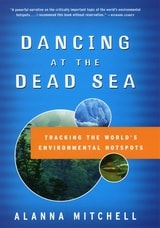
Dancing at the Dead Sea
Tracking the World's Environmental HotspotsAlanna Mitchell
University of Chicago Press, 2005
Combining scientific curiosity with travel and adventure, Dancing at the Dead Sea takes the reader on an intimate tour through the world's environmental hotspots. Readers join Mitchell as she tracks the spectacular biodiversity of regions as extraordinary as the island of Madagascar, the rain forests of Suriname, the parched oases of Jordan, the Arctic desert of Banks Island, the volcanic crests of Iceland, and, ultimately, the Galapagos archipelago, where Darwin conducted his famous research. Along the way, Mitchell introduces us to the numerous scientists and conservationists who are working to protect these endangered places. She also chronicles the courageous efforts of everyday men and women in these regions as they try to convince governments to turn the world's hotspots into environmentally protected areas.
Ultimately, Mitchell's travels around the world compel her to ponder our shelf life as a species in the grand evolutionary scheme of the planet. She wonders what Darwin would make of the profound ecological destruction she witnesses. Is the human race suicidal? What can help our species avert extinction? Posing tough and cutting questions such as these, Dancing at the Dead Sea is a must-read for aficionados of good science writing and travel literature alike.
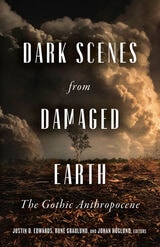
Dark Scenes from Damaged Earth
The Gothic AnthropoceneJustin D. Edwards
University of Minnesota Press, 2022
An urgent volume of essays engages the Gothic to advance important perspectives on our geological era
What can the Gothic teach us about our current geological era? More than just spooky, moonlit castles and morbid graveyards, the Gothic represents a vibrant, emergent perspective on the Anthropocene. In this volume, more than a dozen scholars move beyond longstanding perspectives on the Anthropocene—such as science fiction and apocalyptic narratives—to show that the Gothic offers a unique (and dark) interpretation of events like climate change, diminished ecosystems, and mass extinction.
Embracing pop cultural phenomena like True Detective, Jaws, and Twin Peaks, as well as topics from the New Weird and prehistoric shark fiction to ruin porn and the “monstroscene,” Dark Scenes from Damaged Earth demonstrates the continuing vitality of the Gothic while opening important new paths of inquiry. These essays map a genealogy of the Gothic while providing fresh perspectives on the ongoing climate chaos, the North/South divide, issues of racialization, dark ecology, questions surrounding environmental justice, and much more.
Contributors: Fred Botting, Kingston U; Timothy Clark, U of Durham; Rebecca Duncan, Linnaeus U; Michael Fuchs, U of Oldenburg, Germany; Esthie Hugo, U of Warwick; Dawn Keetley, Lehigh U; Laura R. Kremmel, South Dakota School of Mines and Technology; Timothy Morton, Rice U; Barry Murnane, U of Oxford; Jennifer Schell, U of Alaska Fairbanks; Lisa M. Vetere, Monmouth U; Sara Wasson, Lancaster U; Jeffrey Andrew Weinstock, Central Michigan U.

Dealing with Risk
Why the Public and the Experts Disagree on Environmental IssuesHoward Margolis
University of Chicago Press, 1997
In Dealing with Risk, Howard Margolis moves beyond the usual "rival rationalities" explanation proffered by risk analysts for the rift between expert and lay opinion. He reveals the conflicts of intuition that undergird those concerns, and proposes a new approach to the psychology of persuasion and belief. Examining the role of intuition, mental habits, and cognitive frameworks in the construction of public opinion, this compelling account bridges the public policy impasse that has plagued controversial environmental issues.
Deforesting the Earth
From Prehistory to Global Crisis, An AbridgmentMichael Williams
University of Chicago Press, 2006
Published in 2002, Deforesting the Earth was a landmark study of the history and geography of deforestation. Now available as an abridgment, this edition retains the breadth of the original while rendering its arguments accessible to a general readership.
Deforestation—the thinning, changing, and wholesale clearing of forests for fuel, shelter, and agriculture—is among the most important ways humans have transformed the environment. Surveying ten thousand years to trace human-induced deforestation’s effect on economies, societies, and landscapes around the world, Deforesting the Earth is the preeminent history of this process and its consequences.
Beginning with the return of the forests after the ice age to Europe, North America, and the tropics, Michael Williams traces the impact of human-set fires for gathering and hunting, land clearing for agriculture, and other activities from the Paleolithic age through the classical world and the medieval period. He then focuses on forest clearing both within Europe and by European imperialists and industrialists abroad, from the 1500s to the early 1900s, in such places as the New World, India, and Latin America, and considers indigenous clearing in India, China, and Japan. Finally, he covers the current alarming escalation of deforestation, with our ever-increasing human population placing a potentially unsupportable burden on the world’s forests.
Delaware Naturalist Handbook
McKay Jenkins
University of Delaware Press, 2011
Published by University of Delaware Press. Distributed worldwide by Rutgers University Press.

Democratic Dilemmas in the Age of Ecology
Trees and Toxics in the American WestDaniel Press
Duke University Press, 1994
Press introduces the primary debate in this confrontation as a choice between political centralization and decentralization. Do citizens faced with environmental crises tend to look first to a centralized leadership for solutions or do they tend to respond at a more local and grassroots level? What is the role of technical expertise in this process and how does it effect public participation in these matters? Do confrontations over environmental issues increase support for a more fully democratic decisionmaking process? Representing social, political, and economic challenges to democracy, these and other questions are then investigated empirically through analyses of case studies. Focusing on two recent controversies in the western United States, ancient-forest logging in Oregon and California and hazardous waste management in California, and drawing on in-depth interviews with individuals involved, Press clarifies the relationship between environmentalism and democracy and explores the characteristics of "new" democratic forms of environmental policymaking.
Revealing a need for a more decentralized process and increased individual and collective action in response to environmental crises, Democratic Dilemmas in the Age of Ecology will be of interest to a wide range of audiences, from scholars concerned with applications of democratic theory, to activists and policymakers seeking to change or implement environmental policy.
Demons in Eden
The Paradox of Plant DiversityJonathan Silvertown
University of Chicago Press, 2005
Demons in Eden considers these questions using the latest scientific discoveries from the plant world. Readers join Silvertown as he explores the astonishing diversity of plant life in regions as spectacular as the verdant climes of Japan, the lush grounds of the Royal Botanical Gardens at Kew, the shallow wetlands and teeming freshwaters of Florida, the tropical rainforests of southeast Mexico, and the Canary Islands archipelago, whose evolutionary novelties—and exotic plant life—have earned it the sobriquet "the Galapagos of botany." Along the way, Silvertown looks closely at the evolution of plant diversity in these locales and explains why such variety persists in light of ecological patterns and evolutionary processes. In novel and useful ways, he also investigates the current state of plant diversity on the planet to show the ever-challenging threats posed by invasive species and humans.
Bringing the secret life of plants into more colorful and vivid focus than ever before, Demons in Eden is an empathic and impassioned exploration of modern plant ecology that unlocks evolutionary mysteries of the natural world.
Desert Ecology
John B Sowell
University of Utah Press, 2001
Natural History
"An energetic start quickly became a trudge; we glanced back frequently towards our point of departure, an air-conditioned vehicle. Not only did the hot air feel like a blast from a smelter’s furnace, but within minutes the reflected sunlight was doing perceptible damage to any exposed skin. I’m sure I was sweating more than I ever had before, yet my skin was dry...We found ourselves blinking rapidly to keep the eyes moist. After a few more minutes, we turned back for the car, leading our youngest child who would no longer open her eyes."
- John Sowell
Unlike books that merely identify what plants and animals live in the desert, Desert Ecology is a comprehensive but accessible introduction to how these organisms live where they do. Beginning with an overview of the Intermountain, Mojave, Sonoran, and Chihuahuan Deserts, Sowell presents the topographic and the meteorologic conditions that created these regions. He continues with a thorough examination of physiologic and behavioral adaptations that enable plants and animals, even humans, to survive and persist in these inhospitable places.
While basic scientific principles—such as photosynthesis, trophic levels, thermoregulation, and osmoregulation—are presented in terms that nonspecialists will understand, the real draw is the fascinating life histories of dozens of particular organisms. Explore the life cycle of the yucca and creosote bush, trace the wanderings of the gila monster and tenebrionid beetle, breathe in the rhythms of the desert at night.
"This book is for the curious," says the author, for all who enter the "wasteland," on foot or through imagination.
Desert Frontier
Ecological and Economic Change Along the Western Sahel, 1600-1850James L.A., Jr. Webb
University of Wisconsin Press, 1994
Desert Frontier is a study of the ecological and economic impact of a long-term trend toward increasing aridity along the southern edge of the western Sahara. Beginning in the early seventeenth century, this climatological trend forced the desert approximately 200–300 kilometers to the south, transforming ethnic identities and ways of life along the length of the Sahel. Based on extensive archival research and on Saharan oral data, Desert Frontier argues that the principal historical dynamics of the precolonial Sahel were determined by this pervasive ecological crisis, rather than by the dynamics of a European-dominated world system.
Design with Nature on Cape Cod and the Islands
Jack Ahern
University of Massachusetts Press, 2022
Design with Nature on Cape Cod and the Islands seeks to reverse this damaging trend by offering landscape professionals, local officials, and homeowners a sustainable approach to landscape design based on the ecoregion’s native plants and plant communities. Presenting detailed discussions of Cape Cod’s natural history, Jack Ahern focuses on the principal plant communities that define its landscape character and that are well adapted to local soils and growing conditions, including climate change. The book also includes strategies for ecological planting design and a portfolio of photographs of active ecologically designed landscapes.

Designing Gardens with Flora of the American East
Summers, Carolyn
Rutgers University Press, 2010
Why indigenous plants, you may ask? What makes them so special to butterflies and bees and boys and girls? For Carolyn Summers, the answer is as natural as an ephemeral spring wildflower or berries of the gray dogwood, "As I studied indigenous plants, a strange thing happened. The plants grew on me. I began to love the plants themselves for their own unique qualities, quite apart from their usefulness in providing food and shelter for wildlife.
Emphasizing the importance of indigenous plant gardening and landscape design, Summers provides guidelines for skilled sowers and budding bloomers. She highlights . . .
- The best ways to use exotic and non-indigenous plants responsibly
- Easy-to-follow strategies for hosting wildlife in fields, forests, and gardens
- Designs for traditional gardens using native trees, shrubs, groundcovers as substitutes for exotic plants
- Examples of flourishing plant communities from freshwater streams to open meadows
- How to control plant reproduction, choose cultivars, open-pollinated indigenous plants, and different types of hybrids, and practice “safe sex in the garden
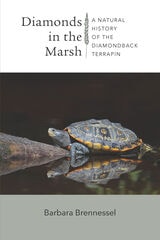
Diamonds in the Marsh
A Natural History of the Diamondback TerrapinBarbara Brennessel
Brandeis University Press, 2021
She’s the mascot for the University of Maryland’s sports teams and her ancestors were nearly driven to extinction by Victorians who indulged in turtle soup. But as she buries herself in the mud every night to sleep, the diamondback terrapin knows none of this. The size of a dinner plate and named for the beautiful concentric rings on her shell, she can live at least forty years and is the only turtle in North America who can live in brackish and salty waters. Several diamondback populations have been the subjects of ecological studies in recent years, but most of that information was buried in scientific literature and various state and federal reports—until this book.
Synthesizing all known research on this remarkable animal, Diamonds in the Marsh is the first full-scale natural history of the diamondback terrapin. Focusing on the northern diamondback, Barbara Brennessel examines its evolution, physiology, adaptations, behavior, growth patterns, life span, genetic diversity, land use, reproduction, and early years. She also discusses its relationship to humans, first as an important food source from colonial times through the nineteenth century, and more recently as a cultural icon, frequently depicted in Native American art and design. She concludes with a look at contemporary hazards to the terrapin and urges continued study of this marvelous creature. Updated with a new introduction by Brennessel, and with a foreword by Bob Prescott, former executive director of Massachusett’s Audubon Wellfleet Bay Sanctuary, Diamonds of the Marsh is perfect for those interested in the conservation of a species.
Does the Earth Care?
Indifference, Providence, and Provisional EcologyMick Smith
University of Minnesota Press, 2022
Rethinking our relationship with Earth in a time of environmental emergency
The world is changing. Progress no longer has a future but any earlier sense of Earth as “providential” seems of merely historical interest. The apparent absence of Earthly solicitude is a symptom and consequence of these successive Western modes of engagement with the Earth, now exemplified in global capitalism. Within these constructs, Earth can only appear as constitutively indifferent to the fate of all its inhabitants. The “provisional ecology” outlined in Does the Earth Care?—drawing on a variety of literary and philosophical sources from Richard Jefferies and Robert Macfarlane to Martin Heidegger and Gaia theory—fundamentally challenges that assumption, while offering an Earthly alternative to either cold realism or alienated despair in the face of impending ecological disaster.
Forerunners is a thought-in-process series of breakthrough digital works. Written between fresh ideas and finished books, Forerunners draws on scholarly work initiated in notable blogs, social media, conference plenaries, journal articles, and the synergy of academic exchange. This is gray literature publishing: where intense thinking, change, and speculation take place in scholarship.

Dwelling in Resistance
Living with Alternative Technologies in AmericaSchelly, Chelsea
Rutgers University Press, 2017
Schelly portrays a wide range of residential living alternatives utilizing renewable, small-scale, de-centralized technologies. These technologies considerably change how individuals and communities interact with the material world, their natural environment, and one another. Using in depth interviews and compelling ethnographic observations, the book offers an insightful look at different communities’ practices and principles and their successful endeavors in sustainability and self-sufficiency.