Results by title
496 books match the query 'Ethnic identity' and 26 start with d

Dadibaajim
Returning Home through NarrativeHelen Olsen Agger
University of Manitoba Press, 2021
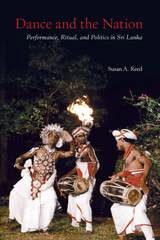
Dance and the Nation
Performance, Ritual, and Politics in Sri LankaSusan A. Reed
University of Wisconsin Press, 2010
As the national dance of Sri Lanka, Kandyan dance is identified with the majority Sinhala ethnic group and heavily supported by the state. Derived from the kohomba kankariya—an elaborate village ritual performed by men of the hereditary drummer caste—the dance was adopted by the state as a symbol of traditional Sinhala culture in the post-independence period. When state officials introduced the dance into the school curriculum, it was opened to individuals of all castes, and high-caste women have emerged as prominent teachers and performers. Reed’s evocative account traces the history and consequences of this transition from ritual to stage, situating the dance in relation to postcolonial nationalism and ethnic politics and emphasizing the voices and perspectives of the hereditary dancers and of women performers.
Although Kandyan dance is related to other south Asian dance forms, it is unique, distinguished by an elegant, energetic style, and lively displays of acrobatics and agility. The companion DVD includes unparalleled footage of this vibrant dance in ritual, stage, and training contexts, and features the most esteemed performers of the Kandyan region.

Darfur Allegory
Rogaia Mustafa Abusharaf
University of Chicago Press, 2021
Elaborated in colonial times and enshrined in policy afterwards, such binary categories have been adopted by the media to explain the civil war in Darfur. The narratives that circulate internationally are thus highly fraught and cover over—to counterproductive effect—forms of Darfurian activism that have emerged in the conflict’s wake. Darfur Allegory marries the analytical precision of a committed anthropologist with an insider’s view of Sudanese politics at home and in the diaspora, laying bare the power of words to heal or perpetuate civil conflict.
Deathly Embrace
Orientalism and Asian American IdentitySheng-Mei Ma
University of Minnesota Press, 2000
A polemical analysis of the ways Orientalism speaks through the texts of prominent Asian American writers.
Asian American resistance to Orientalism—the Western tradition dealing with the subject and subjugation of the East—is usually assumed. And yet, as this provocative work demonstrates, in order to refute racist stereotypes they must first be evoked, and in the process the two often become entangled. Sheng-mei Ma shows how the distinguished careers of post-1960s Asian American writers such as Maxine Hong Kingston, Amy Tan, Frank Chin, and David Henry Hwang reveal that while Asian American identity is constructed in reaction to Orientalism, the two cultural forces are not necessarily at odds. The vigor with which these Asian Americans revolt against Orientalism in fact tacitly acknowledges the family lineage of the two.
To identify the multitude of historical forms appropriated by the deathly embrace of Orientalism and Asian American ethnicity, Ma highlights four types of cultural encounters, embodied in four metaphors of physical states: the "clutch of rape" in imperialist adventure narratives of the 1930s and 1940s, as seen in comic strips of Flash Gordon and Terry and the Pirates and in the Disney film Swiss Family Robinson; the "clash of arms" or martial metaphors in the 1970s and beyond, embodied in Bruce Lee, Kingston’s The Woman Warrior, and the video game Mortal Kombat; U.S. multicultural "flaunting" of ethnicity in the work of Amy Tan and in Disney’s Mulan; and global postcolonial "masquerading" of ethnicity in the Anglo-Japanese novelist Kazuo Ishiguro.Broad in scope, penetrating in insight, Ma’s work exposes the myriad ways in which Orientalism, an integral part of American culture, speaks through the texts of Asian Americans and non–Asian Americans alike. The result is a startling lesson in the construction of cultural identity.
Defending Their Own in the Cold
The Cultural Turns of U.S. Puerto RicansMarc Zimmerman
University of Illinois Press, 2011
Desi Land
Teen Culture, Class, and Success in Silicon ValleyShalini Shankar
Duke University Press, 2008
Whether discussing instant messaging or arranged marriages, Desi bling or the pressures of the model minority myth, Shankar foregrounds the teens’ voices, perspectives, and stories. She investigates how Desi teens interact with dialogue and songs from Bollywood films as well as how they use their heritage language in ways that inform local meanings of ethnicity while they also connect to a broader South Asian diasporic consciousness. She analyzes how teens negotiate rules about dating and reconcile them with their longer-term desire to become adult members of their communities. In Desi Land Shankar not only shows how Desi teens of different socioeconomic backgrounds are differently able to succeed in Silicon Valley schools and economies but also how such variance affects meanings of race, class, and community for South Asian Americans.
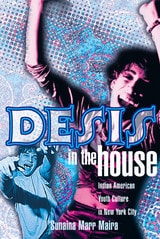
Desis In The House
Indian American Youth Culture In NycSunaina Maira
Temple University Press, 2002
New York City, long the destination for immigrants and migrants, today is home to the largest Indian American population in the United States. Coming of age in a city remarkable for its diversity and cultural innovation, Indian American and other South Asian youth draw on their ethnic traditions and the city's resources to create a vibrant subculture. Some of the city's hottest clubs host regular bhangra parties, weekly events where young South Asians congregate to dance to music that mixes rap beats with Hindi film music, bhangra (North Indian and Pakistani in origin), reggae, techno, and other popular styles. Many of these young people also are active in community and campus organizations that stage performances of "ethnic cultures."
In this book Sunaina Maira explores the world of second-generation Indian American youth to learn how they manage the contradictions of gender roles and sexuality, how they handle their "model minority" status and expectations for class mobility in a society that still racializes everyone in terms of black or white. Maira's deft analysis illuminates the ways in which these young people bridge ethnic authenticity and American "cool."
Development of Arab-American Identity
Ernest McCarus, Editor
University of Michigan Press, 1994
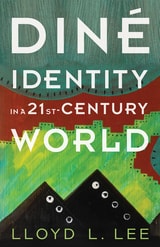
Diné Identity in a Twenty-First-Century World
Lloyd L. Lee
University of Arizona Press, 2020
Diné identity in the twenty-first century is distinctive and personal. It is a mixture of traditions, customs, values, behaviors, technologies, worldviews, languages, and lifeways. It is a holistic experience. Diné identity is analogous to Diné weaving: like weaving, Diné identity intertwines all of life’s elements together.
In this important new book, Lloyd L. Lee, a citizen of the Navajo Nation and an associate professor of Native American studies, takes up and provides insight on the most essential of human questions: who are we? Finding value and meaning in the Diné way of life has always been a hallmark of Diné studies. Lee’s Diné-centric approach to identity gives the reader a deep appreciation for the Diné way of life. Lee incorporates Diné baa hane’ (Navajo history), Sa’ą́h Naagháí Bik’eh Hózhǫ́ǫ́n (harmony), Diné Bizaad (language), K’é (relations), K’éí (clanship), and Níhi Kéyah (land) to address the melding of past, present, and future that are the hallmarks of the Diné way of life.
This study, informed by personal experience, offers an inclusive view of identity that is encompassing of cultural and historical diversity. To illustrate this, Lee shares a spectrum of Diné insights on what it means to be human. Diné Identity in a Twenty-First-Century World opens a productive conversation on the complexity of understanding and the richness of current Diné identities.
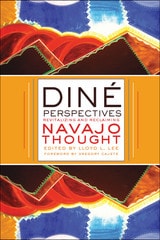
Diné Perspectives
Revitalizing and Reclaiming Navajo ThoughtEdited by Lloyd L. Lee; Foreword by Gregory Cajete
University of Arizona Press, 2014
All of the contributors are coming to personal terms with a phrase that underpins the matrix of Diné culture: Sa’ah Naagháí Bik’eh Hózhóón. Often referred to simply as SNBH, the phrase can be translated in many ways but is generally understood to mean “one’s journey of striving to live a long, harmonious life.” The book offers a variety of perspectives of Diné men and women on the Diné cultural paradigm that is embedded in SNBH. Their writings represent embodied knowledge grounded in a way of knowing that connects thought, speech, experience, history, tradition, and land. Some of the contributors are scholars. Some are Diné who are fighting for justice and prosperity for the Navajo Nation. Some are poets and artists. They are united in working to preserve both intellectual and cultural sovereignty for Diné peoples. And their contributions exemplify how Indigenous peoples are creatively applying tools of decolonization and critical research to re-create Indigenous thought and culture in a present day that rarely resembles the days of their ancestors.
More than 300,000 people self-identify as Diné today. Every one must grapple with how to make a life that acknowledges Sa’ah Naagháí Bik’eh Hózhóón. Diné Perspectives is unique in bringing such personal journeys to the public eye.

Diplomas and Thatch Houses
Asserting Tradition in a Changing MicronesiaJuliana Flinn
University of Michigan Press, 1992
Discrimination in Modern Japan
Case Studies in Identity PoliticsJ. Mark Ramseyer
University of Chicago Press, 2023
In this book, J. Mark Ramseyer, a noted authority on Japan looks at discrimination against groups in Japanese society, focusing on the Korean, Okinawan, and Burakumin groups. Ramseyer asks why they experience discrimination in Japan, an unusually homogeneous society. Is it because of some prejudice on the part of the majority that prevents their integration into mainstream Japanese society? Or is it because some of the dynamics within the group create incentives for the group to stay together and to be on the fringes of society?
Ramseyer argues that the real explanation is the latter, and each of these three groups has been victimized by its own leadership. Precisely because the groups are dysfunctional, members of the group cannot control members who would appoint themselves group leaders. The result has been the capture of leadership positions by people who manipulate the group to their own private advantage and to the detriment of the group as a whole.
Disenchanting Citizenship
Mexican Migrants and the Boundaries of BelongingLuis F. B. Plascencia
Rutgers University Press, 2012
The book explores the meaning of U.S. citizenship through the experience of a unique group of Mexican migrants who were granted Temporary Status under the “legalization” provisions of the 1986 IRCA, attained Lawful Permanent Residency, and later became U.S. citizens. Plascencia integrates an extensive and multifaceted collection of interviews, ethnographic fieldwork, ethno-historical research, and public policy analysis in examining efforts that promote the acquisition of citizenship, the teaching of citizenship classes, and naturalization ceremonies. Ultimately, he unearths citizenship’s root as a Janus-faced construct that encompasses a simultaneous process of inclusion and exclusion. This notion of citizenship is mapped on to the migrant experience, arguing that the acquisition of citizenship can lead to disenchantment with the very status desired. In the end, Plascencia expands our understanding of the dynamics of U.S. citizenship as a form of membership and belonging.
Dislocating China
Muslims, Minorities, and Other Subaltern SubjectsDru C. Gladney
University of Chicago Press, 2004
Gladney locates China and Chinese culture not in some unchanging, essential "Chinese-ness," but in the context of historical and contemporary multicultural complexity. He investigates how this complexity plays out among a variety of places and groups, examining representations of minorities and majorities in art, movies, and theme parks; the invention of folklore and creation myths; the role of pilgrimages in constructing local identities; and the impact of globalization and economic reforms on non-Han groups such as the Muslim Hui. In the end, Gladney argues that just as peoples in the West have defined themselves against ethnic others, so too have the Chinese defined themselves against marginalized groups in their own society.
Displacements and Diasporas
Asians in the AmericasAnderson, Wanni W.
Rutgers University Press, 2005
With an emphasis on anthropological and historical contexts, the essays show how the experiences of Asians across the Americas have been shaped by the social dynamics and politics of settlement locations as much as by transnational connections and the economic forces of globalization. Contributors bring new insights to the unique situations of Asian communities previously overlooked by scholars, such as Vietnamese Canadians and the Lao living in Rhode Island. Other topics include Chinese laborers and merchants in Latin America and the Caribbean, Japanese immigrants and their descendants in Brazil, Afro-Amerasians in America, and the politics of second-generation Indian American youth culture.
Together the essays provide a valuable comparative portrait of Asians across the Americas. Engaging issues of diaspora, transnational social practice and community building, gender, identity, institutionalized racism, and deterritoriality, this volume presents fresh perspectives on displacement, opening the topic up to a wider, more interdisciplinary terrain of inquiry and teaching.
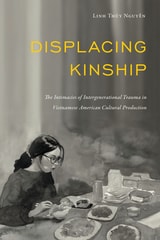
Displacing Kinship
The Intimacies of Intergenerational Trauma in Vietnamese American Cultural ProductionLinh Thuy Nguyen
Temple University Press, 2024
Second-generation texts illustrate how the children of refugees from Vietnam are haunted by trauma and a violent, ever-present, but mostly unarticulated past. Linh Thủy Nguyễn's analysis reveals that present experiences of economic insecurity and racism also shape these narratives of familial loss.
Developing a theory of intergenerational trauma, Nguyễn rethinks how U.S. imperialism, the discourse of communism, and assimilation impacted families across generations. Through ethnic studies and feminist and queer-of-color critique, Displacing Kinship offers a critical approach for reading family tensions and interpersonal conflict as affective investments informed by the material, structural conditions of white supremacy and racial capitalism.
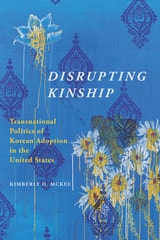
Disrupting Kinship
Transnational Politics of Korean Adoption in the United StatesKimberly D. McKee
University of Illinois Press, 2019
Kimberly D. McKee examines the growth of the neocolonial, multi-million-dollar global industry that shaped these families—a system she identifies as the transnational adoption industrial complex. As she shows, an alliance of the South Korean welfare state, orphanages, adoption agencies, and American immigration laws powered transnational adoption between the two countries. Adoption became a tool to supplement an inadequate social safety net for South Korea's unwed mothers and low-income families. At the same time, it commodified children, building a market that allowed Americans to create families at the expense of loving, biological ties between Koreans. McKee also looks at how Christian Americanism, South Korean welfare policy, and other facets of adoption interact with and disrupt American perceptions of nation, citizenship, belonging, family, and ethnic identity.
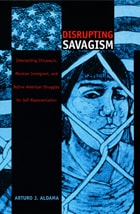
Disrupting Savagism
Intersecting Chicana/o, Mexican Immigrant, and Native American Struggles for Self-RepresentationArturo J. Aldama
Duke University Press, 2001
Arturo J. Aldama begins by presenting a genealogy of the term “savage,” looking in particular at the work of American ethnologist Lewis Henry Morgan and a sixteenth-century debate between Juan Ginés de Sepúlveda and Bartolomé de las Casas. Aldama then turns to more contemporary narratives, examining ethnography, fiction, autobiography, and film to illuminate the historical ideologies and ethnic perspectives that contributed to identity formation over the centuries. These works include anthropologist Manuel Gamio’s The Mexican Immigrant: His Life Story, Leslie Marmon Silko’s Ceremony, Gloria Anzaldúa’s Borderlands/La Frontera, and Miguel Arteta’s film Star Maps. By using these varied genres to investigate the complex politics of racialized, subaltern, feminist, and diasporic identities, Aldama reveals the unique epistemic logic of hybrid and mestiza/o cultural productions.
The transcultural perspective of Disrupting Savagism will interest scholars of feminist postcolonial processes in the United States, as well as students of Latin American, Native American, and literary studies.
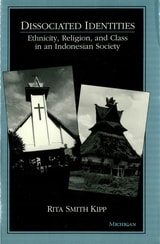
Dissociated Identities
Ethnicity, Religion, and Class in an Indonesian SocietyRita Smith Kipp
University of Michigan Press, 1996
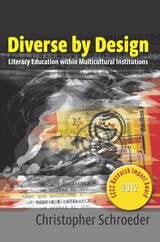
Diverse by Design
Literacy Education within Multicultural InstitutionsChristopher Schroeder
Utah State University Press, 2011
Diversity, despite what we say, disturbs us. In the U.S., we debate linguistic rights, the need for an official language, and educational policies for language minority students. On the one hand, we believe in the rights of individuals, including (at least in the academy) the right to one’s own language. On the other hand, we sponsor a single common language, monolingual and standard, for full participation and communication in both the academy and in U.S. society.
In Diverse by Design, Christopher Schroeder reports on an institutional case study conducted at an officially designated Hispanic-Serving Institution. He gives particular attention to a cohort of Latino students in a special admissions program, to document their experience of a program designed to help students surmount the “obstacle” that ethnolinguistic diversity is perceived to be.
Ultimately, Schroeder argues for reframing multilingualism and multiculturalism, not as obstacles, but as intellectual resources to exploit. While diversity might disturb us, we can overcome its challenges by a more expansive sense of social identity. In an increasingly globalized society, literacy ideologies are ever more critical to educational equity, and to human lives.

Django Generations
Hearing Ethnorace, Citizenship, and Jazz Manouche in FranceSiv B. Lie
University of Chicago Press, 2021
Jazz manouche—a genre known best for its energetic, guitar-centric swing tunes—is among France’s most celebrated musical practices of the twentieth and twenty-first centuries. It centers on the recorded work of famed guitarist Django Reinhardt and is named for the ethnoracial subgroup of Romanies (also known, often pejoratively, as “Gypsies”) to which Reinhardt belonged. French Manouches are publicly lauded as bearers of this jazz tradition, and many take pleasure and pride in the practice while at the same time facing pervasive discrimination. Jazz manouche uncovers a contradiction at the heart of France’s assimilationist republican ideals: the music is portrayed as quintessentially French even as Manouches themselves endure treatment as racial others.
In this book, Siv B. Lie explores how this music is used to construct divergent ethnoracial and national identities in a context where discussions of race are otherwise censured. Weaving together ethnographic and historical analysis, Lie shows that jazz manouche becomes a source of profound ambivalence as it generates ethnoracial difference and socioeconomic exclusion. As the first full-length ethnographic study of French jazz to be published in English, this book enriches anthropological, ethnomusicological, and historical scholarship on global jazz, race and ethnicity, and citizenship while showing how music can be an important but insufficient tool in struggles for racial and economic justice.
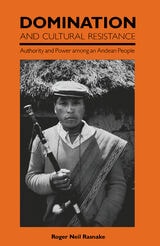
Domination and Cultural Resistance
Authority and Power Among an Andean PeopleRoger Neil Rasnake
Duke University Press, 1988

Doom Patterns
Latinx Speculations and the Aesthetics of ViolenceMaia Gil'Adí
Duke University Press, 2025
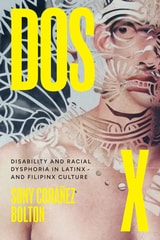
Dos X
Disability and Racial Dysphoria in Latinx and Filipinx CultureSony Coráñez Bolton
University of Texas Press, 2025
An examination of the interconnectedness of brown-racialized people across multiple identities, told through case studies of television, literature, and writing.
As a Filipinx immigrant to the United States, Sony Coráñez Bolton has frequently been mistaken as Mexican. Dos X theorizes such misrecognition. What does it mean to exist in this liminal state, which Coráñez Bolton dubs the “racial uncanny”? What generative possibilities emerge from the presumed interchangeability of Latinx and Filipinx bodies—and from the in-betweenness of brownness as such?
Dos X tracks misrecognition through cultural products like the TV series Undone, Brian Ascalon Roley’s American Son, and the nonfiction work of Jose Antonio Vargas. Misrecognition, Coráñez Bolton argues, produces moments of uncanniness in which subjects experience dysphoric attachments to identities that aren’t supposed to be theirs. In the context of racial capitalism, racial dysphoria is a disability because it undermines certainty about what one’s body is and therefore what role one is meant to play as a laborer. But racial dysphoria can also be revealing. Coráñez Bolton identifies vast potential in this supposed disability, which compels its “sufferers” to confront their shared position within the social, political, and economic organization of capital’s empire, opening new avenues for liberatory solidarity.

Double Cross
Japanese Americans In Black And White ChicagoJacalyn D. Harden
University of Minnesota Press, 2003
Examines relations between peoples of color to offer a compelling new approach to understanding race in America
Since the Great Migration of the early twentieth century, Chicago has been a cauldron of race relations, symbolizing the tenacity of discrimination and segregation. But as in other cities with significant populations of Latinos and Asians, Arabs and Jews, this image belies complex racial dynamics. In Double Cross, Jacalyn D. Harden provides an essential rethinking of the ways we understand and talk about race, using an examination of the Japanese American community of Chicago’s Far North Side to form an innovative new framework for looking at race, identity, and political change.
The Japanese American community in Chicago rapidly expanded between 1940 and 1950 in the aftermath of wartime internment and government relocation programs. Harden tells their story through archival research and interviews with some of the first Japanese Americans who were relocated to Chicago in the 1940s, incorporating her own experiences as an African American scholar who has lived in Japan. The result is a compelling and surprising account of racial interactions, one that clarifies the complex interweaving between black and Asian lives and reclaims a lost history of solidarity between the two groups.Moving from the Great Migration to the “great relocation” to gentrification, Harden explores the shared history of civil rights struggles that firmly links Japanese and African Americans, most importantly the issue of reparations (for internment during World War II and slavery, respectively). She describes the efforts of Japanese Americans to “double-cross the color line” by building coalitions across race, age, and class boundaries, and their vexed position as sometimes “colored,” sometimes white (for example, the Japanese American soldier who was instructed to use the white washrooms at boot camp in Alabama during World War II, while thousands were being relocated to internment camps).Double Cross is a major contribution to our thought about race relations, challenging orthodoxy and shedding new light on the complex identities, conflicting interests, and external forces that have defined the concept of race in the United States.
Duval County Tejanos
An Epic narrative of Liberty and DemocracyAlfredo Cardenas
University of North Texas Press, 2024