Results by title
234 books match the query 'Families' and 9 start with d

Dads, Kids, and Fitness
A Father's Guide to Family HealthMarsiglio, William
Rutgers University Press, 2016
Now more than ever, American dads act as hands-on caregivers who are devoted to keeping themselves and their families healthy. Yet, men are also disproportionately likely to neglect their own health care, diets, and exercise routines—bad habits that they risk passing on to their children.
In Dads, Kids, and Fitness, William Marsiglio challenges dads to become more health-conscious in how they live and raise their children. His conclusions are drawn not only from his revealing interviews with a diverse sample of dads and pediatric healthcare professionals, but also from his own unique personal experiences—as a teenage father who, thirty-one years later, became a later-life dad to a second son. Marsiglio’s research highlights the value of treating dads as central players in what he calls the social health matrix, which can serve both healthy children and those with special needs. He also outlines how schools, healthcare facilities, religious groups, and other organizations can help dads make a positive imprint on their families’ health, fitness, and well-being.
Anchored in compelling life stories of joy, tragedy, and resilience, Dads, Kids, and Fitness extends and deepens public conversation about health at a pivotal historical moment. Its progressive message breathes new life into discussions about fathering, manhood, and health.
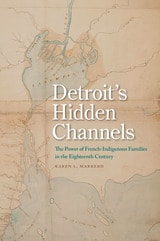
Detroit's Hidden Channels
The Power of French-Indigenous Families in the Eighteenth CenturyKaren L. Marrero
Michigan State University Press, 2020

Disorderly Families
Infamous Letters from the Bastille ArchivesArlette Farge
University of Minnesota Press, 2021
The first English translation of letters of arrest from eighteenth century France held in the archives of the Bastille
Drunken and debauched husbands; libertine wives; vagabonding children. These and many more are the subjects of requests for confinement written to the king of France in the eighteenth century. These letters of arrest (lettres de cachet) from France’s Ancien Régime were often associated with excessive royal power and seen as a way for the king to imprison political opponents. In Disorderly Families, first published in French in 1982, Arlette Farge and Michel Foucault collect ninety-four letters from ordinary families who, with the help of hired scribes, submitted complaints to the king to intervene and resolve their family disputes.
Gathered together, these letters show something other than the exercise of arbitrary royal power, and offer unusual insight into the infamies of daily life. From these letters come stories of divorce and marital conflict, sexual waywardness, reckless extravagance, and abandonment. The letters evoke a fluid social space in which life in the home and on the street was regulated by the rhythms of relations between husbands and wives, or parents and children. Most impressively, these letters outline how ordinary people seized the mechanisms of power to address the king and make demands in the name of an emerging civil order.
Arlette Farge and Michel Foucault were fascinated by the letters’ explosive qualities and by how they both illustrated and intervened in the workings of power and governmentality. Disorderly Families sheds light on Foucault’s conception of political agency and his commitment to theorizing how ordinary lives come to be touched by power. This first English translation is complete with an introduction from the book’s editor, Nancy Luxon, as well as notes that contextualize the original 1982 publication and eighteenth-century policing practices.
Diversity and Disparities
America Enters a New CenturyJohn Logan is professor of sociology and director of the Research Initiative on Spatial Structures in the Social Sciences at Brown University and editor of Diversity and Disparities: America Enters a New Century.
Russell Sage Foundation, 2014
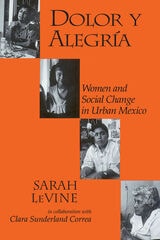
Dolor y Alegria
Women and Social Change in Urban MexicoSarah LeVine; In Collaboration with Clara Sunderland Correa
University of Wisconsin Press, 1993
While many earlier publications have focused on the poor of Latin America who live at the margins of urban life, Dolor y Alegría explores the experiences of ordinary working and lower-middle class women, most of them transplants from villages and small towns to a densely populated city neighborhood. In their early years, many experienced family disruption, emotional deprivation, and economic hardship; but steadily increasing educational opportunities, improved health care, and easily available contraception have significantly altered how the younger women relate to their families and the larger society.
Today’s Mexican schoolgirl, LeVine shows, is encouraged to apply herself to her studies for her own benefit, and the longer she remains in school, the greater the self-confidence she will carry with her into the world of work and later into marriage and motherhood. Hard economic times have forced many married women into the workplace where their sense of personal efficacy is enhanced; at the same time, in the domestic sphere, their earnings allow them greater negotiating power with husbands and male relatives. Changes are not confined to the younger generation. Older women are enjoying better health and living longer; but with adult children either less able or willing to accept responsibility for aged parents than they were in the past, anxiety runs high and family relations are often strained.
Dolor y Alegría takes a close look at the efforts of three generations of Mexican women to redefine themselves in both family and workplace; it shows that today’s young woman has very different expectations of herself and others from those that her grandmother or even her mother had.

Don't Kill in Our Names
Families of Murder Victims Speak Out against the Death PenaltyKing, Rachel
Rutgers University Press, 2003
Could you forgive the murderer of your husband? Your mother? Your son?
Families of murder victims are often ardent and very public supporters of the death penalty. But the people whose stories appear in this book have chosen instead to forgive their loved ones’ murderers, and many have developed personal relationships with the killers and have even worked to save their lives. They have formed a nationwide group, Murder Victims’ Families for Reconciliation (MVFR), to oppose the death penalty.
MVFR members are often treated as either saints or lunatics, but the truth is that they are neither. They are ordinary people who have responded to an extraordinary and devastating tragedy with courage and faith, choosing reconciliation over retribution, healing over hatred. Believing that the death penalty is a form of social violence that only repeats and perpetuates the violence that claimed their loved one’s lives, they hold out the hope of redemption even for those who have committed the most hideous crimes.
Weaving third-person narrative with wrenching first-hand accounts, King presents the stories of ten MVFR members. Each is a heartrending tale of grief, soul searching, and of the challenge to choose forgiveness instead of revenge. These stories, which King sets in the context of the national discussion over the death penalty debate and restorative versus retributive justice, will appeal not only to those who oppose the death penalty, but also to those who strive to understand how people can forgive the seemingly unforgivable.

Doña Barbara
A NovelRómulo Gallegos
University of Chicago Press, 2012
Rómulo Gallegos is best known for being Venezuela’s first democratically elected president. But in his native land he is equally famous as a writer responsible for one of Venezuela’s literary treasures, the novel Doña Barbara. Published in 1929 and all but forgotten by Anglophone readers, Doña Barbara is one of the first examples of magical realism, laying the groundwork for later authors such as Gabriel García Márquez and Mario Vargas Llosa.
Following the epic struggle between two cousins for an estate in Venezuela, Doña Barbara is an examination of the conflict between town and country, violence and intellect, male and female. Doña Barbara is a beautiful and mysterious woman—rumored to be a witch—with a ferocious power over men. When her cousin Santos Luzardo returns to the plains in order to reclaim his land and cattle, he reluctantly faces off against Doña Barbara, and their battle becomes simultaneously one of violence and seduction. All of the action is set against the stunning backdrop of the Venezuelan prairie, described in loving detail. Gallegos’s plains are filled with dangerous ranchers, intrepid cowboys, and damsels in distress, all broadly and vividly drawn. A masterful novel with an important role in the inception of magical realism, Doña Barbara is a suspenseful tale that blends fantasy, adventure, and romance.
Hailed as “the Bovary of the llano” by Larry McMurtry in his new foreword to this book, Doña Barbarais a magnetic and memorable heroine, who has inspired numerous adaptations on the big and small screens, including a recent television show that aired on Telemundo.

Driving the Body Back
Mary Swander
University of Iowa Press, 1998
Dynastic Democracy
Political Families of ThailandYoshinori Nishizaki
University of Wisconsin Press, 2022
Drawing extensively on Thai-language primary sources, including assets documents and cremation volumes for deceased politicians and their kin, Nishizaki traces the intricate blood and marriage connections among Thailand’s political families. These families may fall into two categories: influential commoner families that have held parliamentary seats since 1932 and form the core of Thailand’s dynastic democracy; and upper-class families that are kin to or aligned ideologically with the royal family and have repeatedly challenged dynastic democracy through coups, constitutional changes, and other political maneuvers. Nishizaki’s exploration of dynastic democracy illustrates how democratic pluralism in Thailand has been consistently stifled, to the detriment of ordinary citizens. Dynastic Democracy fleshes out a widely acknowledged yet heretofore empirically unsubstantiated facet of Thai political history—that in Thai politics, family matters.