Results by title
120 books match the query 'Family Life' and 6 start with d
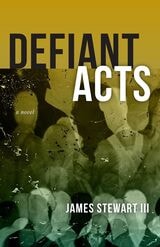
Defiant Acts
A NovelJames Stewart III
Acre Books, 2025
James Stewart III’s powerful debut novel documents the life of a working-class interracial couple and their children in a Chicago suburb in the early 1990s. The father, Jim, is a Black man married to Connie, a white woman with two white sons from a previous marriage. Connie and Jim have three more children together, and the entire family lives in a cramped two-bedroom apartment in a well-to-do, predominantly white community.
Defiant Acts follows the Stewarts through a year in which Jim fights to earn a promotion, the adolescent boys struggle to find themselves, one of the younger children becomes gravely ill, and the parents try to stay afloat in a shaky economy. Within the walls of the Stewarts’ home, race doesn’t factor, but when the family interacts with the outside world, it is inescapable, a basis for identity and inclusion as well as a spur for exclusion and abuse.
Rooted in the tradition of Black authors from Chicago and drawing on the author’s own experiences, Defiant Acts eschews a conventional plot, presenting a series of captured moments—past and present—and multiple perspectives to build a mosaic of the family’s lives. In clear, concise prose, Stewart focuses on the complexities of human relationships and on race relations both in and outside the domestic space, placing emphasis on the values that bind this tight-knit family together: solidarity, care, and hope.
Discovering Successful Pathways in Children's Development
Mixed Methods in the Study of Childhood and Family LifeEdited by Thomas S. Weisner
University of Chicago Press, 2005
This volume includes new studies of minority and immigrant families, school achievement, culture, race and gender, poverty, identity, and experiments and interventions meant to improve family and child contexts. Discovering Successful Pathways in Children's Development will be of enormous value to everyone interested in the issues of human development, education, and social welfare, and among professionals charged with the task of improving the lives of children in our communities.
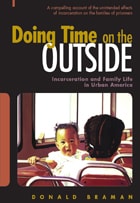
Doing Time on the Outside
Incarceration and Family Life in Urban AmericaDonald Braman
University of Michigan Press, 2004
-Katherine S. Newman
"Doing Time on the Outside brings to life in a compelling way the human drama, and tragedy, of our incarceration policies. Donald Braman documents the profound economic and social consequences of the American policy of massive imprisonment of young African American males. He shows us the link between the broad-scale policy changes of recent decades and the isolation and stigma that these bring to family members who have a loved one in prison. If we want to understand fully the impact of current criminal justice policies, this book should be required reading."
-Mark Mauer, Assistant Director, The Sentencing Project
"Through compelling stories and thoughtful analysis, this book describes how our nation's punishment policies have caused incalculable damage to the fabric of family and community life. Anyone concerned about the future of urban America should read this book."
-Jeremy Travis, The Urban Institute
In the tradition of Elijah Anderson's Code of the Street and Katherine Newman's No Shame in My Game, this startling new ethnography by Donald Braman uncovers the other side of the incarceration saga: the little-told story of the effects of imprisonment on the prisoners' families.
Since 1970 the incarceration rate in the United States has more than tripled, and in many cities-urban centers such as Washington, D.C.-it has increased over five-fold. Today, one out of every ten adult black men in the District is in prison and three out of every four can expect to spend some time behind bars. But the numbers don't reveal what it's like for the children, wives, and parents of prisoners, or the subtle and not-so-subtle effects mass incarceration is having on life in the inner city.
Author Donald Braman shows that those doing time on the inside are having a ripple effect on the outside-reaching deep into the family and community life of urban America. Braman gives us the personal stories of what happens to the families and communities that prisoners are taken from and return to. Carefully documenting the effects of incarceration on the material and emotional lives of families, this groundbreaking ethnography reveals how criminal justice policies are furthering rather than abating the problem of social disorder. Braman also delivers a number of genuinely new arguments.
Among these is the compelling assertion that incarceration is holding offenders unaccountable to victims, communities, and families. The author gives the first detailed account of incarceration's corrosive effect on social capital in the inner city and describes in poignant detail how the stigma of prison pits family and community members against one another. Drawing on a series of powerful family portraits supported by extensive empirical data, Braman shines a light on the darker side of a system that is failing the very families and communities it seeks to protect.
Dongola
A Novel of NubiaIdris Ali
University of Arkansas Press, 1998
The University of Arkansas Press Award for Arabic Literature in Translation, 1997
In this, the first Nubian novel ever translated, Awad Shalali, a Nubian worker in modern Egypt, dreams of Dongola—the capital of medieval Nubia, now lost to the flood waters of the Aswan High Dam. In Dongola, the Nubians reached their zenith. They defeated and dominated Upper Egypt, and their archers, deadly accurate in battle, were renowned as “the bowman of the glance.
Helima, Awad’s wife, must deal with the reality of today’s Nubia, a poverty-stricken bottomland. Men like Awad now work in Cairo for good wages while the women remain at home in squalor, dominated by the Islam of their conquerors and ignorant of the glory now covered by the Nile’s water. Left to tend Awad’s sick mother and his dying country, Halima grows despondent and learns the truths behind the Upper Egyptian lyric: “Time, you are a traitor—what have you done with my love?
Through his characters’ pain and suffering, Idris Ali paints in vibrant detail, with wit and a keen sense of history’s absurdities, the story of cultures and hearts divided, of lost lands, impossible dreams, and abandoned lives.
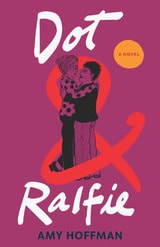
Dot & Ralfie
Amy Hoffman
University of Wisconsin Press, 2022
Dot is caring but hides hurtful secrets. Ralfie’s gruffness masks the physical and emotional pain she endures. Friends and relatives don’t necessarily offer appealing role models for their third act. Dot’s sister Susan is pushing them toward a stuffy “55 or better” community out in the ’burbs, populated by aging straights who mistake the butch Ralfie for a frumpy old man. Eighty-year-old Viola—Dot’s friend and sometime lover—lives alone and refuses help, even as she experiences a devastating fall. Rife with Hoffman’s characteristic wit, Dot & Ralfie takes a hard, sometimes painful look at elder care in the LGBTQ+ community, and the unique struggles that come with getting older outside of heteronormative structures.

Driscoe
Greg Mulcahy
University of Alabama Press, 2026
A stark, hypnotic exploration of memory, identity, and the fractured stories we inherit, and invent, to survive
Driscoe is a stylistically daring novel that plunges deep into the unstable terrain of memory, identity, and the stories we tell to endure collapse. Hypnotic and recursive, it moves through contradiction as both method and meaning, tracing how belief hardens, fractures, and reforms under pressure. The prose hums with unease, balancing precision and disorientation as certainty dissolves into overlapping versions of the same events.
At its center is Jouska, a man suspended between narratives of success and failure, loyalty and betrayal, progress and ruin. He is pursued by obsessive memories of his ex-wife, his brother, and the elusive figure of Driscoe, by turns entrepreneur, fraud, chemist, builder, trickster. Everyone claims a story about Driscoe. None align, yet all insist on their authority. Entangled in familial conflict and his own faltering recollections, Jouska can neither trust nor abandon any version of the truth.
When Jouska receives an email announcing the death of his superior, the already fragile architecture of his life splinters further. What follows is a journey through a bureaucratic labyrinth where death is both confirmed and denied, and where greed, doubt, presence, and absence pulse relentlessly. Driscoe emerges as a narrative dirge for a collapsing American middle class and the myths that sustained it, tracing the impossibility of aligning personal loss with cultural unraveling. This novel will resonate with readers drawn to literary fiction that is intellectually demanding, formally inventive, and attuned to the psychic costs of living amid social and economic decay.