Results by title
153 books match the query 'Genres' and 10 start with d
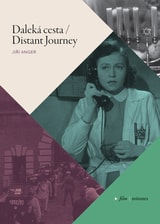
Daleká cesta / Distant Journey
By Jirí Anger
Lever Press, 2026
This volume in the film|minutes series focuses on Alfréd Radok’s Daleká cesta (Distant Journey, 1948), a pioneering Czechoslovak film admired by figures such as André Bazin and Alain Resnais. Renowned for its bold experiments in cinematic montage, the film combines fictional scenes with newsreel footage, Nazi propaganda, and images of liberated concentration camps. Produced shortly after the war, Daleká cesta remains one of the earliest and most formally daring cinematic attempts to grapple with the Holocaust. Drawing on the creators’ ideas of editing as a means of rescuing victims of atrocity—at least momentarily—from historical determinism, the book explores how a montage-like experiment in film analysis can challenge not only deterministic narratives of history, but also the conventions of established theoretical frameworks and academic writing.
Volumes in the film|minutes series cut up films into segments of exactly one minute and transform each minute into an innovative tool for thinking with the film. Each volume works rigorously with the concept of “the minute” as a non-cinematic scale/quantity, a means to zoom in on (dis)orderly fragments that do not necessarily respect the confinements of cinematic form or meaning. As a critical practice, the focus on minutes causes disruptions and displacement that create novel connections and perspectives, and uncovers hidden traces, making it possible to watch each film anew.
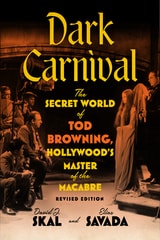
Dark Carnival
The Secret World of Tod Browning, Hollywood’s Master of the MacabreDavid J. Skal
University of Minnesota Press, 2025
The definitive biography of Hollywood horror legend Tod Browning—now revised and expanded with new material
One of the most original and unsettling filmmakers of all time, Tod Browning (1880–1962) began his career buried alive in a carnival sideshow and saw his Hollywood reputation crash with the box office disaster–turned–cult classic Freaks. Penetrating the secret world of “the Edgar Allan Poe of the cinema,” Dark Carnival excavates the story of this complicated, fiercely private man. In this newly revised and expanded edition of their biography first published in 1995, David J. Skal and Elias Savada researched Browning’s recently unearthed scrapbooks and photography archives to add further nuance and depth to their previous portrait of this enigmatic artist.
Skal and Savada chronicle Browning’s turn-of-the-century flight from an eccentric Louisville family into the realm of carnivals and vaudeville, his disastrous first marriage, his rapid climb to riches in the burgeoning silent film industry, and the alcoholism that would plague him throughout his life. They offer a close look at Browning’s legendary collaborations with Lon Chaney and Bela Lugosi as well as the studio politics that brought his remarkable run to an inglorious conclusion. With a revised prologue, epilogue, filmography, and new text and illustrations throughout, Dark Carnival is an unparalleled account of a singular filmmaker and an illuminating depiction of the evolution of horror and the early film industry.

Dark Film, Blood Money
The Economic Unconscious of American Neo-Noir CinemaVernon Shetley
Intellect Books, 2027
Neo-noir films exert their fascination not only through their suspense, shadowy atmosphere, and moral ambiguity, but also through their registration of the experience of American life in the long twilight of the American Dream. With a sharp curatorial eye and an elegant critical voice, Vernon Shetley interprets landmark works from the noir revival of the early 1970s to the present, showing how neo-noir reflects the darkening national mood as postwar prosperity gave way to economic stagnation and inequality, social alienation, and a deepening sense of crisis.
Through close readings of key films and overviews of neo-noir’s treatment of the genre’s defining themes and archetypes—desire and betrayal, corruption and alienation, the private detective and the femme fatale—Shetley delineates neo-noir’s exploration of anxieties about work, money, trust, and exchange. From Chinatown to Mulholland Drive, from Night Moves to Nightmare Alley, neo-noir’s marginalized characters and extreme situations emerge in Shetley’s account as powerful representations of concerns central to economic and social life. Combining illuminating analysis with lucid prose, this book offers scholars and general readers alike a fresh, penetrating understanding of the dynamics of neo-noir filmmaking and its continually renewed vitality over the last five decades.
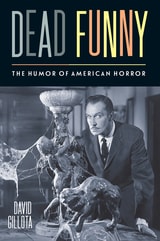
Dead Funny
The Humor of American HorrorDavid Gillota
Rutgers University Press, 2023
Dead Funny locates humor as a key element in the American horror film, one that is not merely used for extraneous “comic relief” moments but often serves to underscore major themes, intensify suspense, and disorient viewers. Each chapter focuses on a different comic style or device, from the use of funny monsters and scary clowns in movies like A Nightmare on Elm Street to the physical humor and slapstick in movies ranging from The Evil Dead to Final Destination. Along the way, humor scholar David Gillota explores how horror films employ parody, satire, and camp to comment on gender, sexuality, and racial politics. Covering everything from the grotesque body in Freaks to the comedy of awkwardness in Midsommar, this book shows how integral humor has been to the development of the American horror film over the past century.
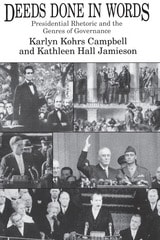
Deeds Done in Words
Presidential Rhetoric and the Genres of GovernanceKarlyn Kohrs Campbell and Kathleen Hall Jamieson
University of Chicago Press, 1990
"Deeds Done in Words is a thoughtful survey of how a democracy uses language to transact its business. Based on an enlivened understanding of genre theory and on numerous pieces of original criticism, Campbell and Jamieson vividly show how central public discourse has become the lifeblood of the American polity."—Roderick Hart, author of The Sound of Leadership
"The rhetoric that issues from the White House is becoming an ever more salient part of what the presidency means and does. This acute inquiry provides a great many insights into the forms, meanings, and functions of presidential discourse. It is an enlightening contribution to our understanding of American politics."—Murray Edelman, author of Constructing the Political Spectacle
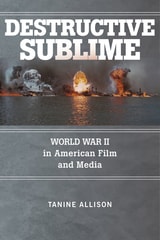
Destructive Sublime
World War II in American Film and MediaAllison, Tanine
Rutgers University Press, 2018
Destructive Sublime traces a new aesthetic history of the World War II combat genre by looking back at it through the lens of contemporary video games like Call of Duty. Allison locates some of video games’ glorification of violence, disruptive audiovisual style, and bodily sensation in even the most canonical and seemingly conservative films of the genre. In a series of case studies spanning more than seventy years—from wartime documentaries like The Battle of San Pietro to fictional reenactments like The Longest Day and Saving Private Ryan to combat video games like Medal of Honor—this book reveals how the genre’s aesthetic forms reflect (and influence) how American culture conceives of war, nation, and representation itself.
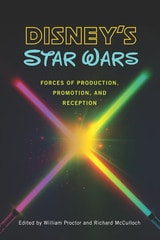
Disney's Star Wars
Forces of Production, Promotion, and ReceptionWilliam Proctor and Richard McCulloch
University of Iowa Press, 2019
Covering the period from Disney’s purchase through the release of The Force Awakens, the book reveals how fans anticipated, interpreted, and responded to the steady stream of production stories, gossip, marketing materials, merchandise, and other sources in the build-up to the movie’s release. From fears that Princess Leia would be turned into a “Disney princess” to collaborative brand management, the authors explore the shifting relationship between fans, texts, and media industries in the context of a crucial rebranding campaign. The result is a fascinating examination of a critical moment in the iconic series’ history.
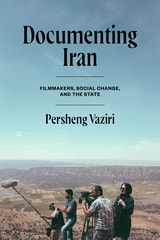
Documenting Iran
Filmmakers and Social ChangePersheng Vaziri
University of Texas Press, 2026
An ethnographic study of how Iranian documentary filmmakers navigate censorship and creativity to shape civic discourse.
Iranian filmmakers have overcome significant obstacles to create a distinctive, globally renowned cinema. Filmmaker and educator Persheng Vaziri explores how documentarians, in particular, have developed a dynamic and creative environment by negotiating limited resources and official constraints. Through their films, they share hard truths—and artful narratives—with fellow Iranians and viewers the world over.
Documenting Iran introduces key historical foundations of documentary filmmaking amid generations of political change—first under the shah and later the Islamic government—with a focus on contemporary filmmakers between 2000 and 2022. Drawing on interviews and ethnographic encounters, Vaziri describes the creative practices and pragmatic choices that provide documentarians relative independence from state censorship and other restrictions on artistic production. Relying on poetic aesthetics, observational filmmaking, international connections, and the accumulated knowledge of a tight-knit local community, filmmakers engage with controversial topics like women’s rights, marriage and divorce laws, environmental degradation, and encounters with Western culture. Documentarians have thus created an activist cinema both subtle and persuasive enough to challenge dogmatic rule and uphold progressive elements of Iranian society.
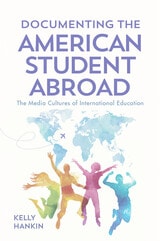
Documenting the American Student Abroad
The Media Cultures of International EducationKelly Hankin
Rutgers University Press, 2021
In Documenting the American Student Abroad, Kelly Hankin explores the documentary media cultures that shape these beliefs, drawing our attention to the broad range of stakeholders and documentary modes involved in defining the core values and practices of study abroad. From study abroad video contests and a F.B.I. produced docudrama about student espionage to reality television inspired educational documentaries and docudramas about Amanda Knox, Hankin shows how the institutional values of "global citizenship," "intercultural communication," and "cultural immersion" emerge in contradictory ways through their representation.
By bringing study abroad and media studies into conversation with one another, Documenting the American Student Abroad: The Media Cultures of International Education offers a much needed humanist contribution to the field of international education, as well as a unique approach to the growing scholarship on the intersection of media and institutions. As study abroad practitioners and students increase their engagement with moving images and digital environments, the insights of media scholars are essential for helping the field understand how the mediation of study abroad rhetoric shapes rather than reflects the field's central institutional ideals
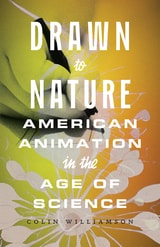
Drawn to Nature
American Animation in the Age of ScienceColin Williamson
University of Minnesota Press, 2025
How twentieth-century developments in science influenced the aesthetics of the burgeoning American cartoon
What do technical renderings of plant cells in trees have to do with Disney’s animated opus Fantasia? Quite a bit, as it turns out: such emergent scientific models and ideas about nature were an important inspiration for Disney’s groundbreaking animated realism. In Drawn to Nature, Colin Williamson presents a vivid portrait of how developments in biology, physics, and geology between 1900 and the long 1960s influenced not just Disney but the American cartoon industry as a whole.
Drawing on original research on the scientific appetites of animators and studios such as Winsor McCay, the Fleischer Brothers, Walt Disney, and United Productions of America, Williamson opens new avenues for understanding the history and aesthetics of cartoons. Interrogating the differences between art and science and reconsidering the realms of dream, magic, and fantasy as they pertain to pop culture, he yields novel proposals for bridging longstanding divides between animation, live-action cinema, and the history of science.
Drawn to Nature not only illuminates the extent to which animators have drawn on scientific insights, it also considers seriously how commercial animations themselves participate in scientific discourse. It revises and revitalizes our existing narratives about the history of American animation to uncover the many ways science informs our collective cultural imagination.