Results by title
116 books match the query 'Health aspects' and 5 start with d
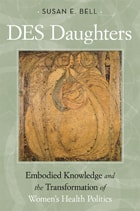
DES Daughters, Embodied Knowledge, and the Transformation of Women's Health Politics in the Late Twentieth Century
Susan E. Bell
Temple University Press, 2009
In DES Daughters, Susan Bell recounts the experiences of this generation of “victims.” In moving, heartfelt narratives, she presents the voices of those women who developed cancer, those who were cancer-free but have concerns about becoming pregnant, and those who suffered other medical and/or reproductive difficulties.
Bell examines the hierarchy of knowledge and power of scientists, doctors, and daughters, tracing the emergence of a feminist health movement. The “embodied knowledge” of these DES daughters prompted them to become advocates and form a social movement that challenged reproductive medical knowledge specifically, but also the politics of women’s health in general. Bell’s important book chronicles the history and future of these grassroots activists born out of illness, suffering, and uncertainty.
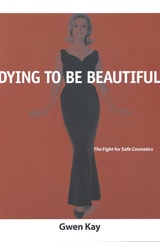
DYING TO BE BEAUTIFUL
FIGHT FOR SAFE COSMETICSGwen Kay
The Ohio State University Press, 2005
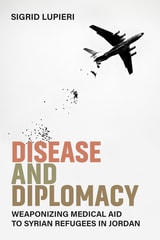
Disease and Diplomacy
Weaponizing Medical Aid to Syrian Refugees in JordanSigrid Lupieri
University of Michigan Press, 2026
When millions of Syrians fled civil war after 2011, international donors and humanitarian organizations mobilized to provide assistance to neighboring countries. Focusing on Jordan—one of the world’s largest refugee hosting states—Disease and Diplomacy investigates how medical aid to refugees operates as an instrument of diplomacy and control within the global refugee system. It argues that health, far from being an apolitical humanitarian good, is a bargaining tool that states commodify to extract resources and concessions.
Drawing on years of field research, interviews, and policy analysis, the book shows how the Jordanian government, international donors, and humanitarian agencies turned healthcare for refugees into a tool for negotiating power, resources, and responsibility. In these cases, refugees, caught within these negotiations, often found their access to care determined not by medical need, but by political calculation. Developing the concept of the weaponization of medical aid, the book extends theories of migration diplomacy and refugee rentierism to show how global power dynamics shape who receives healthcare. The analysis identifies a self-reinforcing “crisis loop” that privileges short-term, highly visible responses while neglecting chronic and long-term needs. Disease and Diplomacy advances an interdisciplinary framework for understanding how humanitarian practices reinforce global inequalities and argues for more equitable approaches to refugee health and responsibility-sharing in the international system.

Disgustatory!
A Gothic Rhetoric of ConsumptionJeremy Tirrell and Kate Maddalena
University of Alabama Press, 2026
A critical exploration of how Gothic tropes infiltrate wellness discourse, revealing the rhetorical forces behind our cultural obsession with food, health, and bodily control.
Disgustatory! A Gothic Rhetoric of Consumption unearths the darkness behind modern obsessions with food, health, and bodily optimization. In this provocative and richly interdisciplinary work, Jeremy Tirrell and Kate Maddalena argue that contemporary discourses around food, medicine, and the body are steeped in Gothic rhetoric—where the promise of purity and control is shadowed by monstrosity, abjection, and the uncanny.
From Soylent and nootropics to probiotics and lab-grown meat, Tirrell and Maddalena show how wellness discourse is haunted by Gothic tropes: body horror, hybridity, and existential dread. Wellness culture, they argue, is not merely pseudoscience or fraud but a complex, persuasive rhetoric that blurs science and myth, purity and decay, medicine and mysticism.
Disgustatory! offers a fresh framework: a “Gothic rhetoric of consumption” that explains why we are drawn to weird diets, digital detoxes, and miracle cures. Through case studies of strange substances and stranger practices—Reddit fasting rituals, magic dirt supplements, fecal transplants— Tirrell and Maddalena reveal how fear, fascination, and the fantasy of bodily control animate our health choices. Each chapter explores a rhetorical element—quantification, hybridity, abjection, optimization, and regulation—to show how food becomes a site of cultural anxiety and existential longing. This book will appeal to rhetoricians, scholars of science and technology studies, cultural theorists, and anyone interested in the strange intersections of health, horror, and persuasion.
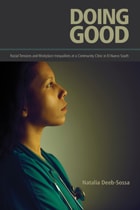
Doing Good
Racial Tensions and Workplace Inequalities at a Community Clinic in El Nuevo SouthNatalia Deeb-Sossa
University of Arizona Press, 2013
Deeb-Sossa argues persuasively that “moral identities” have been constructed by clinic staff. The high-status staff—nearly all of whom are white—see themselves as heroic workers. Mid- and lower-status Latina staff feel like they are guardians of people who are especially needy and deserving of protection. In contrast, the moral identity of African American staffers had previously been established in response to serving “their people.” Their response to the evolving clientele has been to create a self-image of superiority by characterizing Latina/o clients as “immoral,” “lazy,” “working the system,” having no regard for rules or discipline, and being irresponsible parents.
All of the health-care workers want to be seen as “doing good.” But they fail to see how, in constructing and maintaining their own moral identity in response to their personal views and stereotypes, they have come to treat each other and their clients in ways that contradict their ideals.