Results by title
21 books match the query 'Die'
A Death of One's Own
Literature, Law, and the Right to DieJared Stark
Northwestern University Press, 2018
More than a survey or work of advocacy, A Death of One’s Own examines the consequences and limits of the three reasons most often cited for supporting a person’s right to die: that it is justified as an expression of personal autonomy or self-ownership; that it constitutes an act of self-authorship, of “choosing a final chapter” in one’s life; and that it enables what has come to be called “death with dignity.” Probing the intersections of law and literature, Stark interweaves close discussion of major legal, political, and philosophical arguments with revealing readings of literary and testimonial texts by writers including Balzac, Melville, Benjamin, and Améry.
A thought-provoking work that will be of interest to those concerned with law and humanities, biomedical ethics, cultural history, and human rights, A Death of One’s Own opens new and suggestive paths for thinking about the history of modern death as well as the unsettled future of the right to die.
And a Time to Die
How American Hospitals Shape the End of LifeSharon R. Kaufman
University of Chicago Press, 2006
“An act of courage and a public service.”—San Francisco Chronicle
“This beautifully synthesized and disquieting account of how hospital patients die melds disciplined description with acute analysis, incorporating the voices of doctors, nurses, social workers, and patients in a provocative analysis of the modern American quest for a ‘good death.’”—Publishers Weekly
“Kaufman exposes the bureaucratic and ethical quandaries that hover over the modern deathbed.”—Psychology Today
“Kaufman’s analysis illuminates the complexity of the care of critically ill and dying patients [and] the ambiguity of slogans such as ‘death with dignity,’ ‘quality of life,’ and ‘stopping life support.’ . . . Thought-provoking reading for everyone contemplating the fate of us all.”—New England Journal of Medicine
Attack and Die
Civil War Military Tactics and the Southern HeritageGrady McWhiney
University of Alabama Press, 1984
Why did the Confederacy lose so many men? The authors contend that the Confederates bled themselves nearly to death in the first three years of the war by making costly attacks more often than the Federals. Offensive tactics, which had been used successfully by Americans in the Mexican War, were much less effective in the 1860s because an improved weapon—the rifle—had given increased strength to defenders. This book describes tactical theory in the 1850s and suggests how each related to Civil War tactics. It also considers the development of tactics in all three arms of the service during the Civil War.
In examining the Civil War the book separates Southern from Northern tactical practice and discusses Confederate military history in the context of Southern social history. Although the Southerners could have offset their numerical disadvantage by remaining on the defensive and forcing the Federals to attack, they failed to do so. The authors argue that the Southerners’ consistent favoring of offensive warfare was attributable, in large measure, to their Celtic heritage: they fought with the same courageous dash and reckless abandon that had characterized their Celtic forebears since ancient times. The Southerners of the Civil War generation were prisoners of their social and cultural history: they attacked courageously and were killed—on battlefields so totally defended by the Federals that “not even a chicken could get through.”
Dance for Me When I Die
Cristian Alarcón
Duke University Press, 2019
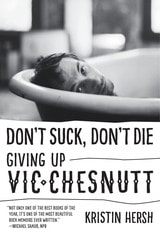
Don't Suck, Don't Die
Giving Up Vic ChesnuttBy Kristin Hersh, Foreword by Amanda Petrusich
University of Texas Press, 2015
“Friend, asshole, angel, mutant,” singer-songwriter Vic Chesnutt “came along and made us gross and broken people seem . . . I dunno, cooler, I guess.” A quadriplegic who could play only simple chords on his guitar, Chesnutt recorded seventeen critically acclaimed albums before his death in 2009, including About to Choke, North Star Deserter, and At the Cut. In 2006, NPR placed him in the top five of the ten best living songwriters, along with Bob Dylan, Tom Waits, Paul McCartney, and Bruce Springsteen. Chesnutt’s songs have also been covered by many prominent artists, including Madonna, the Smashing Pumpkins, R.E.M., Sparklehorse, Fugazi, and Neutral Milk Hotel.
Kristin Hersh toured with Chesnutt for nearly a decade and they became close friends, bonding over a love of songwriting and mutual struggles with mental health. In Don’t Suck, Don’t Die, she describes many seemingly small moments they shared, their free-ranging conversations, and his tragic death. More memoir than biography, Hersh’s book plumbs the sources of Chesnutt’s pain and creativity more deeply than any conventional account of his life and recordings ever could. Chesnutt was difficult to understand and frequently difficult to be with, but, as Hersh reveals him, he was also wickedly funny and painfully perceptive. This intimate memoir is essential reading for anyone interested in the music or the artist.
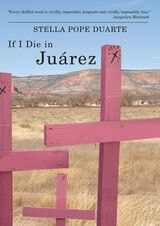
If I Die in Juárez
Stella Pope Duarte
University of Arizona Press, 2008
Based on the author’s interviews with relatives of murdered women, If I Die in Juárez is brilliantly crafted to give readers the experience of walking in the shoes of women who daily risk being abducted and murdered in the “capital city of murdered women,” joining thousands of others who for more than a decade have disappeared from Juárez, las desaparecidas, brutally murdered by assassins who have gone unpunished. The agony of one of the darkest tales in human history brings to light a strange hope, illusive yet constant, resisting lies, betrayal, and the desert’s silent sentence of death.
Read an in-depth review of If I Die in Juárez here or click here for a study guide. If I Die in Juárez was also reviewed on KNAU's Southwest Book Review program. Listen here!
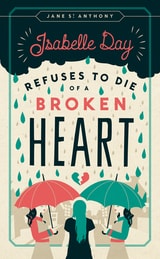
Isabelle Day Refuses to Die of a Broken Heart
Jane St. Anthony
University of Minnesota Press, 2018
In Milwaukee, Isabelle Day had a house. And she had a father. This year, on Halloween, she has half of a house in Minneapolis, a mother at least as sad as she is, and a loss that’s too hard to think—let alone talk—about. It’s the Midwest in the early 1960s, and dads just don’t die . . . like that.
Hovering over Isabelle’s new world are the duplex’s too-attentive landladies, Miss Flora (“a lovely dried flower”) and her sister Miss Dora (“grim as roadkill”), who dwell in a sea of memories and doilies; the gleefully demonic Sister Mary Mercy, who rules a school awash in cigarette smoke; and classmates steady Margaret and edgy Grace, who hold out some hope of friendship. As Isabelle’s first tentative steps carry her through unfamiliar territory—classroom debacles and misadventures at home and beyond, time trapped in a storm-tossed cemetery and investigating an inhospitable hospital—she begins to discover that, when it comes to pain and loss, she might actually be in good company.
In light of the elderly sisters’ lives, Grace and Margaret’s friendship, and her father’s memory, she just might find the heart and humor to save herself. With characteristic sensitivity and wit, Jane St. Anthony reveals how a girl’s life clouded with grief can also hold a world of promise.
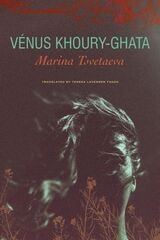
Marina Tsvetaeva
To Die in YelabugaVénus Khoury-Ghata
Seagull Books, 2022
The life of Marina Tsvetaeva (1892–1941) coincided with turbulent years in Russian history. She was an eminent Russian poet and a passionate lover involved with several men at the same time, including Rilke, who chose Lou Andreas-Salomé over her, and Pasternak, who married someone else, but protected her until her death. Her life included many trials such as her poverty during the grueling Russian civil war, her young daughter’s death from hunger in an orphanage, and the death of her husband, who fought against the Communist regime and was executed by the Soviet state. Rejected by official poets, then by the wealthy Russian diaspora in France, she finally returned to her country to end her wandering life. She hanged herself from a rope in an attic from which she could see the field where she had dug with bare hands for potatoes abandoned by local farmers. A poet-martyr of the Stalinist era—buried in an unmarked plot in the cemetery of Yelabuga—Tsvetaeva is brought to life in this poetic biographical novel by celebrated Lebanese author Vénus Khoury-Ghata.
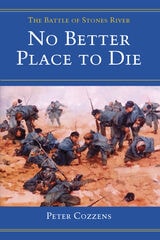
No Better Place to Die
THE BATTLE OF STONES RIVERPeter Cozzens
University of Illinois Press, 1990
It was here that both the Union and Confederate armies lost over one-quarter of their forces in battle casualties. The Confederacy's defeat at Stones River unleashed a wave of dissension that crippled the army's high command and ultimately closed Tennessee to the South for two years. The loss deterred the British and French from coming to the aid of the South in the Civil War, with tragic effects for the Southern cause.
In the 126 years since the guns fell silent at Stones River, few books have examined the bloody clash and its impact on the war's subsequent outcome. No Better Place to Die recounts the events and strategies that brought the two armies to the banks of this central Tennessee river on December 31, 1862. Cozzens re-creates the battle itself, following the movements and performance of individual regiments. A series of maps clarifies the combat activity.
Cozzens frequently lets the men who fought the battle speak for themselves, through letters, diaries, memoirs, and battlefield communications. Here we learn about such critical moments as General Philip Sheridan's gallant defense along the Wilkinson Pike, one of the war's most tenacious stands against overwhelming odds, and the bravery in battle exemplified by Brekenridge's attack on the Union left, a doomed assault with the poignancy of Pickett's charge.
Over twenty thousand Union and Confederate soldiers were killed, wounded, or captured in the bloody New Year's battle of Stone's River. The impact of their struggle extended far beyond the thousands of shattered human lives, ultimately imperiling the fortunes of the Confederacy. No Better Place to Die pays tribute to the heroes, the scoundrels, the mistakes, the bravery, and the grief at Stone's River.
Stay Black and Die
On Melancholy and GeniusI. Augustus Durham
Duke University Press, 2023
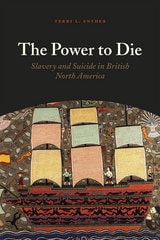
The Power to Die
Slavery and Suicide in British North AmericaTerri L. Snyder
University of Chicago Press, 2015
In The Power to Die, Terri L. Snyder excavates the history of slave suicide, returning it to its central place in early American history. How did people—traders, plantation owners, and, most importantly, enslaved men and women themselves—view and understand these deaths, and how did they affect understandings of the institution of slavery then and now? Snyder draws on ships’ logs, surgeons' journals, judicial and legislative records, newspaper accounts, abolitionist propaganda and slave narratives, and many other sources to build a grim picture of slavery’s toll and detail the ways in which suicide exposed the contradictions of slavery, serving as a powerful indictment that resonated throughout the Anglo-Atlantic world and continues to speak to historians today.
The Right to Die with Dignity
An Argument in Ethics, Medicine, and LawCohen-Almagor, Raphael
Rutgers University Press, 2001
There are few issues more divisive than what has become known as “the right to die.” One camp upholds “death with dignity,” regarding the terminally ill as autonomous beings capable of forming their own judgment on the timing and process of dying. The other camp advocates “sanctity of life,” regarding life as intrinsically valuable, and that should be sustained as long as possible. Is there a right answer?
Raphael Cohen-Almagor takes a balanced approach in analyzing this emotionally charged debate, viewing the dispute from public policy and international perspectives. He offers an interdisciplinary, compelling study in medicine, law, religion, and ethics. It is a comprehensive look at the troubling question of whether physician-assisted suicide should be allowed. Cohen-Almagor delineates a distinction between active and passive euthanasia and discusses legal measures that have been invoked in the United States and abroad. He outlines reasons non-blood relatives should be given a role in deciding a patient’s last wishes. As he examines euthanasia policies in the Netherlands and the 1994 Oregon Death with Dignity Act, the author suggests amendments and finally makes a circumscribed plea for voluntary physician-assisted suicide.
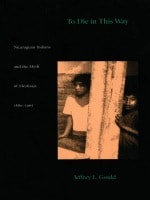
To Die in this Way
Nicaraguan Indians and the Myth of Mestizaje, 1880-1965Jeffrey L. Gould
Duke University Press, 1998
Through interviews with indigenous peoples and records of the elite discourse that suppressed the expression of cultural differences and rationalized the destruction of Indian communities, Gould tells a story of cultural loss. Land expropriation and coerced labor led to cultural alienation that shamed the indigenous population into shedding their language, religion, and dress. Beginning with the 1870s, Gould historicizes the forces that prompted a collective movement away from a strong identification with indigenous cultural heritage to an “acceptance” of a national mixed-race identity.
By recovering a significant part of Nicaraguan history that has been excised from the national memory, To Die in This Way critiques the enterprise of third world nation-building and thus marks an important step in the study of Latin American culture and history that will also interest anthropologists and students of social and cultural historians.

To Live and Die in America
Class, Power, Health and HealthcareRobert Chernomas and Ian Hudson
Pluto Press, 2013
To Live and Die in America details how the United States has among the worst indicators of health in the industrialised world and at the same time spends significantly more on its health care system than any other industrial nation.
Robert Chernomas and Ian Hudson explain this contradictory phenomenon as the product of the unique brand of capitalism that has developed in the US. It is this particular form of capitalism that created both the social and economic conditions that largely influence health outcomes and the inefficient, unpopular and inaccessible health care system that is incapable of dealing with them.
The authors argue that improving health in America requires a change in the conditions in which people live and work as well as a restructured health care system.
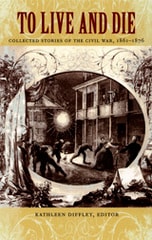
To Live and Die
Collected Stories of the Civil War, 1861–1876Kathleen Diffley, ed.
Duke University Press, 2002
The authors, who include Louisa May Alcott and Mark Twain, depict the horrors of the battlefield, the suffering in prison camps and field hospitals, and the privations of the home front. In these pages, bushwhackers carry the war to out-of-the-way homesteads, spies work households from the inside, journeying paymasters rely on the kindness of border women, and soldiers turn out to be girls. The stories are populated with nurses, officers, speculators, preachers, slaves, and black troops, and they take place in cities, along the frontier, and on battlefields from Shiloh to Gettysburg.
The book opens with a prewar vigilante attack on the Underground Railroad and a Kansas parson in Henry King’s “The Cabin at Pharoah’s Ford” and concludes with an ex-slave recalling the loss of her remaining son in Twain’s “A True Story.” In between are stories written by both women and men that were published in magazines from the South and West as well as the culturally dominant Northeast. Wartime wood engravings highlight the text. Kathleen Diffley’s introduction provides literary and historical background, and her commentary introduces readers to magazine authors as well as the deepening disruptions of a country at war.
Just as they did for nineteenth-century readers, these stories will bring the war home to contemporary readers, giving shape to a crisis that rocked the nation then and continues to haunt it now.
Too Poor to Die
The Hidden Realities of Dying in the MarginsAmy Shea
Rutgers University Press, 2025
Gold Winner in the Death & Dying Category of the Nautilus Book Awards
Winner of the 2025 Book Excellence Awards in the Death and Dying Category
Silver Winner in the Reader Views Literary Awards in the Humanities and Societal Issues categories
Best Nonfiction Book in TalkDeath's Reader Choice Awards
CALIBA Golden Poppy Award Finalist — Nonfiction category
Death is the great equalizer, but not all deaths are created equal. In recent years, there has been an increased interest and advocacy concerning end-of-life and after-death care. An increasing number of individuals and organizations from health care to the funeral and death care industries are working to promote and encourage people to consider their end-of-life wishes. Yet, there are limits to who these efforts reach and who can access such resources. These conversations come from a place of good intentions, but also from a place of privilege.
Too Poor to Die: The Hidden Realities of Dying in the Margins, a collection of closely connected essays, takes the reader on a journey into what happens to those who die while experiencing homelessness or who end up indigent or unclaimed at the end of life. Too Poor to Die bears witness to the disparities in death and dying faced by some of society’s most vulnerable and marginalized and asks the reader to consider their own end-of-life and disposition plans within the larger context of how privilege and access plays a role in what we want versus what we get in death.
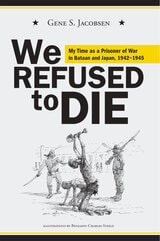
We Refused to Die
My time as a prisoner of war in Bataan and Japan, 1942-1945Gene S Jacobsen
University of Utah Press, 2004
In engaging, direct prose, Jacobsen’s three-and-a-half year experience as a prisoner of war takes the reader on a brutal and harrowing march through hatred and forgiveness, fortitude and freedom. We Refused to Die is an honest memoir that shines light on one of history’s darkest moments.
When I Came to Die
Process and Prophecy in Thoreau's Vision of DyingAudrey Raden
University of Massachusetts Press, 2017
When I Came to Die suggests that throughout his writings, Thoreau communicated that knowing how to die properly is an art and a lifelong study, a perspective that informed his ideas about politics, nature, and individualism. With this insight, Raden opens a dialogue that will engage both Thoreauvians and those interested in American literature and thought.
When a Robot Decides to Die and Other Stories
Francisco García González
Vanderbilt University Press, 2021
With a scholarly introduction by translator Bradley J. Nelson that introduces García González's oeuvre to contemporary readers and scholars of Spanish-language literature, this science fiction collection introduces Anglophones to this unique author.
García González turns a black mirror on contemporary society and its relation both to history and to the future. His insightfulness and relevance draw comparisons with Margaret Atwood, Neal Stephenson, and China Miéville, though his verbal economy and elegance are more akin to Cormac McCarthy, producing both disturbingly uncanny violence and unexpected comedy.
Who Deserves to Die?
Constructing the Executable SubjectAustin Sarat
University of Massachusetts Press, 2011
How do we select those who will be subject to capital punishment? How do we identify the worst of the worst and decide who among them can and should be executed? Today these questions are more pressing than they have ever been. As the number of people sentenced to death and executed declines in the United States, those who are executed stand out as distinctive kinds of criminals, distinctive kinds of people. Does a death sentence affirm or deny their humanity? Is such a sentence an act of revenge or a carefully calculated act of justice?
These are more than questions for policy and law. They are one way of getting a handle on how our culture understands what makes life worth preserving and of delving into its complex calculus of punishment and retribution. Who Deserves to Die? brings together a distinguished group of death penalty scholars to assess the forms of legal subjectivity and legal community that are supported and constructed by the doctrines and practices of punishment by death in the United States. They help us understand what we do and who we become when we decide who is fit for execution.
In addition to the editors, contributors include Vanessa Barker, Thomas L. Dumm, Daniel Markel, Linda Meyer, Ruth A. Miller, Ravit Reichman, Susan R. Schmeiser, Mateo Taussig-Rubbo, and Robert Weisberg.
Zombie History
Lies About Our Past that Refuse to DiePeter Charles Hoffer
University of Michigan Press, 2020