Results by title
28164 books match the query 'History' and 908 start with d
D'Albuquerque's Children
Performing Tradition in Malaysia's Portuguese SettlementMargaret Sarkissian
University of Chicago Press, 2000
Using historical and ethnographic data, Margaret Sarkissian reveals that this music and dance draws on an eclectic array of influences that span the Portuguese diaspora (one song conjures up images of Lucille Ball impersonating Carmen Miranda on "I Love Lucy"). Ironically, she shows, what began as a literate tradition in the 1950s has now become an oral one so deeply rooted in Settlement life that the younger generation, like the tourists, now see it as an unbroken heritage stretching back almost 500 years. A fascinating case of "orientalism in reverse," D'Albuquerque's Children illuminates the creative ways in which one community has adapted to life in a postcolonial world.
D-Day Through French Eyes
Normandy 1944Mary Louise Roberts
University of Chicago Press, 2014
Silent parachutes dotting the night sky—that’s how one woman in Normandy in June 1944 learned that the D-Day invasion was underway. Though they yearned for liberation, the people of Normandy steeled themselves for further warfare, knowing that their homes, land, and fellow citizens would have to bear the brunt of the attack. In D-Day through French Eyes, Mary Louise Roberts resets our view of the usual stories of that momentous operation, taking readers across the Channel to view the invasion anew. Roberts builds her history from an impressive range of gripping first-person accounts from French citizens, reinvigorating a story we thought we knew. The result is a fresh perspective on the heroism, sacrifice, and achievement of D-Day.
D-Day in History and Memory
The Normandy Landings in International Remembrance and CommemorationMichael Dolski
University of North Texas Press, 2014
D.W. Griffith and the Origins of American Narrative Film
The Early Years at BiographTom Gunning
University of Illinois Press, 1991
In this comprehensive historical investigation, drawing on films preserved by the Library of Congress and the Museum of Modern Art, Tom Gunning reveals that the remarkable cinematic changes between 1900 and 1915 were a response to the radical reorganization within the film industry and the evolving role of film in American society. The Motion Picture Patents Company, the newly formed Film Trust, had major economic aspirations. The newly emerging industry's quest for a middle-class audience triggered Griffith's early experiments in film editing and imagery. His unique solutions permanently shaped American narrative film.

DC Sports
The Nation's Capital at PlayChris Elzey
University of Arkansas Press, 2015
A southern city at heart, Washington drew a strong color line in every facet of people’s lives. Race informed how sport was played, written about, and watched in the city. In 1962, the Redskins became the final National Football League team to integrate. That same year, a race riot marred the city’s high-school championship game in football. A generation later, race as an issue resurfaced after Georgetown’s African American head coach John Thompson Jr. led the Hoyas to national prominence in basketball.
DC Sports takes a hard look at how sports in one city has shaped culture and history, and how culture and history inform sports. This informative and engaging collection will appeal to fans and students of sports and those interested in the rich history of the nation’s capital.
DECIPHERING RACE
WHITE ANXIETY, RACIAL CONFLICT, & THE TURN TO FICTION IN MID-VICTORIAN ENGLISH PROSELaura Callanan
The Ohio State University Press, 2005
In this manner these narratives confront the complexity, indeterminacy, and irrationality of both racial difference and the systems put in place to understand that difference. Deciphering Race unpacks this narrative turn to the aesthetic in writings by white English individuals and thus reveals the instability at the heart of cultural understanding of race and racial tropes at mid-century. This series of readings will help to see how figurative structures, while providing a bridge between different cultures and epistemologies, also reinforce a distance that keeps groups separate. Only by disentangling these structures, by addressing and unpacking our assumptions and narratives about those different from ourselves, and by understanding our deep cultural anxiety and investment in these ways of talking about one another, can we begin to create the conditions for productive, local understanding between different cultures, races, and communities.
DESIGNING MODERN AMERICA
THE REGIONAL PLANNING ASSOCIATION OF AMERICA AND ITS MEMBERSEdward K. Spann
The Ohio State University Press, 1996
This fascinating book examines the Regional Planning Association of America (RPAA), a loosely organized association of ambitious and influential planners who hoped to guide the new urban and industrial developments of the early twentieth century and thereby design a radically improved America. After discussing the roots of this effort in the Progressive and World War I periods, Edward K. Spann traces the development of the RPAA from its formation in 1923 through the decades of its greatest effort (which ended in 1934) to its decline and ultimate demise in the late 1930s. Taking a biographical approach and drawing on both published works and private correspondence, the book focuses on the richly varied thoughts and activities of the leading members of the RPAA regarding significant aspects of urban and regional planning.
The members of the RPAA discussed here include Charles Harris Whitaker, Frederick L. Ackerman, Robert D. Kohn, Benton MacKaye, Clarence Stein, Lewis Mumford, Henry Wright, Robert Bruere, Stuart Chase, Edith Elmer Wood, and Catherine Bauer. Spann threads together the philosophies and work of these individuals by focusing on important points in the movement's history, such as the emergence of a community housing movement in World War I, the development of Benton MacKaye's seminal idea of the Appalachian Trail as an instrument for rural reconstruction, and Lewis Mumford's efforts to foster the idealism he thought necessary for successful planning. Spann also looks at Clarence Stein's work with regional planning in New York State during the governorship of Alfred E. Smith; the birth of the RPAA and its early publicity efforts, which culminated in the famous regional planning issue of Survey Graphic; the RPAA's differences with the Regional Plan of New York; the relationship between the RPAA and Franklin Delano Roosevelt during the Great Depression; and the early years of the Tennessee Valley Authority.
This work should appeal not only to students of city and regional planning, of architecture, and of environmentalism, but to all those interested in the intellectual developments of the period between 1914 and 1938, especially as they relate to an important phase of modernization in the United States.
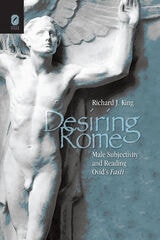
DESIRING ROME
Male Subjectivity and Reading Ovid’s FastiRichard J. King
The Ohio State University Press, 2006
Desiring Rome expands upon recent recognition of the Fasti’s centrality to early imperial politics by situating the poem’s “failure” within broader negotiations of identity between early imperial citizen-subjects and the cultural ideology of Roman manhood.
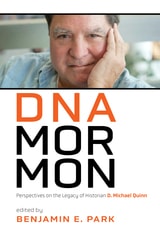
DNA Mormon
Perspectives on the Legacy of Historian D. Michael QuinnBenjamin E. Park
Signature Books, 2022
This compilation is a rigorous and riveting assessment of Quinn’s legacy. In this volume, scholars examine him as a historical figure who helps us better understand modern Mormonism. They also probe his role as a historiographical titan. These essays enable us to analyze his influence on scholarship that both preceded and followed him. More than an investigation into his life and work, DNA Mormon uncovers the world in which he lived.
DOING THE RIGHT THING
Collective Action and Procedural Choice in the New Legislative ProcessLawrence Becker
The Ohio State University Press, 2005
Doing the Right Thing examines the use of extraordinary legislative procedures in four cases in the U.S. Congress to accomplish policy objectives that many political scientists would argue are impossible to achieve. It not only shows that Congress is capable of imposing parochial costs in favor of general benefits but it argues that Congress is able to do so in a variety of policy areas through the use of very different kinds of procedural mechanisms that are underappreciated.
The book opens by developing a theory of procedural choice to explain why Congress chooses to delegate in differing degrees in dealing with similar kinds of policy problems. The theory is then applied to four narrative case studies—military base closures, the Yucca Mountain Project, NAFTA, and the Tax Reform Act of 1986—that both show the variety of factors that impact procedural choice and highlight how our national legislature was able to “do the right thing.”
The book concludes by pointing to the variety of ways in which Congress will be confronted with similar policy problems in the coming years and offering some lessons from these cases about what kinds of procedures and policy outcomes we might expect. In short, Congress is remarkably adept at “doing the right thing,” even under difficult circumstances, but only when legislators are willing to manipulate procedures in all the necessary ways.

DOWN ON PARCHMAN FARM
THE GREAT PRISON IN THE MISSISSIPPI DELTAWILLIAM BANKS TAYLOR
The Ohio State University Press, 1999
DYING TO BE BEAUTIFUL
FIGHT FOR SAFE COSMETICSGwen Kay
The Ohio State University Press, 2005

Dadibaajim
Returning Home through NarrativeHelen Olsen Agger
University of Manitoba Press, 2021
Daemons Are Forever
Contacts and Exchanges in the Eurasian PandemoniumDavid Gordon White
University of Chicago Press, 2021
Daguerreotypes
Fugitive Subjects, Contemporary ObjectsLisa Saltzman
University of Chicago Press, 2015
By examining this idea of photography as articulated in literature, film, and the graphic novel, Daguerreotypes demonstrates how photography secures identity for figures with an otherwise unstable sense of self. Lisa Saltzman argues that in many modern works, the photograph asserts itself as a guarantor of identity, whether genuine or fabricated. From Roland Barthes’s Camera Lucida to Ridley Scott’s Blade Runner, W. G. Sebald’s Austerlitz to Alison Bechdel’s Fun Home—we find traces of photography’s “fugitive subjects” throughout contemporary culture. Ultimately, Daguerreotypes reveals how the photograph, at once personal memento and material witness, has inspired a range of modern artistic and critical practices.
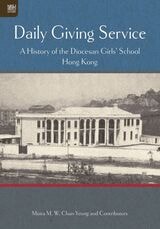
Daily Giving Service
A History of the Diocesan Girls’ SchoolMoira M. W. Chan-Yeung
Hong Kong University Press, 2022
The Diocesan Girls’ School is one of Hong Kong’s oldest girls’ schools, founded during British rule in 1860. As an alumna of the school’s Class of 1955, Professor Moira Chan-Yeung traces the history of her alma mater from its establishment through its development over the last 150 years in Daily Giving Service. Having grown alongside Hong Kong as it expanded from a small city to a global metropolitan center, Diocesan has become one of the most prominent girl’s schools in the city and serves a significant role in the history of education and growth in the region. With contributions from other alumni, this book recounts various aspects of school life throughout different eras, illustrating the connection between the socioeconomic development of Hong Kong and this cornerstone of regional education.

Daily Life and Demographics in Ancient Japan
William Wayne Farris
University of Michigan Press, 2009
Daily Life in Johnson's London
Richard B. Schwartz
University of Wisconsin Press, 1983
"Outstanding. . . . The author packs a remarkable quantity of detail into a small space, even including a discussion of price and wage figures that will be intelligible to Americans [today]. . . . His prose is lucid, graceful, lively. Generously illustrated, the book also includes an extensive bibliography."—Choice
"An excellent source for English Literature and history students studying this period or Samuel Johnson."—Booklist
Daily Life in Portugal in the Late Middle Ages
A.H. de Oliviera Marques; Translated by S.S. Wyatt
University of Wisconsin Press, 1971
Daily Living in the Twelfth Century
Urban Tigner Holmes, Jr.
University of Wisconsin Press, 1962
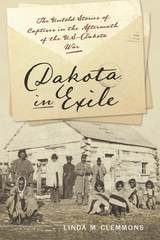
Dakota in Exile
The Untold Stories of Captives in the Aftermath of the U.S.-Dakota WarLinda M. Clemmons
University of Iowa Press, 2019
Historian Linda Clemmons examines the surviving letters from Robert and Sarah; other Dakota language sources; and letters from missionaries, newspaper accounts, and federal documents. She blends both the personal and the historical to complicate our understanding of the development of the Midwest, while also serving as a testament to the resilience of the Dakota and other indigenous peoples who have lived in this region from time immemorial.
Dakotah
The Return of the FutureBy Charles Bowden; foreword by Terry Tempest Williams
University of Texas Press, 2019
“[Dakotah] is about hope, disappointment, impermanence and erasure. . . . This is a meditation Bowden fans will not want to miss.”—Arizona Daily Star
“Bowden’s prose—bleak, fierce, surreal like a swirling sandstorm, like an endlessly ramifying arroyo—provided for me, in its rejection of facile theses and clear-cut answers, an honest mapping of our contemporary predicament.”—Leath Tonino, Lit Hub
The fourth installment in Charles Bowden's acclaimed “Unnatural History of America,” Dakotah uses America’s Great Plains as a lens—sometimes sullied, sometimes shattered, but always sharp—for observing pivotal moments in the lives of anguished figures, including himself.
In scenes that are by turns wrenching and poetic, Bowden describes the Sioux’s forced migrations and rebellions alongside his own ancestors’ migrations from Europe to Midwestern acres beset by unforgiving winters. He meditates on the life of his resourceful mother and his philosophical father, who rambled between farm communities and city life. Interspersed with these images are clear-eyed, textbook-defying anecdotes about Lewis and Clark, Daniel Boone, and, with equal verve, twentieth-century entertainers “Pee Wee” Russell, Peggy Lee, and other musicians. The result is a kaleidoscopic journey that penetrates the senses and redefines the notion of heartland. Dakotah is a powerful ode to loss from one of our most fiercely independent writers.

Dale L. Morgan
Mormon and Western Histories in TransitionRichard L. Saunders
University of Utah Press, 2023
This is the first biography of Dale L. Morgan, preeminent Western historian of the fur trade, historic trails, and the Latter Day Saint movement. The book explores how, despite personal struggles, Morgan committed his life to tracking down sources and interpreting the past on the strength of documentary evidence. Connecting Morgan’s life with some of the broad cultural changes that shaped his experiences, this book engages with methodological shifts in the historical profession, the mid-twentieth-century collision of interpretations within Latter Day Saint history, and the development of a descriptive, scholarly approach to that history.
Morgan’s body of work and commitment to serious scholarship signaled the start of new ways of understanding, studying, and retelling history, and he motivated a generation of historians from the 1930s to the 1970s to transform their historical approaches. Sounding board, mentor, and close friend to Nels Anderson, Fawn Brodie, Juanita Brooks, Bernard DeVoto, Wallace Stegner, and Leonard Arrington, Dale Morgan is the common factor linking this influential generation of mid-twentieth-century historians of western America.
Dalit Studies
Ramnarayan S. Rawat and K. Satyanarayana, editors
Duke University Press, 2016
Dallas
The Making of a Modern CityBy Patricia Evridge Hill
University of Texas Press, 1996
From the ruthless deals of the Ewing clan on TV's "Dallas" to the impeccable customer service of Neiman-Marcus, doing business has long been the hallmark of Dallas. Beginning in the 1920s and 1930s, Dallas business leaders amassed unprecedented political power and civic influence, which remained largely unchallenged until the 1970s.
In this innovative history, Patricia Evridge Hill explores the building of Dallas in the years before business interests rose to such prominence (1880 to 1940) and discovers that many groups contributed to the development of the modern city. In particular, she looks at the activities of organized labor, women's groups, racial minorities, Populist and socialist radicals, and progressive reformers—all of whom competed and compromised with local business leaders in the decades before the Great Depression.
This research challenges the popular view that business interests have always run Dallas and offers a historically accurate picture of the city's development. The legacy of pluralism that Hill uncovers shows that Dallas can accommodate dissent and conflict as it moves toward a more inclusive public life. Dallas will be fascinating and important reading for all Texans, as well as for all students of urban development.
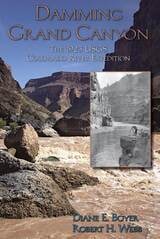
Damming Grand Canyon
The 1923 USGS Colorado River ExpeditionDiane E Boyer and Robert H. Webb
Utah State University Press, 2007
In 1923, America paid close attention, via special radio broadcasts, newspaper headlines, and cover stories in popular magazines, as a government party descended the Colorado to survey Grand Canyon. Fifty years after John Wesley Powell's journey, the canyon still had an aura of mystery and extreme danger. At one point, the party was thought lost in a flood.
Something important besides adventure was going on. Led by Claude Birdseye and including colorful characters such as early river-runner Emery Kolb, popular writer Lewis Freeman, and hydraulic engineer Eugene La Rue, the expedition not only made the first accurate survey of the river gorge but sought to decide the canyon's fate. The primary goal was to determine the best places to dam the Grand. With Boulder Dam not yet built, the USGS, especially La Rue, contested with the Bureau of Reclamation over how best to develop the Colorado River. The survey party played a major role in what was known and thought about Grand Canyon.
The authors weave a narrative from the party's firsthand accounts and frame it with a thorough history of water politics and development and the Colorado River. The recommended dams were not built, but the survey both provided base data that stood the test of time and helped define Grand Canyon in the popular imagination.
Also by Robert Webb: Lee's Ferry

Damming the Gila
The Gila River Indian Community and the San Carlos Irrigation Project, 1900–1942David H. DeJong
University of Arizona Press, 2024
This volume continues to chronicle the history of water rights and activities on the Gila River Indian Reservation. Centered on the San Carlos Irrigation Project and Coolidge Dam, it details the history and development of the project, including the Gila Decree and the Winters Doctrine. Embedded in the narrative is the underlying tension between tribal growers on the Gila River Indian Reservation and upstream users. Told in seven chapters, the story underscores the idea that the Gila River Indian Community believed the San Carlos Irrigation Project was first and foremost for their benefit and how the project and the Gila Decree fell short of restoring their water and agricultural economy.
Damming the Gila is the third in a trio of important documentary works, beginning with DeJong’s Stealing the Gila and followed by Diverting the Gila. It continues the story of the Gila River Indian Community’s fight to regain access to their water.
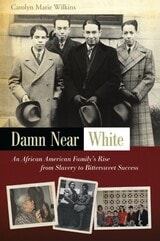
Damn Near White
An African American Family's Rise from Slavery to Bittersweet SuccessCarolyn Marie Wilkins
University of Missouri Press, 2010
Carolyn Wilkins grew up defending her racial identity. Because of her light complexion and wavy hair, she spent years struggling to convince others that she was black. Her family’s prominence set Carolyn’s experiences even further apart from those of the average African American. Her father and uncle were well-known lawyers who had graduated from Harvard Law School. Another uncle had been a child prodigy and protégé of Albert Einstein. And her grandfather had been America's first black assistant secretary of labor.
Carolyn's parents insisted she follow the color-conscious rituals of Chicago's elite black bourgeoisie—experiences Carolyn recalls as some of the most miserable of her entire life. Only in the company of her mischievous Aunt Marjory, a woman who refused to let the conventions of “proper” black society limit her, does Carolyn feel a true connection to her family's African American heritage.
When Aunt Marjory passes away, Carolyn inherits ten bulging scrapbooks filled with family history and memories. What she finds in these photo albums inspires her to discover the truth about her ancestors—a quest that will eventually involve years of research, thousands of miles of travel, and much soul-searching.
Carolyn learns that her great-grandfather John Bird Wilkins was born into slavery and went on to become a teacher, inventor, newspaperman, renegade Baptist minister, and a bigamist who abandoned five children. And when she discovers that her grandfather J. Ernest Wilkins may have been forced to resign from his labor department post by members of the Eisenhower administration, Carolyn must confront the bittersweet fruits of her family's generations-long quest for status and approval.
Damn Near White is an insider’s portrait of an unusual American family. Readers will be drawn into Carolyn’s journey as she struggles to redefine herself in light of the long-buried secrets she uncovers. Tackling issues of class, color, and caste, Wilkins reflects on the changes of African American life in U.S. history through her dedicated search to discover her family’s powerful story.

Damn the Old Tinderbox!
Milwaukee’s Palace of the West and the Fire that Defined an EraMatthew J. Prigge
Wisconsin Historical Society Press, 2019
Damn the Old Tinderbox! is the gripping tale of one of the Gilded Age’s forgotten calamities, a fire that remains among the deadliest unsolved arsons in American history, and a significant chapter in both the history of Milwaukee and the Midwest.
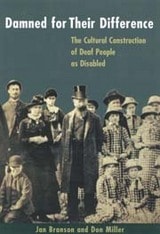
Damned for Their Difference
The Cultural Construction of Deaf People as DisabledJan Branson
Gallaudet University Press, 2002
Until the recent recognition of Deaf culture and the legitimacy of signed languages, majority societies around the world have classified Deaf people as “disabled,” a term that separates all persons so designated from the mainstream in a disparaging way. Damned for Their Difference offers a well-founded explanation of how this discrimination came to be through a discursive exploration of the cultural, social, and historical contexts of these attitudes and behavior toward deaf people, especially in Great Britain.
Authors Jan Branson and Don Miller examine the orientation toward and treatment of deaf people as it developed from the 17th century through the 20th century. Their wide-ranging study explores the varied constructions of the definition of “disabled,” a term whose meaning hinges upon constant negotiation between parties, ensuring that no finite meaning is ever established. Damned for Their Difference provides a sociological understanding of disabling practices in a way that has never been seen before.
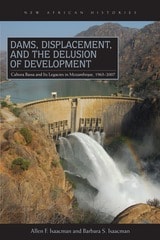
Dams, Displacement, and the Delusion of Development
Cahora Bassa and Its Legacies in Mozambique, 1965–2007Allen F. Isaacman
Ohio University Press, 2013
Cahora Bassa Dam on the Zambezi River, built in the early 1970s during the final years of Portuguese rule, was the last major infrastructure project constructed in Africa during the turbulent era of decolonization. Engineers and hydrologists praised the dam for its technical complexity and the skills required to construct what was then the world’s fifth-largest mega-dam. Portuguese colonial officials cited benefits they expected from the dam—from expansion of irrigated farming and European settlement, to improved transportation throughout the Zambezi River Valley, to reduced flooding in this area of unpredictable rainfall. “The project, however, actually resulted in cascading layers of human displacement, violence, and environmental destruction. Its electricity benefited few Mozambicans, even after the former guerrillas of FRELIMO (Frente de Libertação de Moçambique) came to power; instead, it fed industrialization in apartheid South Africa.” (Richard Roberts)
This in-depth study of the region examines the dominant developmentalist narrative that has surrounded the dam, chronicles the continual violence that has accompanied its existence, and gives voice to previously unheard narratives of forced labor, displacement, and historical and contemporary life in the dam’s shadow.
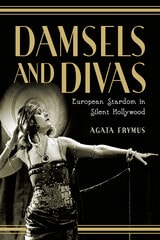
Damsels and Divas
European Stardom in Silent HollywoodAgata Frymus
Rutgers University Press, 2020
Damsels and Divas investigates the meanings of Europeanness in Hollywood during the 1920s by charting professional trajectories of three movie stars: Pola Negri, Vilma Bánky and Jetta Goudal. It combines the investigation of American fan magazines with the analysis of studio documents, and the examination of the narratives of their films, to develop a thorough understanding of the ways in which Negri, Bánky and Goudal were understood within the realm of their contemporary American culture. This discussion places their star personae in the context of whiteness, femininity and Americanization. Every age has its heroines, and they reveal a lot about prevailing attitudes towards women in their respective eras. In the United States, where the stories of rags-to-riches were especially potent, stars could offer models of successful cultural integration.
Dan de Quille
Dwayne Kling
University of Nevada Press, 1990
A biography and anthology of William Wright (1829–1898), better known by the pen name Dan DeQuille or Dan De Quille, an American author, journalist, and humorist. He was best known for his written accounts of the people, events, and silver mining operations on the Comstock Lode at Virginia City, Nevada, including his non-fiction book History of the Big Bonanza (American Publishing Company, 1876).
DeQuille was on the staff of the (Virginia City) Territorial Enterprise for over thirty years, and his writings were also printed in other publications throughout the country and abroad. Highly regarded for his knowledge of silver mining techniques and his ability to explain them in simple terms, he was also appreciated for his humor, similar in style to that of his associate and friend Mark Twain, and of a type very popular in the United States at that time, now referred to as the Sagebrush School literary genre.
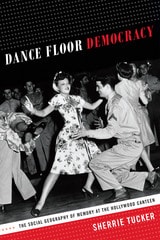
Dance Floor Democracy
The Social Geography of Memory at the Hollywood CanteenSherrie Tucker
Duke University Press, 2014
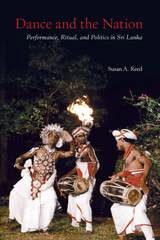
Dance and the Nation
Performance, Ritual, and Politics in Sri LankaSusan A. Reed
University of Wisconsin Press, 2010
As the national dance of Sri Lanka, Kandyan dance is identified with the majority Sinhala ethnic group and heavily supported by the state. Derived from the kohomba kankariya—an elaborate village ritual performed by men of the hereditary drummer caste—the dance was adopted by the state as a symbol of traditional Sinhala culture in the post-independence period. When state officials introduced the dance into the school curriculum, it was opened to individuals of all castes, and high-caste women have emerged as prominent teachers and performers. Reed’s evocative account traces the history and consequences of this transition from ritual to stage, situating the dance in relation to postcolonial nationalism and ethnic politics and emphasizing the voices and perspectives of the hereditary dancers and of women performers.
Although Kandyan dance is related to other south Asian dance forms, it is unique, distinguished by an elegant, energetic style, and lively displays of acrobatics and agility. The companion DVD includes unparalleled footage of this vibrant dance in ritual, stage, and training contexts, and features the most esteemed performers of the Kandyan region.

Dance for Me When I Die
Cristian Alarcón
Duke University Press, 2019
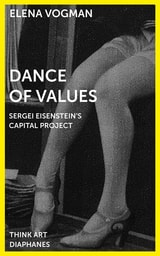
Dance of Values
Sergei Eisenstein’s Capital ProjectElena Vogman
Diaphanes, 2018
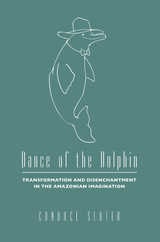
Dance of the Dolphin
Transformation and Disenchantment in the Amazonian ImaginationCandace Slater
University of Chicago Press, 1994
Candace Slater examines these stories in Dance of the Dolphin, both as folk narratives and as representations of culture and conflict in Amazonia. Her engaging study discusses the tales from the viewpoints of genre, performance, and gender, but centers on them as responses to the great changes sweeping the Amazon today. According to Slater, these surprisingly widespread tales reflect Amazonians' own mixed reactions to the ongoing destruction of the rainforest and the resulting transformations in the social as well as physical landscape. Offering an informed view of Brazilian culture, this book crosses the boundaries of folklore, literature, anthropology, and Latin American studies. It is one of the very few studies to offer an overview of the changes taking place in Amazonia through the eyes of ordinary people.
"This book is a rich collection of stories about the transformation of dolphins in the city of enchantment. . . . The joy in this book is not just its vibrant analysis and careful relating of tradition and lore, but also its uncanny accurateness in capturing the very essence of Amazonia."-Darrell Posey, Journal of Latin American Studies
"Slater's fluid prose reads like a novel for those interested in Amazonian culture and folklore, while her integrated approach makes this a must read for those interested in innovative methodology."-Lisa Gabbert, Western Folklore

Dance of the Sleepwalkers
The Dance Marathon FadFrank M. Calabria
University of Wisconsin Press, 1993
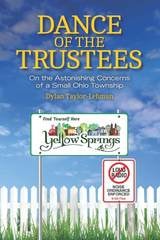
Dance of the Trustees
On the Astonishing Concerns of a Small Ohio TownshipDylan Taylor-Lehman
The Ohio State University Press, 2018
This quaint debate represents just one of many fascinating problems the trustees deal with on a daily basis. While Miami Township is small, the concerns are myriad—from cemeteries filled with unknown remains to a fire department to oversee to legal action required against properties clogged with junk. The responsibilities are doubly impressive considering no trustees have backgrounds in public office.
This book combines entertaining nonfiction vignettes with well-researched township history—including a history of religious cults and the possibility that Lee Harvey Oswald was once in town—and elucidates the processes behind an entire civic division. Dance of the Trustees documents twenty-first-century small-town life with humor, warmth, and erudition.

Dance with the Bear
The Joe Rosenblatt StoryNorman Rosenblatt
University of Utah Press, 2013
The “Little Hoover Commission” was modeled after the 1947 initiative of President Harry Truman, who created the Commission on Organization of the Executive Branch of Government to recommend administrative changes and appointed former president Herbert Hoover to chair it. Rosenblatt, a perceptive and outspoken figure, brought a much-needed dose of urgency and pragmatism to the Utah process and formulated a number of far-reaching suggestions to the legislature—many of which were adopted and still exist to this day. His work with the commission coupled with his later role on the San Francisco Federal Reserve Board did much to modernize Utah. Rosenblatt’s legacy as a perpetual champion of the community is further exemplified by his role as cultural conduit between Salt Lake’s Jewish community and the leaders of the Church of Jesus Christ of Latter-day Saints.
This readable work will serve as an integral addition to Utah business and political history, enriching the library of anyone looking for an engaging story of a remarkable and transformative figure.
Dancing Fools and Weary Blues
The Great Escape of the TwentiesEdited by Lawrence R. Broer and John D. Walther
University of Wisconsin Press, 1990
The contributors have put aside stereotypes to offer a valuable critique of the American dream during a time of major crises. Dancing Fools and Weary Blues also presents its readers a picture of the continual redemption and revitalization of that dream, and reasserts its basic democratic values.
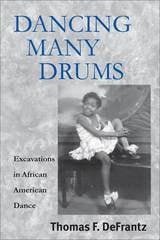
Dancing Many Drums
Excavations In African American DanceThomas F. Defrantz
University of Wisconsin Press, 2002
Few will dispute the profound influence that African American music and movement has had in American and world culture. Dancing Many Drums explores that influence through a groundbreaking collection of essays on African American dance history, theory, and practice. In so doing, it reevaluates "black" and "African American " as both racial and dance categories. Abundantly illustrated, the volume includes images of a wide variety of dance forms and performers, from ring shouts, vaudeville, and social dances to professional dance companies and Hollywood movie dancing.
Bringing together issues of race, gender, politics, history, and dance, Dancing Many Drums ranges widely, including discussions of dance instruction songs, the blues aesthetic, and Katherine Dunham’s controversial ballet about lynching, Southland. In addition, there are two photo essays: the first on African dance in New York by noted dance photographer Mansa Mussa, and another on the 1934 "African opera," Kykunkor, or the Witch Woman.
Dancing Revolution
Bodies, Space, and Sound in American Cultural HistoryChristopher J. Smith
University of Illinois Press, 2019
Dancing Revolution presents richly diverse case studies to illuminate these patterns of movement and influence in movement and sound in the history of American public life. Christopher J. Smith spans centuries, geographies, and cultural identities as he delves into a wide range of historical moments. These include the God-intoxicated public demonstrations of Shakers and Ghost Dancers in the First and Second Great Awakenings; creolized antebellum dance in cities from New Orleans to Bristol; the modernism and racial integration that imbued twentieth-century African American popular dance; the revolutionary connotations behind images of dance from Josephine Baker to the Marx Brothers; and public movement's contributions to hip hop, antihegemonic protest, and other contemporary transgressive communities’ physical expressions of dissent and solidarity.
Multidisciplinary and wide-ranging, Dancing Revolution examines how Americans turned the rhythms of history into the movement behind the movements.

Dancing across Borders
Danzas y Bailes MexicanosEdited by Olga Najera-Ramirez, Norma E. Cantu, and Brenda M. Romero
University of Illinois Press, 2009
Contributors are Norma E. Cantú, Susan Cashion, María Teresa Ceseña, Xóchitl C. Chávez, Adriana Cruz-Manjarrez, Renée de la Torre Castellanos, Peter J. García, Rudy F. García, Chris Goertzen, Martha González, Elisa Diana Huerta, Sydney Hutchinson, Marie "Keta" Miranda, Olga Nájera-Ramírez, Shakina Nayfack, Russell Rodríguez, Brenda M. Romero, Nancy Lee Chalfa Ruyter, José Sánchez Jiménez, and Alberto Zárate Rosales.
Dancing from Past to Present
Nation, Culture, IdentitiesEdited by Theresa Jill Buckland
University of Wisconsin Press, 2007
Dancing in Spite of Myself
Essays on Popular CultureLawrence Grossberg
Duke University Press, 1997
In the course of conducting this exploration into the meaning of "popularity," he investigates the nature of fandom, the social effects of rock music and youth culture, and the possibilities for understanding the history of popular texts and practices. Describing what he calls "the postmodernity of everyday life," Grossberg offers important insights into the relation of pop music to issues of postmodernity and inton the growing power of the new cultural conservatism and its relationship to "the popular." Exploring the limits of existing theories of hegemony in cultural studies, Grossberg reveals the ways in which popular culture is being mobilized in the service of economic and political struggles. In articulating his own critical practice, Grossberg surveys and challenges some of the major assumptions of popular culture studies, including notions of domination and resistance, mainstream and marginality, and authenticity and incorporation.
Dancing in Spite of Myself provides an introduction to contemporary theories of popular culture and a clear statement of relationships among theories of the nature of rock music, postmodernity, and conservative hegemony.
Dancing on the Fault Lines of History
Selected EssaysSusan Manning
University of Michigan Press, 2025
Like the artists at the center of her research, Manning’s writing dances on the fault lines of history. Her introduction and annotations to the essays reflect on how and why these keywords became central to her research, revealing the autobiographical resonances of her scholarship as she confronts the cultural politics of the late twentieth and early twenty-first centuries.
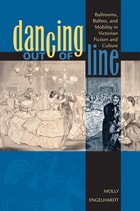
Dancing out of Line
Ballrooms, Ballets, and Mobility in Victorian Fiction and CultureMolly Engelhardt
Ohio University Press, 2009
Dancing out of Line transports readers back to the 1840s, when the craze for social and stage dancing forced Victorians into a complex relationship with the moving body in its most voluble, volatile form.
By partnering cultural discourses with representations of the dance and the dancer in novels such as Jane Eyre, Bleak House, and Daniel Deronda, Molly Engelhardt makes explicit many of the ironies underlying Victorian practices that up to this time have gone unnoticed in critical circles. She analyzes the role of the illustrious dance master, who created and disseminated the manners and moves expected of fashionable society, despite his position as a social outsider of nebulous origins. She describes how the daughters of the social elite were expected to “come out” to society in the ballroom, the most potent space in the cultural imagination for licentious behavior and temptation. These incongruities generated new, progressive ideas about the body, subjectivity, sexuality, and health.
Engelhardt challenges our assumptions about Victorian sensibilities and attitudes toward the sexual/social roles of men and women by bringing together historical voices from various fields to demonstrate the versatility of the dance, not only as a social practice but also as a forum for Victorians to engage in debate about the body and its pleasures and pathologies.
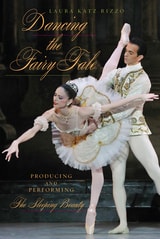
Dancing the Fairy Tale
Producing and Performing The Sleeping BeautyLaura Katz Rizzo
Temple University Press, 2015
Using extensive archival research, dance analysis, and American feminist theory, Dancing the Fairy Tale places women at the center of a historical narrative to reveal how the production and performance of The Sleeping Beauty in the years between 1937 and 2002 made significant contributions to the development and establishment of an American classical ballet. Katz Rizzo highlights not only what women have done not only behind the scenes, as administrators, producers, or directors of ballet companies and schools, but also as active interpreters embodying the ballet's title role.
In the process, Katz Rizzo also emphasizes the importance of regional sites outside of locations traditionally understood as central to the development of ballet in the United States.