Results by title
668 books match the query 'History & Surveys' and 15 start with d
Deconstruction and Philosophy
The Texts of Jacques DerridaEdited by John Sallis
University of Chicago Press, 1989

Deconstruction in Context
Literature and PhilosophyEdited by Mark C. Taylor
University of Chicago Press, 1986
"This invaluable philosophical sampler brings together many of the threads out of which deconstruction is woven. taylor's anthology does not make deconstruction easy; much more usefully, it provides a meticulous guide to the sources – and significance – of the difficulties. – Barbara E. Johnson
"The book will be of great value as a set of readings with authoritative explanation for all those interested in the current relations of literature and philosophy. It is the best book of its kind I know. – J. Hillis Miller, Yale University

Deleuze
The Clamor of BeingAlain Badiou
University of Minnesota Press, 1999

Deleuzism
A MetacommentaryIan Buchanan
Duke University Press, 2000
To show us how Deleuze’s philosophy works, Buchanan begins with Melville’s notion that “a great book is always the inverse of another book that could only be written in the soul, with silence and blood.” Buchanan demonstrates that the figure of two books—one written in ink and the other written in blood—lies at the center of Deleuze’s hermeneutics and that a special relation must be established in order to read the second book from the first. This relation is Deleuzism. By explicating elemental concepts in Deleuze—desire, flow, the nomad—Buchanan finds that, despite Deleuze’s self-declared moratorium on dialectics, he was in several important respects a dialectician. In essays that address the “prehistory” of Deleuze’s philosophy, his methodology, and the utopic dimensions of his thought, Buchanan extracts an apparatus of social critique that arises from the philosopher’s utopian impulse.
Deleuzism is a work that will engage all those with an interest in the twentieth-century’s most original philosopher.
Democracy Ancient and Modern
Finley, M. I.
Rutgers University Press, 2019
This classic study of democratic principles is thus now more relevant than ever. A renowned historian of antiquity and political philosophy, Sir M.I. Finley offers a comparative analysis of Greek and modern conceptions of democracy. As he puts the ancient Greeks in dialogue with their contemporary counterparts, Finley tackles some of the most pressing issues of our day, including public apathy, partisanship, consensus politics, distrust of professional politicians, and the limits of free speech.
Including three lectures that Finley delivered at Rutgers University, plus two additional essays that further illuminate his thinking, Democracy Ancient and Modern explores the dramatic differences between the close-knit civil society of the ancient Greeks and our own atomized mass societies. By mapping out democracy’s past and its present manifestations, this book helps us plot a course for democracy’s future.

Descartes and His Contemporaries
Meditations, Objections, and RepliesEdited by Roger Ariew and Marjorie Grene
University of Chicago Press, 1995
Descartes and his Contemporaries recreates the tumultuous intellectual community of seventeenth-century Europe and provides a detailed, modern analysis of the Meditations in its historical context. The book's chapters examine the arguments and positions of each of the objectors—Hobbes, Gassendi, Arnauld, Morin, Caterus, Bourdin, and others whose views were compiled by Mersenne. They illuminate Descartes' relationships to the scholastics and particularly the Jesuits, to Mersenne's circle with its debates about the natural sciences, to the Epicurean movements of his day, and to the Augustinian tradition. Providing a glimpse of the interactions among leading 17th-century intellectuals as they grappled with major philosophical issues, this book sheds light on how Descartes' thought developed and was articulated in opposition to the ideas of his contemporaries.
Descartes's Grey Ontology
Cartesian Science and Aristotelian Thought in the RegulaeJean-Luc Marion
St. Augustine's Press, 2022
Dialectic and Dialogue
Plato's Practice of Philosophical InquiryFrancisco J. Gonzalez
Northwestern University Press, 1998

Differend
Phrases in DisputeJean-Francois Lyotard
University of Minnesota Press, 1989
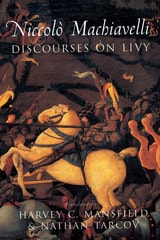
Discourses on Livy
Niccolò Machiavelli
University of Chicago Press, 1998
"[Machiavelli] found in Livy the means to inspire scholars for five centuries. Within the Discourses, often hidden and sometimes unintended by their author, lie the seeds of modern political thought. . . . [Mansfield and Tarcov's] translation is careful and idiomatic."—Peter Stothard, The Times
"Translated with painstaking accuracy—but also great readability."—Weekly Standard
"A model of contemporary scholarship and a brave effort at Machiavelli translation that allows the great Florentine to speak in his own voice."—Choice
Discourses on Livy
Niccolò Machiavelli
University of Chicago Press, 1996
"[Machiavelli] found in Livy the means to inspire scholars for five centuries. Within the Discourses, often hidden and sometimes unintended by their author, lie the seeds of modern political thought. . . . [Mansfield and Tarcov's] translation is careful and idiomatic."—Peter Stothard, The Times
"Translated with painstaking accuracy—but also great readability."—Weekly Standard
"A model of contemporary scholarship and a brave effort at Machiavelli translation that allows the great Florentine to speak in his own voice."—Choice
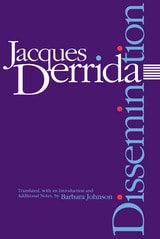
Dissemination
Jacques Derrida
University of Chicago Press, 1981
Dissemination
Jacques Derrida
University of Chicago Press, 1981
Don Isaac Abravanel
An Intellectual BiographyCedric Cohen-Skalli
Brandeis University Press, 2020
Don Isaac Abravanel (1437–1508) was one of the great inventors of Jewish modernity. A merchant, banker, and court financier, a scholar versed in both Jewish and Christian writings, a preacher and exegete, a prominent political actor in royal entourages and Jewish communities, Abravanel was one of the greatest leaders and thinkers of Iberian Jewry in the aftermath of the expulsion of 1492. This book, the first new intellectual biography of Abravanel in twenty years, depicts his life in three cultural milieus—Portugal, Castile, and post-expulsion Italy—and analyzes his major literary accomplishments in each period. Abravanel was a traditionalist with innovative ideas, a man with one foot in the Middle Ages and the other in the Renaissance. An erudite scholar, author of a monumental exegetical opus that is still studied today, and an avid book collector, he was a transitional figure, defined by an age of contradictions. Yet, it is these very contradictions that make him such an important personality for understanding the dawn of Jewish modernity.
Dynamics of Reason
Michael Friedman
CSLI, 2001
Through a modified Kantian approach to epistemology and philosophy of science, this book opposes both Quinean naturalistic holism and the post-Kuhnian conceptual relativism that has dominated recent literature in science studies. Focussing on the development of "scientific philosophy" from Kant to Rudolf Carnap, along with the parallel developments taking place in the sciences during the same period, the author articulates a new dynamical conception of relativized a priori principles. This idea applied within the physical sciences aims to show that rational intersubjective consensus is intricately preserved across radical scientific revolutions or "paradigm-shifts and how this is achieved.