Results by title
783 books match the query 'History & Theory' and 30 start with d

Dangerous Counsel
Accountability and Advice in Ancient GreeceMatthew Landauer
University of Chicago Press, 2019
With Dangerous Counsel, Matthew Landauer analyzes the sometimes ferocious and unpredictable politics of accountability in ancient Greece and offers novel readings of ancient history, philosophy, rhetoric, and drama. In comparing the demos to a tyrant, thinkers such as Herodotus, Plato, Isocrates, and Aristophanes were attempting to work out a theory of the badness of unaccountable power; to understand the basic logic of accountability and why it is difficult to get right; and to explore the ways in which political discourse is profoundly shaped by institutions and power relationships. In the process they created strikingly portable theories of counsel and accountability that traveled across political regime types and remain relevant to our contemporary political dilemmas.

Demanding Choices
Opinion, Voting, and Direct DemocracyShaun Bowler and Todd Donovan
University of Michigan Press, 2000
Democracy Ancient and Modern
Finley, M. I.
Rutgers University Press, 2019
This classic study of democratic principles is thus now more relevant than ever. A renowned historian of antiquity and political philosophy, Sir M.I. Finley offers a comparative analysis of Greek and modern conceptions of democracy. As he puts the ancient Greeks in dialogue with their contemporary counterparts, Finley tackles some of the most pressing issues of our day, including public apathy, partisanship, consensus politics, distrust of professional politicians, and the limits of free speech.
Including three lectures that Finley delivered at Rutgers University, plus two additional essays that further illuminate his thinking, Democracy Ancient and Modern explores the dramatic differences between the close-knit civil society of the ancient Greeks and our own atomized mass societies. By mapping out democracy’s past and its present manifestations, this book helps us plot a course for democracy’s future.
Democracy and Other Neoliberal Fantasies
Communicative Capitalism and Left PoliticsJodi Dean
Duke University Press, 2009
Dean’s critique ranges from her argument that the term democracy has become a meaningless cipher invoked by the left and right alike to an analysis of the fantasy of free trade underlying neoliberalism, and from an examination of new theories of sovereignty advanced by politicians and left academics to a look at the changing meanings of “evil” in the speeches of U.S. presidents since the mid-twentieth century. She emphasizes the futility of a politics enacted by individuals determined not to offend anyone, and she examines questions of truth, knowledge, and power in relation to 9/11 conspiracy theories. Dean insists that any reestablishment of a vital and purposeful left politics will require shedding the mantle of victimization, confronting the marriage of neoliberalism and democracy, and mobilizing different terms to represent political strategies and goals.

Democracy in America
Alexis de Tocqueville
University of Chicago Press, 2000
Alexis de Tocqueville (1805-59) came to America in 1831 to see what a great republic was like. What struck him most was the country's equality of conditions, its democracy. The book he wrote on his return to France, Democracy in America, is both the best ever written on democracy and the best ever written on America. It remains the most often quoted book about the United States, not only because it has something to interest and please everyone, but also because it has something to teach everyone.
Democracy in America
Alexis de Tocqueville
University of Chicago Press, 2000
This is an auto-narrated audiobook edition of this book.
Democracy in Print
The Best of The Progressive Magazine, 1909–2009Edited by Matthew Rothschild
University of Wisconsin Press, 2009
Readers will discover the vision of the magazine’s founder, Robert “Fighting Bob” La Follette, and his suffragist wife, Belle Case La Follette. They’ll find historic gems from the likes of Jane Addams, Carl Sandburg, Huey Long, and John Kenneth Galbraith, and profound essays by Theodore Dreiser, Barbara Ehrenreich, Noam Chomsky, Upton Sinclair, Arundhati Roy, James Baldwin, Edwidge Danticat, and Edward Said. The collection is leavened with humor from Kate Clinton, Will Durst, Michael Feldman, and Molly Ivins, and graced by poems from such writers as Mahmoud Darwish, Rita Dove, Martín Espada, Maxine Kumin, Adrienne Rich, and Sandra Cisneros. Fascinating interviews bring readers into conversations with prominent cultural figures, including Chuck D, the Dalai Lama, Allen Ginsberg, Amy Goodman, Harold Pinter, Patti Smith, Susan Sarandon, and Yevgeny Yevtushenko.
Eminently browsable, this book is for anyone concerned with American democracy, the global community, and the perils of the planet. With contributions by actors and Supreme Court justices, comedians and Nobel Prize-winners, Democracy in Print offers all readers nourishing food for thought.

Democratic Peace
A Political BiographyPiki Ish-Shalom
University of Michigan Press, 2015
The Democratic Peace Thesis holds that democracies rarely make war on other democracies. Political scientists have advanced numerous theories attempting to identify precisely which elements of democracy promote this mutual peace, often hoping that Democratic Peace could be the final and ultimate antidote to war. However, as the theories were taken up by political figures, the immediate outcomes were war and the perpetuation of hostilities.
Political theorist Piki Ish-Shalom sketches the origins and early academic development of the Democratic Peace Thesis. He then focuses on the ways in which various Democratic Peace Theories were used by Bill Clinton and George W. Bush both to shape and to justify U.S. foreign policy, particularly the U.S. stance on the Israeli-Palestinian situation and the War in Iraq. In the conclusion, Ish-Shalom boldly confronts the question of how much responsibility theoreticians must bear for the political uses—and misuses—of their ideas.

Demos Assembled
Democracy and the International Origins of the Modern State, 1840–1880Stephen W. Sawyer
University of Chicago Press, 2018
Previous studies have covered in great detail how the modern state slowly emerged from the early Renaissance through the seventeenth century, but we know relatively little about the next great act: the birth and transformation of the modern democratic state. And in an era where our democratic institutions are rife with conflict, it’s more important now than ever to understand how our institutions came into being.
Stephen W. Sawyer’s Demos Assembled provides us with a fresh, transatlantic understanding of that political order’s genesis. While the French influence on American political development is well understood, Sawyer sheds new light on the subsequent reciprocal influence that American thinkers and politicians had on the establishment of post-revolutionary regimes in France. He argues that the emergence of the stable Third Republic (1870–1940), which is typically said to have been driven by idiosyncratic internal factors, was in fact a deeply transnational, dynamic phenomenon. Sawyer’s findings reach beyond their historical moment, speaking broadly to conceptions of state formation: how contingent claims to authority, whether grounded in violence or appeals to reason and common cause, take form as stateness.
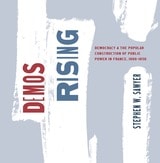
Demos Rising
Democracy and the Popular Construction of Public Power in France, 1800–1850Stephen W. Sawyer
University of Chicago Press, 2025
In his previous book, Demos Assembled, historian Stephen W. Sawyer offered a transatlantic account of the birth and transformation of the modern democratic state. In Demos Rising, he presents readers of political history with a prequel whose ambitious claim is that a genuine demos became possible in France only with the development of government regulation and administration. Focusing on democracy as a form of administration rather than as a form of sovereignty allows Sawyer to explore urban planning, work and private enterprise, health administration, and much more as cornerstones of a self-governing society of equals.
Examining the period between 1800 and 1850, Sawyer studies a set of thinkers who debated at length over the material problems of everyday life, sparking calls for political action and social reform in the face of conflict wreaked by deforestation, urbanization, health crises, labor relations, industrial capitalism, religious tensions, and imperial expansion. The solutions to these problems, Sawyer argues, were sought—and sometimes found—not through elections, as one might assume, but rather through the “care for all” promised by modern administrative power, regulatory intervention, and social welfare programs. By studying this profound transformation in governance, the book wagers, we can better understand the origin and meaning of democracy—even when events in our own time have thrown the concept into doubt.

Derrida and the Time of the Political
Pheng Cheah and Suzanne Guerlac, eds.
Duke University Press, 2009
The volume opens with a substantial introduction in which Pheng Cheah and Suzanne Guerlac survey Derrida’s entire corpus and position his later work in relation to it. The remaining essays address the concerns that arise out of Derrida’s analysis of politics and the conditions of the political, such as the meaning and scope of democracy, the limits of sovereignty, the relationship between the ethical and the political, the nature of responsibility, the possibility for committed political action, the implications of deconstructive thought for non-Western politics, and the future of nationalism in an era of globalization and declining state sovereignty. The collection is framed by original contributions from Hélène Cixous and Judith Butler.
Contributors. Étienne Balibar, Geoffrey Bennington, Wendy Brown, Judith Butler, Pheng Cheah, Hélène Cixous, Rodolphe Gasché, Suzanne Guerlac, Marcel Hénaff, Martin Jay, Anne Norton, Jacques Rancière, Soraya Tlatli, Satoshi Ukai

Dictatorship in the Modern World
Guy Ford
University of Minnesota Press, 1935
Difference without Domination
Pursuing Justice in Diverse DemocraciesEdited by Danielle Allen and Rohini Somanathan
University of Chicago Press, 2020
Using examples from the United States, India, Germany, and Cameroon, the contributors offer paradigm-changing approaches to the concepts of justice, identity, and social groups while also taking a fresh look at the idea that the demographic make-up of institutions should mirror the make-up of a populace as a whole. After laying out the conceptual framework, the volume turns to a number of provocative topics, among them the pernicious tenacity of implicit bias, the logical contradictions inherent to the idea of universal human dignity, and the paradoxes and problems surrounding affirmative action. A stimulating blend of empirical and interpretive analyses, Difference without Domination urges us to reconsider the idea of representation and to challenge what it means to measure equality and inequality.
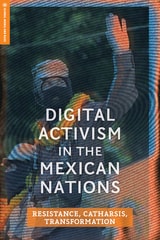
Digital Activism in the Mexican Nations
Resistance, Catharsis, TransformationDavid S. Dalton
Rutgers University Press, 2026
Digital Activism in the Mexican Nations analyzes Mexico’s rich history of digital activism, which is among the most vibrant of any country in the Hispanic world. The book begins with a discussion of the Zapatista uprising of 1994—which is widely understood as the first digital social movement in the history of the world—and ends with a discussion of the digital strategies of migrant communities trekking through Mexico into the present.
Conceptualizing (digital) activism as a type of performance, the book opens a dialogue with Brecht’s binary of cathartic and transformative performance. As such, it suggests that activist movements centered on expressive manifestations of emotion tend to stifle a social movement’s revolutionary potential by stifling their ability to resonate with potential allies outside their community. At the same time, it argues that the most successful digital social movements seek strategies to build connections with allies who can help them to shift state policy.
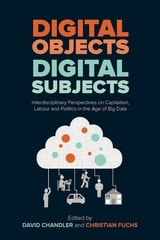
Digital Objects, Digital Subjects
Interdisciplinary Perspectives on Capitalism, Labour and Politics in the Age of Big DataDavid Chandler and Christian Fuchs
University of Westminster Press, 2019
This volume explores activism, research and critique in the age of digital subjects and objects and Big Data capitalism after a digital turn said to have radically transformed our political futures. Optimists assert that the ‘digital’ promises: new forms of community and ways of knowing and sensing, innovation, participatory culture, networked activism, and distributed democracy. Pessimists argue that digital technologies have extended domination via new forms of control, networked authoritarianism and exploitation, dehumanization and the surveillance society. Leading international scholars present varied interdisciplinary assessments of such claims – in theory and via dialogue – and of the digital’s impact on society and the potentials, pitfalls, limits and ideologies, of digital activism. They reflect on whether computational social science, digital humanities and ubiquitous datafication lead to digital positivism that threatens critical research or lead to new horizons in theory and society.
An electronic version of this book is freely available, thanks to the support of libraries working with Knowledge Unlatched. KU is a collaborative initiative designed to make high quality books Open Access for the public good. More information about the initiative and details about KU’s Open Access programme can be found at www.knowledgeunlatched.org.
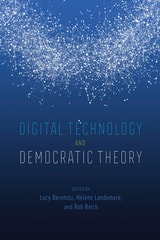
Digital Technology and Democratic Theory
Edited by Lucy Bernholz, Hélène Landemore, and Rob Reich
University of Chicago Press, 2021
To understand these transformations, this book brings together contributions by scholars from multiple disciplines to wrestle with the question of how digital technologies shape, reshape, and affect fundamental questions about democracy and democratic theory. As expectations have whiplashed—from Twitter optimism in the wake of the Arab Spring to Facebook pessimism in the wake of the 2016 US election—the time is ripe for a more sober and long-term assessment. How should we take stock of digital technologies and their promise and peril for reshaping democratic societies and institutions? To answer, this volume broaches the most pressing technological changes and issues facing democracy as a philosophy and an institution.

Dilemmas of Political Change in Mexico
Edited by Kevin J. Middlebrook
University of London Press, 2004
They examine: (1) changes affecting the party system, electoral institutions, and voting behavior; (2) the evolving role of the armed forces, organized labor, big business, and rural producers; (3) the new importance of civil society, the mass media, and cross-border social coalitions; (4) and key issues of political representation and governance, including executive-legislative relations, judicial performance, federalism, the constitutional rights of indigenous peoples, and the political role of Mexicans resident in the United States.
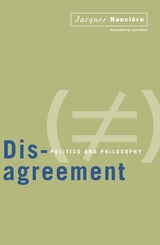
Disagreement
Politics And PhilosophyJacques Ranciere
University of Minnesota Press, 2004
“Is there any such thing as political philosophy?” So begins this provocative book by one of the foremost figures in Continental thought. Here, Jacques Rancière brings a new and highly useful set of terms to the vexed debate about political effectiveness and “the end of politics.”
What precisely is at stake in the relationship between “philosophy” and the adjective “political”? In Disagreement, Rancière explores the apparent contradiction between these terms and reveals the uneasy meaning of their union in the phrase “political philosophy”—a juncture related to age-old attempts in philosophy to answer Plato’s devaluing of politics as a “democratic egalitarian” process.
According to Rancière, the phrase also expresses the paradox of politics itself: the absence of a proper foundation. Politics, he argues, begins when the “demos” (the “excessive” or unrepresented part of society) seeks to disrupt the order of domination and distribution of goods “naturalized” by police and legal institutions. In addition, the notion of “equality” operates as a game of contestation that constantly substitutes litigation for political action and community. This game, Rancière maintains, operates by a primary logic of “misunderstanding.” In turn, political philosophy has always tried to substitute the “politics of truth” for the politics of appearances.
Disagreement investigates the various transformations of this regime of “truth” and their effects on practical politics. Rancière then distinguishes what we mean by “democracy” from the practices of a consensual system in order to unravel the ramifications of the fashionable phrase “the end of politics.” His conclusions will be of interest to readers concerned with political questions from the broadest to the most specific and local.

Disciplining the Poor
Neoliberal Paternalism and the Persistent Power of RaceJoe Soss, Richard C. Fording, and Sanford F. Schram
University of Chicago Press, 2011
Disciplining the Poor explains the transformation of poverty governance over the past forty years—why it happened, how it works today, and how it affects people. In the process, it clarifies the central role of race in this transformation and develops a more precise account of how race shapes poverty governance in the post–civil rights era. Connecting welfare reform to other policy developments, the authors analyze diverse forms of data to explicate the racialized origins, operations, and consequences of a new mode of poverty governance that is simultaneously neoliberal—grounded in market principles—and paternalist—focused on telling the poor what is best for them. The study traces the process of rolling out the new regime from the federal level, to the state and county level, down to the differences in ways frontline case workers take disciplinary actions in individual cases. The result is a compelling account of how a neoliberal paternalist regime of poverty governance is disciplining the poor today.

Discourses on Livy
Niccolò Machiavelli
University of Chicago Press, 1998
"[Machiavelli] found in Livy the means to inspire scholars for five centuries. Within the Discourses, often hidden and sometimes unintended by their author, lie the seeds of modern political thought. . . . [Mansfield and Tarcov's] translation is careful and idiomatic."—Peter Stothard, The Times
"Translated with painstaking accuracy—but also great readability."—Weekly Standard
"A model of contemporary scholarship and a brave effort at Machiavelli translation that allows the great Florentine to speak in his own voice."—Choice

Disorderly Families
Infamous Letters from the Bastille ArchivesArlette Farge
University of Minnesota Press, 2021
The first English translation of letters of arrest from eighteenth century France held in the archives of the Bastille
Drunken and debauched husbands; libertine wives; vagabonding children. These and many more are the subjects of requests for confinement written to the king of France in the eighteenth century. These letters of arrest (lettres de cachet) from France’s Ancien Régime were often associated with excessive royal power and seen as a way for the king to imprison political opponents. In Disorderly Families, first published in French in 1982, Arlette Farge and Michel Foucault collect ninety-four letters from ordinary families who, with the help of hired scribes, submitted complaints to the king to intervene and resolve their family disputes.
Gathered together, these letters show something other than the exercise of arbitrary royal power, and offer unusual insight into the infamies of daily life. From these letters come stories of divorce and marital conflict, sexual waywardness, reckless extravagance, and abandonment. The letters evoke a fluid social space in which life in the home and on the street was regulated by the rhythms of relations between husbands and wives, or parents and children. Most impressively, these letters outline how ordinary people seized the mechanisms of power to address the king and make demands in the name of an emerging civil order.
Arlette Farge and Michel Foucault were fascinated by the letters’ explosive qualities and by how they both illustrated and intervened in the workings of power and governmentality. Disorderly Families sheds light on Foucault’s conception of political agency and his commitment to theorizing how ordinary lives come to be touched by power. This first English translation is complete with an introduction from the book’s editor, Nancy Luxon, as well as notes that contextualize the original 1982 publication and eighteenth-century policing practices.

Distrust
Russell Hardin
Russell Sage Foundation, 2004

Divergent Modernities
Culture and Politics in Nineteenth-Century Latin AmericaJulio Ramos
Duke University Press, 2001
Since its first publication in Spanish nearly a decade ago, Julio Ramos’s Desenucuentros de la modernidad en America Latina por el siglo XIX has been recognized as one of the most important studies of modernity in the western hemisphere. Available for the first time in English—and now published with new material—Ramos’s study not only offers an analysis of the complex relationships between history, literature, and nation-building in the modern Latin American context but also takes crucial steps toward the development of a truly comparative inter-American cultural criticism.
With his focus on the nineteenth century, Ramos begins his genealogy of an emerging Latin Americanism with an examination of Argentinean Domingo Sarmiento and Chilean Andrés Bello, representing the “enlightened letrados” of tradition. In contrast to these “lettered men,” he turns to Cuban journalist, revolutionary, and poet José Martí, who, Ramos suggests, inaugurated a new kind of intellectual subject for the Americas. Though tracing Latin American modernity in general, it is the analysis of Martí—particularly his work in the United States—that becomes the focal point of Ramos’s study. Martí’s confrontation with the unequal modernization of the New World, the dependent status of Latin America, and the contrast between Latin America’s culture of elites and the northern mass culture of commodification are, for Ramos, key elements in understanding the complex Latin American experience of modernity.
Including two new chapters written for this edition, as well as translations of three of Martí’s most important works, Divergent Modernities will be indispensable for anyone seeking to understand development and modernity across the Americas.
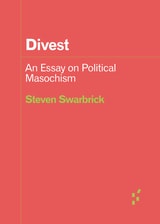
Divest
An Essay on Political MasochismSteven Swarbrick
University of Minnesota Press, 2026
A manifesto for liberating desire from the grip of capital and colonial violence in Palestine
Could a psychoanalytic theory of masochism help us to understand the politics of protest? A socially engaged psychoanalysis of 2024’s widespread student uprisings in support of Palestine, Divest posits that masochism, as theorized by Freud in his later years, is a fundamental structure at the heart of anticapitalist and anticolonial resistance. Conceptualizing masochism as a radical form of divestment, Steven Swarbrick theorizes the affective economies of solidarity, self-sacrifice, and collective struggle. Through vivid film readings and sharp critique of state and university violence, Swarbrick explores the emancipatory potential of masochism in the protest movement and the sadistic machinery of capitalist governance it has laid bare.
Divest is both a politically urgent manifesto and a theoretical companion to the global movement for Palestinian liberation. Asserting that the politics of left-wing solidarity must reckon with the libidinal investments that sustain both power and resistance, this bold volume argues that divestment from global capitalism may begin with a revolution in our psychic attachments.
Retail e-book files for this title are screen-reader friendly with image accompanied by short alt text and/or extended descriptions.

Divide, Provide and Rule
An Integrative History of Poverty Policy, Social Reform, and Social Policy in Hungary under the Habsburg MonarchySusan Zimmermann
Central European University Press, 2011

Dividing Lines
Municipal Politics and the Struggle for Civil Rights in Montgomery, Birmingham, and SelmaJ. Mills Thornton, III
University of Alabama Press, 2006
Presents the story of the civil rights movement from the perspective of community-municipal history at the grassroots level
Thornton demonstrates that the movement had powerful local sources in its three birth cities—Montgomery, Birmingham, and Selma. There, the arcane mechanisms of state and city governance and the missteps of municipal politicians and civic leaders—independent of emerging national trends in racial mores—led to the great swell of energy for change that became the civil rights movement.
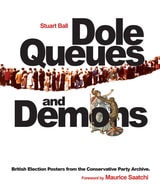
Dole Queues and Demons
British Election Posters from the Conservative Party ArchiveStuart Ball
Bodleian Library Publishing, 2011
Bold amalgams of graphic design, psychology, and art, election posters have remained unsung—and sometimes even maligned—since their inception at the beginning of the twentieth century. Through a careful selection from among the more than seven hundred posters in the Bodleian Library’s Conservative Party Archive, this lavishly illustrated volume charts the evolution of the election posters created by Britain’s Conservative Party.

Dreaming in Dark Times
Six Exercises in Political ThoughtSharon Sliwinski
University of Minnesota Press, 2017
What do dreams manage to say—or indeed, show—about human experience that is not legible otherwise? Can the disclosure of our dream-life be understood as a form of political avowal? To what does a dream attest? And to whom?
Blending psychoanalytic theory with the work of such political thinkers as Hannah Arendt and Michel Foucault, Sharon Sliwinski explores how the disclosure of dream-life represents a special kind of communicative gesture—a form of unconscious thinking that can serve as a potent brand of political intervention and a means for resisting sovereign power. Each chapter centers on a specific dream plucked from the historical record, slowly unwinding the significance of this extraordinary disclosure. From Wilfred Owen and Lee Miller to Frantz Fanon and Nelson Mandela, Sliwinski shows how each of these figures grappled with dream-life as a means to conjure up the courage to speak about dark times. Here dreaming is defined as an integral political exercise—a vehicle for otherwise unthinkable thoughts and a wellspring for the freedom of expression.
Dreaming in Dark Times defends the idea that dream-life matters—that attending to this thought-landscape is vital to the life of the individual but also vital to our shared social and political worlds.
Drift and Mastery
An Attempt to Diagnose the Current UnrestWalter Lippmann, Introduction and notes by William E. Leuchtenburg, Foreword by Ganesh Sitaraman
University of Wisconsin Press, 2015
Lippman’s Drift and Mastery became one of the most important and influential documents of the Progressive Movement. It remains a valuable text for understanding the political thought of early twentieth-century America and a lucid exploration of timeless themes in American government and politics. Distinguished historian Walter Leuchtenberg’s 1986 introduction and notes are retained in this edition.

Duty to Respond
Mass Crime, Denial, and Collective ResponsibilityNenad Dimitrijevic
Central European University Press, 2011