Results by title
221 books match the query 'Imperialism' and 13 start with d
Dark Continents
Psychoanalysis and ColonialismRanjana Khanna
Duke University Press, 2003
bringing psychoanalysis, colonialism, and women together can become the starting point of a postcolonial feminist theory. Psychoanalysis brings to light, Khanna argues, how nation-statehood for the former colonies of Europe institutes the violence of European imperialist history. Far from rejecting psychoanalysis, Dark Continents reveals its importance as a reading practice that makes visible the psychical strife of colonial and
postcolonial modernity. Assessing the merits of various models of nationalism, psychoanalysis, and colonialism, it refashions colonial melancholy as a transnational feminist ethics.
Khanna traces the colonial backgrounds of psychoanalysis from its beginnings in the late nineteenth century up to the present. Illuminating Freud’s debt to the languages of archaeology and anthropology throughout his career, Khanna describes how Freud altered his theories of the ego as his own political status shifted from Habsburg loyalist to Nazi victim. Dark Continents explores how psychoanalytic theory was taken up in Europe and its colonies in the period of decolonization following World War II, focusing on its use by a range of writers including Jean-Paul Sartre, Simone de Beauvoir, Octave Mannoni, Aimé and Suzanne Césaire, René Ménil, Frantz Fanon, Albert Memmi, Wulf Sachs, and Ellen Hellman. Given the multiple gendered and colonial contexts of many of these writings, Khanna argues for the necessity of a postcolonial, feminist critique of
decolonization and postcoloniality.
Democracy and Imperialism
Irving Babbitt and Warlike DemocraciesWilliam S. Smith
University of Michigan Press, 2019
Following costly U.S. engagement in two wars in the Middle East, questions about the appropriateness of American military interventions dominate foreign policy debates. Is an interventionist foreign policy compatible with the American constitutional tradition?
This book examines critic Irving Babbitt’s (1865–1933) unique contribution to understanding the quality of foreign policy leadership in a democracy. Babbitt explored how a democratic nation’s foreign policy is a product of the moral and cultural tendencies of the nation’s leaders, arguing that the substitution of expansive, sentimental Romanticism for the religious and ethical traditions of the West would lead to imperialism.
The United States’ move away from the restraint and order of sound constitutionalism to involve itself in the affairs of other nations will inevitably cause a clash with the “civilizational” regions that have emerged in recent decades. Democracy and Imperialism uses the question of soul types to address issues of foreign policy leadership, and discusses the leadership qualities that are necessary for sound foreign policy.
Disability, the Environment, and Colonialism
Edited by Tatiana Konrad
Temple University Press, 2024
The editor and contributors provide a careful analysis of the intersection of disability, the environment, and colonialism to understand issues such as eco-ableism, environmental degradation, homogenized approaches to environmentalism, and climate change. They also look at the body as a site of colonial oppression and environmental exploitation.
Contributors: Holly Caldwell, Matthew J. C. Cella, John Gulledge, Memona Hossain, Nancy J. Hirschmann, Iain Hutchison, Andrew B. Jenks, Suha Kudsieh, Gordon M. Sayre, Jessica A. Schwartz, Anna Stenning, Aubrey Tang, Alice Wexler, and the editor.
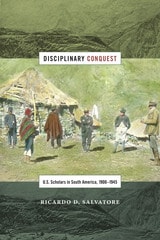
Disciplinary Conquest
U.S. Scholars in South America, 1900–1945Ricardo D. Salvatore
Duke University Press, 2016
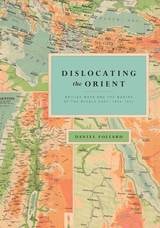
Dislocating the Orient
British Maps and the Making of the Middle East, 1854-1921Daniel Foliard
University of Chicago Press, 2017
Using a wide variety of primary texts and historical maps to show how the idea of the Middle East came into being, Dislocating the Orient will interest historians of the Middle East, the British empire, cultural geography, and cartography.
Dissident Friendships
Feminism, Imperialism, and Transnational SolidarityEdited by Elora Halim Chowdhury and Liz Philipose
University of Illinois Press, 2016
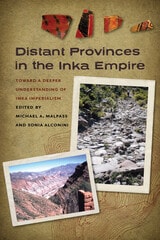
Distant Provinces in the Inka Empire
Toward a Deeper Understanding of Inka ImperialismMichael A. Malpass
University of Iowa Press, 2010
Who was in charge of the widespread provinces of the great Inka Empire of the fifteenth and sixteenth centuries: Inka from the imperial heartland or local leaders who took on the trappings of their conquerors, either by coercion or acceptance? By focusing on provinces far from the capital of Cuzco, the essays in this multidisciplinary volume provide up-to-date information on the strategies of domination asserted by the Inka across the provinces far from their capital and the equally broad range of responses adopted by their conquered peoples.
Contributors to this cutting-edge volume incorporate the interaction of archaeological and ethnohistorical research with archaeobotany, biometrics, architecture, and mining engineering, among other fields. The geographical scope of the chapters—which cover the Inka provinces in Bolivia, in southeast Argentina, in southern Chile, along the central and north coast of Peru, and in Ecuador—build upon the many different ways in which conqueror and conquered interacted. Competing factors such as the kinds of resources available in the provinces, the degree of cooperation or resistance manifested by local leaders, the existing levels of political organization convenient to the imperial administration, and how recently a region had been conquered provide a wealth of information on regions previously understudied. Using detailed contextual analyses of Inka and elite residences and settlements in the distant provinces, the essayists evaluate the impact of the empire on the leadership strategies of conquered populations, whether they were Inka by privilege, local leaders acculturated to Inka norms, or foreign mid-level administrators from trusted ethnicities.
By exploring the critical interface between local elites and their Inka overlords, Distant Provinces in the Inka Empire builds upon Malpass’s 1993 Provincial Inca: Archaeological and Ethnohistorical Assessment of the Impact of the Inca State to support the conclusions that Inka strategies of control were tailored to the particular situations faced in different regions. By contributing to our understanding of what it means to be marginal in the Inka Empire, this book details how the Inka attended to their political and economic goals in their interactions with their conquered peoples and how their subjects responded, producing a richly textured view of the reality that was the Inka Empire.
Domesticating Brown
Movements of Racial ImaginationChristopher B. Patterson
Duke University Press, 2026
Domestications
American Empire, Literary Culture, and the Postcolonial LensHosam Aboul-Ela
Northwestern University Press, 2018
Domestications traces a genealogy of American global engagement with the Global South since World War II. Hosam Aboul-Ela reads American writers contrapuntally against intellectuals from the Global South in their common—yet ideologically divergent—concerns with hegemony, world domination, and uneven development. Using Edward Said’s Culture and Imperialism as a model, Aboul-Ela explores the nature of U.S. imperialism’s relationship to literary culture through an exploration of five key terms from the postcolonial bibliography: novel, idea, perspective, gender, and space.
Within this framework the book examines juxtapositions including that of Paul Bowles’s Morocco with North African intellectuals’ critique of Orientalism, the global treatment of Vietnamese liberation movements with the American narrative of personal trauma in the novels of Tim O’Brien and Hollywood film, and the war on terror’s philosophical idealism with Korean and post-Arab nationalist materialist archival fiction.
Domestications departs from other recent studies of world literature in its emphases not only on U.S. imperialism but also on intellectuals working in the Global South and writing in languages other than English and French. Although rooted in comparative literature, its readings address issues of key concern to scholars in American studies, postcolonial studies, literary theory, and Middle Eastern studies.
Domesticity, Imperialism, and Emigration in the Victorian Novel
Diana C. Archibald
University of Missouri Press, 2002

Doomed by Hope
Essays on Arab TheatreEdited by Eyad Houssami and Elias Khoury
Pluto Press, 2012
Doomed by Hope is a beautifully presented collection of essays by writers and artists which traces the history of contemporary Arab theatre and its relationship to social change.
With contributors from Syria, Egypt, Lebanon, Palestine, Kuwait and Yemen, this book includes both academic discussions and personal narratives, alongside a number of specially commissioned portraits of contemporary Arab theatre artists. The essays revolve around the legacy of the late Syrian dramatist Saadallah Wannous, whose monumental plays incited audiences to rise up against tyranny decades ago.
This unique book is one of the first English language volumes on Arab theatre. In a highly topical manner following the Arab Spring, it explores cultural practices – from reading plays in a classroom to performing in a security state and directing in theatres, prisons, and international festivals – in times of revolt.
Duress
Imperial Durabilities in Our TimesAnn Laura Stoler
Duke University Press, 2016
Dwelling in American
Dissent, Empire, and GlobalizationJohn Muthyala
Dartmouth College Press, 2012