Results by title
220 books match the query 'Individual Artists' and 8 start with d

DAVID HUNTER STRUTHER
ONE OF THE BEST DRAUGHTSMEN THE COUNTRY POSSESSESJOHN A. CUTHBERT
West Virginia University Press, 1997

Darger's Resources
Michael Moon
Duke University Press, 2012

Dear Friend
Rainer Maria Rilke and Paula Modersohn-BeckerEric Torgersen
Northwestern University Press, 2000

Desert Jewels
Cactus Flowers of the Southwest and MexicoJohn P. Schaefer
University of Arizona Press, 2023
Stunning up-close images by a renowned desert photographer
Cactus flowers are jewels of the desert—they add brilliant pops of color to our arid surroundings. In this book, renowned Tucson photographer John P. Schaefer brings the exquisite and unexpected beauty of the cactus flower to the page. Hundreds of close-up photographs of cactus flowers native to the U.S. Southwest and Mexico offer a visual feast of color and texture, nuance and light.
These stunning photographs allow us to appreciate the spectacular range of color and form cactus flowers have to offer. For the cactus enthusiast, the book offers a comprehensive collection of high-quality flower photographs unlike any other. The photographs cover more than 250 cactus species organized by genus. The book starts with an introduction by the photographer that is both autobiographical and informative. It offers a glimpse into his process for capturing these elusive desert gems, resulting in photographs so beautiful they were featured as a book of stamps issued by the U.S. Postal Service.
This collection of cactus flowers in bloom is a one-of-a-kind work by a master photographer.
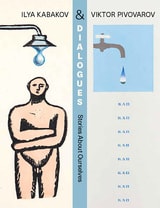
Dialogues
Ilya Kabakov and Viktor Pivovarov, Stories about OurselvesKsenia Nouril
Rutgers University Press, 2020
This exhibition catalog brings together Kabakov and Pivovarov’s key works for the first time, putting the two artists in dialogue and recreating their artistic community. It not only includes nearly hundred pages of full-color illustrations, but also provides complete English translations of the Russian texts that appear in the volume, plus new interviews with each artist. Taken together, they give viewers a new appreciation of the different aesthetic strategies each artist used to depict the absurdities of everyday life in the Soviet era. Published in partnership with the Zimmerli Museum.

Diary and Letters of Kaethe Kollwitz
Kaethe Kollwitz
Northwestern University Press, 1988
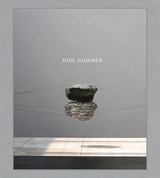
Don Gummer
Don Gummer
The Artist Book Foundation, 2021
The trajectory of Don Gummer's career as a sculptor began in New York City in the late 1970s with his wall reliefs of painted wood, carefully layered geometric works exhibiting a strong architectural influence. Moving beyond wood to stone, bronze, stainless steel, aluminum, and glass as his primary materials, his artworks evolved into subtly inventive freestanding sculptures, often of monumental scale, that exhibit his unfailing attention to craftsmanship and detail.
In a 2001 interview with Peter Plagens, American artist and art critic, Gummer described his interest in sculpture as "the recontextualization of natural phenomena, of unaltered things brought into aesthetic balance by choosing and placing." Using balance, proportion, and his unique sense of harmony, the artist is able to make durable materials seem almost buoyant. Negative space becomes an intrinsic element in his work, imparting a sense that his exquisite, seemingly permanent forms are ultimately as fleeting as any of nature's creations would be. The Artist Book Foundation is delighted to present Don Gummer, a new monograph on the artist and his highly acclaimed body of work.
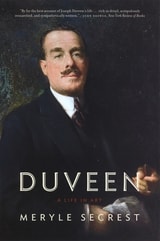
Duveen
A Life in ArtMeryle Secrest
University of Chicago Press, 2005
The first major biography of Duveen in more than fifty years and the first to make use of his enormous archive—only recently opened to the public—Meryle Secrest's Duveen traces the rapid ascent of the tirelessly enterprising dealer, from his humble beginnings running his father's business to knighthood and eventually apeerage. The eldest of eight sons of Jewish-Dutch immigrants, Duveen inherited an uncanny ability to spot a hidden treasure from his father, proprietor of a prosperous antiques business. After his father's death, Duveen moved the company into the riskier but lucrative market of paintings and quickly became one of the world's leading art dealers. The key to Duveen's success was his simple observation that while Europe had the art, America had the money; Duveen made his fortune by buying art from declining European aristocrats and selling them to the "squillionaires" in the United States.
"By far the best account of Joseph Duveen's life in a biography that is rich in detail, scrupulously researched, and sympathetically written. [Secrest's] inquiries into early-twentieth-century collecting whet our appetite for a more general history of the art market in the first half of the twentieth century."—John Brewer, New York Review of Books