Results by title
366 books match the query 'International' and 7 start with d

Dead in the Water
Global Lessons from the World Bank's Model Hydropower Project in LaosEdited by Bruce Shoemaker and William Robichaud; foreword by Yos Santasombat; afterword by Philip Hirsch
University of Wisconsin Press, 2019
In the 2000s, as the World Bank was reeling from revelations of past hydropower failures, it nonetheless promoted the enormous Nam Theun 2 project. NT2, the Bank believed, offered a new, wiser model of dam development that would alleviate poverty, protect the environment, engage locally affected people in a transparent fashion, and stimulate political transformation. This was a tall order. For the first time, this book shows in detail why, despite assertions of success from the World Bank and other agencies involved in the project, the dam's true story has been one of substantial loss for affected villagers and the regional environment. Nam Theun 2 is an important case study that illustrates much broader problems of global development policy.

Dealing in Virtue
International Commercial Arbitration and the Construction of a Transnational Legal OrderYves Dezalay and Bryant G. Garth
University of Chicago Press, 1996
Building on Pierre Bourdieu's structural approach, the authors show how an informal, settlement-oriented system became formalized and litigious. Integral to this new legal field is the intense personal competition among arbitrators to gain a reputation for virtue, hoping to be selected for arbitration panels. Since arbitration fees have skyrocketed, this is a high-stakes game.
Using multiple examples, Yves Dezalay and Bryant G. Garth explore how international developments can transform domestic methods for handling disputes and analyze the changing prospects for international business dispute resolution given the growing presence of such international market and regulatory institutions as the EEC, the WTO, and NAFTA.
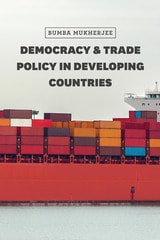
Democracy and Trade Policy in Developing Countries
Bumba Mukherjee
University of Chicago Press, 2016
Mukherjee offers the first comprehensive cross-national framework for identifying the specific economic conditions that influence trade policy in developing countries. Laying out the causes of variation in trade policy in four developing or recently developed countries—Brazil, India, Indonesia, and South Africa—he argues persuasively that changing political interactions among parties, party leaders, and the labor market are often key to trade policy outcome. For instance, if workers are in a position to benefit from opening up to trade, party leaders in turn support trade reforms by decreasing tariffs and other trade barriers.
At a time when discussions about the stability of new democracies are at the forefront, Democracy and Trade Policy in Developing Countries provides invaluable insight into the conditions needed for a democracy to survive in the developing world in the context of globalization.
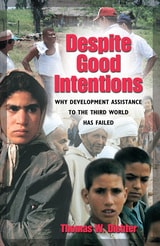
Despite Good Intentions
Why Development Assistance to the Third World Has FailedThomas W. Dichter
University of Massachusetts Press, 2003
For more than thirty-five years, Thomas W. Dichter has worked in the field of international development, managing and evaluating projects for nongovernmental organizations, directing a Peace Corps country program, and serving as a consultant for such agencies as USAID, UNDP, and the World Bank. On the basis of this extensive and varied experience, he has become an outspoken critic of what he terms the “international poverty alleviation industry.” He believes that efforts to reduce world poverty have been well-intentioned but largely ineffective. On the whole, the development industry has failed to serve the needs of the people it has sought to help.
To make his case, Dichter reviews the major trends in development assistance from the 1960s through the 1990s, illustrating his analysis with eighteen short stories based on his own experiences in the field. The analytic chapters are thus grounded in the daily life of development workers as described in the stories.
Dichter shows how development organizations have often become caught up in their own self-perpetuation and in public relations efforts designed to create an illusion of effectiveness. Tracing the evolution of the role of money (as opposed to ideas) in development assistance, he suggests how financial imperatives have reinforced the tendency to sponsor time-bound projects, creating a dependency among aid recipients. He also examines the rise of careerism and increased bureaucratization in the industry, arguing that assistance efforts have become disconnected from important lessons learned on the ground, and often lessons of world history.
In the end, Dichter calls for a more light-handed and artful approach to development assistance, with fewer agencies and experts involved. His stance is pragmatic, rather than ideological or political. What matters, he says, is what works, and the current practices of the development industry are simply not effective.

Development Prospects in Cuba
An Agenda in the MakingEdited by Pedro Monreal
University of London Press, 2002
Contributors include Julio Carranza, Anicia Garcia, Hiram Marquetti, Lazaro Pena, Omar Everleny Perez, and Julio Diaz Vazquez (University of Havana, Cuba), Claes Brundenius (Centre for Development Research, Copenhagen, Denmark), David Dapice (Tufts University and Harvard University, USA), Francisco Leon (United Nations Economic Commission for Latin America and the Caribbean), and Mauricio de Miranda (Pontificia Universidad Javeriana, Colombia).

Domestic Choices, International Markets
Dismantling National Barriers and Liberalizing Securities MarketsAndrew C. Sobel
University of Michigan Press, 1994
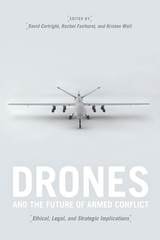
Drones and the Future of Armed Conflict
Ethical, Legal, and Strategic ImplicationsEdited by David Cortright, Rachel Fairhurst, and Kristen Wall
University of Chicago Press, 2015
Presenting a robust conversation among leading scholars in the areas of international legal standards, counterterrorism strategy, humanitarian law, and the ethics of force, Drones and the Future of Armed Conflict takes account of current American drone campaigns and the developing legal, ethical, and strategic implications of this new way of warfare. Among the contributions to this volume are a thorough examination of the American government’s legal justifications for the targeting of enemies using drones, an analysis of American drone campaigns’ notable successes and failures, and a discussion of the linked issues of human rights, freedom of information, and government accountability.