Results by title
751 books match the query 'International Relations' and 33 start with d
Debating Moderate Islam
The Geopolitics of Islam and the WestM A Muqtedar Khan
University of Utah Press, 2007
After 9/11, many Americans took the view that the attacks on the World Trade Center and the Pentagon were the leading edge of a new war: Islam versus the West. Yet the attacks were also part of the current struggle within Islam between fundamentalist and moderate approaches and were staged for maximum effect in the Muslim world.
This book is based on a special-topic issue of the American Journal of Islamic Social Sciences (Fall 2005), and brings together prominent Muslim voices from the policy and academic communities to debate the nature of moderate Islam and what moderation means in both a theological and a geopolitical sense. Participants reflect on the future of political Islam, its role in Muslim politics, western policies in the Muslim world, and the future of American-Muslim relations. This book and the debate it presents are vital to understanding these complex issues.
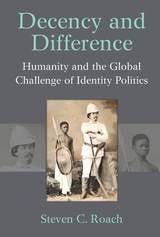
Decency and Difference
Humanity and the Global Challenge of Identity PoliticsSteven C. Roach
University of Michigan Press, 2019
Decency remains one of the most prevalent yet least understood terms in today’s political discourse. In evoking respect, kindness, courage, integrity, reason, and tolerance, it has long expressed an unquestioned duty and belief in promoting and protecting the dignity of all persons. Today this unquestioned belief is in crisis. Tribalism and identity politics have both hindered and threatened its moral stability and efficacy. Still, many continue to undertheorize its political character by isolating it from the effects of identity politics. Decency and Difference argues that decency is a primary source of the political tension that has long shaped the struggles for power, identity, and justice in the global arena. It distinguishes among basic, conservative, and liberal strands of decency to critically examine the many conflicting and competing applications of decency in global politics. Together these different strands reflect a long and uneven evolution from the British and American empires to a global network of justice. This powerful book exposes the gaps of decency and the disparate ways it is practiced, thus addressing the global challenge of configuring a diverse political ethic of decency.

Deciding to Intervene
The Reagan Doctrine and American Foreign PolicyJames M. Scott
Duke University Press, 1996
Using a comparative case study method, Scott examines the historical, intellectual, and ideological origins of the Reagan Doctrine as it was applied to Afghanistan, Angola, Cambodia, Nicaragua, Mozambique, and Ethiopia. Scott draws on many previously unavailable government documents and a wide range of primary material to show both how this policy in particular, and American foreign policy in general, emerges from the complex, shifting interactions between the White House, Congress, bureaucratic agencies, and groups and individuals from the private sector.
In evaluating the origins and consequences of the Reagan Doctrine, Deciding to Intervene synthesizes the lessons that can be learned from the Reagan administration’s policy and places them within the broad perspective of foreign policy-making today. Scott’s measured treatment of this sensitive and important topic will be welcomed by scholars in policy studies, international affairs, political science, and history, as well as by any reader with an interest in the formation of American foreign policy.
Decolonization and World Peace
By Brian Urquhart
University of Texas Press, 1989
Brian Urquhart's remarkable career in the United Nations began when the UN was founded in 1945 and ended in 1986 after a twelve-year tenure as Under Secretary-General for Special Political Affairs—the equivalent of commander of UN peacekeeping operations. Among the many revolutions he observed during that period was the process of decolonization, which completely changed the geopolitical map of the world and the conditions under which governments seek to assure world peace. In Decolonization and World Peace, he charts the rapid progress of decolonization in Africa, the Middle East, and other areas of the Third World and describes some of its repercussions.
One of the most serious repercussions has been the chain of regional conflicts arising from the creation of postcolonial power vacuums in various parts of the world. Attributing the difficulty in resolving many of these conflicts—including the Palestine conflict and the Iran-Iraq War—to the climate of Cold War that paralyzed UN authority from the 1960s through the early 1980s, Urquhart is encouraged by what he calls a "new summer of international relations" brought on by the warming of relations between the US and the USSR.
The four chapters of Decolonization and World Peace are based on the Tom Slick World Peace lectures that Urquhart delivered at the Lyndon B. Johnson School of Public Affairs of the University of Texas at Austin in 1988. The appendices offer further insights into the peacekeeping potential of the UN. Included are his remarks at the Nobel Prize Banquet in Norway, on the occasion of the award of the 1988 Nobel Peace Prize to UN peacekeeping forces.

Decolonizing Independence
Statecraft in Nigeria’s First Republic and Israeli InterventionsLynn Schler
Michigan State University Press, 2022
Defacing Power
The Aesthetics of Insecurity in Global PoliticsBrent J. Steele
University of Michigan Press, 2012
"Combining a rich and varied set of theoretical insights with a subtle analysis of the politics of American foreign policy, Defacing Power marks an important contribution toward understanding the power of identity in world politics. Engagingly written and rigorously argued, Steele's challenging analysis is incisive, important, and rewarding."
---Michael C. Williams, Graduate School of Public and International Affairs, University of Ottawa
"Brent Steele's marvelous excavation of the aesthetic dimensions of power is strikingly irreverent, inasmuch as he displays no commitment to ex ante disciplinary or substantive constraints in his quest to disclose those moments of creative action so often overlooked by theories and theorists wedded to the grandiose and the transhistorical. Steele samples and remixes a myriad of sources, arranging them so as to produce a transgressively insightful account of how 'work on the Self,' often condemned as self-indulgent by prior generations of intellectuals, might just point in the direction of a more sustainably secure world."
---Patrick Thaddeus Jackson, School of International Service, American University
"Defacing Power successfully integrates work from Dewey to Morgenthau to Foucault, as well as a wide range of contemporary international relations scholars, in its genealogy of power conceptualizations and characteristics. This book is theoretically sophisticated and serious. It should be of interest to students of international politics, international theory, social theory, and foreign policy."
---Cecelia Lynch, Center for Global Peace and Conflict Studies, University of California, Irvine
Defacing Power investigates how nation-states create self-images in part through aesthetics and how these images can be manipulated to challenge those states' power. Although states have long employed media, such as radio, television, and film, for their own image-making purposes, counterpower agents have also seized upon new telecommunications technologies. Most recently, the Internet has emerged as contested territory where states and other actors wage a battle of words and images.
Moving beyond theory, Brent Steele illustrates his provocative argument about the vulnerability of power with examples from recent history: the My Lai Massacre and the Tet Offensive, September 11 and the al-Qaeda communiqués, the atrocities at Fallujah and Abu Ghraib, and the U.S. response to the Asian tsunami of December 2004. He demonstrates how a nation-state---even one as powerful as the United States---comes to feel threatened not only by other nation-states or terrorist organizations but also by unexpected events that challenge its self-constructed image of security. At the same time, Steele shows that as each generation uses available media to create and re-create a national identity, technological innovations allow for the shifting, upheaval, and expansion of the cultural structure of a nation.
Brent J. Steele is Associate Professor of Political Science at the University of Kansas.

Defending the Holy Land
A Critical Analysis of Israel's Security and Foreign PolicyZeev Maoz
University of Michigan Press, 2008
Most of the wars in which Israel was involved, Maoz shows, were entirely avoidable, the result of deliberate Israeli aggression, flawed decision-making, and misguided conflict management strategies. None, with the possible exception of the 1948 War of Independence, were what Israelis call "wars of necessity." They were all wars of choice-or, worse, folly.
Demonstrating that Israel's national security policy rested on the shaky pairing of a trigger-happy approach to the use of force with a hesitant and reactive peace diplomacy, Defending the Holy Land recounts in minute-by-minute detail how the ascendancy of Israel's security establishment over its foreign policy apparatus led to unnecessary wars and missed opportunites for peace.
A scathing and brilliant revisionist history, Defending the Holy Land calls for sweeping reform of Israel's foreign policy and national security establishments. This book will fundamentally transform the way readers think about Israel's troubled history.
Defining the National Interest
Conflict and Change in American Foreign PolicyPeter Trubowitz
University of Chicago Press, 1998
Peter Trubowitz offers a new and compelling conception of American foreign policy and the domestic geopolitical forces that shape and animate it. Foreign policy conflict, he argues, is grounded in America's regional diversity. The uneven nature of America's integration into the world economy has made regionalism a potent force shaping fights over the national interest. As Trubowitz shows, politicians from different parts of the country have consistently sought to equate their region's interests with that of the nation. Domestic conflict over how to define the "national interest" is the result. Challenging dominant accounts of American foreign policy-making, Defining the National Interest exemplifies how interdisciplinary scholarship can yield a deeper understanding of the connections between domestic and international change in an era of globalization.
Delivering on Promises
The Domestic Politics of Compliance in International CourtsLauren J. Peritz
University of Chicago Press, 2022
When do international institutions effectively promote economic cooperation among countries and help them resolve conflict? Although the international system lacks any central governing authority, states have created rules, particularly around international economic relations, and empowered international tribunals to enforce those rules. Just how successful are these institutions? In Delivering on Promises Lauren J. Peritz demonstrates that these international courts do indeed deliver results—but they are only effective under certain conditions.
As Peritz shows, states are less likely to comply with international rules and international court decisions when domestic industries have the political ability to obstruct compliance in particular cases. The author evaluates the argument with an extensive empirical analysis that traces the domestic politics of compliance with the decisions of two international economic courts: the World Trade Organization’s dispute settlement mechanism and the Court of Justice of the European Union. At a time when international agreements are under attack, this book sheds light on the complex relationship between domestic politics and international economic cooperation, offering detailed evidence that international economic courts are effective at promoting interstate cooperation.
Demilitarization in the Contemporary World
Edited by Peter N. Stearns
University of Illinois Press, 2013
In nine insightful chapters, this volume's contributors outline each nation's demilitarization choices and how they were made. They investigate factors such as military defeat, border security risks, economic pressures, and the development of strong peace cultures among citizenry. Also at center stage is the influence of the United States, which fills a paradoxical role as both an enabler of demilitarization and a leader in steadily accelerating militarization.
Bookended by Peter N. Stearns' thought-provoking historical introduction and forward-looking conclusion, the chapters in this volume explore what true demilitarization means and how it impacts a society at all levels, military and civilian, political and private. The examples chosen reveal that successful demilitarization must go beyond mere troop demobilization or arms reduction to generate significant political and even psychological shifts in the culture at large. Exemplifying the political difficulties of demilitarization in both its failures and successes, Demilitarization in the Contemporary World provides a possible roadmap for future policies and practices.
Democracy and Imperialism
Irving Babbitt and Warlike DemocraciesWilliam S. Smith
University of Michigan Press, 2019
Following costly U.S. engagement in two wars in the Middle East, questions about the appropriateness of American military interventions dominate foreign policy debates. Is an interventionist foreign policy compatible with the American constitutional tradition?
This book examines critic Irving Babbitt’s (1865–1933) unique contribution to understanding the quality of foreign policy leadership in a democracy. Babbitt explored how a democratic nation’s foreign policy is a product of the moral and cultural tendencies of the nation’s leaders, arguing that the substitution of expansive, sentimental Romanticism for the religious and ethical traditions of the West would lead to imperialism.
The United States’ move away from the restraint and order of sound constitutionalism to involve itself in the affairs of other nations will inevitably cause a clash with the “civilizational” regions that have emerged in recent decades. Democracy and Imperialism uses the question of soul types to address issues of foreign policy leadership, and discusses the leadership qualities that are necessary for sound foreign policy.
Democracy and Trade Policy in Developing Countries
Bumba Mukherjee
University of Chicago Press, 2016
Mukherjee offers the first comprehensive cross-national framework for identifying the specific economic conditions that influence trade policy in developing countries. Laying out the causes of variation in trade policy in four developing or recently developed countries—Brazil, India, Indonesia, and South Africa—he argues persuasively that changing political interactions among parties, party leaders, and the labor market are often key to trade policy outcome. For instance, if workers are in a position to benefit from opening up to trade, party leaders in turn support trade reforms by decreasing tariffs and other trade barriers.
At a time when discussions about the stability of new democracies are at the forefront, Democracy and Trade Policy in Developing Countries provides invaluable insight into the conditions needed for a democracy to survive in the developing world in the context of globalization.
Democracy, Dictatorship, and Term Limits
Alexander Baturo
University of Michigan Press, 2014
A national constitution or other statute typically specifies restrictions on executive power, often including a limit to the number of terms the chief executive may hold office. In recent decades, however, some presidents of newly established democracies have extended their tenure by various semilegal means, thereby raising the specter—and in some cases creating the reality—of dictatorship.
Alexander Baturo tracks adherence to and defiance of presidential term limits in all types of regimes (not only democratic regimes) around the world since 1960. Drawing on original data collection and fieldwork to investigate the factors that encourage playing by or manipulating the rules, he asks what is at stake for the chief executive if he relinquishes office. Baturo finds that the income-generating capacity of political office in states where rent-seeking is prevalent, as well as concerns over future immunity and status, determines whether or not an executive attempts to retain power beyond the mandated period. Democracy, Dictatorship, and Term Limitswill appeal to scholars of democratization and executive power and also to political theorists.
Democratic Peace
A Political BiographyPiki Ish-Shalom
University of Michigan Press, 2015
The Democratic Peace Thesis holds that democracies rarely make war on other democracies. Political scientists have advanced numerous theories attempting to identify precisely which elements of democracy promote this mutual peace, often hoping that Democratic Peace could be the final and ultimate antidote to war. However, as the theories were taken up by political figures, the immediate outcomes were war and the perpetuation of hostilities.
Political theorist Piki Ish-Shalom sketches the origins and early academic development of the Democratic Peace Thesis. He then focuses on the ways in which various Democratic Peace Theories were used by Bill Clinton and George W. Bush both to shape and to justify U.S. foreign policy, particularly the U.S. stance on the Israeli-Palestinian situation and the War in Iraq. In the conclusion, Ish-Shalom boldly confronts the question of how much responsibility theoreticians must bear for the political uses—and misuses—of their ideas.

Democratizing Communist Militaries
The Cases of the Czech and Russian Armed ForcesMarybeth Peterson Ulrich
University of Michigan Press, 2000
In a groundbreaking study, Marybeth Peterson Ulrich explores the attitudes of the leaders of the armed forces in Russia and the Czech Republic toward the new democratic governments and suggests ways in which we might encourage the development of politically neutral militaries in these states. Building on the work of Samuel Huntington and others on the relationship between the military and the state, the author suggests that norms of military professionalism must change if the armies in countries making a transition from communist rule are to become strong supporters of the democratic state. The Czech Republic and Russia are interesting cases, because they have had very different experiences in the transition; they have different geopolitical goals; and they experienced different military-civilian relationships during the Soviet period. The author also explores American and NATO programs to promote democratization in these militaries and suggests changes in the programs.
Marybeth Peterson Ulrich is Associate Professor of Government, U.S. Army War College.
Desire and Imitation in International Politics
Jodok Troy
Michigan State University Press, 2021
Despite Good Intentions
Why Development Assistance to the Third World Has FailedThomas W. Dichter
University of Massachusetts Press, 2003
For more than thirty-five years, Thomas W. Dichter has worked in the field of international development, managing and evaluating projects for nongovernmental organizations, directing a Peace Corps country program, and serving as a consultant for such agencies as USAID, UNDP, and the World Bank. On the basis of this extensive and varied experience, he has become an outspoken critic of what he terms the “international poverty alleviation industry.” He believes that efforts to reduce world poverty have been well-intentioned but largely ineffective. On the whole, the development industry has failed to serve the needs of the people it has sought to help.
To make his case, Dichter reviews the major trends in development assistance from the 1960s through the 1990s, illustrating his analysis with eighteen short stories based on his own experiences in the field. The analytic chapters are thus grounded in the daily life of development workers as described in the stories.
Dichter shows how development organizations have often become caught up in their own self-perpetuation and in public relations efforts designed to create an illusion of effectiveness. Tracing the evolution of the role of money (as opposed to ideas) in development assistance, he suggests how financial imperatives have reinforced the tendency to sponsor time-bound projects, creating a dependency among aid recipients. He also examines the rise of careerism and increased bureaucratization in the industry, arguing that assistance efforts have become disconnected from important lessons learned on the ground, and often lessons of world history.
In the end, Dichter calls for a more light-handed and artful approach to development assistance, with fewer agencies and experts involved. His stance is pragmatic, rather than ideological or political. What matters, he says, is what works, and the current practices of the development industry are simply not effective.
Detente in Europe
The Soviet Union & The West Since 1953John Van Oudenaren
Duke University Press, 1991
In redefining détente as a process, rather than a code of conduct, Van Oudenaren looks to its origins in Soviet policy earlier than previously identified and analyzes both its history and character. His study explores the restoration of four-power negotiations in Germany and Austria in the mid-1950s, their subsequent breakdown in the Berlin crisis, their unexpected revival in 1990 in the form of “two plus four” talks on German unity, and the future of the Soviet Union as a European power.
Among the key elements of détente discussed are diplomacy, particularly the role of summit conferences; cooperation among parliaments, political parties, and trade unions; arms control; economic relations; and links among cultural institutions, churches, and peace movements.
Diaspora and Trust
Cuba, Mexico, and the Rise of ChinaAdrian H. Hearn
Duke University Press, 2016
Diplomatic Material
Affect, Assemblage, and Foreign PolicyJason Dittmer
Duke University Press, 2017

Disarmed Democracies
Domestic Institutions and the Use of ForceDavid P. Auerswald
University of Michigan Press, 2000
Disarming Doomsday
The Human Impact of Nuclear Weapons since HiroshimaBecky Alexis-Martin
Pluto Press, 2019

Discovering the Scottish Revolution 1692-1746
Neil Davidson
Pluto Press, 2003
Davidson explores the political and economic changes of these years, revealing how social and economic power was transferred from one class to another. He describes how Scotland was transformed from a backward and feudal economy to a new centre of emergent capitalism. He traces the economic and social crisis that led to Scotland's incorporation into the Union in 1707, but argues that the Union did not lead to the transformation of Scottish society. The decisive period was instead the aftermath of the last Jacobite revolt in 1746, whose failure was integral to the survival and consolidation of British, and ultimately global capitalism.
'His opinions are bound to cause controversy and discussion ... a good thing as Scottish history desperately needs the airing and voicing of new approaches.'
John R Young, Albion.
‘What is so good about Neil Davidson’s brave study is that he brings a Marxist perspective to bear on Scottish history in very clear and readable prose. Quotations and statistics drawn from uncannily wide reading will make this book of great value even to those who disagree with it.’
Angus Calder, author of Revolutionary Empire and Revolving Culture: Notes from the Scottish Republic

Discussing Hitler
Advisers of U.S. Diplomacy in Central Europe, 1934-41Tibor Frank
Central European University Press, 2003

Disease and Diplomacy
Weaponizing Medical Aid to Syrian Refugees in JordanSigrid Lupieri
University of Michigan Press, 2026
When millions of Syrians fled civil war after 2011, international donors and humanitarian organizations mobilized to provide assistance to neighboring countries. Focusing on Jordan—one of the world’s largest refugee hosting states—Disease and Diplomacy investigates how medical aid to refugees operates as an instrument of diplomacy and control within the global refugee system. It argues that health, far from being an apolitical humanitarian good, is a bargaining tool that states commodify to extract resources and concessions.
Drawing on years of field research, interviews, and policy analysis, the book shows how the Jordanian government, international donors, and humanitarian agencies turned healthcare for refugees into a tool for negotiating power, resources, and responsibility. In these cases, refugees, caught within these negotiations, often found their access to care determined not by medical need, but by political calculation. Developing the concept of the weaponization of medical aid, the book extends theories of migration diplomacy and refugee rentierism to show how global power dynamics shape who receives healthcare. The analysis identifies a self-reinforcing “crisis loop” that privileges short-term, highly visible responses while neglecting chronic and long-term needs. Disease and Diplomacy advances an interdisciplinary framework for understanding how humanitarian practices reinforce global inequalities and argues for more equitable approaches to refugee health and responsibility-sharing in the international system.
Dispatches from Pakistan
Madiha R. Tahir
University of Minnesota Press, 2014
Since 9/11, Pakistan has loomed large in the geopolitical imagination of the West. A key ally in the global war on terror, it is also the country in which Osama bin Laden was finally found and killed—and the one that has borne the brunt of much of the ongoing conflict’s collateral damage. Despite its prominence on the front lines and on the front pages, Pakistan has been depicted by Western observers simplistically in terms of its corruption, its fundamentalist Islamic beliefs, and its propensity for violence. Dispatches from Pakistan, in contrast, reveals the complexities, the challenges, and the joys of daily life in the country, from the poetry of Gilgit to the graffiti of Gwadar, from an army barrack in Punjab to the urban politics of Karachi.
This timely book brings together journalists, activists, academics, and artists to provide a rich, in-depth, and intriguing portrait of contemporary Pakistani society. Straddling a variety of boundaries—geographic, linguistic, and narrative—Dispatches from Pakistan is a vital attempt to speak for the multitude of Pakistanis who, in the face of seemingly unimaginable hardships, from drone strikes to crushing poverty, remain defiantly optimistic about their future. While engaging in conversations on issues that make the headlines in the West, the contributors also introduce less familiar dimensions of Pakistani life, highlighting the voices of urban poets, rural laborers, industrial workers, and religious-feminist activists—and recovering Pakistani society’s inquilabi (revolutionary) undercurrents and its hopeful overtones.
Contributors: Mahvish Ahmad; Nosheen Ali, U of California, Berkeley; Shafqat Hussain, Trinity College; Humeira Iqtidar, King’s College London; Amina Jamal, Ryerson U; Hafeez Jamali, U of Texas at Austin; Iqbak Khattak; Zahra Malkani; Raza Mir; Hammad Nasar; Junaid Rana, U of Illinois at Urbana–Champaign; Maliha Safri, Drew U; Aasim Sajjad Akhtar, Lahore U of Management Sciences; Ayesha Siddiqa; Sultan-i-Rome, Government Jahanzeb Postgraduate College, Swat, Pakistan; Saadia Toor, Staten Island College.
Distaff Diplomacy
The Empress Eugénie and the Foreign Policy of the Second EmpireBy Nancy Nichols Barker
University of Texas Press, 1967
The Empress Eugénie, wife of Napoleon III and one of the most beautiful women ever to grace a throne, was the victim of her own inconstant mind. A daughter of an aristocratic Spanish family, she had a natural reverence for legitimate monarchy; yet her high-spirited temperament and chivalric outlook made her admire instinctively the boldness and aura of glory that she associated with the Napoleonic empire. The incongruous principles of Legitimism and Bonapartism battling within the Empress produced in her a double-mindedness that had tragic consequences.
The Empress has always been a controversial figure. Her enemies have blamed her the fall of the Second Empire and the defeat of France; her admirers have disclaimed for her any part in the mistakes that led to the disastrous Franco-Prussian War of 1870. To determine the actual role that Eugénie played, Barker, using material from public and private European archives and a wide range of published works, examines in Distaff Diplomacy the development of the Empress' views on foreign affairs and ascertains their effect on the formation of the policies of the Second Empire.
Eugénie's influence fluctuated widely over the years. As a bride she was neither interested in nor knowledgable about foreign matters; as a middle-aged woman, in the late years of the Empire, she was discredited by her past errors, but she continued to pull strings outside of normal diplomatic channels. Her most sustained and effective work, from 1861 to 1863, was largely the inspiration for a grand design to remake the map to assure French hegemony in Europe and to establish an empire in Mexico. The success of this design rested on an Austro-French alliance; but the design itself, reflecting the Empress' incoherent thinking, contained the fatal inconsistencies that made Austrian rejection of it inevitable. Since the Mexican expedition and the diplomatic muddle of 1863 were the watershed from which the subsequent troubles of the Empire flowed, the Empress must be held responsible for seriously undermining the foreign policy of the Empire. Despite Eugénie's many fine qualities—her generosity of spirit, her splendid courage, and her moral integrity—her diplomatic efforts, affected as they were by her background, temperament, state of health, and changing moods, did not amount to statesmanship. This first systematic examination of the Empress' influence on foreign policy delves deeply and carefully into the subject.
Distorted Mirrors
Americans and Their Relations with Russia and China in the Twentieth CenturyDonald E. Davis & Eugene P. Trani
University of Missouri Press, 2009

Disunion Among Ourselves
The Perilous Politics of the American RevolutionEli Merritt
University of Missouri Press, 2025
Winner of the 2024 Society of the Cincinnati Prize from the American Revolution Institute
Winner of the 2023 American Revolution Round Table of Philadelphia book award
In this eye-opening account, Eli Merritt reveals the deep political divisions that almost tore the Union apart during the American Revolution. So fractious were the founders’ political fights that they feared the War of Independence might end in disunion and civil war.
Instead of disbanding into separate regional confederacies, the founders managed to unite for the sake of liberty and self-preservation. In so doing, they succeeded in holding the young nation together. To achieve this, they forged grueling compromises, including Declaration of Independence in 1776, the Mississippi-Fisheries Compromise of 1779, and the ratification of the Articles of Confederation in 1781.
In addition to bringing new insights to the history of the American Revolution, Disunion Among Ourselves has inevitable resonances with our present era of political hyperpolarization and serves as a touchstone for contemporary politics, reminding us that the founders overcame far tougher times than our own through commitment to ethical constitutional democracy and compromise.

Divided Korea
Toward a Culture of ReconciliationRoland Bleiker
University of Minnesota Press, 2005
In 2002, North Korea precipitated a major international crisis when it revealed the existence of a secret nuclear weapons program and announced its withdrawal from the Nuclear Nonproliferation Treaty. Earlier in the year, George W. Bush had declared North Korea part of the “axis of evil,” and soon afterward his administration listed the country as a potential target of a preemptive nuclear strike. Pyongyang’s angry reaction ensured the complete deterioration of relations on the Korean peninsula, where only two years before the leaders of North and South Korea had come together in a historic summit meeting.
Few international conflicts are as volatile, protracted, or seemingly insoluble as the one in Korea, where mutual mistrust, hostile Cold War attitudes, and the possibility of a North Korean economic collapse threaten the security of the entire region. For Roland Bleiker, this persistently recurring pattern suggests profound structural problems within and between the two Koreas that have not been acknowledged until now. Expanding the discussion beyond geopolitics and ideology, Bleiker places peninsular tensions in the context of an ongoing struggle over competing forms of Korean identity. Divided Korea examines both domestic and international attitudes toward Korean identity, the legacy of war, and the possibilities for-and anxieties about-unification.
Divided Korea challenges the prevailing logic of confrontation and deterrence, embarking on a fundamental reassessment of both the roots of the conflict and the means to achieve a more stable political environment and, ultimately, peace. In order to realize a lasting solution, Bleiker concludes, the two Koreas and the international community must first show a willingness to accept difference and contemplate forgiveness as part of a broader reconciliation process.
Roland Bleiker is professor of international relations at the University of Queensland. From 1986 to 1988 he served as chief of office for the Swiss delegation to the Neutral Nations Supervisory Commission in Panmunjom.

Dominant Powers and Subordinate States
The United States in Latin America and the Soviet Union in Eastern EuropeJan F. Triska, ed.
Duke University Press, 1986
Don't Mention the War
Northern Ireland, Propaganda and the MediaDavid Miller
Pluto Press, 1994
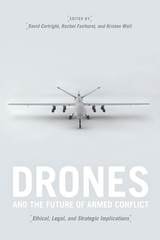
Drones and the Future of Armed Conflict
Ethical, Legal, and Strategic ImplicationsEdited by David Cortright, Rachel Fairhurst, and Kristen Wall
University of Chicago Press, 2015
Presenting a robust conversation among leading scholars in the areas of international legal standards, counterterrorism strategy, humanitarian law, and the ethics of force, Drones and the Future of Armed Conflict takes account of current American drone campaigns and the developing legal, ethical, and strategic implications of this new way of warfare. Among the contributions to this volume are a thorough examination of the American government’s legal justifications for the targeting of enemies using drones, an analysis of American drone campaigns’ notable successes and failures, and a discussion of the linked issues of human rights, freedom of information, and government accountability.