496 books match the query 'Jewish' and 19 start with d

cover of Data Mind: Poems

Data Mind

Poems

Joanna Fuhrman

Northwestern University Press, 2025

Wrestling with the experience of living online as a non-digital native 

Joanna Fuhrman didn’t grow up online. Her generation entered the digital age as adults, with optimism about the possibilities it would bring for community building. In the alien landscape of the internet, they indeed found moments of joy and connection, but they also watched in anguish as what had been sold as a utopian space instead magnified the anti-democratic demons of necrocapitalism. In this darkly comic and surreal collection, Fuhrman lets herself fall into the internet wormhole of these conflicting realities. With titles ranging from “You Won’t Believe How Your Favorite Childhood Star Looks Now” to “We’ll Burn That Algorithm When We Get to It,” the feminist prose poems in Data Mind remix the tropes of digital life with the puckishness and embodied urgency for which Fuhrman is celebrated. 
[more]
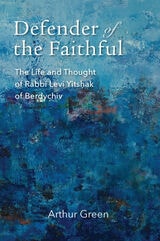
cover of Defender of the Faithful: The Life and Thought of Rabbi Levi Yitshak of Berdychiv

Defender of the Faithful

The Life and Thought of Rabbi Levi Yitshak of Berdychiv

Arthur Green

Brandeis University Press, 2022

The first scholarly biography of Levi Yitshak of Berdychiv in English in over thirty-five years.
 
Defender of the Faithful explores the life and thought of Levi Yitshak of Berdychiv (1740–1809), one of the most fascinating and colorful Hasidic leaders of his time. This is an intellectual and religious biography, a reading of the development of his thought and career. Featuring examples of Levi Yitshak’s extraordinary texts alongside insightful analysis by scholar and theologian Arthur Green, Defender of the Faithful is a compelling study of both Levi Yitshak’s theology and broader philosophy.

 
[more]
cover of Degas at the Gas Station: Essays

Degas at the Gas Station

Essays

Thomas Beller

Duke University Press, 2025
In his latest collection, Thomas Beller trains his piercing literary eye on how a single, seismic event indelibly shapes the trajectory of the common and mundane experiences of one’s life. Weaving together a charming set of autobiographical stories, Beller interrogates the randomness and contingencies that separate sadness from joy, death from life. His father escaped the Nazis, only to die in America from cancer when Beller was nine years old. Beller measures how this loss impacted his life as the father of two young children and became both a catalyst for understanding an ever-present sorrow. At the same time, ordinary moments—from retrieving an iPod from the subway tracks to encountering the police at a Kinks concert to observing his young tutued ballerina daughter at a gas station—lead to instances of penetrating insight, self-deprecation, and humor. Degas at the Gas Station presents an endearing and bracingly honest portrait of the author as an ever-curious observer of the mysteries and profundities of everyday life.
[more]
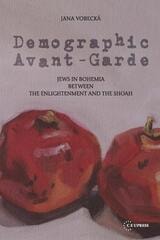
cover of Demographic Avant-Garde: Jews in Bohemia between the Enlightenment and the Shoah

Demographic Avant-Garde

Jews in Bohemia between the Enlightenment and the Shoah

Jana Vobecká

Central European University Press, 2013
This book studies the unique demographic behavior of Jews in Bohemia (the historic part of the Czech Republic), starting from a moment in history when industrialization in Central Europe was still far away in the future, and when Jews were still living legally restricted lives in ghettos. Very early on, however, from the 18th century onwards, Jews developed patterns of decreasing mortality and fertility that was not observed among the gentile majority in Bohemia; patterns which established them as a demographic avant-garde population in all of Europe.
[more]
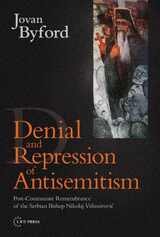
cover of Denial and Repression of Anti-Semitism: Post-Communist Rehabilitation of the Serbian Bishop Nikolaj Velimirovic

Denial and Repression of Anti-Semitism

Post-Communist Rehabilitation of the Serbian Bishop Nikolaj Velimirovic

Jovan Byford

Central European University Press, 2008

Bishop Nikolaj Velimirovic (1881–1956) is arguably one the most controversial figures in contemporary Serbian national culture. Having been vilified by the former Yugoslav Communist authorities as a fascist and an antisemite, this Orthodox Christian thinker has over the past two decades come to be regarded in Serbian society as the most important religious person since medieval times and an embodiment of the authentic Serbian national spirit. Velimirovic was formally canonised by the Serbian Orthodox Church in 2003. In this book, Jovan Byford charts the posthumous transformation of Velimirovic from 'traitor' to 'saint' and examines the dynamics of repression and denial that were used to divert public attention from the controversies surrounding the bishop's life, the most important of which is his antisemitism. Byford offers the first detailed examination of the way in which an Eastern Orthodox Church manages controversy surrounding the presence of antisemitism within its ranks and he considers the implications of the continuing reverence of Nikolaj Velimirovic for the persistence of antisemitism in Serbian Orthodox culture and in Serbian society as a whole. This book is based on a detailed examination of the changing representation of Bishop Nikolaj Velimirovic in the Serbian media and in commemorative discourse devoted to him. The book also makes extensive use of exclusive interviews with a number of Serbian public figures who have been actively involved in the bishop’s rehabilitation over the past two decades.
[more]
cover of Diaries by Jewish and Christian Adolescents: Reconstructing the Social Reality of Pre- and Post-Holocaust Hungary

Diaries by Jewish and Christian Adolescents

Reconstructing the Social Reality of Pre- and Post-Holocaust Hungary

Gergely Kunt

Central European University Press, 2027
Based on twenty published and manuscript diaries written by Jewish and non-Jewish adolescents during wartime Hungary, this book provides an unprecedented microhistorical perspective on how young people observed, interpreted, and internalized the profound social and political upheavals of the late 1930s through the 1950s. These diaries—often discovered by chance and preserved against all odds—reveal not only personal struggles with identity, belief and belonging, but also troubling reflections of prevailing social attitudes, including complicity, silence and, at times, approval toward the persecution of their peers. Through intimate narrative details and marginalia—from doodles to worn pages—the text reconstructs the emotional and intellectual worlds of teenagers who witnessed history unfolding around them. An unsettling yet essential contribution to Holocaust studies, social history and memory research, it challenges contemporary readers to confront the disquieting mirror held up by youth living through one of Hungary’s darkest eras.
[more]
cover of Diaries by Jewish and Christian Adolescents: Reconstructing the Social Reality of Pre- and Post-Holocaust Hungary

Diaries by Jewish and Christian Adolescents

Reconstructing the Social Reality of Pre- and Post-Holocaust Hungary

Gergely Kunt

Central European University Press, 2027

Based on twenty published and manuscript diaries written by Jewish and non-Jewish adolescents during wartime Hungary, this book provides an unprecedented microhistorical perspective on how young people observed, interpreted, and internalized the profound social and political upheavals of the late 1930s through the 1950s. These diaries—often discovered by chance and preserved against all odds—reveal not only personal struggles with identity, belief and belonging, but also troubling reflections of prevailing social attitudes, including complicity, silence and, at times, approval toward the persecution of their peers. Through intimate narrative details and marginalia—from doodles to worn pages—the text reconstructs the emotional and intellectual worlds of teenagers who witnessed history unfolding around them. An unsettling yet essential contribution to Holocaust studies, social history and memory research, it challenges contemporary readers to confront the disquieting mirror held up by youth living through one of Hungary’s darkest eras.
[more]
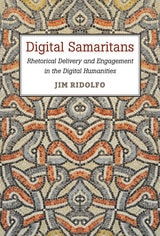
cover of Digital Samaritans: Rhetorical Delivery and Engagement in the Digital Humanities

Digital Samaritans

Rhetorical Delivery and Engagement in the Digital Humanities

Jim Ridolfo

University of Michigan Press, 2015

Digital Samaritans explores rhetorical delivery and cultural sovereignty in the digital humanities. The exigence for the book is rooted in a practical digital humanities project based on the digitization of manuscripts in diaspora for the Samaritan community, the smallest religious/ethnic group of 770 Samaritans split between Mount Gerizim in the Palestinian Authority and in Holon, Israel. Based on interviews with members of the Samaritan community and archival research, Digital Samaritans explores what some Samaritans want from their diaspora of manuscripts, and how their rhetorical goals and objectives relate to the contemporary existential and rhetorical situation of the Samaritans as a living, breathing people. 
 
How does the circulation of Samaritan manuscripts, especially in digital environments, relate to their rhetorical circumstances and future goals and objectives to communicate their unique cultural history and religious identity to their neighbors and the world? Digital Samaritans takes up these questions and more as it presents a case for collaboration and engaged scholarship situated at the intersection of rhetorical studies and the digital humanities.
 
[more]
cover of Dirshuni: Contemporary Women’s Midrash

Dirshuni

Contemporary Women’s Midrash

Edited by Tamar Biala

Brandeis University Press, 2022

A unique compilation of contemporary women’s midrashim.
 
Dirshuni: Contemporary Women’s Midrash, is the first-ever English edition of a historic collection of midrashim composed by Israeli women, which has been long-anticipated by multiple American audiences, including synagogues, rabbinical seminaries, adult learning programs, Jewish educators, and scholars of gender and religion. Using the classical forms developed by the ancient rabbis, the contributors express their religious and moral thought and experience through innovative interpretations of scripture. The women writers, from all denominations and beyond, of all political stripes and ethnic backgrounds, contribute their Torah to fill the missing half of the sacred Jewish bookshelf. This book reflects dramatic changes in the agency of women in the world of religious writings. The volume features a comprehensive introduction to Midrash for the uninitiated reader by the distinguished scholar Tamar Kadari and extensive annotation and commentary by Tamar Biala.

 
[more]
cover of Dispersing the Ghetto: The Relocation of Jewish Immigrants Across America

Dispersing the Ghetto

The Relocation of Jewish Immigrants Across America

Jack Glazier

Michigan State University Press, 2005

In the early 20th century, the population of New York City’s Lower East Side swelled with vast numbers of eastern European Jewish immigrants. The tenements, whose inhabitants faced poverty and frequent unemployment, provoked the hostile attention of immigration restrictionists, many of whom disdained Jews, racial minorities, and foreigners as inferior. Accordingly, they aimed to stifle the growth of dense ethnic settlements by curtailing immigration. 
     Dispersing the Ghetto is the first book to describe in detail an important but little-known chapter in American immigration history, that of the Industrial Removal Office (IRO), founded in 1901. Established American Jews—arrivals from the German states only a generation before—felt vulnerable. They feared their security was at risk owing to the rising tide of Russian Jews on the east coast. German American Jews believed they too might become the objects of anti-Semitic scorn, which would be disastrous for German and Russian Jews alike if it were allowed to shape public policy. As a defensive measure to undercut the immigration restrictionist movement, American Jews of German origin established the Industrial Removal Office to promote the relocation of the immigrants to the towns and cities of the nation’s interior. Until the onset of World War I, the IRO directed the resettlement of Jewish immigrants from New York and other port cities to hundreds of communities nationwide. 
     Drawing on a variety of sources, including the IRO archive, first-person accounts of resettlement, local records, and the Jewish press, Glazier recounts the operation of the IRO and the complex relationship between two sets of Jewish immigrants.
[more]
cover of Dispossession: Plundering German Jewry, 1933-1953

Dispossession

Plundering German Jewry, 1933-1953

Christoph Kreutzmüller and Jonathan R. Zatlin, Editors

University of Michigan Press, 2020

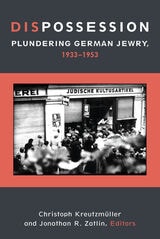
This collection of essays by a range of international, multidisciplinary scholars explores the financial history, social significance, and cultural meanings of the theft, starting in 1933, of assets owned by German Jews. Despite the fraught topic and the ongoing legal discussions, the subject has not received much scholarly attention until now. This volume offers a much needed contribution to our understanding of the history of the period and the acts. The essays examine the confiscatory taxation of Jewish property, the looting of art and confiscation of gold, the role of German freight forwarders in property theft, salesmen and dispossession in the retail world, theft from the elderly, and the complicity of the banking industry, as well as the reach of the practice beyond German borders.
[more]
cover of Divrei Mishkan HaNefesh: A Guide to the CCAR Machzor

Divrei Mishkan HaNefesh

A Guide to the CCAR Machzor

Rabbi Edwin Goldberg

Central Conference of American Rabbis, 2016
Divrei Mishkan HaNefesh is like a midrash on the machzor, a "Mishkan Hanefesh Rabah." This volume serves as a springboard for entering into the sanctuary of our souls with enthusiasm and helpful insights, exegetical and homiletical material, tips and guideposts, as well as indexes of poems and biblical citations. This book focuses on the prayers and scriptural offerings included in Mishkan HaNefesh. Rubric by rubric, insights are presented with background information concerning the perspective and choices of the editors, as well as offering extra material to engage the reader. A number of brief essays, composed by members of the machzor editorial team, are also included.
 
[more]
cover of Divrei Mishkan T'filah: Delving into the Siddur

Divrei Mishkan T'filah

Delving into the Siddur

Rabbi Richard S. Sarason

Central Conference of American Rabbis, 2018

This long-awaited collection of essays on Mishkan T'filah by Rabbi Richard Sarason, PhD, serves as a commentary on our prayerbook. Drawing on Dr. Sarason's deep knowledge of liturgy, these essays teach about Mishkan T'filah specifically and about prayer in general.
[more]
cover of Dodging

Dodging

Charles Bernstein

University of Chicago Press, 0

A new, expansive collection by one of the most provocative and inventive poets of our time. 

In Dodging, Charles Bernstein pushes his poetics toward new kinds of formal and tonal attentions. This multifaceted work brings together comic velocity, pointed political critique, and passages of lyric intensity. Bernstein calls these poems “too late”: written late in life as irreversibility presses against reflection, regret, and renewed resistance—a situation in which dodging is not evasion but survival, a way of moving through political catastrophe and personal loss without being silenced by either.

The collection unfolds in three interrelated “fits”—a term suggesting bursts of composition, rhythmic surges, and formal groupings—titled “Dodging,” “Struggle,” and “Reflection.” These sections move from a series of flashes and fragments, then to assembled riffs and collaborations with poet Tracie Morris, and finally turn to refractions and aphorisms that embrace active contradiction. Together they trace a shifting field of contrasts: between satire and elegy, volatility and concentration, comedy and grief.

Both fundamentally true to Bernstein’s voice and radically radiant in its range, Dodging is a work that moves restlessly across forms and tones—by turns sly, searching, and unguarded, where humor and grief occupy the same ground.
[more]
cover of Don Isaac Abravanel: An Intellectual Biography

Don Isaac Abravanel

An Intellectual Biography

Cedric Cohen-Skalli

Brandeis University Press, 2020

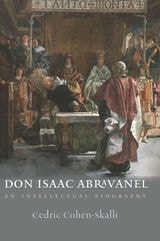
Don Isaac Abravanel (1437–1508) was one of the great inventors of Jewish modernity. A merchant, banker, and court financier, a scholar versed in both Jewish and Christian writings, a preacher and exegete, a prominent political actor in royal entourages and Jewish communities, Abravanel was one of the greatest leaders and thinkers of Iberian Jewry in the aftermath of the expulsion of 1492. This book, the first new intellectual biography of Abravanel in twenty years, depicts his life in three cultural milieus—Portugal, Castile, and post-expulsion Italy—and analyzes his major literary accomplishments in each period. Abravanel was a traditionalist with innovative ideas, a man with one foot in the Middle Ages and the other in the Renaissance. An erudite scholar, author of a monumental exegetical opus that is still studied today, and an avid book collector, he was a transitional figure, defined by an age of contradictions. Yet, it is these very contradictions that make him such an important personality for understanding the dawn of Jewish modernity.
[more]
cover of Drawing the Iron Curtain: Jews and the Golden Age of Soviet Animation

Drawing the Iron Curtain

Jews and the Golden Age of Soviet Animation

Maya Balakirsky Katz

Rutgers University Press, 2016

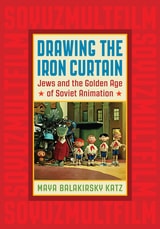
In the American imagination, the Soviet Union was a drab cultural wasteland, a place where playful creative work and individualism was heavily regulated and censored. Yet despite state control, some cultural industries flourished in the Soviet era, including animation. Drawing the Iron Curtain tells the story of the golden age of Soviet animation and the Jewish artists who enabled it to thrive. 
 
Art historian Maya Balakirsky Katz reveals how the state-run animation studio Soyuzmultfilm brought together Jewish creative personnel from every corner of the Soviet Union and served as an unlikely haven for dissidents who were banned from working in other industries. Surveying a wide range of Soviet animation produced between 1919 and 1989, from cutting-edge art films like Tale of Tales to cartoons featuring “Soviet Mickey Mouse” Cheburashka, she finds that these works played a key role in articulating a cosmopolitan sensibility and a multicultural vision for the Soviet Union. Furthermore, she considers how Jewish filmmakers used animation to depict distinctive elements of their heritage and ethnic identity, whether producing films about the Holocaust or using fellow Jews as models for character drawings.  
 
Providing a copiously illustrated introduction to many of Soyuzmultfilm’s key artistic achievements, while revealing the tumultuous social and political conditions in which these films were produced, Drawing the Iron Curtain has something to offer animation fans and students of Cold War history alike. 
 
[more]
cover of Dreamer of the Ghetto: The Life and Works of Israel Zangwill

Dreamer of the Ghetto

The Life and Works of Israel Zangwill

Joseph H. Udelson

University of Alabama Press, 1990

"An impressive achievement. . . . Udelson provides a trenchant analysis of Zangwill's works set within a historical context, i.e., Jewish emancipation and the dilemma of how one might remain fully Jewish while becoming fully modern, that helps to illuminate Zangwill's life as well as his writings."

—Jewish Book News

"By carefully following the threads of Zangwill's own divided self through the labyrinths of his life and writings, Udelson convinces us not only of the author's startling political prescience, but that he embodies attitudes now shared by almost all secular Jews as a result of events Zangwill did not witness—Nazism and the founding of Israel."

—Shofar

[more]
cover of Durkheim and the Jews of France

Durkheim and the Jews of France

Ivan Strenski

University of Chicago Press, 1997

Ivan Strenski debunks the common notion that there is anything "essentially" Jewish in Durkheim's work. Seeking the Durkheim inside the real world of Jews in France rather than the imagined Jewishness inside Durkheim himself, Strenski adopts a Durkheimian approach to understanding Durkheim's thought. In so doing he shows for the first time that Durkheim's sociology (especially his sociology of religion) took form in relation to the Jewish intellectual life of late nineteenth- and early twentieth-century France.

Strenski begins each chapter by weighing particular claims (some anti-Semitic, some not) for the Jewishness of Durkheim's work. In each case Strenski overturns the claim while showing that it can nonetheless open up a fruitful inquiry into the relation of Durkheim to French Jewry. For example, Strenski shows that Durkheim's celebration of ritual had no innately Jewish source but derived crucially from work on Hinduism by the Jewish Indologist Sylvain Lévi, whose influence on Durkheim and his followers has never before been acknowledged.

[more]
cover of Dynamic Repetition: History and Messianism in Modern Jewish Thought

Dynamic Repetition

History and Messianism in Modern Jewish Thought

Gilad Sharvit

Brandeis University Press, 2022

A fine example of the best scholarship that lies at the intersection of philosophy, religion, and history.
 
Dynamic Repetition proposes a new understanding of modern Jewish theories of messianism across the disciplines of history, theology, and philosophy. The book explores how ideals of repetition, return, and the cyclical occasioned a new messianic impulse across an important swath of late nineteenth- and early twentieth-century German Jewish thought. To grasp the complexities of Jewish messianism in modernity, the book focuses on diverse notions of “dynamic repetition” in the works of Franz Rosenzweig, Walter Benjamin, Franz Kafka, and Sigmund Freud, and their interrelations with basic trajectories of twentieth-century philosophy and critical thought.
 
[more]