593 books match the query 'Jews' and 15 start with d
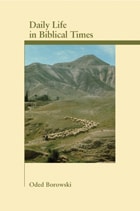
cover of Daily Life in Biblical Times

Daily Life in Biblical Times

Oded Borowski

SBL Press, 2003

While the history of Israel during the period from ca. 1200 to 586 B.C.E. has been in the forefront of biblical research, little attention has been given to questions of daily life. Where did the Israelites live? What did people do for a living? What did they eat and what affected their health? How did the family function? These and similar questions form the basis for this book. The book introduces different aspects of daily life. It describes the natural setting and the people who occupied the land. It deals with the economy, both rural and urban, emphasizing the main sources of livelihood such as agriculture, herding, and trade. These topics are discussed in relation to the family in particular and the social structure in general. Other topics include urban society, the bureaucracy and the military. Beyond material culture, the book delves into daily and seasonal cultural, social and religious activities, art, music, and the place of writing in Israelite society. Drawing on textual and archaeological evidence, and written with nontechnical language, the book will be especially helpful for undergraduates, seminarians, pastors, rabbis, and other interested nonspecialist readers as well as graduate students and faculty in Hebrew Bible.
[more]
cover of Dance with the Bear: The Joe Rosenblatt Story

Dance with the Bear

The Joe Rosenblatt Story

Norman Rosenblatt

University of Utah Press, 2013

This carefully researched and illuminating biography recounts a pivotal period in Utah’s history as revealed by the life of businessman, community activist, and statesman Joe Rosenblatt. After successfully building Eimco Corporation, his manufacturing and construction business, into an industry leader—and, by the 1950s, Utah’s largest privately owned company—Rosenblatt spent the better part of his time following his retirement in 1963 as a devoted public servant. He served as chairman of the “Little Hoover Commission,” charged by Utah governor Calvin Rampton in 1965 to investigate the operation of the executive branch of the state’s government. He would go on to serve on more than fifty boards and commissions.

The “Little Hoover Commission” was modeled after the 1947 initiative of President Harry Truman, who created the Commission on Organization of the Executive Branch of Government to recommend administrative changes and appointed former president Herbert Hoover to chair it. Rosenblatt, a perceptive and outspoken figure, brought a much-needed dose of urgency and pragmatism to the Utah process and formulated a number of far-reaching suggestions to the legislature—many of which were adopted and still exist to this day. His work with the commission coupled with his later role on the San Francisco Federal Reserve Board did much to modernize Utah. Rosenblatt’s legacy as a perpetual champion of the community is further exemplified by his role as cultural conduit between Salt Lake’s Jewish community and the leaders of the Church of Jesus Christ of Latter-day Saints.

This readable work will serve as an integral addition to Utah business and political history, enriching the library of anyone looking for an engaging story of a remarkable and transformative figure.
[more]
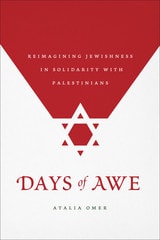
cover of Days of Awe: Reimagining Jewishness in Solidarity with Palestinians

Days of Awe

Reimagining Jewishness in Solidarity with Palestinians

Atalia Omer

University of Chicago Press, 2019

For many Jewish people in the mid-twentieth century, Zionism was an unquestionable tenet of what it meant to be Jewish. Seventy years later, a growing number of American Jews are instead expressing solidarity with Palestinians, questioning old allegiances to Israel. How did that transformation come about? What does it mean for the future of Judaism?

In Days of Awe, Atalia Omer examines this shift through interviews with a new generation of Jewish activists, rigorous data analysis, and fieldwork within a progressive synagogue community. She highlights people politically inspired by social justice campaigns including the Black Lives Matter movement and protests against anti-immigration policies. These activists, she shows, discover that their ethical outrage at US policies extends to Israel’s treatment of Palestinians. For these American Jews, the Jewish history of dispossession and diaspora compels a search for solidarity with liberation movements. This shift produces innovations within Jewish tradition, including multi-racial and intersectional conceptions of Jewishness and movements to reclaim prophetic Judaism. Charting the rise of such religious innovation, Omer points toward the possible futures of post-Zionist Judaism.
[more]
cover of Deepening the Dialogue: Jewish-Americans and Israelis Envisioning the Jewish-Democratic State

Deepening the Dialogue

Jewish-Americans and Israelis Envisioning the Jewish-Democratic State

Rabbi Stanley M. Davids

Central Conference of American Rabbis, 2020
Using the vision embedded in Israel's Declaration of Independence as a template, this anthology presents a unique and comprehensive dialogue between North American Jews and Israelis about the present and future of the State of Israel. With each essay published in both Hebrew and English, in one volume, Deepening the Dialogue is the first of its kind, outlining cultural barriers as well as the immediate need to come together in conversation around the vision of a democratic solution for our nation state.
 
[more]
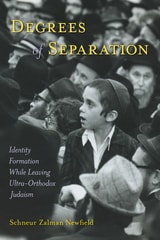
cover of Degrees of Separation: Identity Formation While Leaving Ultra-Orthodox Judaism

Degrees of Separation

Identity Formation While Leaving Ultra-Orthodox Judaism

Schneur Zalman Newfield

Temple University Press, 2020

Those who exit a religion—particularly one they were born and raised in—often find themselves at sea in their efforts to transition to life beyond their community. In Degrees of Separation, Schneur Zalman Newfield, who went through this process himself, interviews seventy-four Lubavitch and Satmar ultra-Orthodox Hasidic Jews who left their communities.He presents their motivations for leaving as well as how they make sense of their experiences and their processes of exiting, detailing their attitudes and opinions regarding their religious upbringing. Newfield also examines how these exiters forge new ways of being that their upbringing had not prepared them for, while also considering what these particular individuals lose and retain in the exit process.

Degrees of Separation presents a comprehensive portrait of the prolonged state of being “in-between” that characterizes transition out of a totalizing worldview. What Newfield discovers is that exiters experience both a sense of independence and a persistent connection; they are not completely dislocated from their roots once they “arrive” at their new destination. Moreover, Degrees of Separation shows that this process of transitioning identity has implications beyond religion.
[more]
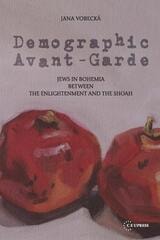
cover of Demographic Avant-Garde: Jews in Bohemia between the Enlightenment and the Shoah

Demographic Avant-Garde

Jews in Bohemia between the Enlightenment and the Shoah

Jana Vobecká

Central European University Press, 2013

This book studies the unique demographic behavior of Jews in Bohemia (the historic part of the Czech Republic), starting from a moment in history when industrialization in Central Europe was still far away in the future, and when Jews were still living legally restricted lives in ghettos. Very early on, however, from the 18th century onwards, Jews developed patterns of decreasing mortality and fertility that was not observed among the gentile majority in Bohemia; patterns which established them as a demographic avant-garde population in all of Europe.
[more]
cover of Demon in the Box: Jews, Arabs, Politics, and Culture in the Making of Israeli Television

Demon in the Box

Jews, Arabs, Politics, and Culture in the Making of Israeli Television

Oren, Tasha G

Rutgers University Press, 2004

What does a country's television programming say about its deep character, beliefs, dreams, and fears? In Demon in the Box, Tasha G. Oren recounts the volatile history of Israeli television and thereby reveals the history of the nation itself.

Initially rejected as a corrupting influence on "the people of the book," television became the object of fantasies and anxieties that went to the heart of Israel's most pressing concerns: Arab-Israeli relations, immigration, and the forging of a modern Israeli culture. Television broadcasting was aimed toward external relations-the flow of messages across borders, Arab-Israeli conflict, and the shaping of public opinion worldwide-as much as it was toward internal needs and interests. Through archival research and analysis of public scandals and early programs, Oren traces Israeli television's transformation from a feared agent of decadence to a powerful national communication tool, and eventually, to a vastly popular entertainment medium.
[more]
cover of Dialogue against the Jews

Dialogue against the Jews

Petrus Alfonsi

Catholic University of America Press, 2006

Never before translated into English, this work presents to the reader perhaps the most important source for an intensifying medieval Christian-Jewish debate.
[more]
cover of Directed by God: Jewishness in Contemporary Israeli Film and Television

Directed by God

Jewishness in Contemporary Israeli Film and Television

By Yaron Peleg

University of Texas Press, 2016

As part of its effort to forge a new secular Jewish nation, the nascent Israeli state tried to limit Jewish religiosity. However, with the steady growth of the ultraorthodox community and the expansion of the settler community, Israeli society is becoming increasingly religious. Although the arrival of religious discourse in Israeli politics has long been noticed, its cultural development has rarely been addressed. Directed by God explores how the country’s popular media, principally film and television, reflect this transformation. In doing so, it examines the changing nature of Zionism and the place of Judaism within it.

Once the purview of secular culture, Israel’s media initially promoted alternatives to traditional religious expression; however, using films such as Kadosh, Waltz with Bashir, and Eyes Wide Open, Yaron Peleg shows how Israel’s contemporary film and television programs have been shaped by new religious trends and how secular Israeli culture has processed and reflected on its religious heritage. He investigates how shifting cinematic visions of Jewish masculinity and gender track transformations in the nation’s religious discourse. Moving beyond the secular/religious divide, Directed by God explores changing film and television representations of different Jewish religious groups, assessing what these representations may mean for the future of Israeli society.
[more]
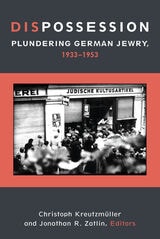
cover of Dispossession: Plundering German Jewry, 1933-1953

Dispossession

Plundering German Jewry, 1933-1953

Christoph Kreutzmüller and Jonathan R. Zatlin, Editors

University of Michigan Press, 2020

This collection of essays by a range of international, multidisciplinary scholars explores the financial history, social significance, and cultural meanings of the theft, starting in 1933, of assets owned by German Jews. Despite the fraught topic and the ongoing legal discussions, the subject has not received much scholarly attention until now. This volume offers a much needed contribution to our understanding of the history of the period and the acts. The essays examine the confiscatory taxation of Jewish property, the looting of art and confiscation of gold, the role of German freight forwarders in property theft, salesmen and dispossession in the retail world, theft from the elderly, and the complicity of the banking industry, as well as the reach of the practice beyond German borders.
[more]
cover of Dixie Diaspora: An Anthology of Southern Jewish History

Dixie Diaspora

An Anthology of Southern Jewish History

Mark K. Bauman

University of Alabama Press, 2006
Regional Jewish history at its best.
 
This book is an anthology of essays designed to introduce readers to key issues in this growing field of scholarship and to encourage further study. Divided into five sections--“Jews and Judaism,” “Small Town Life,” “Business and Governance,” “Interaction,” and “Identity”--the essays cover a broad geographical and chronological span and address a variety of topics, including economics, politics, roles of women, ethnicity, and race. This organizational structure enhances the volume’s historical treatment of regional Jewish history and lends itself to cross-disciplinary study in fields such as cultural studies, religious studies, and political science.


[more]
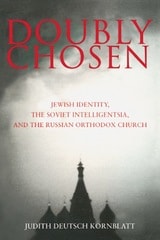
cover of Doubly Chosen: Jewish Identity, the Soviet Intelligentsia, and the Russian Orthodox Church

Doubly Chosen

Jewish Identity, the Soviet Intelligentsia, and the Russian Orthodox Church

Judith Deutsch Kornblatt

University of Wisconsin Press, 2004

    Doubly Chosen provides the first detailed study of a unique cultural and religious phenomenon in post-Stalinist Russia—the conversion of thousands of Russian Jewish intellectuals to Orthodox Christianity, first in the 1960s and later in the 1980s. These time periods correspond to the decades before and after the great exodus of Jews from the Soviet Union. Judith Deutsch Kornblatt contends that the choice of baptism into the Church was an act of moral courage in the face of Soviet persecution, motivated by solidarity with the values espoused by Russian Christian dissidents and intellectuals. Oddly, as Kornblatt shows, these converts to Russian Orthodoxy began to experience their Jewishness in a new and positive way.
    Working primarily from oral interviews conducted in Russia, Israel, and the United States, Kornblatt underscores the conditions of Soviet life that spurred these conversions: the virtual elimination of Judaism as a viable, widely practiced religion; the transformation of Jews from a religious community to an ethnic one; a longing for spiritual values; the role of the Russian Orthodox Church as a symbol of Russian national culture; and the forging of a new Jewish identity within the context of the Soviet dissident movement.
[more]
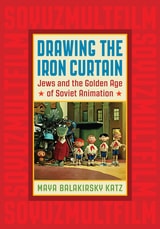
cover of Drawing the Iron Curtain: Jews and the Golden Age of Soviet Animation

Drawing the Iron Curtain

Jews and the Golden Age of Soviet Animation

Maya Balakirsky Katz

Rutgers University Press, 2016

In the American imagination, the Soviet Union was a drab cultural wasteland, a place where playful creative work and individualism was heavily regulated and censored. Yet despite state control, some cultural industries flourished in the Soviet era, including animation. Drawing the Iron Curtain tells the story of the golden age of Soviet animation and the Jewish artists who enabled it to thrive. 
 
Art historian Maya Balakirsky Katz reveals how the state-run animation studio Soyuzmultfilm brought together Jewish creative personnel from every corner of the Soviet Union and served as an unlikely haven for dissidents who were banned from working in other industries. Surveying a wide range of Soviet animation produced between 1919 and 1989, from cutting-edge art films like Tale of Tales to cartoons featuring “Soviet Mickey Mouse” Cheburashka, she finds that these works played a key role in articulating a cosmopolitan sensibility and a multicultural vision for the Soviet Union. Furthermore, she considers how Jewish filmmakers used animation to depict distinctive elements of their heritage and ethnic identity, whether producing films about the Holocaust or using fellow Jews as models for character drawings.  
 
Providing a copiously illustrated introduction to many of Soyuzmultfilm’s key artistic achievements, while revealing the tumultuous social and political conditions in which these films were produced, Drawing the Iron Curtain has something to offer animation fans and students of Cold War history alike. 
 
[more]
cover of Drawing to an Inside Straight: The Legacy of an Absent Father

Drawing to an Inside Straight

The Legacy of an Absent Father

Jodi Varon

University of Missouri Press, 2006
Life can sometimes hinge on the turn of a card—not only the gambler’s life but also the lives of those close to him. For Jodi Varon, one fateful turn changed her father’s life—propelling her into a search far from home that will lead readers to a new contemplation of family ties and lost cultural legacies.
 
Benjamin Varon never rode a horse and preferred his beef hanging in a cooler, but he still thought of himself as a cattleman—that is, until he disappeared after losing his meat-supply business in a high-stakes poker game. In recalling how a hardscrabble New Yorker sought his fortune in Colorado’s cattle country, Varon also relates a daughter’s quest to understand and forgive.
 
Drawing to an Inside Straight is a bittersweet story of growing up in Denver during the 1960s. As Varon recalls life at home with parents Benjamin and Irene—Jews of decidedly different backgrounds, he a Ladino-speaking Sephardi from New York, she a Yiddish-speaking Ashkenazi from Denver’s close-knit Jewish community—she tells of a childhood nourished by pireshkes and cronson, hamantashen and challah. These stories and other culinary delights are contrasted with her father’s childhood of stolen fruit and his longing for the aromas of the Mediterranean spice markets of his ancestors.
 
Against the backdrop of America in the Vietnam era, and amid tales of Joseph McCarthy’s tyranny, Burma-Shave divination, domestic nerve-gas stockpiling, suburban wife-swapping, murder, and suicide, Varon offers an intriguing look at Sephardic history and culture. Behind her own story looms that of Benjamin, who transformed himself from an immigrant’s son sneaking into Yankee Stadium, to a tough GI, to a quixotic dreamer willing to stake his hard-won business in a game of chance. 
 
Rather than cast off his European past, Benjamin embraced it, insisted upon it, tried to celebrate what was different. All the while, he was dogged by his favorite Ladino adage—“We left on a horse. We came back on a donkey”—which served to remind him of the caprices of fortune that would follow him to that fateful poker game. Varon’s story of her own journey to Spain, in search of her father’s lost heritage and his adoration of the Sephardim’s Golden Age, helps seal her understanding as it heals wounds left open too long.
 
            Varon’s account is an insightful view of what it means to be American without losing one’s past to the proverbial melting pot, with its insider’s look at Sephardic culture and depictions of Denver’s ethnic communities that challenge stereotypes of the Anglo-American West. Drawing to an Inside Straight is a book that will make an immediate connection with readers—even those whose fathers weren’t compulsive gamblers—who struggle with mixed emotions about childhood or are in search of their own roots.
[more]
cover of Durkheim and the Jews of France

Durkheim and the Jews of France

Ivan Strenski

University of Chicago Press, 1997

Ivan Strenski debunks the common notion that there is anything "essentially" Jewish in Durkheim's work. Seeking the Durkheim inside the real world of Jews in France rather than the imagined Jewishness inside Durkheim himself, Strenski adopts a Durkheimian approach to understanding Durkheim's thought. In so doing he shows for the first time that Durkheim's sociology (especially his sociology of religion) took form in relation to the Jewish intellectual life of late nineteenth- and early twentieth-century France.

Strenski begins each chapter by weighing particular claims (some anti-Semitic, some not) for the Jewishness of Durkheim's work. In each case Strenski overturns the claim while showing that it can nonetheless open up a fruitful inquiry into the relation of Durkheim to French Jewry. For example, Strenski shows that Durkheim's celebration of ritual had no innately Jewish source but derived crucially from work on Hinduism by the Jewish Indologist Sylvain Lévi, whose influence on Durkheim and his followers has never before been acknowledged.
[more]