Results by title
358 books match the query 'Labor & Industrial Relations' and 18 start with d
Daily Labors
Marketing Identity and Bodies on a New York City Street CornerCarolyn Pinedo-Turnovsky
Temple University Press, 2019
On street corners throughout the country, men stand or sit together patiently while they wait for someone looking to hire un buen trabajador (a good worker). These day laborers are visible symbols of the changing nature of work—and the demographics of workers—in the United States.
Carolyn Pinedo-Turnovsky spent nearly three years visiting with African American men and Latino immigrant men who looked for work as day laborers at a Brooklyn street intersection. Her fascinating ethnography, Daily Labors, considers these immigrants and citizens as active participants in their social and economic life. They not only work for wages but also labor daily to institute change, create knowledge, and contribute new meanings to shape their social world.
Daily Labors reveals how ideologies about race, gender, nation, and legal status operate on the corner and the vulnerabilities, discrimination, and exploitation workers face in this labor market. Pinedo-Turnovsky shows how workers market themselves to conform to employers’ preconceptions of a “good worker” and how this performance paradoxically leads to a more precarious workplace experience. Ultimately, she sheds light on belonging, community, and what a “good day laborer” for these workers really is.

Dangerous Migration
Mexican Labor and the Fight for Immigrant RightsEladio B. Bobadilla
University of Illinois Press, 2026
Beginning with Mexican American opposition to the Bracero Program, Eladio Bobadilla traces the movement’s fault lines that formed around the issue of undocumented workers. Bobadilla reveals how internationalist and human rights discourse influenced the rise of the Chicano movement and its defense of Mexican undocumented immigrants. As time passed, anti-Mexican social, political, and legislative forces produced a nativist backlash that put immigration at the center of the United States’ culture wars and created the fantasy of undocumented workers as an existential threat.
Engaging and vivid, Dangerous Migration illuminates the history of debates over Mexican labor, the emergence of the immigrant rights activism, and the nativist movements that united Latinos with right-wing white Americans.

Dawn of Industrial Agriculture in Iowa
Anthropology, Literature, and HistoryE. Paul Durrenberger
University Press of Colorado, 2021
Durrenberger tells the story that Corey aimed to record and preserve of the industrialization of Iowa’s agriculture and the death of its family farms. He analyzes Corey’s regionalist focus on Iowa farming and regionalism’s contemporaneous association in Europe with rising fascism. He explores Corey’s adoption of naturalism, evident in his resistance to heroes and villains, to plot structure and resolution, and to moral judgment, as well as his ethnographic tendency to focus on groups rather than individuals.
An unusual and wide-ranging study, The Dawn of Industrial Agriculture in Iowa offers important insight into the relationships among fiction, individual lives, and anthropological practice, as well as into a pivotal period in American history.
Dead Labor
Toward a Political Economy of Premature DeathJames Tyner
University of Minnesota Press, 2019
A groundbreaking consideration of death from capitalism, from the seventeenth to the twenty-first century
From a 2013 Texas fertilizer plant explosion that killed fifteen people and injured 252 to a 2017 chemical disaster in the wake of Hurricane Harvey, we are confronted all too often with industrial accidents that reflect the underlying attitude of corporations toward the lives of laborers and others who live and work in their companies’ shadows. Dead Labor takes seriously the myriad ways in which bodies are commodified and profits derived from premature death. In doing so it provides a unique perspective on our understanding how life and death drive the twenty-first-century global economy.
James Tyner tracks a history from the 1600s through which premature death and mortality became something calculable, predictable, manageable, and even profitable. Drawing on a range of examples, including the criminalization of migrant labor, medical tourism, life insurance, and health care, he explores how today we can no longer presume that all bodies undergo the same processes of life, death, fertility, and mortality. He goes on to develop the concept of shared mortality among vulnerable populations and examines forms of capital exploitation that have emerged around death and the reproduction of labor.
Positioned at the intersection of two fields—the political economy of labor and the philosophy of mortality—Dead Labor builds on Marx’s notion that death (and truncated life) is a constant factor in the processes of labor. Considering premature death also as a biopolitical and bioeconomic concept, Tyner shows how racialized and gendered bodies are exposed to it in unbalanced ways within capitalism, and how bodies are then commodified, made surplus and redundant, and even disassembled in order to accumulate capital.
Death and Dying in the Working Class, 1865-1920
Michael K. Rosenow
University of Illinois Press, 2015
Drawing from an eclectic array of sources ranging from Andrew Carnegie to grave markers in Chicago's potter's field, Rosenow portrays the complex political, social, and cultural relationships that fueled the United States' industrial ascent. The result is an undertaking that adds emotional depth to existing history while challenging our understanding of modes of cultural transmission.
Decolonial Feminist Genealogies and Futures
Edited by Annie Isabel Fukushima and K. Melchor Quick Hall
University of Illinois Press, 2025
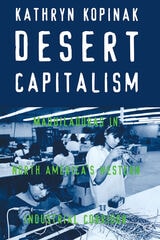
Desert Capitalism
Maquiladoras in North America's Western Industrial CorridorKathryn Kopinak
University of Arizona Press, 1996

Detroit's Cold War
The Origins of Postwar ConservatismColleen Doody
University of Illinois Press, 2017
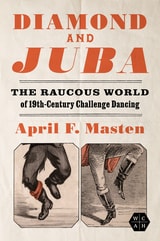
Diamond and Juba
The Raucous World of 19th-Century Challenge DancingApril F. Masten
University of Illinois Press, 2025
Diamonds in the Rough
Corporate Paternalism and African Professionalism on the Mines of Colonial Angola, 1917–1975Todd Cleveland
Ohio University Press, 2015
Diamonds in the Rough explores the lives of African laborers on Angola’s diamond mines from the commencement of operations in 1917 to the colony’s independence from Portugal in 1975. The mines were owned and operated by the Diamond Company of Angola, or Diamang, which enjoyed exclusive mining and labor concessions granted by the colonial government. Through these monopolies, the company became the most profitable enterprise in Portugal’s African empire. After a tumultuous initial period, the company’s mines and mining encampments experienced a remarkable degree of stability, in striking contrast to the labor unrest and ethnic conflicts that flared in other regions. Even during the Angolan war for independence (1961–75), Diamang’s zone of influence remained comparatively untroubled.
Todd Cleveland explains that this unparalleled level of quietude was a product of three factors: African workers’ high levels of social and occupational commitment, or “professionalism”; the extreme isolation of the mining installations; and efforts by Diamang to attract and retain scarce laborers through a calculated paternalism. The company’s offer of decent accommodations and recreational activities, as well as the presence of women and children, induced reciprocal behavior on the part of the miners, a professionalism that pervaded both the social and the workplace environments. This disparity between the harshness of the colonial labor regime elsewhere and the relatively agreeable conditions and attendant professionalism of employees at Diamang opens up new ways of thinking about how Africans in colonial contexts engaged with forced labor, mining capital, and ultimately, each other.
Differences and Changes in Wage Structures
Edited by Richard B. Freeman and Lawrence F. Katz
University of Chicago Press, 1995
Focusing on labor market institutions and the supply and demand forces that affect wages, the papers compare patterns of earnings inequality and pay differentials in the United States, Australia, Korea, Japan, Western Europe, and the changing economies of Eastern Europe. Cross-country studies examine issues such as managerial compensation, gender differences in earnings, and the relationship of pay to regional unemployment.
From this rich store of data, the contributors attribute changes in relative wages and unemployment among countries both to differences in labor market institutions and training and education systems, and to long-term shifts in supply and demand for skilled workers. These shifts are driven in part by skill-biased technological change and the growing internationalization of advanced industrial economies.
Digital Rebellion
The Birth of the Cyber LeftTodd Wolfson
University of Illinois Press, 2014
Todd Wolfson reveals how aspects of the mid-1990s Zapatistas movement--network organizational structure, participatory democratic governance, and the use of communication tools as a binding agent--became essential parts of Indymedia and other Cyber Left organizations. From there he uses oral interviews and other rich ethnographic data to chart the media-based think tanks and experiments that continued the Cyber Left's evolution through the Independent Media Center's birth around the 1999 WTO protests in Seattle.
Melding virtual and traditional ethnographic practice to explore the Cyber Left's cultural logic, Wolfson maps the social, spatial and communicative structure of the Indymedia network and details its operations on the local, national and global level. He looks at the participatory democracy that governs global social movements and the ways democracy and decentralization have come into tension, and how "the switchboard of struggle" conducts stories from the hyper-local and disperses them worldwide. As he shows, understanding the intersection of Indymedia and the Global Social Justice Movement illuminates their foundational role in the Occupy struggle and other emergent movements that have re-energized radical politics.
Disaster Citizenship
Survivors, Solidarity, and Power in the Progressive EraJacob Remes
University of Illinois Press, 2015
In Disaster Citizenship, Jacob A. C. Remes draws on histories of the Salem and Halifax events to explore the institutions--both formal and informal--that ordinary people relied upon in times of crisis. He explores patterns and traditions of self-help, informal order, and solidarity and details how people adapted these traditions when necessary. Yet, as he shows, these methods--though often quick and effective--remained illegible to reformers. Indeed, soldiers, social workers, and reformers wielding extraordinary emergency powers challenged these grassroots practices to impose progressive "solutions" on what they wrongly imagined to be a fractured social landscape.
Disconnected
Call Center Workers Fight for Good Jobs in the Digital AgeDebbie J. Goldman
University of Illinois Press, 2024
Call center employees once blended skill and emotional intelligence to solve customer problems while the workplace itself encouraged camaraderie and job satisfaction. Ten years after telecom industry deregulation, management had isolated the largely female workforce in cubicles, imposed quotas to sell products, and installed surveillance systems that tracked every call and keystroke.
Debbie J. Goldman explores how call center employees and their union fought for good, humane jobs in the face of degraded working conditions and lowered wages. As the workforce coalesced to resist the changes, it demanded the Communications Workers of America (CWA) fight for safe and secure good-paying jobs. But trends in technology, capitalism, and corporate governance--combined with the decline of unions--narrowed the negotiating options for workers. Goldman describes how the actions of workers, management, and policymakers shaped the social impact of the new digital technologies and gave new form to the telecommunications industry in a time of momentous change.
Perceptive and nuanced, Disconnected tells an overlooked story of service workers in a time of change.
Dishing It Out
Waitresses and Their Unions in the Twentieth CenturyDorothy Sue Cobble
University of Illinois Press, 1991
Back when SOS or Adam and Eve on a raft were things to order if you were hungry but a little short on time and money, nearly one-fourth of all waitresses belonged to unions. By the time their movement peaked in the 1940s and 1950s, the women had developed a distinctive form of working-class feminism, simultaneously pushing for equal rights and pay and affirming their need for special protections.
Dorothy Sue Cobble shows how sexual and racial segregation persisted in wait work, but she rejects the idea that this was caused by employers' actions or the exclusionary policies of male trade unionists. Dishing It Out contends that the success of waitress unionism was due to several factors: waitresses, for the most part, had nontraditional family backgrounds, and most were primary wage-earners. Their close-knit occupational community and sex-separate union encouraged female assertiveness and a decidedly unromantic view of men and marriage. Cobble skillfully combines oral interviews and extensive archival records to show how waitresses adopted the basic tenets of male-dominated craft unions but rejected other aspects of male union culture. The result is a book that will expand our understanding of feminism and unionism by including the gender conscious perspectives of working women.
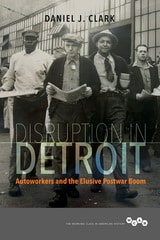
Disruption in Detroit
Autoworkers and the Elusive Postwar BoomDaniel J. Clark
University of Illinois Press, 2018
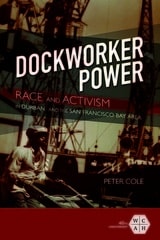
Dockworker Power
Race and Activism in Durban and the San Francisco Bay AreaPeter Cole
University of Illinois Press, 2018
Philip Taft Labor History Book Award, Labor and Working-Class History Association (LAWCHA) and the Cornell ILR School, 2019
A Black Perspectives Best Black History Book of 2018
Dockworkers have power. Often missed in commentary on today's globalizing economy, workers in the world's ports can harness their role, at a strategic choke point, to promote their labor rights and social justice causes. Peter Cole brings such overlooked experiences to light in an eye-opening comparative study of Durban, South Africa, and the San Francisco Bay Area, California. Path-breaking research reveals how unions effected lasting change in some of the most far-reaching struggles of modern times. First, dockworkers in each city drew on longstanding radical traditions to promote racial equality. Second, they persevered when a new technology--container ships--sent a shockwave of layoffs through the industry. Finally, their commitment to black internationalism and leftist politics sparked transnational work stoppages to protest apartheid and authoritarianism. Dockworker Power not only brings to light surprising parallels in the experiences of dockers half a world away from each other. It also offers a new perspective on how workers can change their conditions and world.
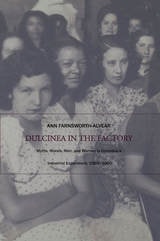
Dulcinea in the Factory
Myths, Morals, Men, and Women in Colombia's Industrial Experiment, 1905-1960Ann Farnsworth-Alvear
Duke University Press, 2000
Ann Farnsworth-Alvear’s analyses of archived personnel records, internal factory correspondence, printed regulations, and company magazines are combined with illuminating interviews with retired workers to allow a detailed reconstruction of the world behind the mill gate. In a place where the distinction between virgins and nonvirgins organized the labor market for women, the distance between chaste and unchaste behavior underlay a moral code that shaped working women’s self-perceptions. Farnsworth-Alvear challenges the reader to understand gender not as an opposition between female and male but rather as a normative field, marked by “proper” and “improper” ways of being female or male. Disputing the idea that the shift in the mills’ workforce over several decades from mainly women to almost exclusively men was based solely on economic factors, the author shows how gender and class, as social practices, converged to shape industrial development itself.
Innovative in its creative employment of subtle and complex material, Dulcinea in the Factory addresses long-standing debates within labor history about proletarianization and work culture. This book’s focus on Colombia will make it valuable to Latin Americanists, but it will also appeal to a wide readership beyond Latin American and labor studies, including historians and sociologists, as well as students of women’s studies, social movements, and anthropology.