Results by title
835 books match the query 'France' and 68 start with a

A Bag of Marbles
Joseph Joffo
University of Chicago Press, 2000

A Black Corps d'Elite
An Egyptian Sudanese Conscript Battalion with the French Army in Mexico, 1863-1867, and its Survivors in Subsequent African HistoryRichard Hill
Michigan State University Press, 1995
For several years, the armies of Napoleon III deployed some 450 Muslim Sudanese slave soldiers in Veracruz, the port of Mexico City. As in the other case of Western hemisphere military slavery (the West India Regiments, a British unit in existence 1795-1815), the Sudanese were imported from Africa in the hopes that they would better survive the tropical diseases that so terribly afflicted European soldiers. In both cases, the Africans did indeed fulfill these expectations. The mixture of cultures embodied by this event has piqued the interest of several historians, so it is by no means unknown. Hill and Hogg provide a particularly thorough account of this exotic interlude, explaining its background, looking in detail at the battle record in Mexico, and figuring out who exactly made up the battalion. Much in their account is odd and interesting, for example, the Sudanese superiority to Austrian troops and their festive nine-day spree in Paris on the emperor's tab. The authors also assess the episode's longer-term impact on the Sudan, showing that the veterans of Mexico, having learnt much from their extended exposure to French military practices, rose quickly in the ranks, then taught these methods to others.
A Brief Apology for a Catholic Moment
Jean-Luc Marion
University of Chicago Press, 2021

A Castle in the Backyard
The Dream of a House in FranceBetsy Draine and Michael Hinden
University of Wisconsin Press, 2006
Like any romance, this one has had its ups and downs, and Betsy and Michael chart its course in this delightful memoir. They offer an intimate glimpse of a region little known to Americans—the Dordogne valley, its castles and prehistoric art, its walking trails and earthy cuisine—and describe the charms and mishaps of setting up housekeeping thousands of miles from home.
Along with the region’s terrain and culture, A Castle in the Backyard introduces us to the people of Périgord—the castle’s proprietor, the village children, the gossipy real-estate agent, the rascally mason, and the ninety-year-old widow with a tale of heartbreak. A celebration of a place and its people, the book also reflects on the future of historic Périgord as tourism and development pose a challenge to its graceful way of life.

A Certain Smile
A NovelFrançoise Sagan
University of Chicago Press, 2011
A neglected classic about a young French woman in the 1950s risking romance, from the author of Bonjour Tristesse
Françoise Sagan is best known for her first novel, Bonjour Tristesse, which caused a scandal when she first published it at the age of eighteen in 1953. But her second novel, A Certain Smile, less shocking and more psychologically convincing, was preferred by many critics. Like Bonjour Tristesse, this story is set in Paris in the 1950s and told by a young student bored by her law books, restless and curious about love and sex. She is fond of her loyal boyfriend, but he, too, bores her. His worldly uncle strikes her as more exciting, appealingly risky and forbidden. Frank and spontaneous, vulnerable and cruel, thoughtless and insightful, Sagan's young narrator explores such perennial themes as unrequited love and the precarious balance of irrational emotions and self-restraint.
A Constant Journey
The Fiction of Monique WittigErika Ostrovsky
Southern Illinois University Press, 1991
From the creation of a neuter pronoun in her earliest work, L’Opoponax, to the confusion of genres in her most recent fiction, Virgile, non, Monique Wittig uses literary subversion and invention to accomplish what Erika Ostrovsky appropriately defines as renversement, the annihilation of existing literary canons and the creation of highly innovative constructs.
Erika Ostrovsky explores those aspects of Wittig’s work that best illustrate her literary approach. Among the countless revolutionary devices that Wittig uses to achieve renversement are the feminization of masculine gender names, the reorganization of myth patterns, and the replacement of traditional punctuation with her own system of grammatical emphasis and separation. It is the unexpected quantity and quality of such literary devices that make reading Monique Wittig’s fiction a fresh and rewarding experience. Such literary devices have earned Wittig the acclaim of her critics and peers—Marguerite Duras, Mary McCarthy, Alain Robbe-Grillet, Nathalie Sarraute, and Claude Simon, to name a few.
While analyzing the intrinsic value of each of Wittig’s fictions separately, Erika Ostrovsky traces the progressive development of Wittig’s major literary devices as they appear and reappear in her fictions. Ostrovsky maintains that the seeds of those innovations that appear in Wittig’s most recent texts can be found as far back as L’Opoponax. This evidence of progression supports Ostrovsky’s theory that clues to Wittig’s future endeavors can be found in her past.

A Duel of Giants
Bismarck, Napoleon III, and the Origins of the Franco-Prussian WarDavid Wetzel
University of Wisconsin Press, 2001
Combining impeccable scholarship and literary elegance, David Wetzel depicts the drama of machinations and passions that exploded in a war that forever changed the face of European history.

A French Aristocrat in the American West
The Shattered Dreams of De Lassus De LuzièresCarl J. Ekberg & Foreword by Marie-Sol de La Tour d'Auvergne
University of Missouri Press, 2010

A Genealogy of Manners
Transformations of Social Relations in France and England from the Fourteenth to the Eighteenth CenturyJorge Arditi
University of Chicago Press, 1998
Analyzing courtesy manuals and etiquette books from the thirteenth to the eighteenth century, Arditi shows how the dominant classes of a society were able to create a system of social relations and put it into operation. The result was an infrastructure in which these classes could successfully exert power. He explores how the ecclesiastical authorities of the Middle Ages, the monarchies from the fifteenth through the seventeenth century, and the aristocracies during the early stages of modernity all forged their own codes of manners within the confines of another, dominant order. Arditi goes on to describe how each of these different groups, through the sustained deployment of their own forms of relating with one another, gradually moved into a position of dominance.

A Genealogy of Terror in Eighteenth-Century France
Ronald Schechter
University of Chicago Press, 2018
For centuries prior to the French Revolution, the word “terror” had largely positive connotations. Subjects flattered monarchs with the label “terror of his enemies.” Lawyers invoked the “terror of the laws.” Theater critics praised tragedies that imparted terror and pity. By August 1794, however, terror had lost its positive valence. As revolutionaries sought to rid France of its enemies, terror became associated with surveillance committees, tribunals, and the guillotine. By unearthing the tradition that associated terror with justice, magnificence, and health, Schechter helps us understand how the revolutionary call to make terror the order of the day could inspire such fervent loyalty in the first place—even as the gratuitous violence of the revolution eventually transformed it into the dreadful term we would recognize today. Most important, perhaps, Schechter proposes that terror is not an import to Western civilization—as contemporary discourse often suggests—but rather a domestic product with a long and consequential tradition.

A Global Enlightenment
Western Progress and Chinese ScienceAlexander Statman
University of Chicago Press, 2023
The Enlightenment gave rise not only to new ideas of progress but consequential debates about them. Did distant times and places have anything to teach the here and now? Voltaire could believe that they did; Hegel was convinced that they did not. Early philosophes praised Chinese philosophy as an enduring model of reason. Later philosophes rejected it as stuck in the past. Seeking to vindicate ancient knowledge, a group of French statesmen and savants began a conversation with the last great scholar of the Jesuit mission to China. Together, they drew from Chinese learning to challenge the emerging concept of Western advancement.
A Global Enlightenment traces this overlooked exchange between China and the West to make compelling claims about the history of progress, notions of European exceptionalism, and European engagement with Chinese science. To tell this story, Alexander Statman focuses on a group of thinkers he terms “orphans of the Enlightenment,” intellectuals who embraced many of their contemporaries’ ideals but valued ancient wisdom. They studied astronomical records, gas balloons, electrical machines, yin-yang cosmology, animal magnetism, and Daoist medicine. And their inquiries helped establish a new approach to the global history of science.
Rich with new archival research and fascinating anecdotes, A Global Enlightenment deconstructs two common assumptions about the early to late modern period. Though historians have held that the idea of a mysterious and inscrutable East was inherent in Enlightenment progress theory, Statman argues that it was the orphans of the Enlightenment who put it there: by identifying China as a source of ancient wisdom, they turned it into a foil for scientific development. But while historical consensus supposes that non-Western ideas were banished from European thought over the course of the Enlightenment, Statman finds that Europeans became more interested in Chinese science—as a precursor, then as an antithesis, and finally as an alternative to modernity.
A History of the French New Wave Cinema
Richard Neupert
University of Wisconsin Press, 2007
The French New Wave cinema is arguably the most fascinating of all film movements, famous for its exuberance, daring, and avant-garde techniques. A History of the French New Wave Cinema offers a fresh look at the social, economic, and aesthetic mechanisms that shaped French film in the 1950s, as well as detailed studies of the most important New Wave movies of the late 1950s and early 1960s.
Richard Neupert first tracks the precursors to New Wave cinema, showing how they provided blueprints for those who would follow. He then demonstrates that it was a core group of critics-turned-directors from the magazine Cahiers du Cinéma—especially François Truffaut, Claude Chabrol, and Jean-Luc Godard—who really revealed that filmmaking was changing forever. Later, their cohorts Eric Rohmer, Jacques Rivette, Jacques Doniol-Valcroze, and Pierre Kast continued in their own unique ways to expand the range and depth of the New Wave.
In an exciting new chapter, Neupert explores the subgroup of French film practice known as the Left Bank Group, which included directors such as Alain Resnais and Agnès Varda. With the addition of this new material and an updated conclusion, Neupert presents a comprehensive review of the stunning variety of movies to come out of this important era in filmmaking.
A Holocaust Controversy
The Treblinka Affair in Postwar FranceSamuel Moyn
Brandeis University Press, 2005
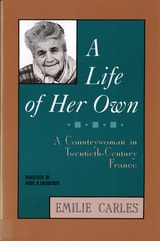
A Life of Her Own
A Countrywoman in Twentieth-Century FranceCarles, Émilie
Rutgers University Press, 1991

A Literary Guide to Provence
Daniel Vitaglione
Ohio University Press, 2001
Provence through the eyes of its writers—those who wrote of it in Provençal or French and also those visitors who were moved by its beauty—that is the inspiration behind A Literary Guide to Provence. In this compact travel guide, Marseilles native Daniel Vitaglione presents a literary panorama of the region of southern France from the Avignon of Mistral to Colette’s St. Tropez.
Including such sites as the birthplace of Nostradamus and the ruins of the Marquis de Sade’s castle, A Literary Guide to Provence presents a thousand years of history entwined with maps and photos that provide readers on tour with a sense of the historical import of this most beautiful of regions even as they experience it firsthand.
Both authors of Provençal ancestry and those who came to love and live in Provence are featured in this comprehensive and enchanting picture of the garden place of France. The Riviera enticed Virginia Woolf. Toulon inspired two novels by Georges Sand. Robert Louis Stevenson resided in Hyères, as did Edith Wharton. Le Lavandou was Willa Cather’s favorite place. F. Scott Fitzgerald lived in St. Raphael and Juan-les-Pins, where he wrote Tender is the Night.
This illustrated guide follows in these writers’ footsteps, and the practical information on hotels and restaurants (phones, web sites, email, etc.) make it the ideal traveling companion for armchair tourists and those who cannot resist seeing Provence for themselves.

A Machine-Gunner in France
The Memoirs of Ward Schrantz, 35th Division, 1917-1919Ward Schrantz
University of North Texas Press, 2019

A Menorah for Athena
Charles Reznikoff and the Jewish Dilemmas of Objectivist PoetryStephen Fredman
University of Chicago Press, 2001
Stephen Fredman illuminates the relationship of Jewish intellectuals to modernity through a close look at Reznikoff's life and writing. He shows that when we regard the Objectivists as modern Jewish poets, we can see more clearly their distinctiveness as modernists and the reasons for their profound impact upon later poets, such as Allen Ginsberg and Charles Bernstein. Fredman also argues that to understand Reznikoff's work more completely, we must see it in the context of early, nonsectarian attempts to make the study of Jewish culture a force in the construction of a more pluralistic society. According to Fredman, then, the indelible images in Reznikoff's poetry open a window onto the vexed but ultimately successful entry of Jewish immigrants and their children into the mainstream of American intellectual life.
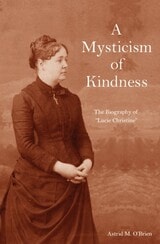
A Mysticism of Kindness
The Lucie Christine StoryAstrid M. O’Brien
University of Scranton Press, 2010
On the surface, Lucie Christine—the pseudonym given to a nineteenth-century Frenchwoman named Mathilde Boutle—was a very ordinary upper-middle-class woman, fulfilling her daily responsibilities to her husband and children. But underneath, Lucie Christine was an extraordinary human being. In A Mysticism of Kindness, Astrid M. O’Brien tells the life story of this remarkable woman, revealing how her experiences as a mystic allowed her to persevere as a wife and mother in the midst of constant verbal and physical abuse from her alcoholic husband. Her story will inspire all those who struggle to find a way to live a strong spiritual life in an often difficult and troubling world.
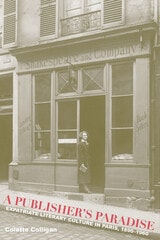
A Publisher's Paradise
Expatriate Literary Culture in Paris, 1890-1960Colette Colligan
University of Massachusetts Press, 2014
From 1890 to 1960, some of Anglo-America's most heated cultural contests over books, sex, and censorship were staged not at home, but abroad in the City of Light. Paris, with its extraordinary liberties of expression, became a special place for interrogating the margins of sexual culture and literary censorship, and a wide variety of English language “dirty books” circulated through loose expatriate publishing and distribution networks.
A Publisher's Paradise explores the political and literary dynamics that gave rise to this expatriate cultural flourishing, which included everything from Victorian pornography to the most daring and controversial modernist classics. Colette Colligan tracks the British and French politicians and diplomats who policed Paris editions of banned books and uncovers offshore networks of publishers, booksellers, authors, and readers. She looks closely at the stories the “dirty books” told about this publishing haven and the smut peddlers and literary giants it brought together in transnational cultural formations. The book profiles an eclectic group of expatriates living and publishing in Paris, from relatively obscure figures such as Charles Carrington, whose list included both The Picture of Dorian Gray and the pornographic novel Randiana, to bookshop owner Sylvia Beach, famous for publishing James Joyce's Ulysses in 1922.
A Publisher's Paradise is a compelling exploration of the little-known history of foreign pornography in Paris and the central role it played in turning the city into a modernist outpost for literary and sexual vanguardism, a reputation that still lingers today in our cultural myths of midnight in Paris.
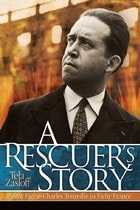
A Rescuer's Story
Pastor Pierre-Charles Toureille in Vichy FranceTela Zasloff
University of Wisconsin Press, 2014
This is the story of a Holocaust rescuer, Pierre Toureille, a French Protestant pastor whose efforts resulted in the rescue of hundreds of refugees, most of them Jewish. Inspired by his Huguenot heritage, Pastor Toureille participated in international Protestant church efforts to combat Nazism during the 1930s and headed a major refugee aid organization in Vichy France during World War II. After the war, Pastor Toureille was honored by the Jewish organization Yad Vashem as one of the "Righteous Among the Nations."
In telling Toureille’s story, Tela Zasloff also depicts the wide-ranging network of Protestant pastors and lay people in southern French villages who participated in an aggressive rescue effort. She delves into their motivations, including their heritage as members of a religious minority. Toureille’s rescue work under the Vichy regime, partly official and then increasingly clandestine as the war progrressed. was a crucial part of the French non-violent "spiritual resistance" against Nazism.

A Rhetoric of Bourgeois Revolution
The Abbe Sieyes and What is the Third Estate?William H. Jr. Sewell
Duke University Press, 1994
This book studies the powerful rhetoric of the great pamphlet and the brilliant but enigmatic thought of its author. William H. Sewell’s insightful analysis reveals the fundamental role played by the new discourse of political economy in Sieyes’s thought and uncovers the strategies by which this gifted rhetorician gained the assent of his intended readers—educated and prosperous bourgeois who felt excluded by the nobility in the hierarchical social order of the old regime. He also probes the contradictions and incoherencies of the pamphlet’s highly polished text to reveal fissures that reach to the core of Sieyes’s thought—and to the core of the revolutionary project itself.
Combining techniques of intellectual history and literary analysis with a deep understanding of French social and political history, Sewell not only fashions an illuminating portrait of a crucial political document, but outlines a fresh perspective on the history of revolutionary political culture.

A Rule for Children and Other Writings
Jacqueline Pascal
University of Chicago Press, 2003
This book presents selections from the whole of Pascal's career as a writer, including her witty adolescent poetry and her pioneering treatise on the education of women, A Rule for Children, which drew on her experiences as schoolmistress at Port-Royal. Readers will also find Pascal's devotional treatise, which matched each moment in Christ's Passion with a corresponding virtue that his female disciples should cultivate; a transcript of her interrogation by church authorities, in which she defended the controversial theological doctrines taught at Port-Royal; a biographical sketch of her abbess, which presented Pascal's conception of the ideal nun; and a selection of letters offering spirited defenses of Pascal's right to practice her vocation, regardless of patriarchal objections.
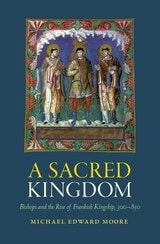
A Sacred Kingdom
Bishops and the Rise of Frankish Kingship, 300-850Michael Edward Moore
Catholic University of America Press, 2011
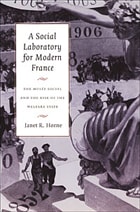
A Social Laboratory for Modern France
The Musée Social and the Rise of the Welfare StateJanet R. Horne
Duke University Press, 2001
Horne explains how Musée founders believed—and convinced others to believe—that the Third Republic would carry out the social mission of the French Revolution and create a new social contract for modern France, one based on the rights of citizenship and that assumed collective responsibility for the victims of social change. Challenging the persistent notion of the Third Republic as the stagnant backwater of European social reform, Horne instead depicts the intellectually sophisticated and progressive political culture of a generation that laid the groundwork for the rise of a hybrid welfare system, characterized by a partnership between private agencies and government. With a focus on the cultural origins of turn-of-the-century thought—including religion, republicanism, liberalism, solidarism, and early sociology—A Social Laboratory for Modern France demonstrates how French reformers grappled with social problems that are still of the utmost relevance today and how they initiated a process that gave the welfare state the task of achieving social cohesion within an industrializing republic.
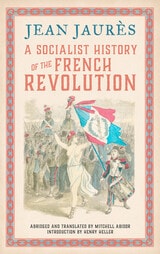
A Socialist History of the French Revolution
Jean Jaurés
Pluto Press, 2021
Jean Jaurès was the celebrated French Socialist Party leader, assassinated in 1914 for trying to use diplomacy and industrial action to prevent the outbreak of war. Published just a few years before his death, his magisterial A Socialist History of the French Revolution has endured for over a century.
Written in the midst of his activities as leader of the Socialist Party and editor of its newspaper, L'Humanite, Jaurès intended the book to serve as both a guide and an inspiration to political activity; even now it can serve to do just that.
Jaurès's verve, originality, and willingness to criticize all players in this epic drama make this a truly moving addition to the shelf of great books on the French Revolution. Mitchell Abidor's abridged translation of Jaurès's original six volumes makes this exceptional work truly accessible to an Anglophone audience.

A Soldier in World War I
The Diary of Elmer W. SherwoodRobert H. Ferrell
Indiana Historical Society Press, 2004

A Tale of Two Murders
Passion and Power in Seventeenth-Century FranceJames R. Farr
Duke University Press, 2005
James R. Farr reveals the Giroux affair not only as a riveting murder mystery but also as an illuminating point of entry into the dynamics of power, justice, and law in seventeenth-century France. Drawing on the voluminous trial records, Farr uses Giroux’s experience in the court system to trace the mechanisms of power—both the formal power vested by law in judicial officials and the informal power exerted by the nobility through patron-client relationships. He does not take a position on Giroux’s guilt or innocence. Instead, he allows readers to draw their own conclusions about who did what to whom on that ill-fated evening in 1638.
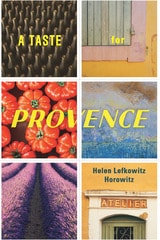
A Taste for Provence
Helen Lefkowitz Horowitz
University of Chicago Press, 2016
In A Taste for Provence, historian Helen Lefkowitz Horowitz digs into this question and spins a wonderfully appealing tale of how Provence became Provence. The region had previously been regarded as a backwater and known only for its Roman ruins, but in the postwar era authors, chefs, food writers, visual artists, purveyors of goods, and travel magazines crafted a new, alluring image for Provence. Soon, the travel industry learned that there were many ways to roam—and some even involved sitting still. The promise of longer stays where one cooked fresh food from storied outdoor markets became desirable as American travelers sought new tastes and unadulterated ingredients.
Even as she revels in its atmospheric, cultural, and culinary attractions, Horowitz demystifies Provence and the perpetuation of its image today. Guiding readers through books, magazines, and cookbooks, she takes us on a tour of Provence pitched as a new Eden, and she dives into the records of a wide range of visual media—paintings, photographs, television, and film—demonstrating what fueled American enthusiasm for the region. Beginning in the 1970s, Provence—for a summer, a month, or even just a week or two—became a dream for many Americans. Even today as a road well traveled, Provence continues to enchant travelers, armchair and actual alike.
A Thousand Screenplays
The French Imagination in a Time of CrisisSabine Chalvon-Demersay
University of Chicago Press, 1999
The time of crisis presented by the amateur writers was not one of war, famine, or disease—it was the millennial dilemma of representation. In a world plagued by alienation, individualization, and a lack of mobility, how can members of a society combat their declining senses of self?
Although the contestants wrote about life in France, their concerns and struggles have a distinctly universal ring. A lucid, witty writer, Chalvon-Demersay offers a clear, if still developing, photograph of the contemporary imagination.

A Woman Who Defends All the Persons of Her Sex
Selected Philosophical and Moral WritingsGabrielle Suchon
University of Chicago Press, 2010
During the oppressive reign of Louis XIV, Gabrielle Suchon (1632–1703) was the most forceful female voice in France, advocating women’s freedom and self-determination, access to knowledge, and assertion of authority. This volume collects Suchon’s writing from two works—Treatise on Ethics and Politics (1693) and On the Celibate Life Freely Chosen; or, Life without Commitments (1700)—and demonstrates her to be an original philosophical and moral thinker and writer.
Suchon argues that both women and men have inherently similar intellectual, corporeal, and spiritual capacities, which entitle them equally to essentially human prerogatives, and she displays her breadth of knowledge as she harnesses evidence from biblical, classical, patristic, and contemporary secular sources to bolster her claim. Forgotten over the centuries, these writings have been gaining increasing attention from feminist historians, students of philosophy, and scholars of seventeenth-century French literature and culture. This translation, from Domna C. Stanton and Rebecca M. Wilkin, marks the first time these works will appear in English.
AIDS in French Culture
Social Ills, Literary CuresDavid Caron
University of Wisconsin Press, 2001
The deluge of metaphors triggered in 1981 in France by the first public reports of what would turn out to be the AIDS epidemic spread with far greater speed and efficiency than the virus itself. To understand why it took France so long to react to the AIDS crisis, AIDS in French Culture analyzes the intersections of three discourses—the literary, the medical, and the political—and traces the origin of French attitudes about AIDS back to nineteenth-century anxieties about nationhood, masculinity, and sexuality.
ANNE OF AUSTRIA
QUEEN OF FRANCERuth Kleinman
The Ohio State University Press, 1987

Absolutist Attachments
Emotion, Media, and Absolutism in Seventeenth-Century FranceChloé Hogg
Northwestern University Press, 2019
In Absolutist Attachments, Chloé Hogg uncovers the affective and media connections that shaped Louis XIV’s absolutism. Studying literature, painting, engravings, correspondence, and the emerging periodic press, Hogg diagnoses the emotions that created absolutism’s feeling subjects and publics.
Louis XIV’s subjects explored new kinds of affective relations with their sovereign, joining with the king in acts of aesthetic judgment, tender feeling, or the “newsiness” of emerging print news culture. Such alternative modes of adhesion countered the hegemonic model of kingship upheld by divine right, reason of state, or corporate fidelities and privileges with subject-driven attachments and practices. Absolutist Attachments discovers absolutism’s alternative political and cultural legacy—not the spectacle of an unbound king but the binding connections of his subjects.
Absorption and Theatricality
Painting and Beholder in the Age of DiderotMichael Fried
University of Chicago Press, 1988
"A reinterpretation supported by immense learning and by a series of brilliantly perceptive readings of paintings and criticism alike. . . . An exhilarating book."—John Barrell, London Review of Books
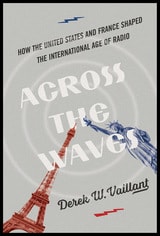
Across the Waves
How the United States and France Shaped the International Age of RadioDerek Vaillant
University of Illinois Press, 2017
Drawing on a broad range of American and French archives, Derek Vaillant joins textual and aural materials with original data analytics and maps to illuminate U.S.-French broadcasting's political and cultural development. Vaillant focuses on the period from 1931 until France dismantled its state media system in 1974. His analysis examines mobile actors, circulating programs, and shifting institutions that shaped international radio's use in times of war and peace. He explores the extraordinary achievements, the miscommunications and failures, and the limits of cooperation between America and France as they shaped a new media environment. Throughout, Vaillant explains how radio's power as an instantaneous mass communications tool produced, legitimized, and circulated various notions of states, cultures, ideologies, and peoples as superior or inferior.
A first comparative history of its subject, Across the Waves provocatively examines how different strategic agendas, aesthetic aims and technical systems shaped U.S.-French broadcasting and the cultural politics linking the United States and France.
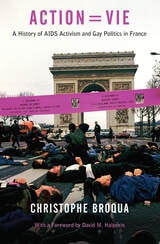
Action=Vie
A History of AIDS Activism and Gay Politics in FranceChristophe Broqua
Temple University Press, 2026
Act Up-Paris became one of the most notable protest groups in France in the mid-1990s. Founded in 1989, and following the New York model, it became a confrontational voice representing the interests of those affected by HIV through openly political activism. Action=Vie, the English-language translation of Christophe Broqua’s study of the grassroots activist branch, explains the reasons for the group’s success and sheds light on Act Up's defining features—such as its unique articulation between AIDS and gay activism.
Featuring numerous accounts by witnesses and participants, Broqua traces the history of Act Up-Paris and shows how thousands of gay men and women confronted the AIDS epidemic by mobilizing with public actions. Act Up-Paris helped shape the social definition not only of HIV-positive persons but also of sexual minorities. Broqua analyzes the changes brought about by the group, from the emergence of new treatments for HIV infection to normalizing homosexuality and a controversy involving HIV-positive writers’ remarks about unprotected sex. This rousing history ends in the mid-2000s before marriage equality and antiretroviral treatments caused Act Up-Paris to decline.
Adolphe Gouhenant
French Revolutionary, Utopian Leader, and Texas Frontier PhotographerPaula Selzer
University of North Texas Press, 2019
Adventures in the Archaic
Primitivism, Degrowth, and the French Social Sciences, 1945–1975Ryan L. Allen
University of Chicago Press, 2026
We tend to associate primitivism with the nostalgic idealization of origins, often aimed at parts of the world that are viewed as closer to that idealized past than modern post-industrial society. Primitivist impulses still exist in popular culture, whether in paleo diets or returns to foraging, and they can also be seen in intellectual and political circles in debates around the possibility of degrowth. In this book, historian Ryan L. Allen examines primitivism anew through four fascinating figures: Georges Bataille, Henri Lefebvre, Georges Devereux, and Mircea Eliade.
In the postwar period, Allen shows, the French social sciences reappraised the primitive and archaic from anthropological, sociological, psychiatric, and religious angles. These four thinkers sought past alternatives to midcentury hypermodernization and capitalist excess. They put forth trenchant critiques of contemporary society and sought in the archaic past a way to imagine a more sustainable future. Adventures in the Archaic rehabilitates these thinkers, showing how their critique of growth and consumerism was nourished by an engagement with primitive cultures as potential sources of cultural and ecological wisdom. As we confront planetary crisis, Allen suggests, there is still much we can learn from these iconoclastic approaches.
Advertising the Self in Renaissance France
Lemaire, Marot, and RabelaisScott Francis
University of Delaware Press, 2019
Published by University of Delaware Press. Distributed worldwide by Rutgers University Press.

Aesthetic Citizenship
Immigration and Theater in Twenty-First-Century ParisEmine Fisek
Northwestern University Press, 2017
From neighborhood associations and humanitarian alliances to arts organizations both large and small, Fisek traces how theater has emerged as a practice with the perceived capacity to address questions regarding immigrant rights, integration, and experience. In Aesthetic Citizenship, she explores how the stage, one of France’s most evocative cultural spaces, has come to play a role in contemporary questions about immigration, citizenship and national identity. Yet Fişek’s insightful research also illuminates Paris’s broader historical, political, and cultural through-lines that continue to shape the relationship between theater and migration in France.
By focusing on how French public discourses on immigration are not only rendered meaningful but also inhabited and modified in the context of activist and arts practice, Aesthetic Citizenship seeks to answer the fundamental question: is theater a representational act or can it also be a transformative one?
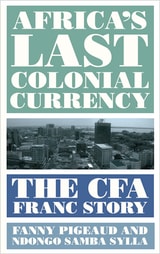
Africa's Last Colonial Currency
The CFA Franc StoryFanny Pigeaud
Pluto Press, 2021

Africa's Last Colonial Currency
The CFA Franc StoryFanny Pigeaud
Pluto Press, 2021

African Miracle, African Mirage
Transnational Politics and the Paradox of Modernization in Ivory CoastAbou B. Bamba
Ohio University Press, 2016
Throughout the 1960s and 1970s, Ivory Coast was touted as an African miracle, a poster child for modernization and the ways that Western aid and multinational corporations would develop the continent. At the same time, Marxist scholars—most notably Samir Amin—described the capitalist activity in Ivory Coast as empty, unsustainable, and incapable of bringing real change to the lives of ordinary people. To some extent, Amin’s criticisms were validated when, in the 1980s, the Ivorian economy collapsed.
In African Miracle, African Mirage, Abou B. Bamba incorporates economics, political science, and history to craft a bold, transnational study of the development practices and intersecting colonial cultures that continue to shape Ivory Coast today. He considers French, American, and Ivorian development discourses in examining the roles of hydroelectric projects and the sugar, coffee, and cocoa industries in the country’s boom and bust. In so doing, he brings the agency of Ivorians themselves to the fore in a way not often seen in histories of development. Ultimately, he concludes that the “maldevelopment” evident by the mid-1970s had less to do with the Ivory Coast’s “insufficiently modern” citizens than with the conflicting missions of French and American interests within the context of an ever-globalizing world.

After Django
Making Jazz in Postwar FranceTom Perchard
University of Michigan Press, 2015

After the Fall
War and Occupation in Irène Némirovsky's Suite françaiseNathan Bracher
Catholic University of America Press, 2010
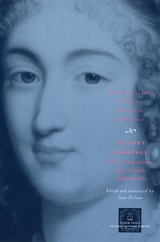
Against Marriage
The Correspondence of La Grande MademoiselleAnne-Marie-Louise d'Orléans, Duchesse de Montpensier
University of Chicago Press, 2002
In the daring letters presented in this bilingual edition, Montpensier condemns the alliance system of marriage, proposing instead to found a republic that she would govern, "a corner of the world in which . . . women are their own mistresses," and where marriage and even courtship would be outlawed. Her pastoral utopia would provide medical care and vocational training for the poor, and all the homes would have libraries and studies, so that each woman would have a "room of her own" in which to write books.
Joan DeJean's lively introduction and accessible translation of Montpensier's letters—four previously unpublished—allow us unprecedented access to the courageous voice of this extraordinary woman.
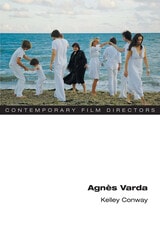
Agnes Varda
Kelley Conway
University of Illinois Press, 2015

Alias Caracalla
Daniel Cordier
Swan Isle Press, 2024
Daniel Cordier’s fascinating, intimate memoir is a major contribution to our understanding of the fraught and historic relations between General Charles de Gaulle’s Free French and the fractious resistance movements under the Occupation during World War II. As the first young secretary to legendary Jean Moulin, one of the leaders of Conseil National de la Résistance, Cordier recounts Moulin’s tense negotiations to bring together the resistance movements and persuade them to join forces under de Gaulle’s banner between 1942 and ‘43. Cordier was a lookout on the fateful day the National Resistance Council was created, confirming de Gaulle’s legitimacy in the eyes of the French people and, crucially, in the eyes of Roosevelt and the Allied leadership. Later in life, Cordier penned his first-hand account of his role in the creation of Jean Moulin’s secretariat in Lyon and then Paris. Alias Caracalla is a brave and passionate story of action and self-discovery in times of war, with a sensitive and nuanced translation by Rupert Swyer.

All Manners of Food
Eating and Taste in England and France from the Middle Ages to the PresentStephen Mennell
University of Illinois Press, 1985
Debunking myths along the way, All Manners of Food is a sweeping look at how social and political development has helped to shape different culinary cultures. Food and almost everything to do with food, fasting and gluttony, cookbooks, women's magazines, chefs and cooks, types of foods, the influential difference between "court" and "country" food are comprehensively explored and tastefully presented in a dish that will linger in the memory long after the plates have been cleared.

America that island off the coast of France
Jesse lee Kercheval
Tupelo Press, 2019