Results by title
460 books match the query 'Law and legislation' and 18 start with d
DYING TO BE BEAUTIFUL
FIGHT FOR SAFE COSMETICSGwen Kay
The Ohio State University Press, 2005
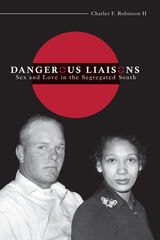
Dangerous Liaisons
Sex and Love in the Segregated SouthCharles F. Robinson II
University of Arkansas Press, 2003
In the tumultuous decades after the Civil War, as the southern white elite reclaimed power, “racial mixing” was the central concern of segregationists who strove to maintain “racial purity.” Segregation—and race itself—was based on the idea that interracial sex posed a biological threat to the white race. In this groundbreaking study, Charles Robinson examines how white southerners enforced anti-miscegenation laws. His findings challenge conventional wisdom, documenting a pattern of selective prosecution under which interracial domestic relationships were punished even more harshly than transient sexual encounters. Robinson shows that the real crime was to suggest that black and white individuals might be equals, a notion which undermined the legitimacy of the economic, political, and social structure of white male supremacy.
Robinson examines legal cases from across the South, considering both criminal prosecutions brought by states and civil disputes over marital and family assets. He also looks at U.S. Supreme Court decisions, debates in state legislatures, comments in the U.S. Congressional Record, and newspaper editorials. He not only shows the hardening of racial categories but assesses the attitudes of African Americans about anti-miscegenation laws and intermarriage. The epilogue concerns “The Demise of Anti-miscegenation Law” including the case of Richard and Mildred Loving.
Dangerous Liaisons vividly documents the regulation of intimacy and its fundamental role in the construction of race.
Dawn at Mineral King Valley
The Sierra Club, the Disney Company, and the Rise of Environmental LawDaniel P. Selmi
University of Chicago Press, 2022
In our current age of climate change–induced panic, it’s hard to imagine a time when private groups were not actively enforcing environmental protection laws in the courts. It wasn’t until 1972, however, that a David and Goliath–esque Supreme Court showdown involving the Sierra Club and Disney set a revolutionary legal precedent for the era of environmental activism we live in today.
Set against the backdrop of the environmental movement that swept the country in the late 1960s and early 1970s, Dawn at Mineral King Valley tells the surprising story of how the US Forest Service, the Disney company, and the Sierra Club each struggled to adapt to the new, rapidly changing political landscape of environmental consciousness in postwar America. Proposed in 1965 and approved by the federal government in 1969, Disney’s vast development plan would have irreversibly altered the practically untouched Mineral King Valley, a magnificently beautiful alpine area in the Sierra Nevada mountains. At first, the plan met with unanimous approval from elected officials, government administrators, and the press—it seemed inevitable that this expanse of wild natural land would be radically changed and turned over to a private corporation. Then the scrappy Sierra Club forcefully pushed back with a lawsuit that ultimately propelled the modern environmental era by allowing interest groups to bring litigation against environmentally destructive projects.
An expert on environmental law and appellate advocacy, Daniel P. Selmi uses his authoritative narrative voice to recount the complete history of this revolutionary legal battle and the ramifications that continue today, almost 50 years later.

Decolonizing Discipline
Children, Corporal Punishment, Christian Theologies, and ReconciliationValerie E. Michaelson
University of Manitoba Press, 2020
Defending Diversity
Affirmative Action at the University of MichiganPatricia Gurin, Jeffrey S. Lehman, and Earl Lewis, with Eric L. Dey, Gerald Gurin, and Sylvia Hurtado
University of Michigan Press, 2004
Digital Rights at the Periphery
Making Brazil's Marco CivilGuy T. Hoskins
University of Illinois Press, 2025
Signed into law in 2014, the Marco Civil da Internet (Brazilian Civil Rights Framework for the Internet) appeared to offer pioneering legislation for a digital bill of rights that addressed issues like network neutrality and privacy. Guy T. Hoskins chronicles the Marco Civil’s development and its failure to confront the greatest concentration of power in the digital age: informational capitalism. Combining interviews with discourse and political-economic analysis, Hoskins reveals why the legislation fell short while examining the implications of its emergence in Brazil, which remains on the margins of the global system of informational capitalism. Hoskins places collectivist and public service principles at the core of any framework’s effectiveness. He also shows why we must create systems sensitive to the sociocultural and political-economic contexts that will shape digital rights and their usefulness.
Compelling and contrarian, Digital Rights at the Periphery looks at communications policy and internet governance in the Global South and the lessons they provide for the rest of the world.
Dirty Words and Filthy Pictures
Film and the First AmendmentBy Jeremy Geltzer
University of Texas Press, 2015
From the earliest days of cinema, scandalous films such as The Kiss (1896) attracted audiences eager to see provocative images on screen. With controversial content, motion pictures challenged social norms and prevailing laws at the intersection of art and entertainment. Today, the First Amendment protects a wide range of free speech, but this wasn’t always the case. For the first fifty years, movies could be censored and banned by city and state officials charged with protecting the moral fabric of their communities. Once film was embraced under the First Amendment by the Supreme Court’s Miracle decision in 1952, new problems pushed notions of acceptable content even further.
Dirty Words & Filthy Pictures explores movies that changed the law and resulted in greater creative freedom for all. Relying on primary sources that include court decisions, contemporary periodicals, state censorship ordinances, and studio production codes, Jeremy Geltzer offers a comprehensive and fascinating history of cinema and free speech, from the earliest films of Thomas Edison to the impact of pornography and the Internet. With incisive case studies of risqué pictures, subversive foreign films, and banned B-movies, he reveals how the legal battles over film content changed long-held interpretations of the Constitution, expanded personal freedoms, and opened a new era of free speech. An important contribution to film studies and media law, Geltzer’s work presents the history of film and the First Amendment with an unprecedented level of detail.
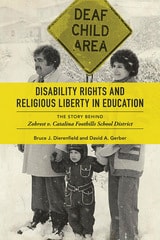
Disability Rights and Religious Liberty in Education
The Story behind Zobrest v. Catalina Foothills School DistrictBruce J. Dierenfield and David A. Gerber
University of Illinois Press, 2020
Bruce J. Dierenfield and David A. Gerber use the Zobrests' story to examine the complex history and jurisprudence of disability accommodation and educational mainstreaming. They look at the family's effort to acquire educational resources for their son starting in early childhood and the choices the Zobrests made to prepare him for life in the hearing world rather than the deaf community. Dierenfield and Gerber also analyze the thorny church-state issues and legal controversies that informed the case, its journey to the U.S. Supreme Court, and the impact of the high court's ruling on the course of disability accommodation and religious liberty.

Discretionary Justice
Looking Inside a Juvenile Drug CourtPaik, Leslie
Rutgers University Press, 2011
Juvenile drug courts are on the rise in the United States, as a result of a favorable political climate and justice officials' endorsement of the therapeutic jurisprudence movement--the concept of combining therapeutic care with correctional discipline. The goal is to divert nonviolent youth drug offenders into addiction treatment instead of long-term incarceration. Discretionary Justice overviews the system, taking readers behind the scenes of the juvenile drug court. Based on fifteen months of ethnographic fieldwork and interviews at a California court, Leslie Paik explores the staff's decision-making practices in assessing the youths' cases, concentrating on the way accountability and noncompliance are assessed. Using the concept of "workability," Paik demonstrates how compliance, and what is seen by staff as "noncompliance," are the constructed results of staff decisions, fluctuating budgets, and sometimes questionable drug test results.
While these courts largely focus on holding youths responsible for their actions, this book underscores the social factors that shape how staff members view progress in the court. Paik also emphasizes the perspectives of children and parents. Given the growing emphasis on individual responsibility in other settings, such as schools and public welfare agencies, Paik's findings are relevant outside the juvenile justice system.
Discrimination, Jobs, and Politics
The Struggle for Equal Employment Opportunity in the United States since the New DealPaul Burstein
University of Chicago Press, 1985
"This is an important, well-researched book. . . . Burstein has had the courage to break through narrow specializations within sociology . . . and even to address the types of acceptable questions usually associated with three different disciplines (political science, sociology, and economics). . . . This book should be read by all professionals interested in political sociology and social movements."—Donald Tomaskovic-Devey, Social Forces
"Discrimination, Jobs and Politics [is] satisfying because it tells a more complete story . . . than does most sociological research. . . . I find myself returning to it when I'm studying the U.S. women's movement and recommending it to students struggling to do coherent research."—Rachel Rosenfeld, Contemporary Sociology
Doctors and Demonstrators
How Political Institutions Shape Abortion Law in the United States, Britain, and CanadaDrew Halfmann
University of Chicago Press, 2011
Does Business Learn?
Tax Breaks, Uncertainty, and Political StrategiesSandra L. Suarez
University of Michigan Press, 2000
Doing Business in Arizona
A Legal GuideSnell & Wilmer Associates Snell & Wilmer Associates
University of Arizona Press, 1998
Domestic Tyranny
The Making of American Social Policy against Family Violence from Colonial Times to the PresentElizabeth Pleck
University of Illinois Press, 2004
Domestic Violence and the Law in Colonial and Postcolonial Africa
Emily S. Burrill
Ohio University Press, 2010
Domestic Violence and the Law in Colonial and Postcolonial Africa reveals the ways in which domestic space and domestic relationships take on different meanings in African contexts that extend the boundaries of family obligation, kinship, and dependency. The term domestic violence encompasses kin-based violence, marriage-based violence, gender-based violence, as well as violence between patrons and clients who shared the same domestic space. As a lived experience and as a social and historical unit of analysis, domestic violence in colonial and postcolonial Africa is complex.
Using evidence drawn from Sub-saharan Africa, the chapters explore the range of domestic violence in Africa’s colonial past and its present, including taxation and the insertion of the household into the broader structure of colonial domination.
African histories of domestic violence demand that scholars and activists refine the terms and analyses and pay attention to the historical legacies of contemporary problems. This collection brings into conversation historical, anthropological, legal, and activist perspectives on domestic violence in Africa and fosters a deeper understanding of the problem of domestic violence, the limits of international human rights conventions, and local and regional efforts to address the issue.
Dream of Justice
The Story of Keyes v. Denver Public Schoolsby Pat Pascoe
University Press of Colorado, 2023
Pascoe details Denver’s desegregation battle, beginning with the citizen studies that exposed the inequities of segregated schools and Rachel Noel’s resolution to integrate the system, followed by the momentous pro-integration Benton-Pascoe campaign of Ed Benton and Monte Pascoe for the school board in 1969. When segregationists won that election and reversed the integration plan for northeast Denver, Black, white, and Latino parents filed Keyes v. School District No. 1. This book follows the arguments in the case through briefs, transcripts, and decisions from district court to the Supreme Court of the United States and back, to its ultimate order to desegregate all Denver schools “root and branch.” It was the first northern city desegregation suit to be brought before the Supreme Court. However, with the end of court-ordered busing in 1995, schools quickly resegregated and are now more segregated than before Keyes was filed.
Pascoe asserts that school integration is a necessary step toward eliminating systemic racism in our country and should be the objective of every school board. A Dream of Justice will appeal to students, scholars, and readers interested in the history of civil rights in America, Denver history, and the history of US education.

Drinkers, Drivers, and Bartenders
Balancing Private Choices and Public AccountabilityFrank A. Sloan, Emily M. Stout, Kathryn Whetten-Goldstein, and Lan Liang
University of Chicago Press, 2000
Extraordinary in scope and exacting in detail, Drinkers, Drivers, and Bartenders: Balancing Private Choices and Public Accountability links alcohol problems, deterrence, and serving practices in a way no other work has been able to do and is certain to become a crucial reference point for researchers and policymakers alike.
Drones and the Future of Armed Conflict
Ethical, Legal, and Strategic ImplicationsEdited by David Cortright, Rachel Fairhurst, and Kristen Wall
University of Chicago Press, 2015
Presenting a robust conversation among leading scholars in the areas of international legal standards, counterterrorism strategy, humanitarian law, and the ethics of force, Drones and the Future of Armed Conflict takes account of current American drone campaigns and the developing legal, ethical, and strategic implications of this new way of warfare. Among the contributions to this volume are a thorough examination of the American government’s legal justifications for the targeting of enemies using drones, an analysis of American drone campaigns’ notable successes and failures, and a discussion of the linked issues of human rights, freedom of information, and government accountability.